
Not Exercising? How to Choose the Right Meal Plan for a Sedentary Lifestyle in Bangkok
Exercise changes calorie needs, but it is not a prerequisite for weight control. What matters more is whether daily food intake matches how much energy the body actually uses.
In Bangkok, many people spend most of the day seated. Long office hours, commuting, injuries, or general fatigue often mean that movement is limited, even with the intention to “be healthier.” In these cases, following meal plans designed for active lifestyles can quietly push calorie intake above what the body requires.
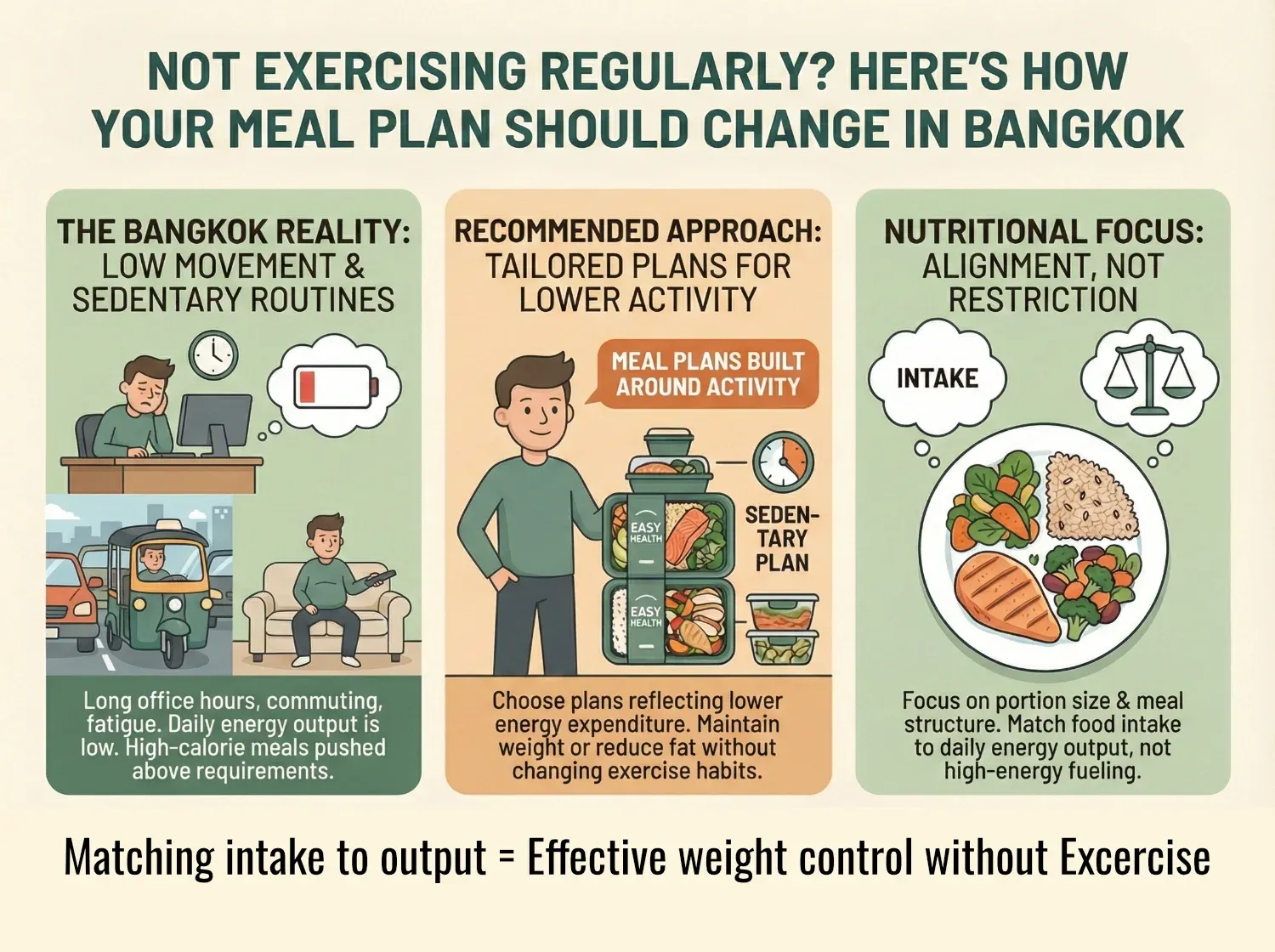
When exercise levels are low, nutrition must shift. Portion size, meal structure, and overall calorie intake become more important than high-energy meals meant to fuel training. The goal is not restriction, but alignment between food intake and daily output.
Easy Health builds meal plans around activity level, including options specifically suited to sedentary routines. By choosing a plan that reflects lower energy expenditure, it becomes possible to maintain weight or reduce body fat without needing to change exercise habits.
Why Eating “Normally” Doesn’t Work for a Sedentary Lifestyle
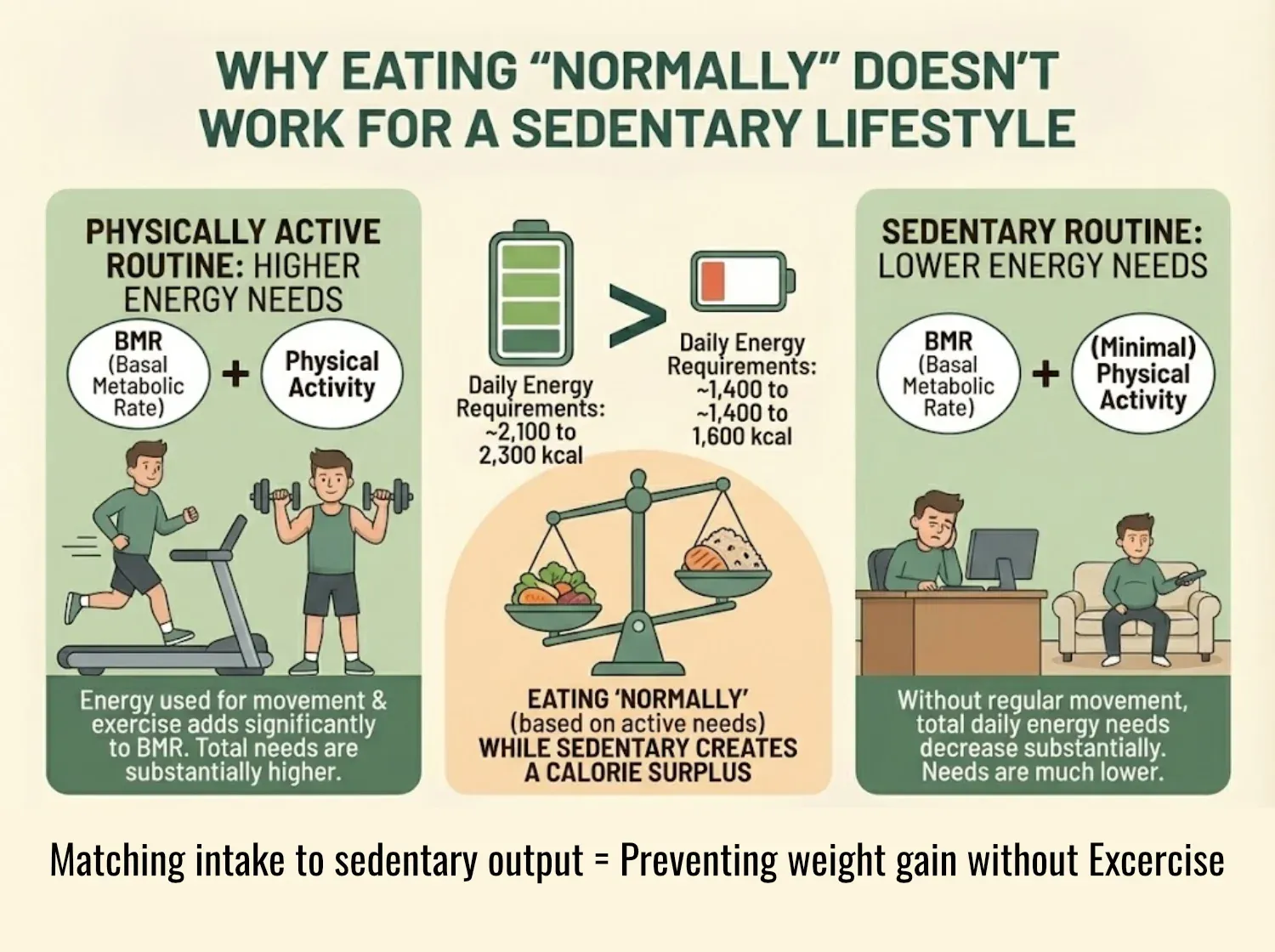
Your body expends energy through two primary mechanisms:
BMR (Basal Metabolic Rate): The energy required to sustain essential functions such as breathing, circulation, and organ activity at rest
Physical activity: Energy used through movement, including walking, structured exercise, and everyday tasks
When regular movement is removed, total daily energy needs decrease substantially:
Physically active routine: Daily energy requirements often sit around 2,100 to 2,300 kcal
Sedentary routine: Daily energy requirements may fall closer to 1,400 to 1,600 kcal
When portion sizes remain the same despite lower activity levels, excess energy has nowhere to go. Common everyday meals such as Pad Thai or curry rice can be energy-dense, often exceeding 700 kcal per serving. Without sufficient movement to offset this intake, surplus calories are stored as body fat, particularly around the abdominal area.
Adjusting Your Meal Plan for a Sedentary Lifestyle
When daily movement is limited, energy intake needs to reflect lower overall expenditure. Rather than increasing output through exercise, calorie control becomes the primary lever. Two practical approaches apply in this situation:
Path A: Creating a Calorie Deficit
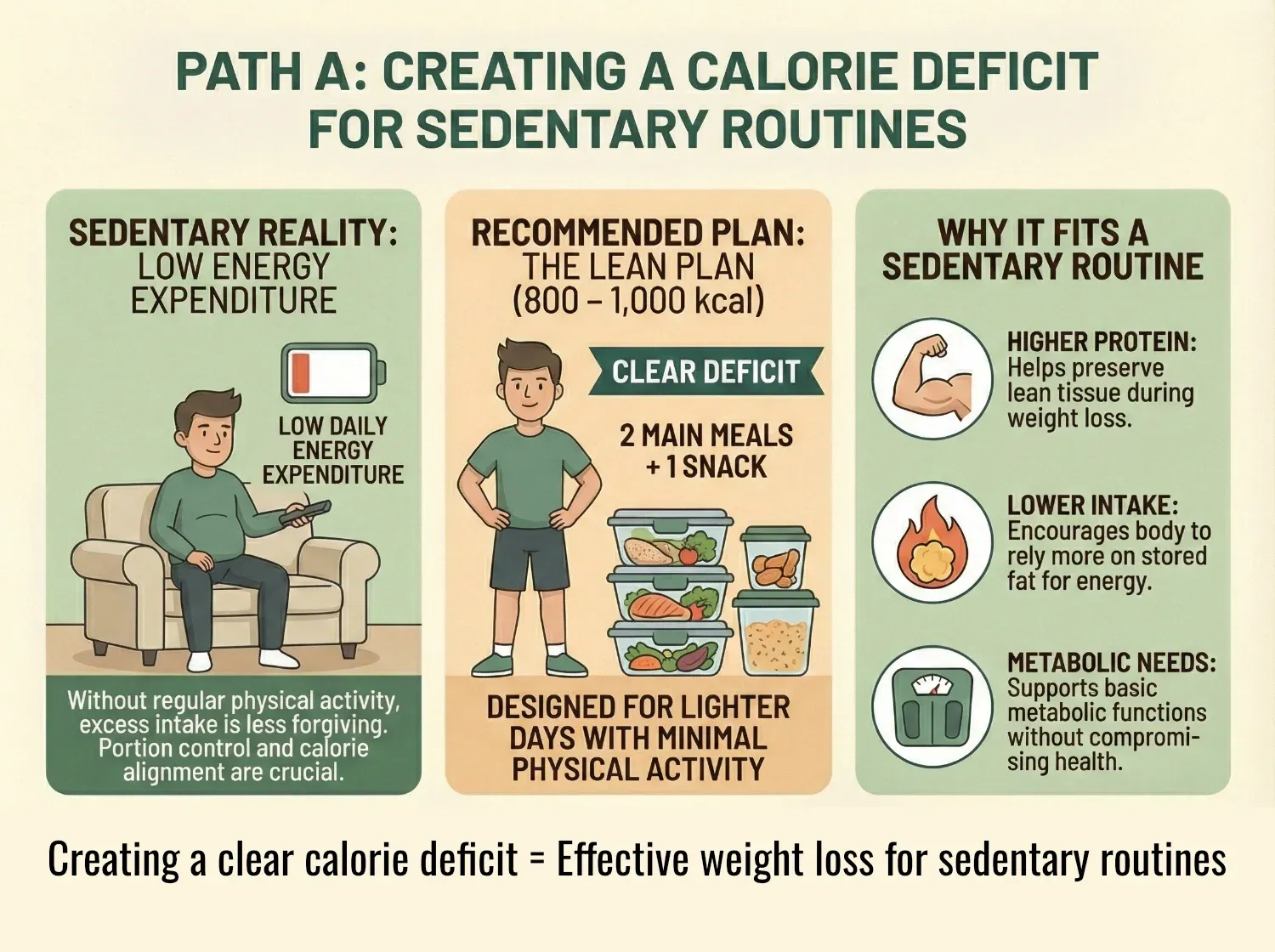
For individuals with a sedentary routine, effective weight loss typically requires a clearer calorie deficit. Without regular physical activity to increase energy expenditure, excess intake is less forgiving, making portion control and overall calorie alignment more important.
Recommended Plan: The Lean Plan (800 – 1,000 kcal).
Why It Fits a Sedentary Routine
Creates a clear calorie deficit when daily energy expenditure is low
Higher protein intake helps preserve lean tissue during weight loss
Lower overall intake encourages the body to rely more on stored fat for energy without compromising basic metabolic needs
Plan Structure
Two main meals and one snack
Designed for lighter days with minimal physical activity
Path B: Weight Maintenance Without Regular Exercise
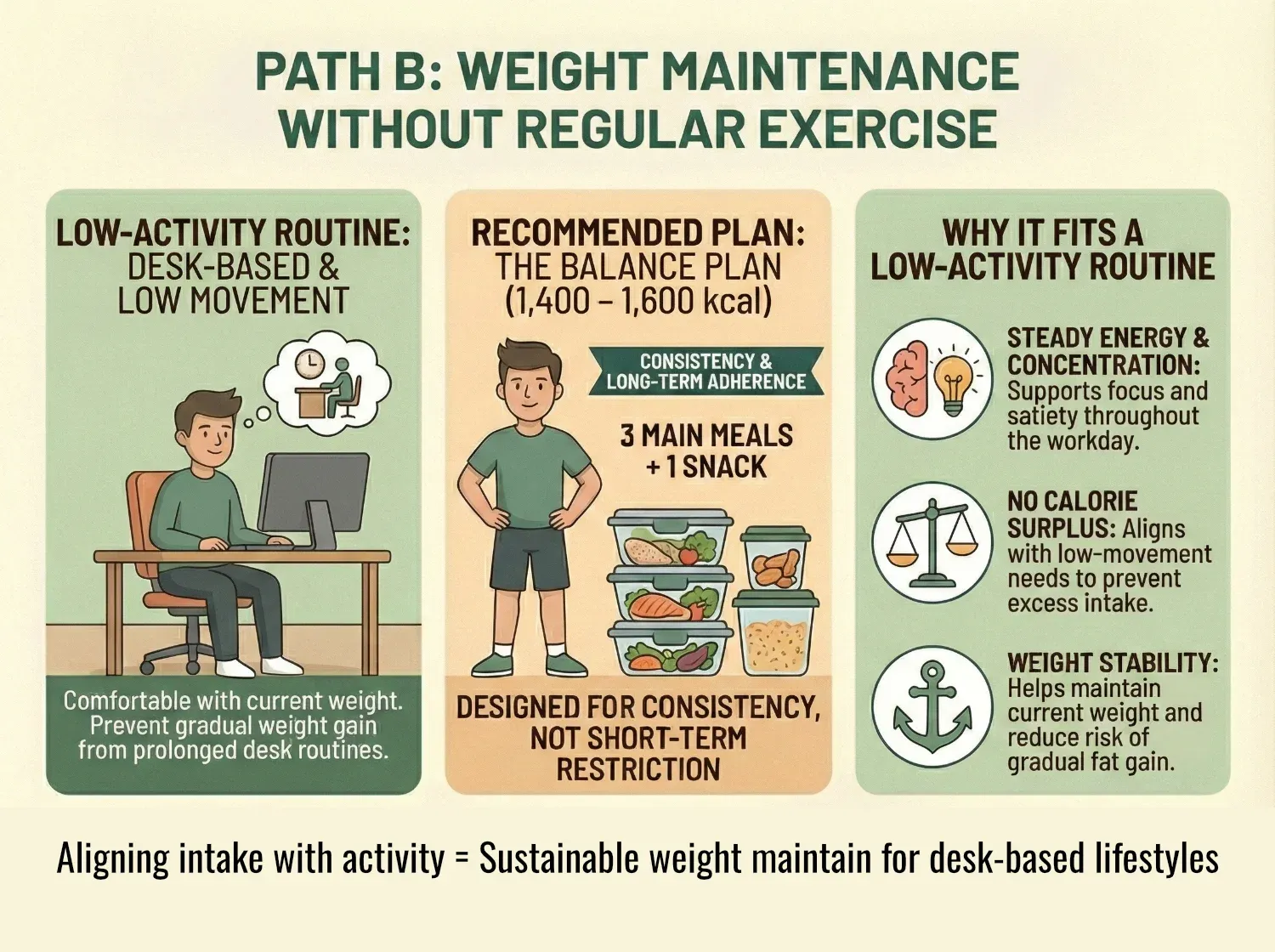
This approach suits individuals who are comfortable with their current weight but want to prevent gradual weight gain associated with prolonged desk-based routines, while maintaining steady energy levels throughout the workday.
Recommended Plan: The Balance Plan (1,400 – 1,600 kcal).
Why It Fits a Low-Activity Routine
Closely aligns with the typical energy needs of desk-based or low-movement workdays
Provides sufficient intake to support concentration and satiety without creating a calorie surplus
Helps maintain weight stability while reducing the risk of gradual fat gain over time
Plan Structure
Three main meals and one snack
Designed for consistency and long-term adherence rather than short-term restriction
Three Principles for Eating With Low Activity
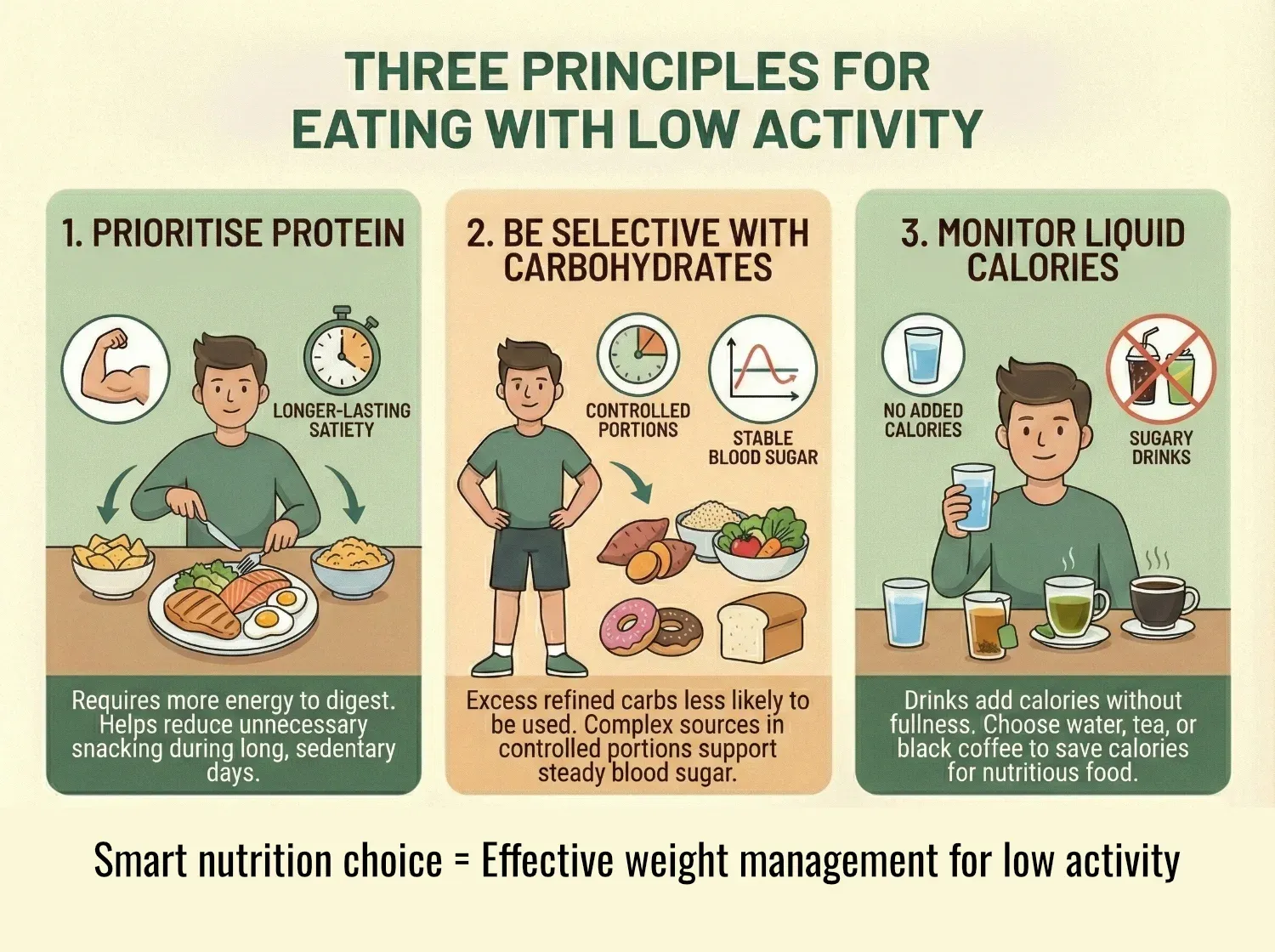
Prioritise protein: Protein requires more energy to digest than carbohydrates or fats and contributes to longer-lasting satiety. A protein-forward intake helps reduce unnecessary snacking, particularly during long, sedentary workdays.
Be selective with carbohydrates: When activity levels are low, excess refined carbohydrates are less likely to be used for energy. Emphasising complex carbohydrate sources in controlled portions supports steadier blood sugar levels without oversupplying calories.
Monitor liquid calories: Drinks can add significant calories without contributing to fullness. For those with lower daily energy needs, choosing water, unsweetened tea, or black coffee helps preserve calorie intake for meals that provide nutritional value.
Common Questions About Weight Loss Without Exercise
Q1: Will metabolism slow down without regular exercise?
Daily energy expenditure may decrease slightly when activity levels are low. This is why meal composition matters. Maintaining adequate protein intake helps support lean tissue and can reduce the degree of metabolic adaptation compared with diets that rely heavily on refined carbohydrates.
Q2: Is a lower-calorie plan suitable for longer periods?
Lower-calorie plans are generally most effective when used for defined phases rather than indefinitely. Short cycles allow individuals to assess energy levels, satiety, and overall response. Once weight goals are achieved, transitioning to a moderate intake supports longer-term stability.
Q3: Why does bloating feel worse with a sedentary routine?
Prolonged sitting can affect digestion and fluid balance. Diets lower in sodium and more consistent in portion size often help reduce water retention. Including fibre-rich foods and fermented dairy can also support digestive comfort during low-movement days.
Managing Your Nutrition Without Regular Exercise
When activity levels are low, consistency and portion control become the main drivers of progress. The Easy Health App allows users to select meal plans that match lower daily energy needs, adjust intake as routines change, and maintain structure without relying on exercise or constant tracking. This approach supports weight management through alignment rather than restriction.
Choose the Right Meal Plan for a Low-Activity Lifestyle
Android: Download via Google Play Store
References
Vox. (2024). Why you can't exercise your way out of a bad diet. Retrieved from https://www.vox.com/2016/4/28/11518804/weight-loss-exercise-myth-burn-calories
Healthline. (2024). How to Lose Weight Without Exercise. Retrieved from https://www.healthline.com/nutrition/lose-weight-without-exercise
WebMD. (2024). The Truth About Weight Loss Without Exercise. Retrieved from https://www.webmd.com/diet/features/weight-loss-without-exercise