
Intermittent Fasting in Thailand: Does It Work? Schedules, Meals & Science
Intermittent fasting is everywhere. Your colleague swears by it. Your gym trainer recommends it. Social media influencers credit it for their transformations. But does intermittent fasting actually work, or is it just another diet trend that sounds good on Instagram?
More importantly, does it work in Thailand? Because skipping meals in 35-degree heat with 80% humidity while surrounded by some of the most tempting street food on the planet is a very different proposition from fasting in a mild European climate with bland office cafeteria options.
The short answer: yes, intermittent fasting works. The evidence is strong. But it works for specific, well-understood biological reasons, and understanding those reasons helps you apply it correctly, especially in Thailand's unique environment. This guide covers the science, the most effective schedules, what to eat during your eating window, Thailand-specific challenges, and the mistakes that cause most people to quit within two weeks.
What Is Intermittent Fasting and How Does It Work?
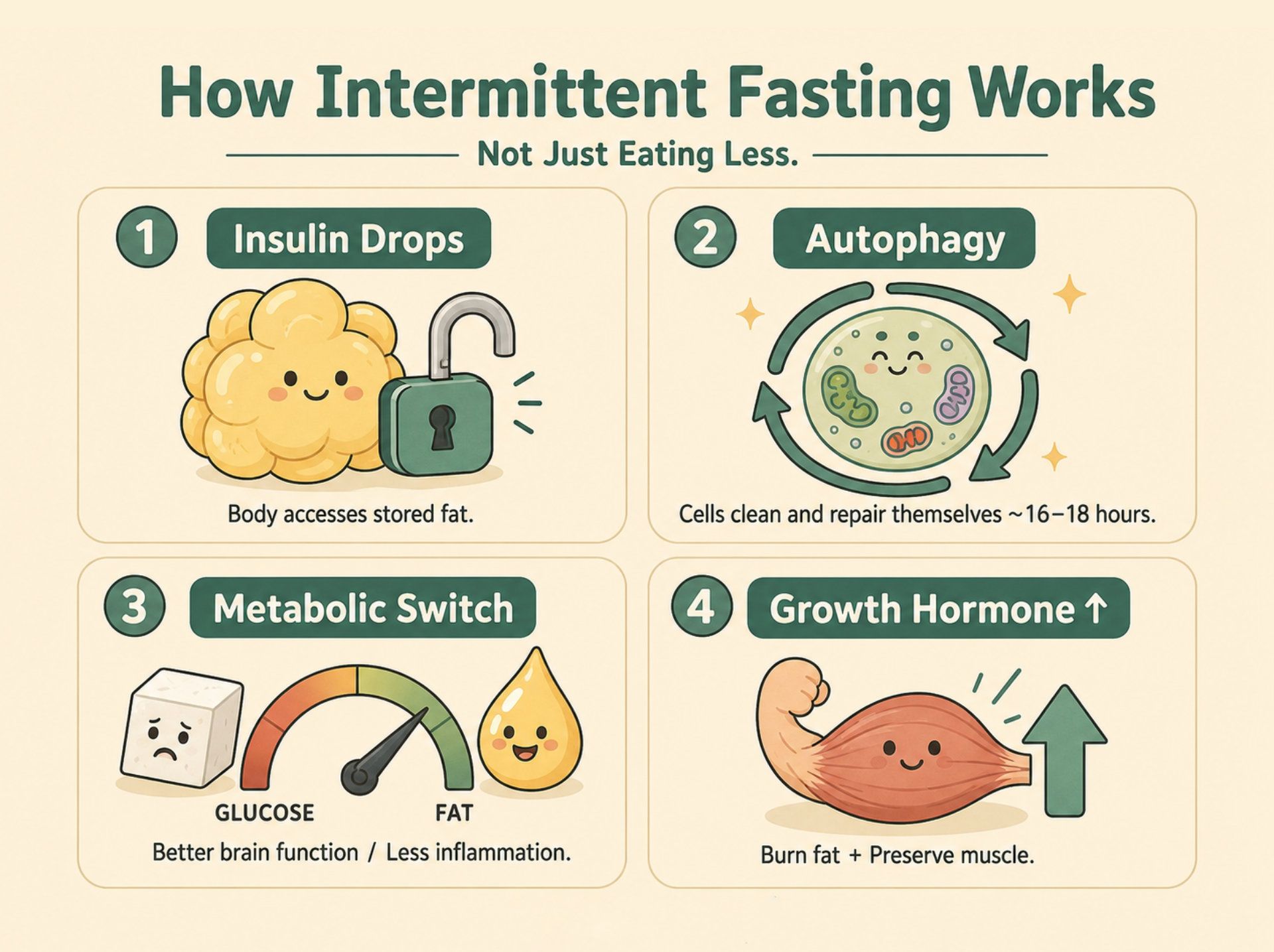
Intermittent fasting is not a diet. It does not tell you what to eat. It tells you when to eat. You cycle between periods of eating and periods of fasting, and during the fasting window, you consume zero calories (water, black coffee, and plain tea are allowed).
The magic happens during the fasting window through several overlapping biological mechanisms:
Insulin Reduction and Fat Access When you eat, insulin rises. Insulin's primary job is to store energy. As long as insulin is elevated, your body prioritises burning incoming food energy and storing excess as fat. When you fast for 12+ hours, insulin drops, allowing your body to access stored fat for fuel. Fasting has been shown to reduce fasting insulin significantly, improving fat burning.
Cellular Cleanup (Autophagy) After approximately 16-18 hours of fasting, your cells activate a process where damaged cellular components are broken down and recycled. Think of it as your body's internal recycling programme. This process reduces oxidative stress, improves cellular function, and may even slow biological ageing.
Metabolic Switching During fasting, your body switches from burning glucose (sugar) to burning fat. This metabolic switch improves brain function, reduces inflammation, and increases stress resistance. Intermittent fasting has broad-spectrum benefits beyond just weight loss.
Hormone Optimisation Fasting significantly increases human growth hormone (HGH) secretion. HGH promotes fat burning and muscle preservation simultaneously, which is why intermittent fasting tends to preserve muscle better than continuous calorie restriction.
The Best Intermittent Fasting Schedules (and Which One Fits Your Life)
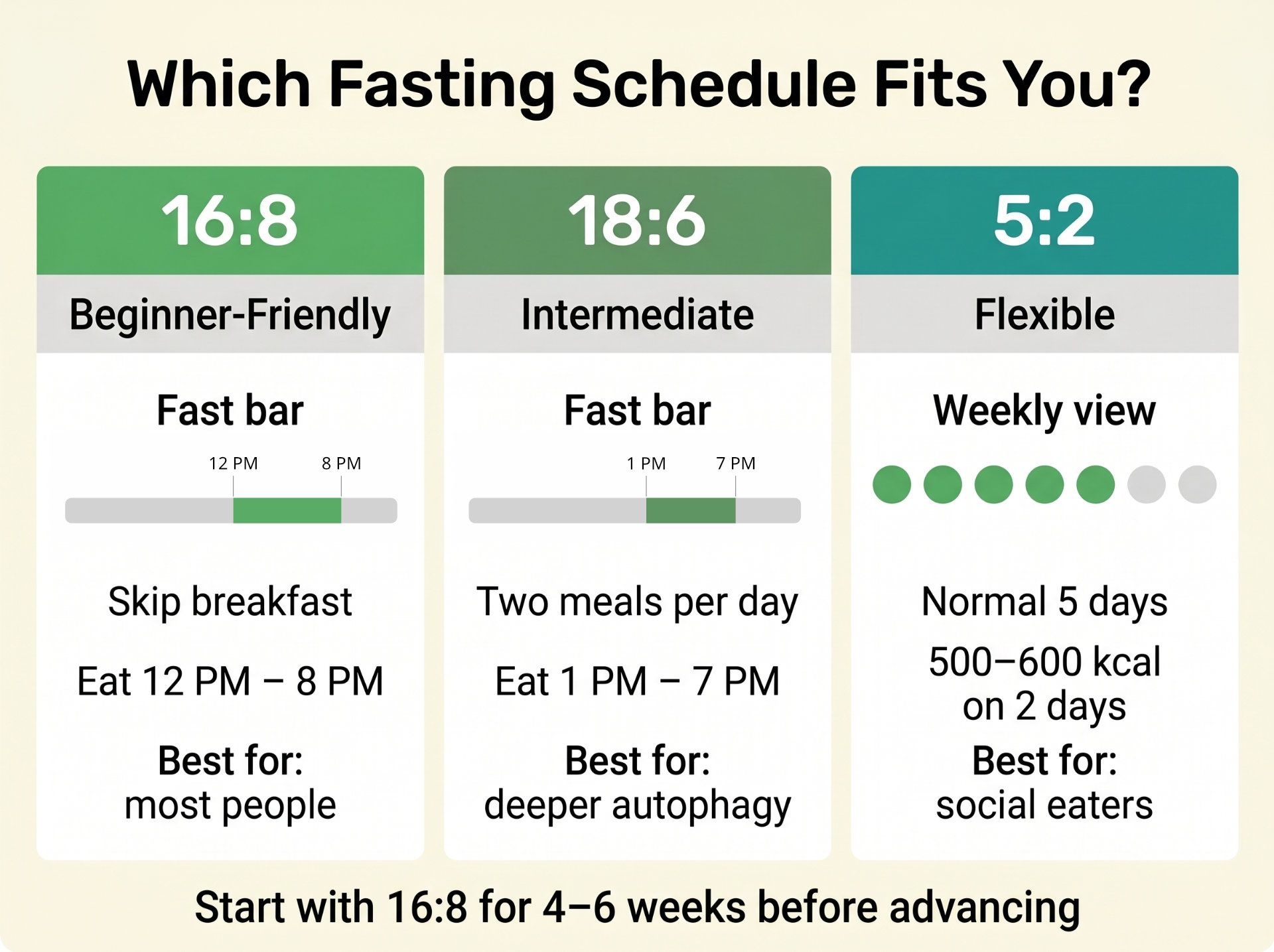
Not all fasting schedules are equal, and the best one depends on your lifestyle, goals, and how your body responds to fasting.
16:8 (The Most Popular and Best Starting Point)
Fast for 16 hours, eat within an 8-hour window. Most people skip breakfast and eat from noon to 8 PM, or 1 PM to 9 PM.
Who it suits: Beginners, office workers, anyone who does not enjoy breakfast, people who want sustainable long-term results without extreme restriction.
The evidence: People following the 16:8 method typically lose weight without consciously counting calories and show improvements in blood pressure.
Thailand schedule example:
12:00 PM: First meal (lunch)
3:00-4:00 PM: Snack or light meal
7:30-8:00 PM: Dinner
8:00 PM to 12:00 PM next day: Fasting window (water, black coffee, plain tea only)
18:6 (Intermediate Level)
Fast for 18 hours, eat within a 6-hour window. Typically eating from 1 PM to 7 PM.
Who it suits: People who have adapted to 16:8 and want deeper cellular cleanup benefits. Those who prefer two meals per day without snacking.
The evidence: Extending the fast to 18 hours maximises the cellular cleanup process and improves insulin sensitivity and blood pressure even more effectively.
Thailand schedule example:
1:00 PM: First meal (substantial lunch)
6:30-7:00 PM: Dinner
7:00 PM to 1:00 PM next day: Fasting window
5:2 (The Flexible Option)
Eat normally 5 days per week. On 2 non-consecutive days, restrict calories to 500-600.
Who it suits: People who hate daily restriction. Social eaters who need flexibility for dinners and events. Those who find daily fasting windows too rigid for Bangkok's social scene.
The evidence: This method produces comparable weight loss and metabolic improvements to daily calorie restriction.
20:4 / OMAD (Advanced, Not Recommended for Most)
Fast for 20 hours with a 4-hour eating window, or One Meal A Day. This is extreme and carries risks including nutrient deficiency, muscle loss, and binge eating tendencies.
Recommendation: Start with 16:8 for at least 4-6 weeks. If you respond well and want deeper benefits, try 18:6. The 5:2 method works best for people with unpredictable social schedules. Skip OMAD.
What to Eat During Your Eating Window
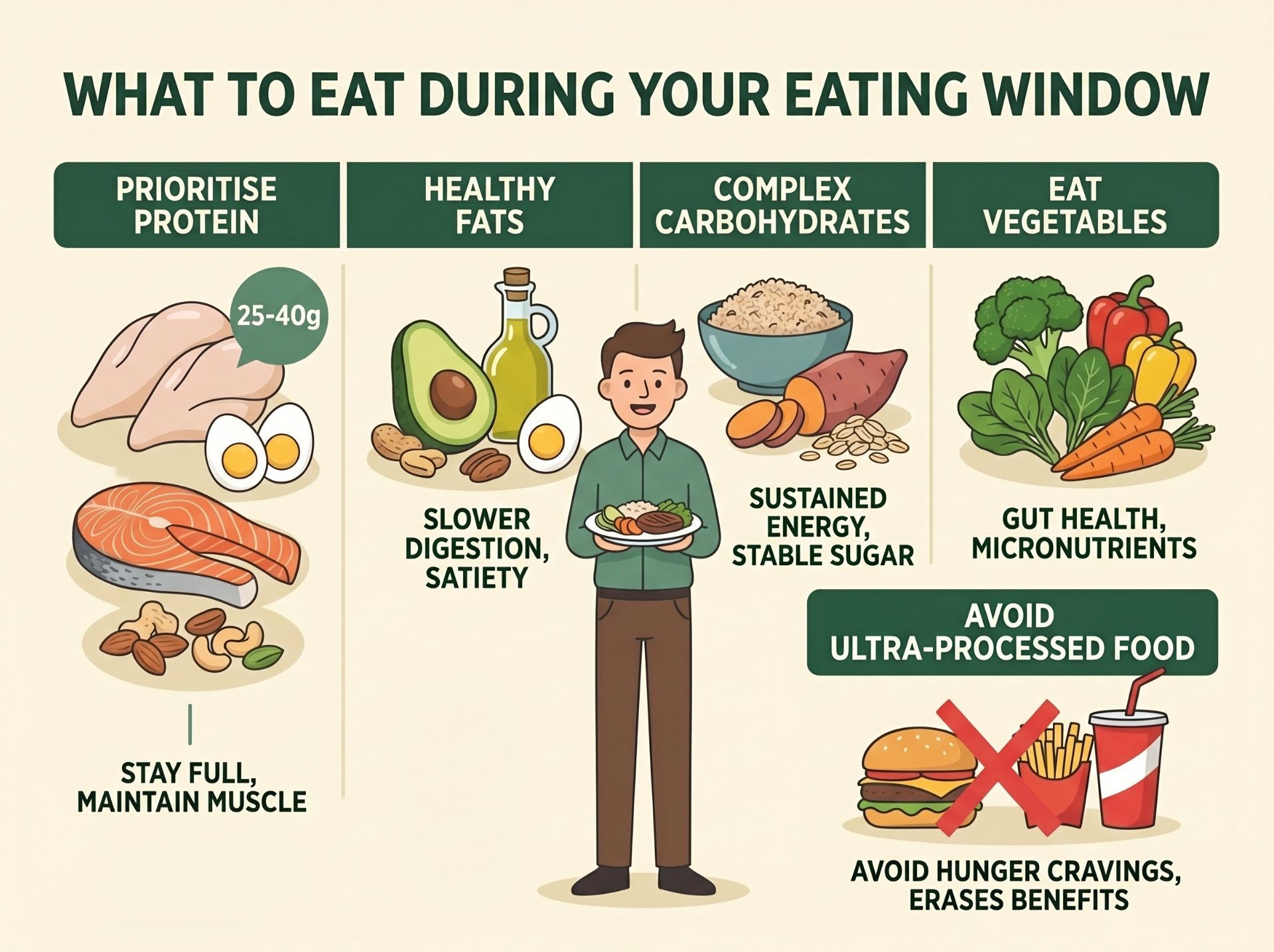
This is where most people fail at intermittent fasting. They assume fasting gives them permission to eat anything during the eating window. It does not. What you eat during your eating window determines whether IF works brilliantly or fails completely.
The Principles
Prioritise protein. Fasting already creates a slight protein synthesis challenge. Every meal in your eating window should contain 25-40g of protein to maintain muscle mass and stay full.
Include healthy fats. Fats slow digestion, extend satiety, and support hormone production. Avocado, olive oil, nuts, fatty fish, and eggs are ideal.
Choose complex carbohydrates. Brown rice, sweet potatoes, oats, and whole grains provide sustained energy without the blood sugar spikes that cause cravings during your fasting window.
Eat vegetables at every meal. Fibre supports gut health, extends fullness, and provides micronutrients that fasting can deplete.
Avoid ultra-processed food. The calorie savings from fasting are easily erased by a single fast food meal or sugary drink. Processed food also increases hunger hormones, making your next fasting window harder.
Intermittent Fasting in Thailand: Unique Challenges and Advantages
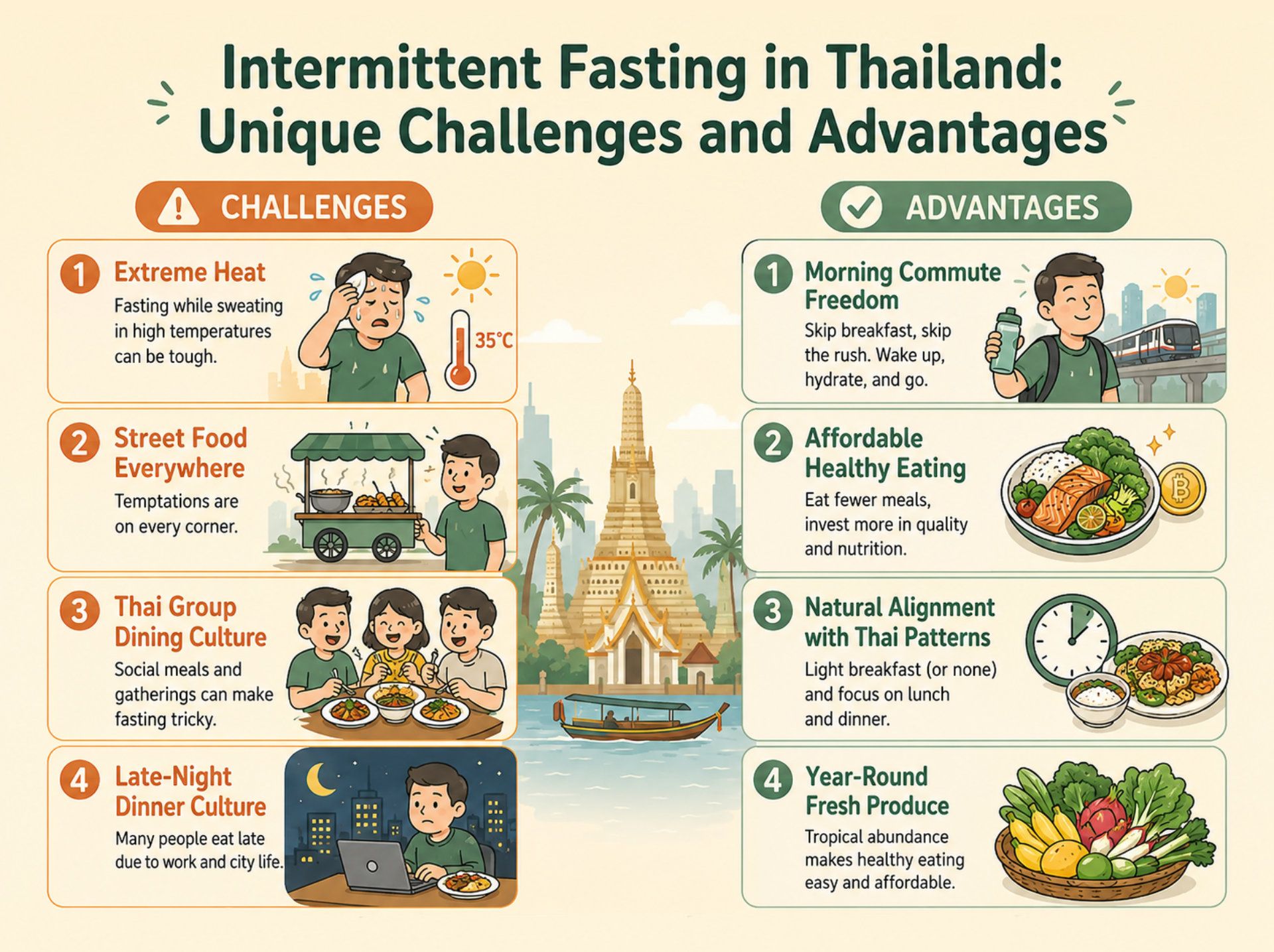
Thailand creates both unique obstacles and surprising advantages for intermittent fasting.
The Challenges
Heat and Dehydration. Fasting in Bangkok's heat is different from fasting in London or New York. You lose more water and electrolytes through sweat, which can cause headaches, dizziness, and fatigue during your fasting window.The fix: Drink 3-4 litres of water daily. Add a pinch of Himalayan salt or electrolyte powder (zero calorie) to your morning water. Black coffee with no sugar or milk is allowed and helps with alertness.
Street Food Temptation. Bangkok has arguably the most tempting street food in the world. Walking past pad kra pao, som tam, mango sticky rice, and grilled skewers during your fasting window requires genuine willpower. Strategy:Plan your walking routes to avoid food vendor clusters during fasting hours. Keep your eating window aligned with your social meal times so you do not feel excluded.
Social Eating Culture. Thai culture revolves around eating together. Colleagues go for lunch at noon. Friends meet for dinner at 8 PM. Business happens over meals. Refusing food can feel socially awkward. Solution: Choose a fasting schedule that accommodates your social meals. The 16:8 window from noon to 8 PM fits most Bangkok social patterns perfectly.
Late-Night Culture. Bangkok's nightlife and late dinner culture can push meals past 10-11 PM. If your eating window ends at 8 PM, this creates friction. Adjustment: Shift your window to 2 PM - 10 PM if you consistently eat late. Consistency matters more than the specific hours.
The Advantages
Morning Commute Freedom. Bangkok's morning commute is brutal. Skipping breakfast eliminates the need to rush through a meal before sitting in traffic for an hour. You can wake up, hydrate, and leave.
Affordable Healthy Eating. By eating 2-3 meals instead of 4-5, you can afford to spend more per meal on quality food. Instead of cheap pad kra pao twice, invest in one properly balanced, nutrient-dense meal.
Natural Alignment with Thai Meal Patterns. Many Thais naturally eat a light breakfast (or skip it) and focus on lunch and dinner as main meals. The 16:8 schedule aligns with this cultural pattern, making it feel less restrictive.
Year-Round Fresh Produce. Thailand's tropical climate means fresh vegetables, fruits, and herbs are available year-round and affordably. Breaking your fast with nutrient-dense whole foods is easier and cheaper here than in many Western countries.
The Meal Plan Advantage for Intermittent Fasting
Intermittent fasting compresses your eating into a shorter window, which means every meal matters more. One poor food choice wastes a larger percentage of your daily nutrition than it would on a normal eating schedule.
Easy Health meal plans remove the decision fatigue:
Lean Plan: Ideal for 18:6 fasting with aggressive fat loss goals.
Balance Plan: Perfect for 16:8 fasting with steady, sustainable weight loss.
Active Plan: For 16:8 fasters who exercise regularly.
Athlete Plan: For serious athletes combining IF with heavy training.
Keto Plan: Synergises naturally with fasting because your body is already in a fat-burning state.
Vegetarian Plan: Plant-based fasting with complete nutrition.
Every meal comes with full macro transparency, zero added sugar, zero MSG, and zero ultra-processed ingredients. You know exactly what you are putting into your compressed eating window.
Common Intermittent Fasting Mistakes (and How to Avoid Them)
Mistake 1: Breaking Your Fast with Sugar or Refined Carbs Your first meal after fasting sets the metabolic tone for the day. Breaking your fast with a sugary coffee, pastry, or plate of white rice triggers a massive insulin spike that crashes within 2-3 hours, causing intense hunger, brain fog, and cravings. Break your fast with protein and healthy fats first.
Mistake 2: Not Eating Enough During Your Window Some people combine intermittent fasting with extreme calorie restriction, eating only 600-800 calories in their 8-hour window. This backfires: metabolism slows, muscle breaks down, energy crashes, and binge eating follows. Fasting benefits come from the timing, not from starvation.
Mistake 3: Ignoring Electrolytes Fasting increases water and electrolyte loss. In Bangkok's heat, this is amplified. Symptoms include headaches, muscle cramps, dizziness, and irritability. Most people blame fasting when the real culprit is dehydration. Solution: 3-4 litres of water daily, a pinch of quality salt in your morning water, and magnesium-rich foods (almonds, pumpkin seeds, dark leafy greens).
Mistake 4: Drinking Calories During the Fast Anything with calories breaks your fast. Thai iced tea, iced coffee with condensed milk, smoothies, coconut water, and even "healthy" juices all contain calories that halt fat burning. Stick to water, black coffee (no sugar/milk), plain tea, and sparkling water.
Mistake 5: Starting Too Aggressively Jumping from eating 5 times a day to an 18:6 schedule is a recipe for failure. Your body needs 1-2 weeks to adapt. Start with 12:12 (skip late-night snacking), move to 14:10 after a week, then 16:8 after two weeks.
Who Should NOT Do Intermittent Fasting
Intermittent fasting is not for everyone. Do not fast if you:
Are pregnant or breastfeeding
Have a history of eating disorders
Have type 1 diabetes or are on insulin medication (consult your doctor first)
Are under 18 years old
Have a medical condition that requires regular food intake
Are underweight
How Long Until You See Results?
Week 1: Adaptation phase. You may experience hunger, mild headaches, and irritability. These symptoms usually pass by day 4-5.
Week 2-3: Fat burning ramps up. Energy levels stabilise. Morning hunger disappears.
Week 4-6: Visible changes begin. Most people report 1.5-3 kg of weight loss. Clothes fit differently.
Month 2-3: Significant body composition changes and improved metabolic markers (like blood sugar).
Month 6+: Long-term metabolic adaptation, better blood pressure, and reduced inflammation.
FAQ
Does intermittent fasting actually work for weight loss?
Yes. It naturally reduces total calorie intake while improving insulin sensitivity and fat burning. However, IF only works if you do not overcompensate by eating excessively during your eating window.
What is the best intermittent fasting schedule for beginners?
The 16:8 method (16 hours fasting, 8 hours eating). Most people skip breakfast and eat from noon to 8 PM, which fits naturally with social patterns. Start gradually: 12 hours fasting for the first week, then increase it slowly.
Can I do intermittent fasting in Thailand's heat?
Yes, but hydration is crucial. Fasting in tropical heat increases water and electrolyte loss. Drink 3-4 litres of water during your fasting window and add a pinch of salt to your morning water.
What should I eat to break my fast?
Break your fast with protein and healthy fats first, not sugar or refined carbohydrates. Ideal options include eggs, grilled chicken or fish, or a protein-rich soup. Avoid breaking your fast with fruit juice or sweetened coffee.
Will intermittent fasting cause muscle loss?
Not if you eat adequate protein and maintain resistance training. Consume enough protein daily and distribute it across your eating window. The increase in growth hormone during fasting actually helps preserve muscle.
Is intermittent fasting safe long-term?
Current evidence supports long-term safety for healthy adults, producing sustained health benefits. Listen to your body: if fasting causes persistent fatigue or disrupted sleep after a 2-week adaptation period, it may not be suitable for you.
Ready to Make Intermittent Fasting Work in Bangkok?
Intermittent fasting compresses your eating window, which means every meal carries more weight. A single bad meal wastes a bigger portion of your daily nutrition than it would on a normal schedule. Easy Health ensures every meal in your window counts.
160+ menu items with full macro transparency
Zero added sugar, zero MSG, zero ultra-processed ingredients
Fresh daily preparation, delivered across Bangkok
Download the Easy Health app:
References
Patterson, R. E., & Sears, D. D. (2017). Metabolic Effects of Intermittent Fasting. Annual Review of Nutrition, 37, 371-393. https://doi.org/10.1146/annurev-nutr-071816-064634
de Cabo, R., & Mattson, M. P. (2019). Effects of Intermittent Fasting on Health, Aging, and Disease. The New England Journal of Medicine, 381(26), 2541-2551. https://doi.org/10.1056/NEJMra1905136
Gabel, K., et al. (2018). Effects of 8-hour time restricted feeding on body weight and metabolic disease risk factors. Nutrition and Healthy Aging, 4(4), 345-353. https://doi.org/10.3233/NHA-170036
Sutton, E. F., et al. (2018). Early Time-Restricted Feeding Improves Insulin Sensitivity. Cell Metabolism, 27(6), 1212-1221. https://doi.org/10.1016/j.cmet.2018.08.011
Barnosky, A. R., et al. (2014). Intermittent fasting vs daily calorie restriction for type 2 diabetes prevention. Translational Research, 164(4), 302-311. https://doi.org/10.1016/j.trsl.2014.07.013
Moro, T., et al. (2016). Effects of eight weeks of time-restricted feeding on basal metabolism, maximal strength, body composition. Journal of Translational Medicine, 14(1), 290. https://doi.org/10.1186/s12967-016-1044-0
Ho, K. Y., et al. (1988). Fasting enhances growth hormone secretion. Journal of Clinical Investigation, 81(4), 968-975. https://doi.org/10.1172/JCI108150
Harvie, M. N., et al. (2018). The effect of intermittent energy and carbohydrate restriction on weight loss and metabolic risk markers. International Journal of Obesity, 42, 759-768. https://doi.org/10.1038/s41366-018-0015-2
Mattson, M. P., et al. (2018). Intermittent metabolic switching, neuroplasticity and brain health. Nature Reviews Neuroscience, 19(2), 63-80. https://doi.org/10.1038/nrn.2017.156