
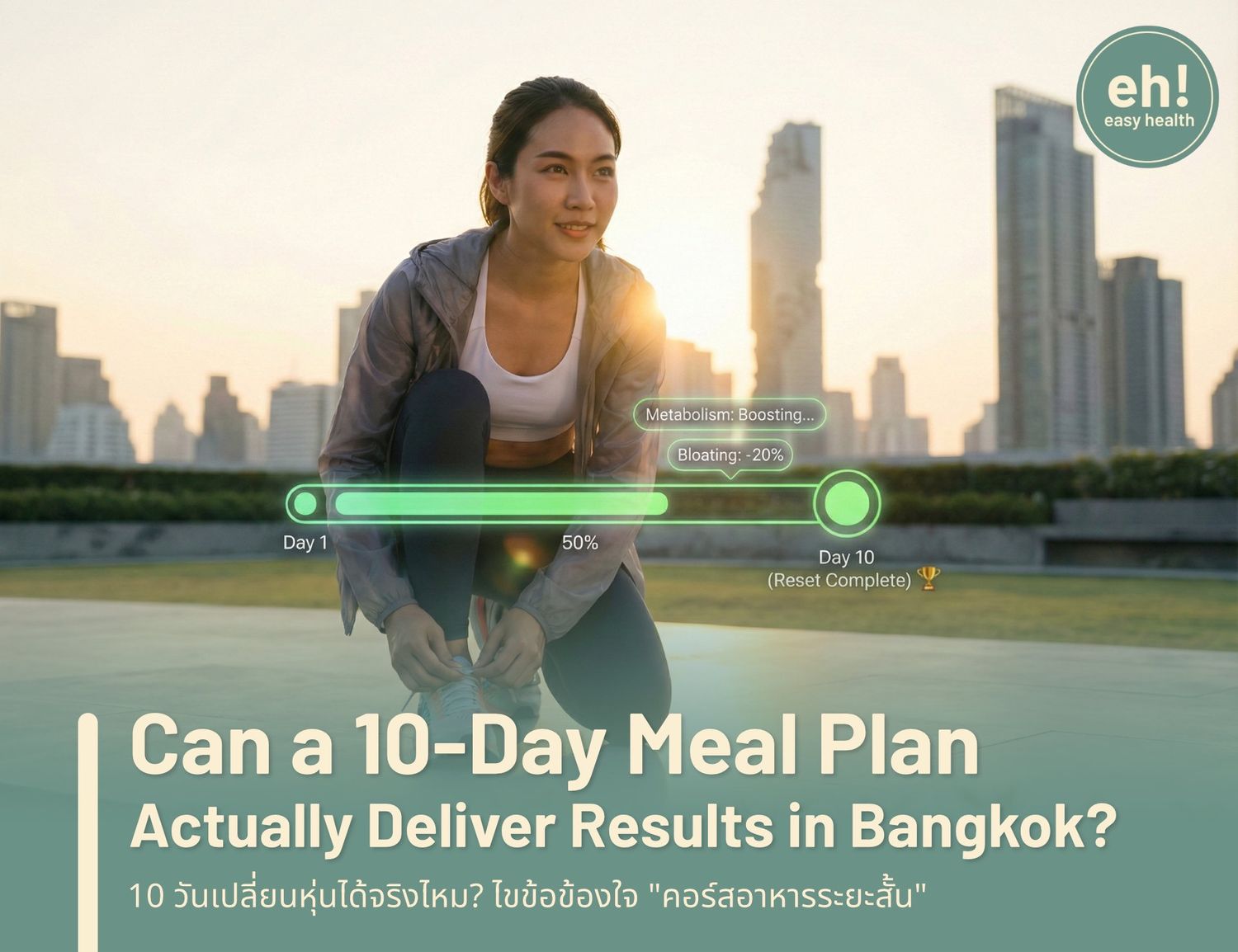
Can a 10-Day Meal Plan Deliver Real Results in Bangkok?
For many people in Bangkok, committing to months of strict eating feels overwhelming. The idea of “forever” becomes the biggest barrier to starting at all. That is where shorter cycles matter.
A 10-day window is long enough to establish routine, regulate portions, and experience early physical changes, yet short enough to feel realistic. It is not about rapid weight loss or unrealistic promises. It is about creating a reset that shows your body what consistent, well-balanced meals actually feel like.
At Easy Health, meal plans are intentionally structured in 10-day cycles to help people break unhealthy patterns, reduce water retention, and regain control without pressure. The goal is progress you can feel and results that motivate the next step.
Below, we explain what realistically happens when you commit to a 10-Day Meal Plan, and why short-term structure often leads to long-term change.
Why a 10-Day Timeframe Is Easier to Commit To
The hardest part of changing how you eat is rarely physical. It is psychological. Long-term promises often feel restrictive before you begin. When the mind hears “never again,” it responds with resistance, anxiety, and eventually overeating.
A short timeframe changes that response. Committing to eating well for 10 days feels achievable rather than intimidating. The goal feels contained, which lowers the mental barrier to starting and reduces the urge to rebel against the plan.
Once the 10-day cycle is completed, two important shifts usually occur:
A sense of achievement: Finishing a defined goal creates motivation and confidence to continue.
Behavioral interruption: The routine of frequent takeaway orders or impulsive snacking has been disrupted, making healthier choices feel less forced.
What Changes in Your Body Over 10 Days
When you move from a typical Bangkok eating pattern built around street food, fried dishes, and sugary drinks to a structured Easy Health Meal Plan (Lean, Balance, or Active), the body tends to respond in a predictable sequence. Below is a realistic timeline of the changes most people experience.
Days 1–3: Initial Reduction in Water Retention
The body begins releasing excess sodium and retains water commonly associated with highly seasoned and processed foods.
Result: As a result, facial puffiness often reduces, jewellery may feel less tight, and the scale can drop by 1 to 2 kg, largely from water weight rather than fat loss.
Days 4–7: Improvements in Energy and Focus
Energy can dip briefly around Day 4 as the body adjusts to lower sugar intake. By Day 6, blood sugar levels typically stabilise, and energy feels more consistent.
Result: The result is steadier energy throughout the day, with fewer post-meal slumps and less reliance on caffeine to feel alert.
Days 8–10: Changes in Taste and Appetite Awareness
This phase often marks the most significant shift, as taste perception begins adapting to lower levels of sugar and salt.
Result: Foods that once tasted bland often begin to register as naturally sweet, while heavily fried or greasy dishes become less appealing. Cravings tend to shift toward fresher, lighter options.
Why Easy Health Uses a 10-Day Meal Plan Structure
Many short-term meal plans fall apart not because the timeframe is too short, but because the eating experience deteriorates quickly. When meals are cooked in bulk and stored for days, texture and flavour decline, making it harder to stay consistent past the first week.
Easy Health takes a different approach:
Daily fresh delivery: Meals are prepared and delivered each morning, so food quality remains consistent throughout the entire 10-day cycle. Fresh textures and balanced flavours make adherence easier day after day.
Focus on nutrient density: Calorie control is paired with ingredients that support recovery and overall health. The aim is not just weight change, but improving how the body responds to food.
Low-pressure commitment: A 10-day cycle is intended as a starting point, not a long-term contract. It allows people to experience structure and results without the mental burden of an open-ended plan.
Is a 10-Day Meal Plan Worth Your Time?
A 10-day meal plan is not a shortcut to dramatic physical transformation, and it is not meant to be. Its real value lies in momentum. Within a short, manageable timeframe, it shows both the body and the mind what consistent, well-balanced eating actually feels like.
For many, the experience is enough to change perspective. Energy improves, digestion feels lighter, and food choices start to make more sense. The plan becomes proof that structure is possible and that healthy eating does not have to feel restrictive.
A common reflection after completing the cycle is simple but telling: people often realise how far from their baseline they had drifted before eating well consistently. That awareness is what turns a short-term plan into the starting point for longer-term change.
Ready to Start Your 10-Day Reset?
A short, focused cycle is often all it takes to regain structure, improve how you feel day to day, and build momentum toward better habits. Commit to 10 days of consistent eating and see how your body responds.
Select your 10-Day Plan in the app:
Android: Download via Google Play Store
References
Healthline. (2024). How Long Does It Take to Break a Habit? Retrieved from https://www.healthline.com/health/how-long-does-it-take-to-form-a-habit
Cleveland Clinic. (2024). Water Retention: Relief and Solutions. Retrieved from https://my.clevelandclinic.org/health/symptoms/21740-bloated-stomach
Harvard Health Publishing. (2024). The sugar detox: How to quit sugar. Retrieved from https://www.health.harvard.edu/heart-health/the-sweet-danger-of-sugar