
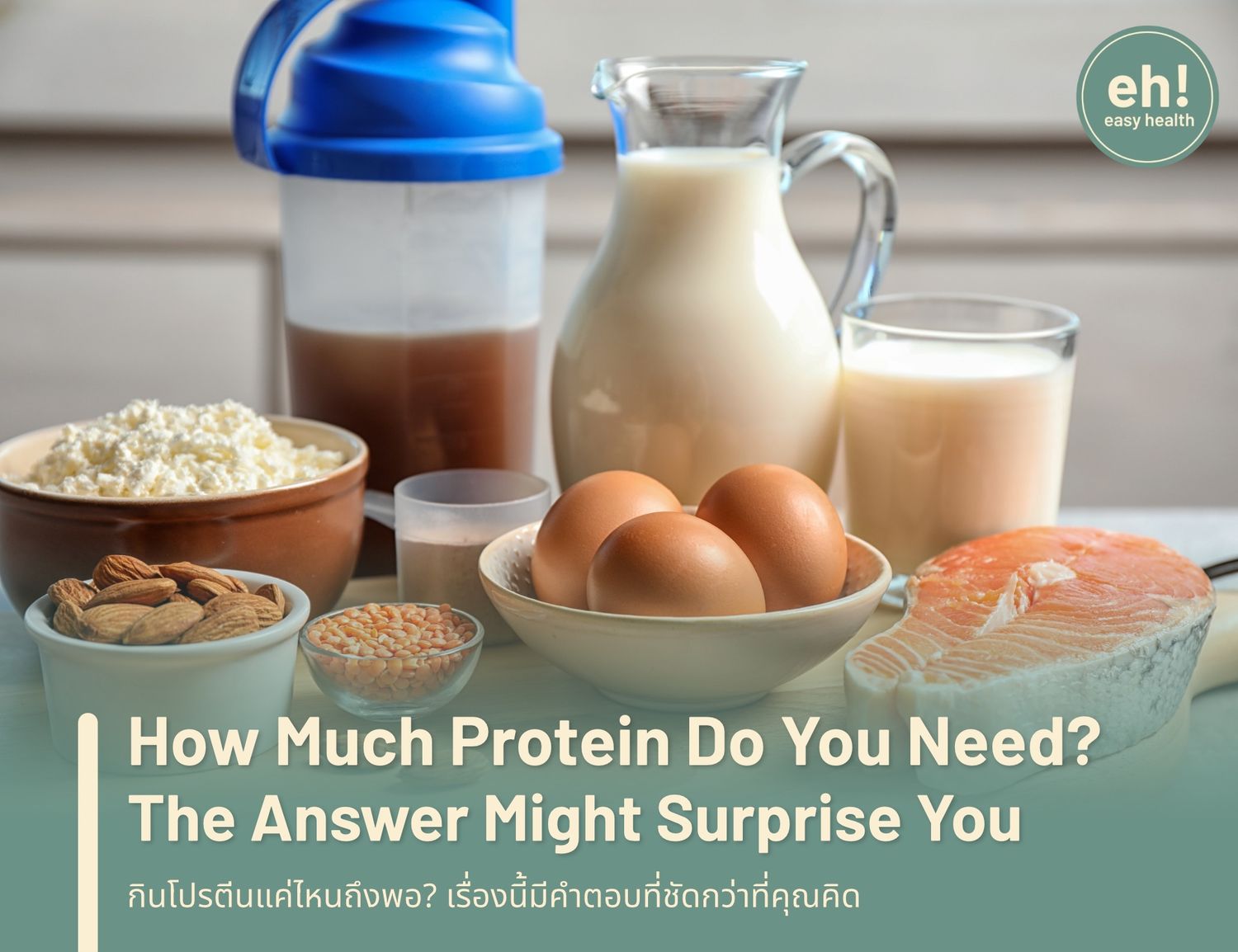
How Much Protein Do You Actually Need? The Answer Might Surprise You
Protein is one of the most talked-about nutrients in fitness circles, yet most people in Bangkok are either eating too little without realizing it or overthinking every meal. Understanding how much protein you need per day is not complicated once you know the basics, and getting it right makes a real difference to your energy, body composition, and how you feel day to day.
Why Protein Matters More Than Just Building Muscle
Protein is not just for gym people. Every cell in your body contains protein. It repairs tissues, builds muscle, carries oxygen through your blood, and keeps your immune system functioning properly. When you do not eat enough of it, your body starts breaking down existing muscle to meet its own needs, which is the opposite of what most people want.
Research published in the American Journal of Clinical Nutrition found that higher protein diets are consistently linked to better satiety, meaning you feel fuller for longer after eating. In Bangkok where street food temptations hit you on every corner, this matters more than people give it credit for.
Protein also has the highest thermic effect of any macronutrient. Your body burns roughly 20 to 30 percent of protein calories just through the process of digesting it, compared to 5 to 10 percent for carbohydrates. This is one reason high-protein diets support fat loss even when total calories are not drastically cut.
How Much Protein Do You Need Per Day? The Science-Backed Numbers
The answer depends on your goals, activity level, and body weight. Here is a practical breakdown
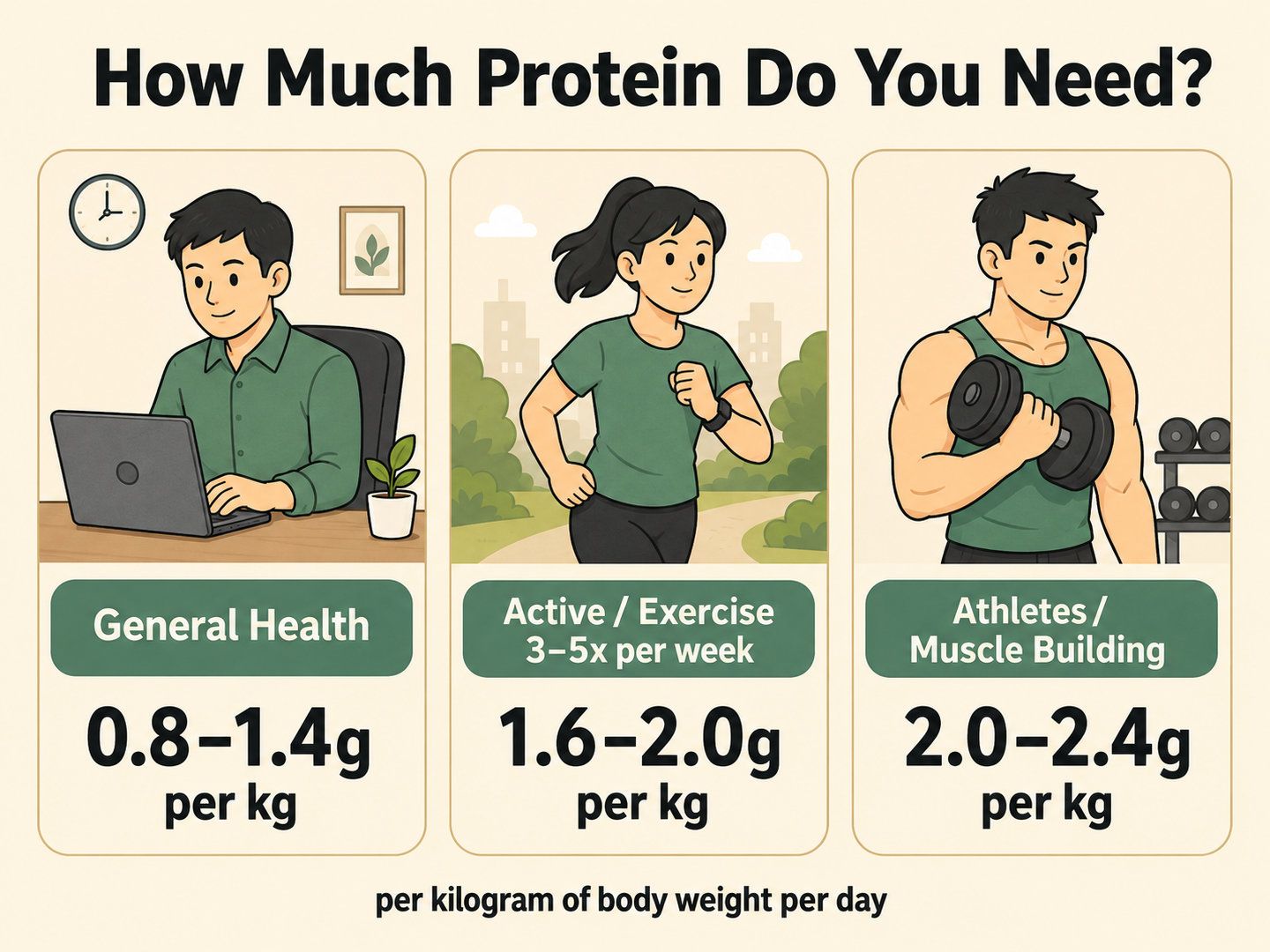
For General Health and Weight Management
The minimum recommended by the WHO is 0.8g of protein per kilogram of body weight per day. For a 65kg person, that is about 52g of protein daily. This is the floor, not the target.
Most nutrition researchers now agree this number is too conservative for most adults, especially those over 30 when muscle loss starts to naturally accelerate. A more realistic target for general health is 1.2 to 1.4g per kilogram per day.
For Active People and Regular Gym-Goers
If you work out 3 to 5 times per week, whether that is lifting, running, cycling, or yoga, your protein needs jump significantly. Current evidence points to 1.6 to 2.0g per kilogram as the optimal range for supporting muscle repair and adaptation.
For a 70kg person who trains regularly, that translates to 112 to 140g of protein per day. Most Thai diets fall short of this, especially for office workers who grab lunch from food courts without much thought about their protein ratio.
For Serious Athletes and Muscle Building
If your goal is actively building muscle, the British Journal of Sports Medicine supports going up to 2.0 to 2.4g per kilogram per day. Beyond that, evidence shows diminishing returns rather than further gains.
People following the Easy Health Athlete Plan at 2,400 to 2,600 calories per day are well-positioned to hit these targets with structured, portion-controlled meals designed specifically for performance goals.
Are You Getting Enough Protein from Thai Food?
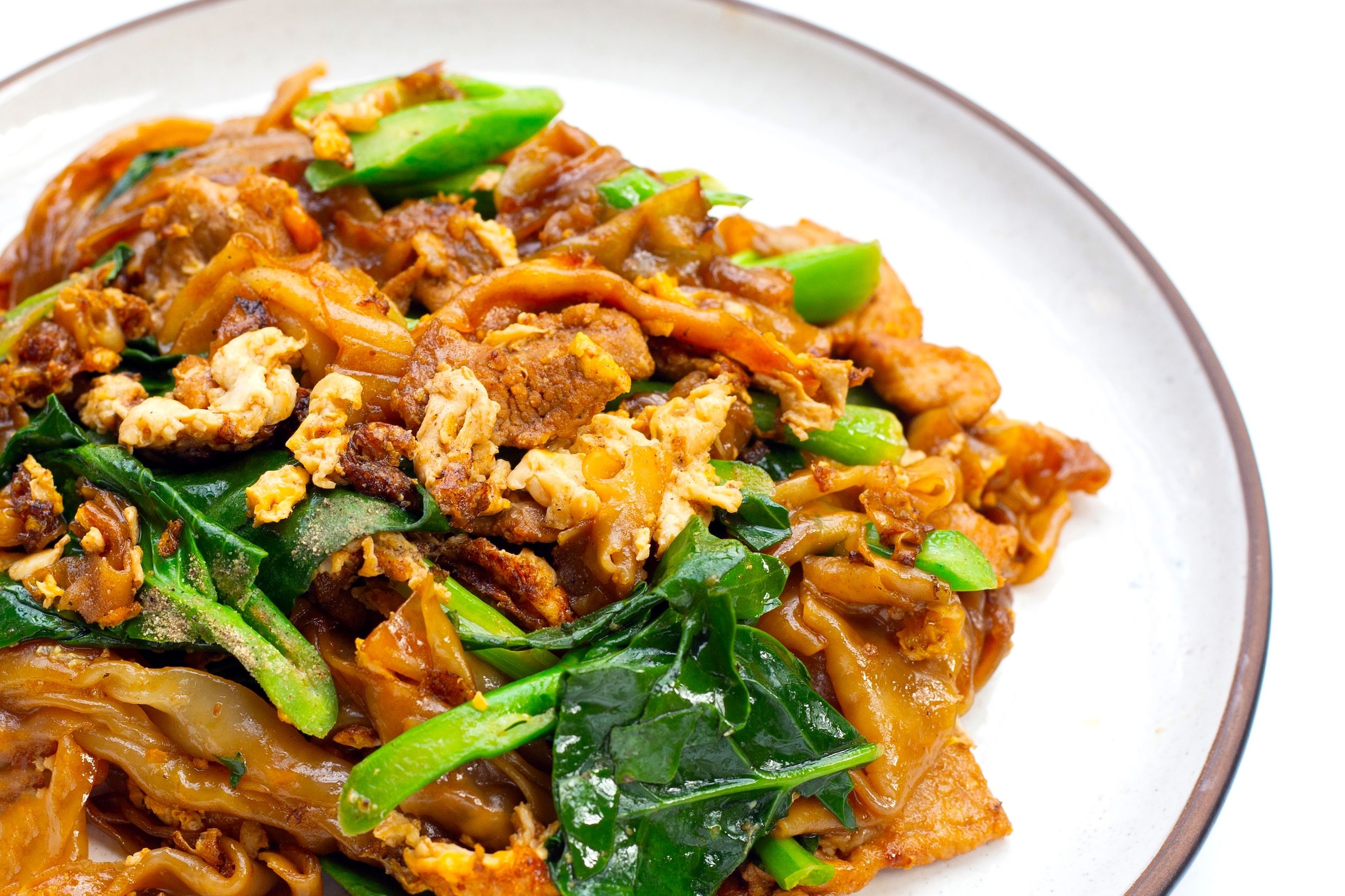
Thai food is genuinely great but it can be sneaky when it comes to protein balance. A plate of pad see ew or khao man gai gives you roughly 20 to 30g of protein but also comes with a significant amount of white rice, high-sodium sauces, and cooking oil that racks up the calorie count fast.
The challenge for most people in Bangkok is not that Thai food is unhealthy by nature. It is that the ratio of carbs to protein in most street food meals skews heavily toward carbs. A typical food court lunch might give you 700 calories but only 20 to 25g of protein, barely enough for someone trying to maintain muscle while sitting at a desk all day.
This is where having access to meals with transparent macro labeling becomes genuinely useful. When you can see that the Free-Range Chicken Fitness Meal at Easy Health delivers 47g of protein at 538 calories, you can make an informed choice rather than guessing at the counter.
High-Protein Foods Worth Building Your Day Around
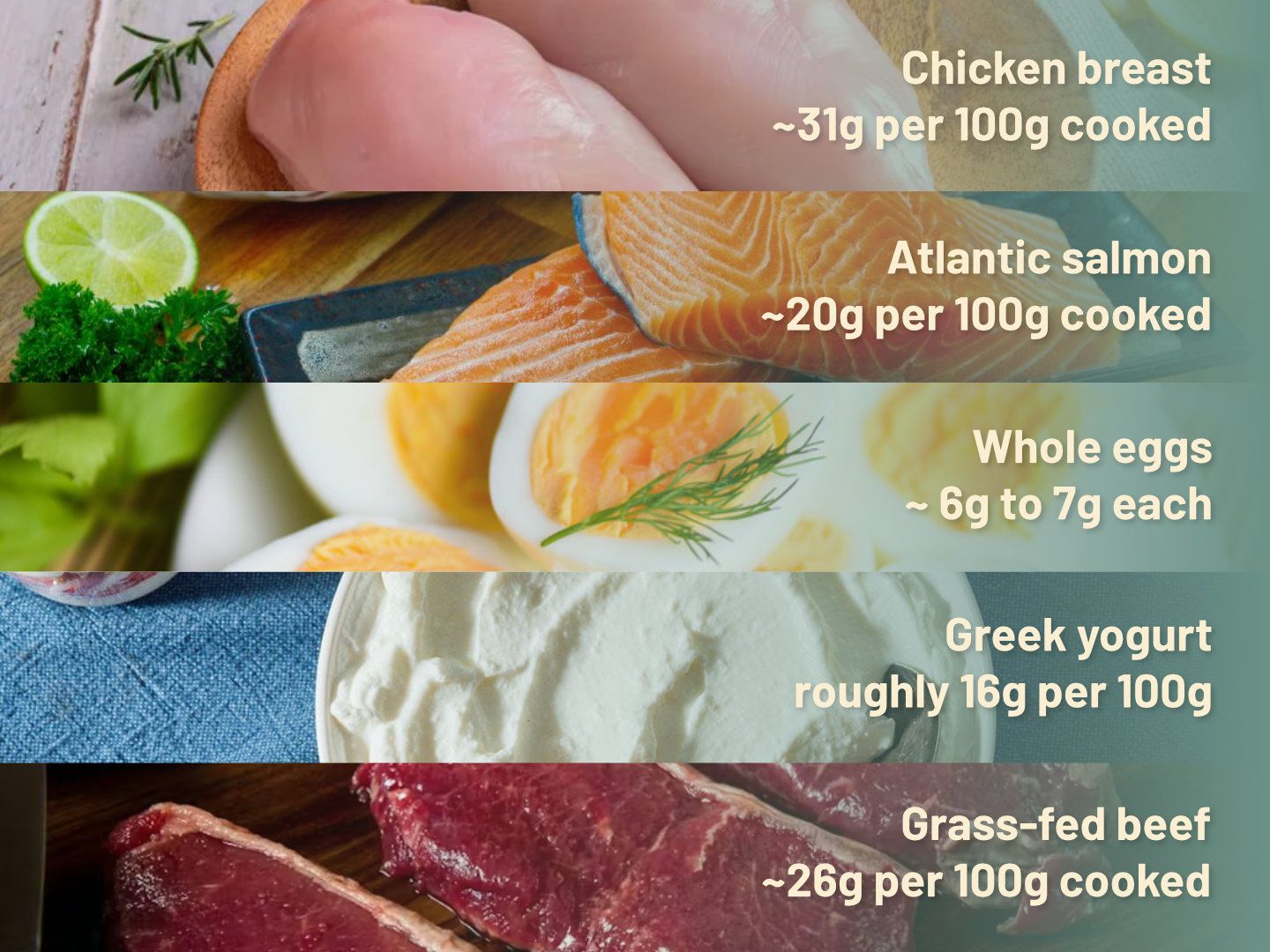
The best sources of complete protein, meaning they contain all essential amino acids, include:
Chicken breast: about 31g per 100g cooked
Atlantic salmon: about 20g per 100g cooked, with omega-3 fatty acids as a bonus
Whole eggs: about 6 to 7g each, with one of the best amino acid profiles in nature
Greek yogurt: roughly 16g per 100g, excellent for breakfast or a post-workout snack
Grass-fed beef: about 26g per 100g cooked
For plant-based eaters, quinoa and edamame are two of the most complete plant proteins available. Tofu is a solid option as well, especially when paired with other plant sources across the day to round out the amino acid profile.
Looking at the Easy Health full menu, some standout high-protein choices include the Ranchero Skillet at breakfast with 56g of protein, the Fajita Bowl at 47g, and the Atlantic Salmon Fitness Meal at 40g. These are real, trackable numbers that make daily planning far less stressful.
How to Spread Protein Throughout Your Day for Better Results
One thing most people get wrong is eating very little protein at breakfast and lunch, then trying to compensate with a heavy dinner. Research on muscle protein synthesis suggests your body responds better to protein spread across 3 to 4 meals of roughly 25 to 40g each, rather than loading most of it in a single sitting.
A practical daily structure for someone targeting 140g of protein might look like this:
Breakfast: Ranchero Skillet or Farmer Omelette (28 to 56g protein)
Lunch: Fajita Bowl or Free-Range Chicken Fitness Meal (47g protein)
Snack: Greek Yogurt with edamame (25g protein)
Dinner: Atlantic Salmon Teriyaki or Free-Range Chicken Teriyaki (38 to 44g protein)
This kind of structure is easy to sustain when your meals are planned out. It becomes much harder when you are making decisions while tired and hungry after a long day stuck in Bangkok traffic.
Frequently Asked Questions
How much protein do I need per day to lose weight?
For weight loss, research consistently recommends 1.2 to 1.6g of protein per kilogram of body weight per day. Higher protein intake during a calorie deficit preserves lean muscle mass while your body burns fat for fuel. For a 60kg person aiming to lose weight, that means targeting around 72 to 96g of protein daily. Skimping on protein during a cut is one of the most common reasons people end up losing muscle alongside fat, which slows metabolism and makes long-term weight management harder.
Can I get enough protein from plant-based foods alone?
Yes, but it requires more intentional planning. Most plant proteins are incomplete, meaning they are low in one or more essential amino acids. By combining different plant sources across the day (rice and legumes, quinoa, edamame, tofu, pea protein) you can fully cover your amino acid profile. Plant-based eaters should generally aim for the higher end of protein recommendations to account for slightly lower digestibility compared to animal sources.
Does protein intake matter if I do not exercise at all?
It still matters, especially as you get older. Muscle loss called sarcopenia starts accelerating around age 30 and becomes a significant health risk after 50. Adequate daily protein intake, even without exercise, helps slow this process and supports better mobility and metabolic health over time. The recommended minimum for sedentary adults remains 1.0 to 1.2g per kilogram of body weight per day.
What happens if I eat too much protein?
In healthy individuals without kidney disease, high protein intake is considered safe. Excess protein beyond what your body uses for tissue repair and synthesis is either used for energy or converted to fat over time. The main practical downside is caloric cost since protein provides 4 calories per gram. Eating far more than your target is not dangerous for most people but it does not deliver extra benefits either.
I am hitting my protein target every day but still not losing weight. Why?
Protein alone does not create a calorie deficit. If you are eating 150g of protein per day but your total calories still exceed what your body burns, fat loss will not happen regardless of the protein number. Protein helps preserve muscle and keeps you full, but total energy balance is still the deciding factor. The most common culprit is underestimating calories in sauces, cooking oil, and drinks, which Bangkok food is full of. Tracking total macros alongside protein, not just protein in isolation, gives you the full picture.
What is the right ratio of protein to carbs for fat loss?
There is no universal ratio that works for everyone, but a practical starting point for fat loss is roughly 30 to 35 percent of daily calories from protein, 35 to 40 percent from carbs, and the remainder from healthy fats. For someone eating 1,600 calories per day, that means around 120 to 140g of protein, 140 to 160g of carbs, and 40 to 50g of fat. What matters more than hitting an exact ratio is that your protein is high enough to protect muscle and your carbs come from quality sources, not refined sugar or white rice at every meal.
Start Hitting Your Protein Targets with the Easy Health App
Knowing your protein target is step one. Actually hitting it consistently every day is where most people struggle, especially with Bangkok's busy pace and unpredictable schedules.
The Easy Health app makes the consistent part easier:
160+ menu items with full macro transparency, so you always know exactly how much protein you are eating
Zero added sugar, zero MSG, zero artificial preservatives across all meals
Multiple high-protein meal plans including the Active Plan (1,800 to 2,000 kcal/day) and Athlete Plan (2,400 to 2,600 kcal/day), both designed to hit your protein targets daily
Fresh daily preparation, never frozen, with delivery across Bangkok and branches in Bangkok and Pattaya for when you want to eat in
Browse the full menu and find the plan that matches your goals at easyhealth.asia/menu.
Download the Easy Health app today:
References
Stokes T, Hector AJ, Morton RW, et al. (2018). Recent Perspectives Regarding the Role of Dietary Protein for the Promotion of Muscle Hypertrophy with Resistance Exercise Training. Nutrients, 10(2), 180. https://doi.org/10.3390/nu10020180
Leidy HJ, Clifton PM, Astrup A, et al. (2015). The role of protein in weight loss and maintenance. American Journal of Clinical Nutrition, 101(6), 1320S-1329S. https://doi.org/10.3945/ajcn.114.084038
Morton RW, Murphy KT, McKellar SR, et al. (2018). A systematic review, meta-analysis and meta-regression of the effect of protein supplementation on resistance training-induced gains in muscle mass and strength in healthy adults. British Journal of Sports Medicine, 52(6), 376-384. https://doi.org/10.1136/bjsports-2017-097608
WHO/FAO/UNU Expert Consultation (2007). Protein and amino acid requirements in human nutrition. WHO Technical Report Series, 935. https://www.who.int/publications/i/item/WHO-TRS-935
Paddon-Jones D, Westman E, Mattes RD, et al. (2008). Protein, weight management, and satiety. American Journal of Clinical Nutrition, 87(5), 1558S-1561S. https://doi.org/10.1093/ajcn/87.5.1558S
Antonio J, Ellerbroek A, Silver T, et al. (2016). A high protein diet has no harmful effects: A one-year crossover study in resistance-trained males. Journal of Nutrition and Metabolism, 2016, 9104792. https://doi.org/10.1155/2016/9104792
Internal links: Easy Health menu | Easy Health meal plans