
How Much Protein Do You Need Per Day? The Easy Calculation Guide
The One Number That Changes Everything About Your Diet
If you could only track one thing about your nutrition, it should be protein.
Not calories. Not carbs. Not fat. Protein.
That might sound like an exaggeration, but the research is clear. Getting enough protein each day is the single most impactful change most people can make to their diet. It helps you lose fat while keeping muscle. It keeps you full so you don't overeat. It supports recovery after exercise. It even helps your body burn more calories through digestion alone.
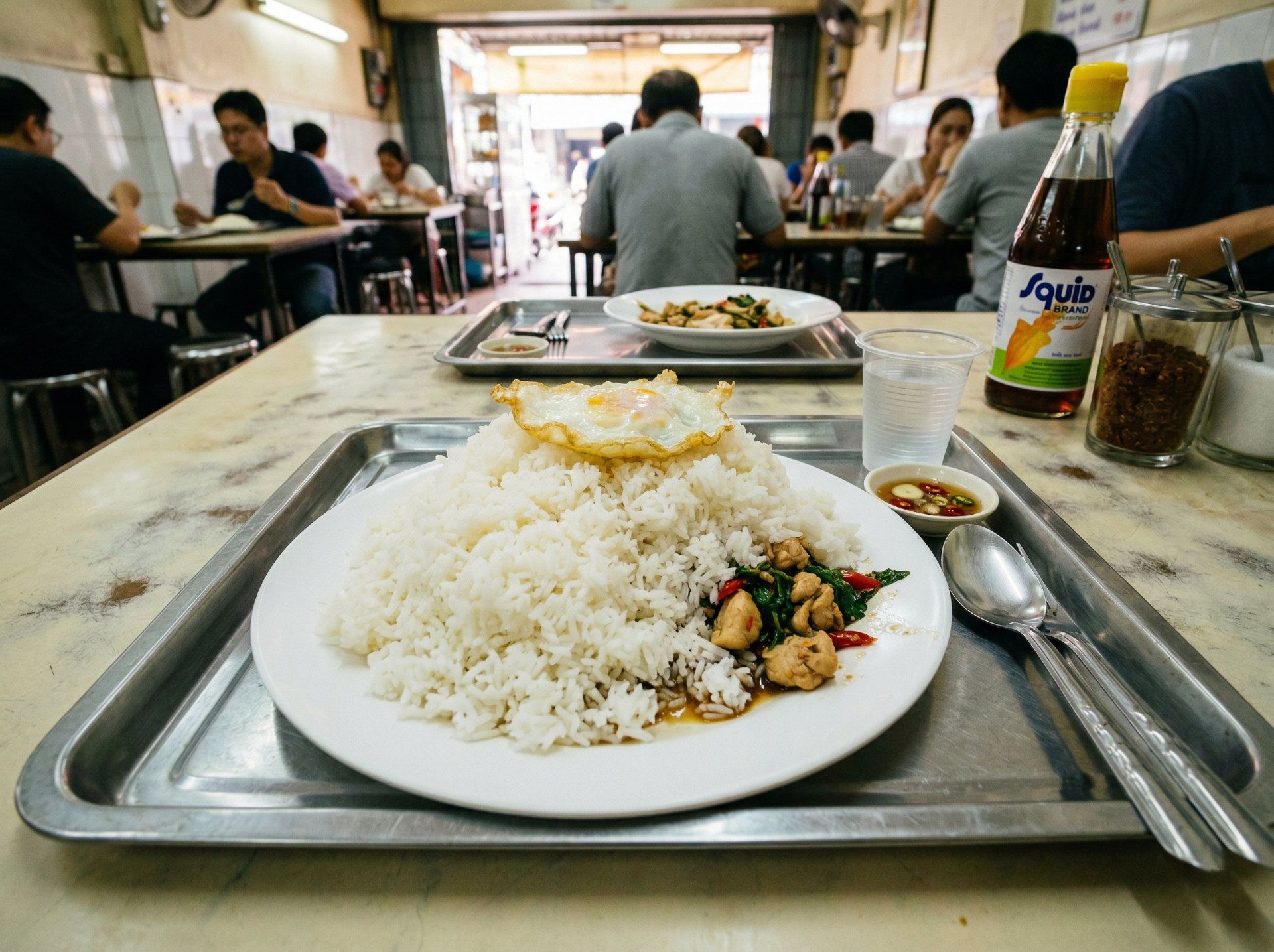
And yet, most people in Thailand are eating far less protein than they need. A typical Thai diet built around jasmine rice, noodles, and stir-fries with a small amount of meat often delivers only 40 to 60 grams of protein per day. For an average adult, that's about half of what the research recommends for optimal health, and less than a third of what you need if you're trying to build muscle or lose fat effectively.
The good news? Figuring out how much protein you need is surprisingly simple. This guide will walk you through the exact calculation, explain why the number matters, and show you how to actually hit your protein target every day without turning your life into a complicated meal prep operation.
Why Protein Matters More Than You Think
Before we get to the numbers, let's understand why protein deserves this much attention. It's not just about building muscle. Protein affects nearly every aspect of how your body looks, feels, and performs.
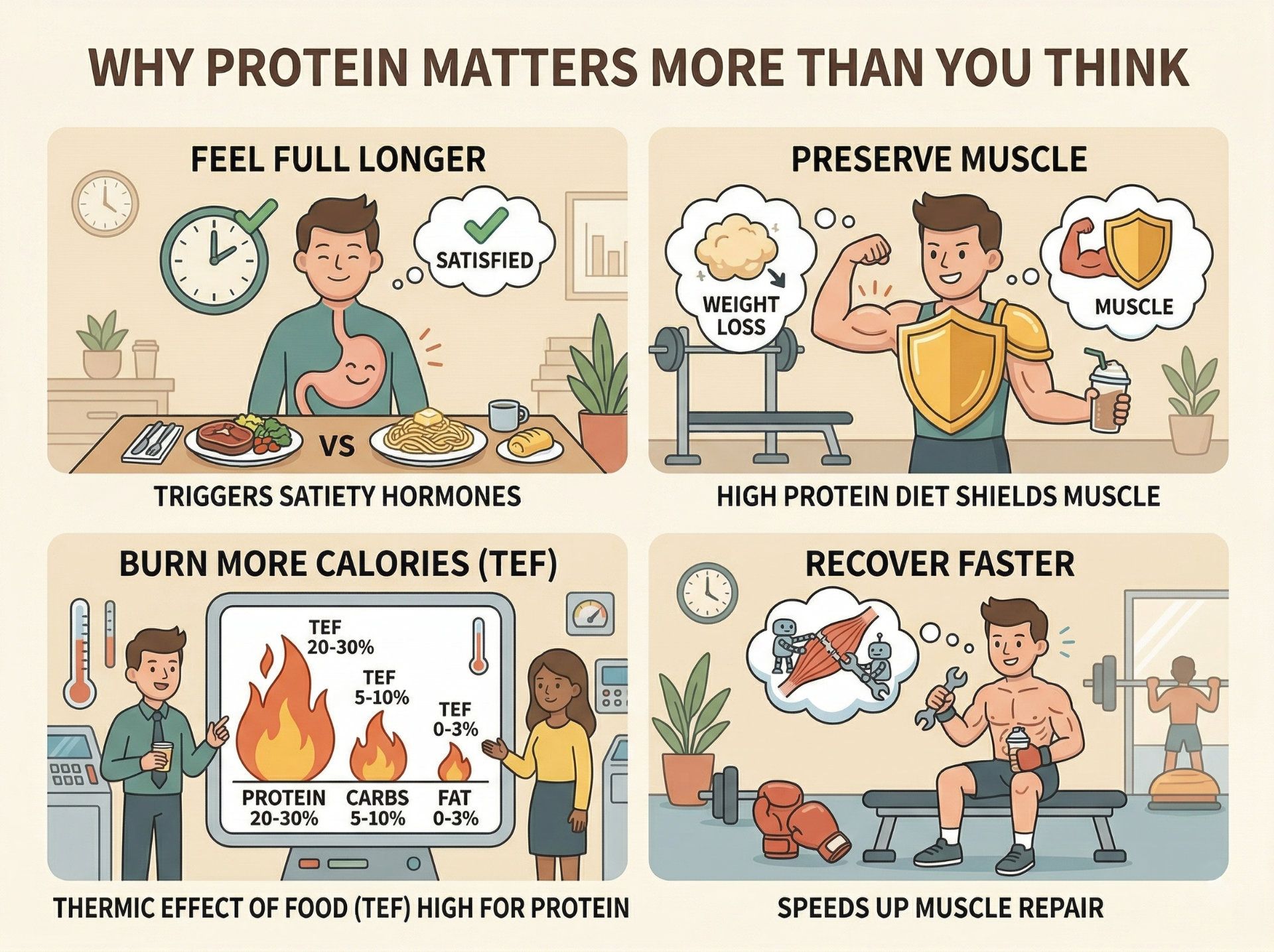
Protein Keeps You Full (Better Than Any Other Macronutrient)
Research published in the American Journal of Clinical Nutrition consistently shows that protein has the highest satiety effect of all three macronutrients. In plain language: protein keeps you feeling full longer than the same number of calories from carbs or fat.
This happens through multiple mechanisms. Protein triggers the release of satiety hormones like GLP-1 and PYY, while simultaneously suppressing the hunger hormone ghrelin. A study from the University of Missouri found that people who ate a high-protein breakfast (35 grams) consumed 400 fewer calories throughout the rest of the day compared to those who ate a standard carb-heavy breakfast.
For anyone trying to lose weight in Bangkok, where delicious food temptation is literally on every corner, this appetite control effect is incredibly valuable.
Protein Preserves Muscle During Weight Loss
Here's something most people don't realize. When you eat in a calorie deficit to lose weight, your body doesn't exclusively burn fat. It also breaks down muscle tissue for energy. The less protein you eat, the more muscle you lose. And losing muscle is a problem because muscle is metabolically active tissue. It burns calories even at rest. Less muscle means a slower metabolism, which means you need to eat even fewer calories to keep losing weight. This is how yo-yo dieting starts.
Research from a landmark 2016 study published in the American Journal of Clinical Nutrition showed that people in a calorie deficit who ate 2.4 grams of protein per kilogram of body weight lost significantly more fat and gained more lean mass than those eating 1.2 grams per kilogram. Both groups ate the same number of calories. The only difference was protein intake.
Protein Burns More Calories During Digestion
Your body uses energy to digest food. This is called the thermic effect of food (TEF). The TEF of protein is 20 to 30%, compared to 5 to 10% for carbs and 0 to 3% for fat. That means if you eat 100 calories of protein, your body uses 20 to 30 of those calories just to digest it. Eat 100 calories of fat, and only 0 to 3 calories are burned during digestion.
Over the course of a day, this difference adds up. A high-protein diet can increase your daily calorie burn by 80 to 100 calories compared to a low-protein diet, even without any additional exercise. It's not a magic trick, but it's a genuine metabolic advantage.
Protein Is Essential for Recovery and Performance
If you exercise regularly, protein is non-negotiable. After a workout, your muscle fibers are damaged (this is normal and how muscles grow). Protein provides the amino acids your body needs to repair and rebuild those fibers, making them stronger. Without adequate protein, your recovery is slower, your progress stalls, and your risk of injury increases.
This matters especially in Bangkok, where many expats, residents, and travelers maintain active lifestyles. Whether you're doing Muay Thai in a hot gym, running in Lumpini Park, cycling on Rama IV, or lifting weights at a fitness center, your protein needs are higher than someone who sits at a desk all day.
The Simple Protein Calculation: How Much Do You Need?
Here's the part you came for. Calculating your daily protein need is straightforward. You only need two things: your body weight in kilograms and your activity level.
Step 1: Know Your Body Weight in Kilograms
If you know your weight in pounds, divide by 2.2 to get kilograms.
Examples:
60 kg (132 lbs)
70 kg (154 lbs)
80 kg (176 lbs)
90 kg (198 lbs)
Step 2: Multiply by the Right Factor for Your Goal
Different goals require different amounts of protein. Here are the evidence-based ranges from peer-reviewed research:
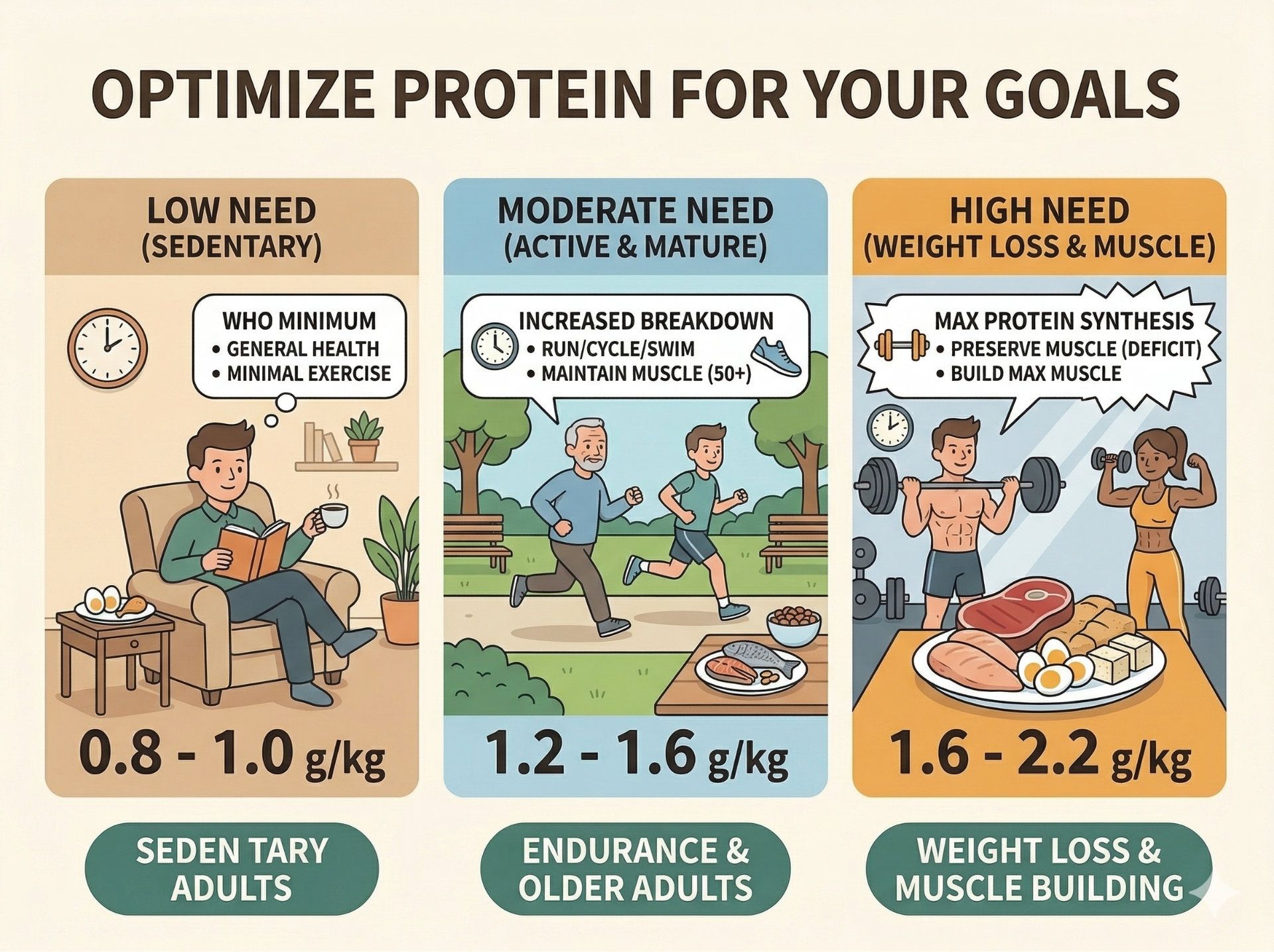
Sedentary adults (minimal exercise, general health)
0.8 to 1.0 grams per kilogram of body weight per day
This is the bare minimum recommended by the World Health Organization
Example: 70 kg person needs 56 to 70 grams per day
Weight loss (calorie deficit, want to preserve muscle)
1.6 to 2.2 grams per kilogram of body weight per day
Higher protein during a calorie deficit is critical to prevent muscle loss
Example: 70 kg person needs 112 to 154 grams per day
Muscle building (strength training, eating at maintenance or surplus)
1.6 to 2.2 grams per kilogram of body weight per day
The International Society of Sports Nutrition recommends this range for maximizing muscle protein synthesis
Example: 70 kg person needs 112 to 154 grams per day
Endurance athletes (running, cycling, swimming, Muay Thai)
1.2 to 1.6 grams per kilogram of body weight per day
Endurance exercise increases protein breakdown, so needs are higher than sedentary levels
Example: 70 kg person needs 84 to 112 grams per day
Older adults (50+ years, maintaining muscle and bone health)
1.2 to 1.6 grams per kilogram of body weight per day
Aging reduces the body's efficiency at using protein for muscle repair, so more is needed
Example: 70 kg person needs 84 to 112 grams per day
Step 3: Pick Your Number and Round It
For most active adults who exercise 3 or more times per week and care about their body composition, a good rule of thumb is simply:
Aim for 1.6 to 2.0 grams of protein per kilogram of body weight per day.
If you only remember one number from this entire article, make it this: multiply your body weight in kilograms by 1.6. That's your minimum daily protein target.
Quick Reference: Daily Protein Targets by Body Weight
50 kg · Weight loss or muscle building: 80 to 110g per day
55 kg · Weight loss or muscle building: 88 to 121g per day
60 kg · Weight loss or muscle building: 96 to 132g per day
65 kg · Weight loss or muscle building: 104 to 143g per day
70 kg · Weight loss or muscle building: 112 to 154g per day
75 kg · Weight loss or muscle building: 120 to 165g per day
80 kg · Weight loss or muscle building: 128 to 176g per day
85 kg · Weight loss or muscle building: 136 to 187g per day
90 kg · Weight loss or muscle building: 144 to 198g per day
Why Most People in Thailand Are Under-Eating Protein
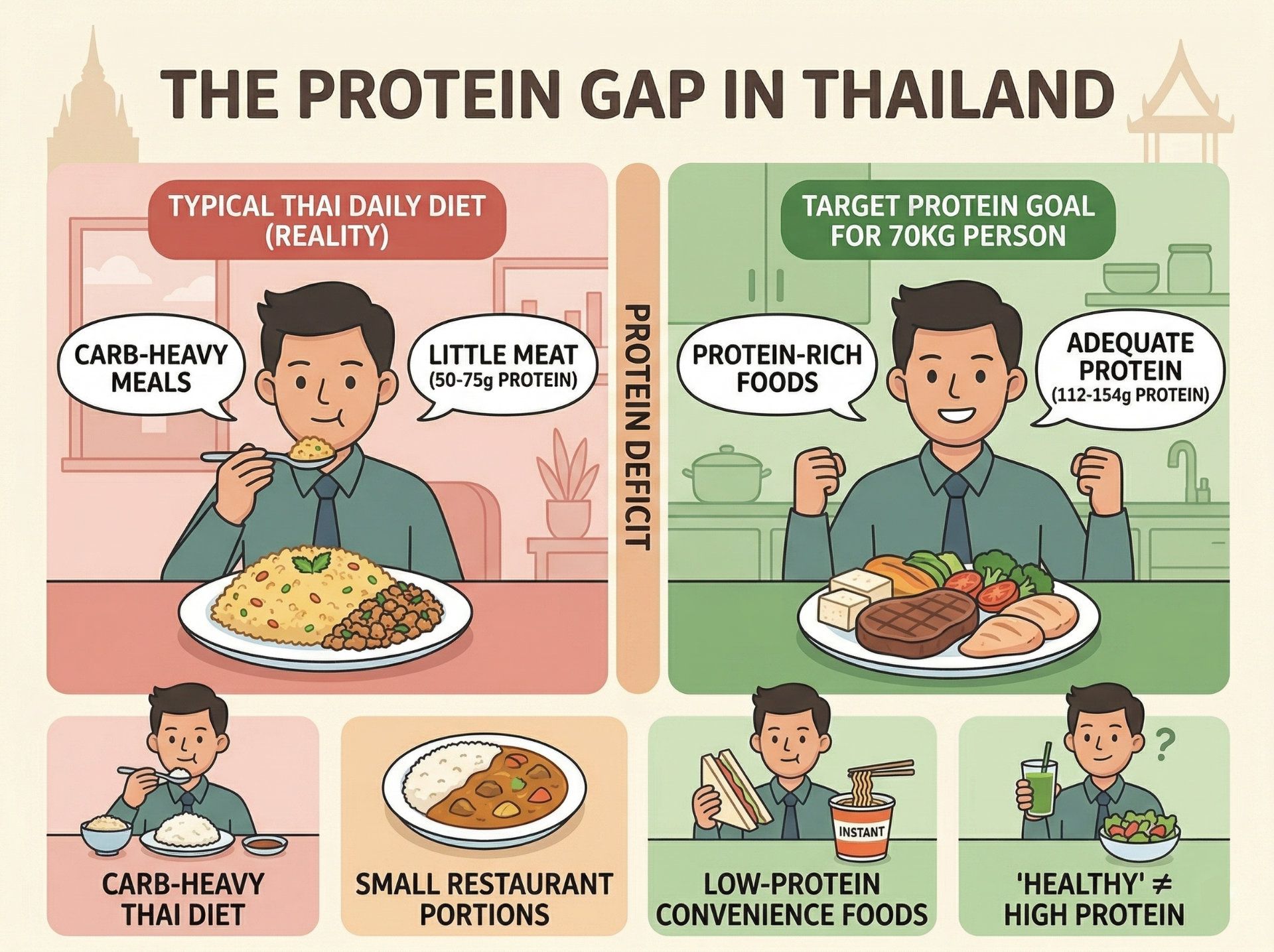
Now that you know your target, let's talk about why hitting it is harder than it sounds, especially in Thailand.
The Typical Thai Diet Is Carb-Heavy
Traditional Thai meals are built around rice. A standard plate of khao pad (fried rice), pad kra pao, or kuay teow (noodle soup) might contain 60 to 80 grams of carbs but only 15 to 25 grams of protein. If you eat three meals like this, you're getting maybe 50 to 75 grams of protein per day. For a 70 kg person who needs 112+ grams, that's a massive shortfall.
Protein Portions at Thai Restaurants Are Small
Walk into most Thai restaurants and order gai pad kra pao (chicken stir-fry with basil). You'll get a generous mound of rice and a relatively small amount of chicken. The protein-to-carb ratio is heavily skewed toward carbs. To get 40 grams of protein from a typical Thai stir-fry, you'd often need to order double meat, which most people don't do.
Convenience Foods Are Almost Always Low-Protein
The breakfast sandwich from 7-Eleven? About 10 to 12 grams of protein. A bowl of rice porridge from a street vendor? Maybe 8 to 15 grams, depending on the toppings. A sweetened coffee and a banana? Virtually zero meaningful protein. Most quick, convenient food options in Bangkok are carb-forward with minimal protein.
"Healthy" Doesn't Always Mean "High Protein"
Many health-conscious choices in Bangkok are actually quite low in protein. A cafe smoothie bowl might have 8 grams of protein but 50 grams of sugar. A fresh salad without added chicken or eggs might have only 5 to 8 grams. A plate of fresh spring rolls looks healthy but delivers mostly carbs from the rice paper wrapper with minimal protein from the shrimp.
How to Actually Hit Your Protein Target Every Day
Knowing your number is step one. Actually eating that much protein consistently is step two. Here's how to make it happen without turning every meal into a science project.
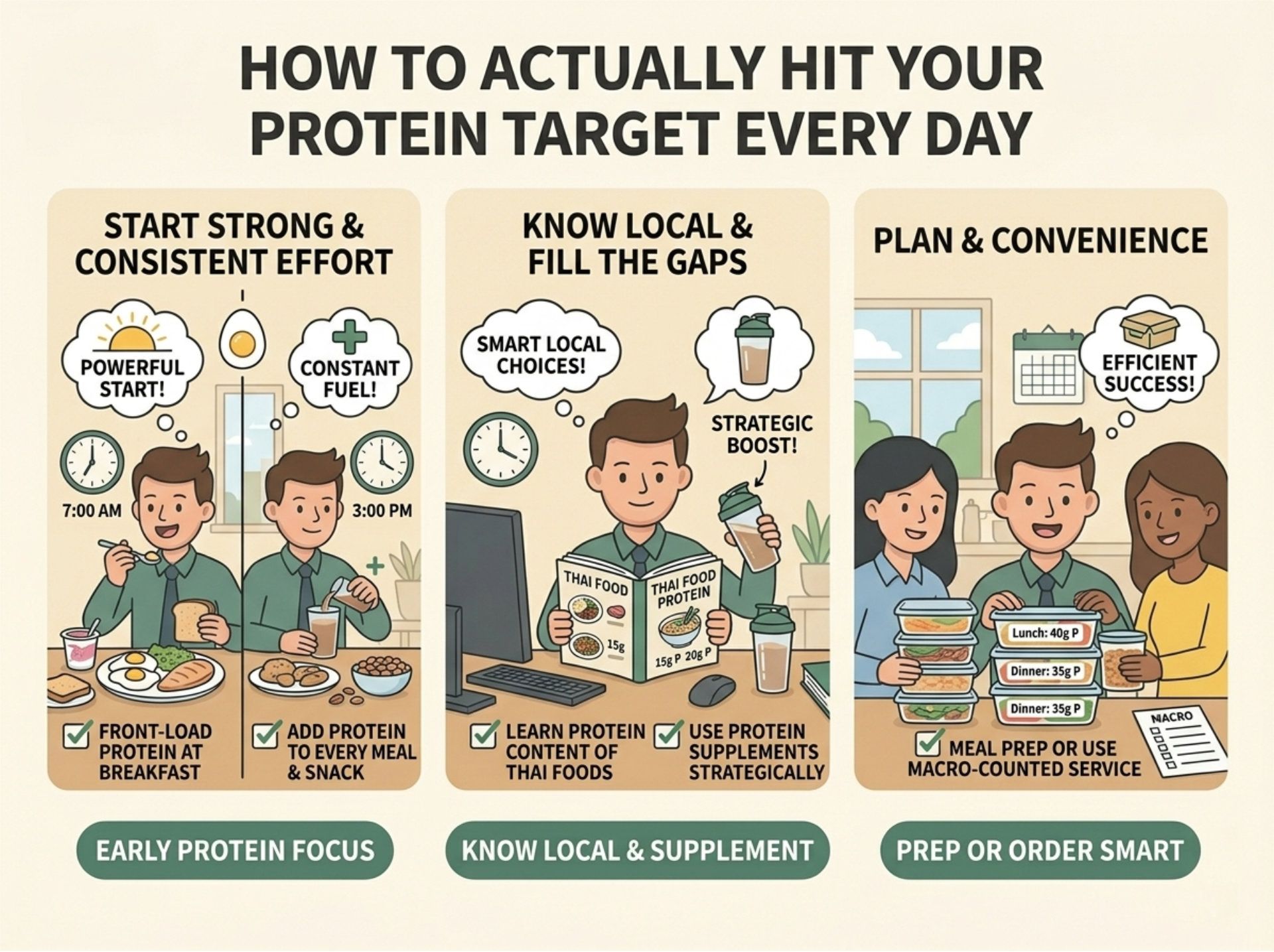
Strategy 1: Front-Load Protein at Breakfast
Most people eat their lowest-protein meal in the morning and their highest-protein meal at dinner. This is backwards. Research shows that distributing protein evenly across meals (rather than loading it all at dinner) leads to better muscle protein synthesis throughout the day.
Aim for at least 30 grams of protein at breakfast. This one change makes hitting your daily target dramatically easier because you're not trying to cram 100+ grams into lunch and dinner.
High-protein breakfast ideas:
3 whole eggs with vegetables (21g protein)
Greek yogurt (200g) with nuts and seeds (20 to 25g protein)
Protein smoothie with whey or plant protein powder (25 to 35g protein)
Omelette with extra egg whites and cheese (30 to 35g protein)
Strategy 2: Add a Protein Source to Every Meal and Snack
Make it a habit: before you eat anything, ask yourself "where's the protein in this meal?" If the answer is "there isn't much," add some.
Eating rice? Add grilled chicken, fish, or tofu
Having a salad? Add boiled eggs, grilled chicken, or Greek yogurt dressing
Snacking on fruit? Pair it with a handful of almonds or a serving of Greek yogurt
Drinking a smoothie? Add a scoop of protein powder
Strategy 3: Learn the Protein Content of Common Thai Foods
You don't need to weigh everything on a food scale. But knowing the approximate protein content of foods you eat regularly makes a huge difference.
High-protein Thai food options (per serving):
Grilled chicken breast (gai yang), 100g: about 31g protein
Steamed fish (pla neung), 100g: about 26g protein
Boiled eggs (2 large): about 14g protein
Thai omelette (kai jeow), large: about 18 to 22g protein
Grilled pork (moo yang), 100g: about 27g protein
Tofu, firm (100g): about 12g protein
Shrimp (100g): about 24g protein
Greek yogurt, plain (200g): about 20g protein
Lower-protein foods that people overestimate:
White rice (1 cup cooked): only 4g protein
Pad Thai (typical serving): about 15 to 20g protein (mostly from noodles and egg, not enough)
Som tam (papaya salad): about 3 to 5g protein
Fresh spring rolls (2 rolls): about 6g protein
Mango sticky rice: essentially 0g protein
Strategy 4: Use Protein Supplements Strategically
Supplements aren't required, but they can be extremely helpful for people who struggle to hit their protein target through food alone. A single scoop of whey protein gives you 24 to 30 grams of protein for about 120 calories. That's one of the most efficient protein-to-calorie ratios available.
Good times to use a protein supplement:
Mixed into morning oats or a smoothie
As a mid-afternoon snack shake
Post-workout within 30 to 60 minutes of training
Before bed if you're still significantly short of your daily target
Protein powder is available at most supplement stores in Bangkok, on Lazada and Shopee, and at many pharmacies. Whey protein isolate is the most researched and generally the best value. Plant-based options (pea, rice, soy) work well for vegetarians and vegans.
Strategy 5: Meal Prep or Use a Macro-Counted Meal Service
If you want to hit your protein target consistently without spending hours in the kitchen, two strategies work exceptionally well: meal prepping on weekends, or using a meal delivery service that shows exact macros for every dish.
Meal prepping works but requires time, containers, fridge space, and the discipline to actually do it every week. For busy professionals in Bangkok, this often starts strong and fades after 2 to 3 weeks.
A macro-counted meal delivery service like Easy Health eliminates the prep entirely. Every dish shows exact protein content, so you can plan your day around hitting your target without any guesswork.
How to Distribute Protein Throughout the Day
It's not just about total daily protein. How you spread it across meals matters too.
Research from the Journal of Nutrition shows that muscle protein synthesis (the process of building and repairing muscle) is maximized when you consume 0.4 to 0.55 grams of protein per kilogram of body weight per meal, across 3 to 4 meals per day. Eating all your protein in one giant dinner is less effective than spreading it evenly.
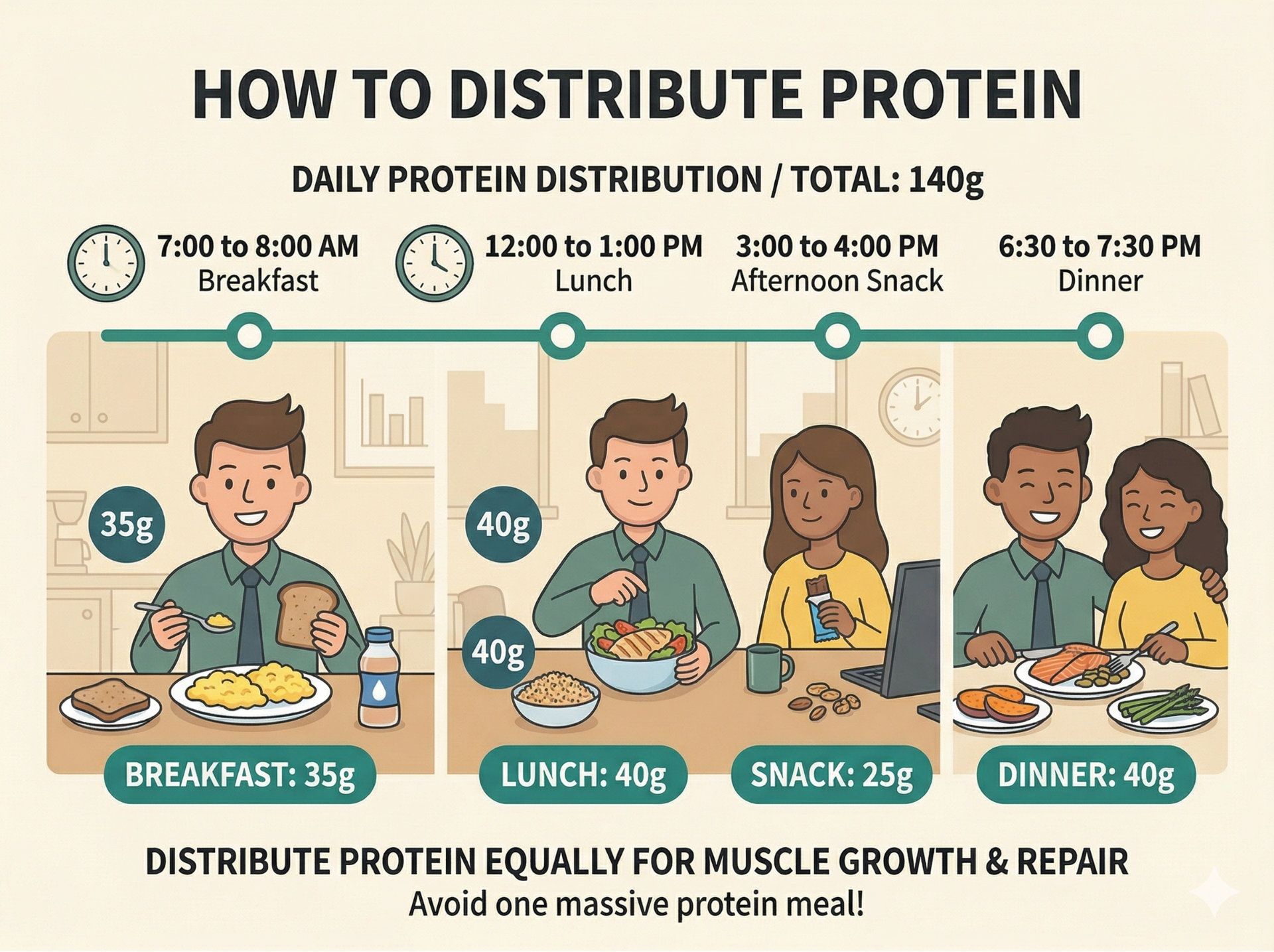
Here's what an optimal protein distribution looks like for a 70 kg person targeting 140 grams per day:
Breakfast (7:00 to 8:00 AM): 35g protein
Example: 3-egg omelette with vegetables and a Greek yogurt on the side
Or: Protein oats with whey powder and peanut butter
Lunch (12:00 to 1:00 PM): 40g protein
Example: Grilled chicken breast (150g) with rice and vegetables
Or: A macro-balanced meal bowl with double protein
Afternoon Snack (3:00 to 4:00 PM): 25g protein
Example: Protein shake with almond milk
Or: Greek yogurt with almonds
Dinner (6:30 to 7:30 PM): 40g protein
Example: Grilled fish (200g) with stir-fried vegetables
Or: Protein-rich curry with extra chicken or shrimp
This pattern gives you 140 grams of protein spread across 4 eating occasions, with each meal delivering enough to trigger muscle protein synthesis. It's also realistic for someone living and working in Bangkok.
Common Protein Myths That Need to Die
There's a lot of misinformation about protein floating around. Let's clear up the biggest myths.
Myth 1: "Too Much Protein Damages Your Kidneys"
This is one of the most persistent myths in nutrition. For healthy adults with no pre-existing kidney disease, there is no evidence that high-protein diets (up to 2.2g/kg/day) cause kidney damage. A comprehensive review published in the Journal of the International Society of Sports Nutrition concluded that protein intakes of up to 2.2g/kg/day are safe for healthy individuals. The confusion comes from the fact that people with existing kidney disease are advised to limit protein. But having kidney disease and being a healthy person eating more protein are completely different situations.
Myth 2: "Your Body Can Only Absorb 30 Grams of Protein Per Meal"
This is a misunderstanding of the research. Your body can absorb far more than 30 grams of protein per meal. What the research actually shows is that muscle protein synthesis peaks at around 0.4 to 0.55g/kg per meal (about 25 to 40 grams for most people). Eating more protein than this in a single meal doesn't go to waste. Your body still absorbs and uses it for other functions including energy, immune function, hormone production, and enzyme activity. However, spreading protein across multiple meals does optimize muscle protein synthesis specifically.
Myth 3: "You Need to Eat Protein Within 30 Minutes of Your Workout or It's Wasted"
The "anabolic window" myth has been heavily debunked. While eating protein after a workout is beneficial, the timing window is much larger than 30 minutes. Research shows that consuming protein anywhere within 2 hours of your workout supports recovery effectively. What matters far more than exact timing is total daily protein intake. If you're hitting your daily target, the specific timing matters much less.
Myth 4: "Plant Protein Is Inferior to Animal Protein"
Plant proteins are sometimes called "incomplete" because individual plant sources may be lower in certain amino acids. However, research published in the American Journal of Clinical Nutrition shows that as long as you eat a variety of plant protein sources throughout the day (legumes, tofu, tempeh, nuts, seeds, whole grains), the amino acid profiles complement each other. You don't even need to combine them in the same meal. Vegetarians and vegans can absolutely hit their protein targets and build muscle effectively. It just requires more intentional planning.
Myth 5: "Women Shouldn't Eat Too Much Protein or They'll Get Bulky"
This myth persists despite being completely false. Building significant muscle mass requires years of progressive heavy training, a calorie surplus, and favorable hormonal conditions. Simply eating adequate protein will not make women "bulky." What it will do is help preserve lean muscle during weight loss, improve body composition, strengthen bones, and support overall health. Most female fitness professionals and athletes eat 1.6 to 2.0g of protein per kilogram of body weight daily.
How Easy Health Makes Hitting Your Protein Target Simple
Let's be realistic. Knowing you need 120 to 150 grams of protein per day is one thing. Actually getting that much, every single day, while living and working in Bangkok? That's the hard part.
Most people fall short on protein not because they don't know it's important, but because the food that's easiest to access, whether from street vendors, convenience stores, or delivery apps, is carb-heavy and protein-light. By the time you realize you're 50 grams short at 8 PM, your options are limited.
This is where Easy Health changes the game.
Every meal from Easy Health is prepared fresh daily with zero added sugar and no MSG. Every single dish shows exact calories, protein, carbs, and fat. When you're tracking protein, this transparency is everything. No guessing. No estimating. No wondering if the restaurant used mostly rice and just a little chicken.
Here are Easy Health meals that are packed with protein:
Ranchero Skillet · Bold, savory, and loaded with protein. 589 kcal, 56g protein, 27g carbs, 29g fat. 289 THB. One meal covers nearly half the daily protein target for most people. Tagged: High Protein.
Power Fit Combo · Soup + main dish + smoothie in one order. 1,043 kcal, 83g protein. 319 THB. If you need a single meal that delivers massive protein, this is it.
Farmer Omelette · Hearty omelette with mushrooms, peppers, and onions. 385 kcal, 33g protein, 13g carbs, 23g fat. 229 THB. A protein-dense breakfast that keeps you full for hours. Tagged: High Protein.
Pad Thai · Clean version of the Thai classic. 615 kcal, 39g protein. 135 THB. Proof that Thai food and high protein can coexist.
Morning Omelette · Fluffy, protein-packed omelette with fresh vegetables and herbs. 366 kcal, 28g protein, only 3g carbs, 27g fat. 225 THB. Tagged: Keto, High Protein.
Hearty Breakfast Wrap · Scrambled eggs, fresh vegetables, and savory sauce wrapped up and ready to eat. 375 kcal, 27g protein. 179 THB. Perfect high-protein option for busy mornings.
Let's put this in context. If you order a Farmer Omelette for breakfast (33g protein), a Pad Thai for lunch (39g protein), and a Ranchero Skillet for dinner (56g protein), your total protein for the day is 128 grams. Add a Greek yogurt snack in the afternoon (20g) and you're at 148 grams. That's enough for a 70 to 80 kg person doing regular exercise, all without any meal prep or calorie counting on your part.
For a fully structured approach, the Easy Health Meal Plans handle every meal:
Active Plan (1,800 to 2,000 kcal/day) at 3,499 THB / 5 days. Balanced macros with adequate protein for people who train 3 to 5 times per week.
Athlete Plan (2,400 to 2,600 kcal/day) at 4,799 THB / 5 days. High-protein, high-energy meals designed for intense training.
Lean Plan (800 to 1,000 kcal/day) at 1,899 THB / 5 days. Calorie-controlled but protein is preserved to prevent muscle loss during aggressive fat loss.
Balance Plan (1,400 to 1,600 kcal/day) at 3,399 THB / 5 days. Sustainable daily nutrition with balanced macros.
Keto Plan (Low-Carb / High-Fat) at 3,499 THB / 5 days. Moderate protein with high fat for people on ketogenic diets.
Vegetarian Plan (1,400 to 1,600 kcal/day) at 2,799 THB / 5 days. Plant-based meals with adequate protein from tofu, legumes, and dairy.
The beauty of using a service like Easy Health for protein tracking is that the math is already done. You pick your meals, add up the protein, and you know exactly where you stand. No food scale. No MyFitnessPal entries. No guessing at portion sizes.
Signs You're Not Eating Enough Protein
Not sure if you're under-eating protein? Here are the most common signs.
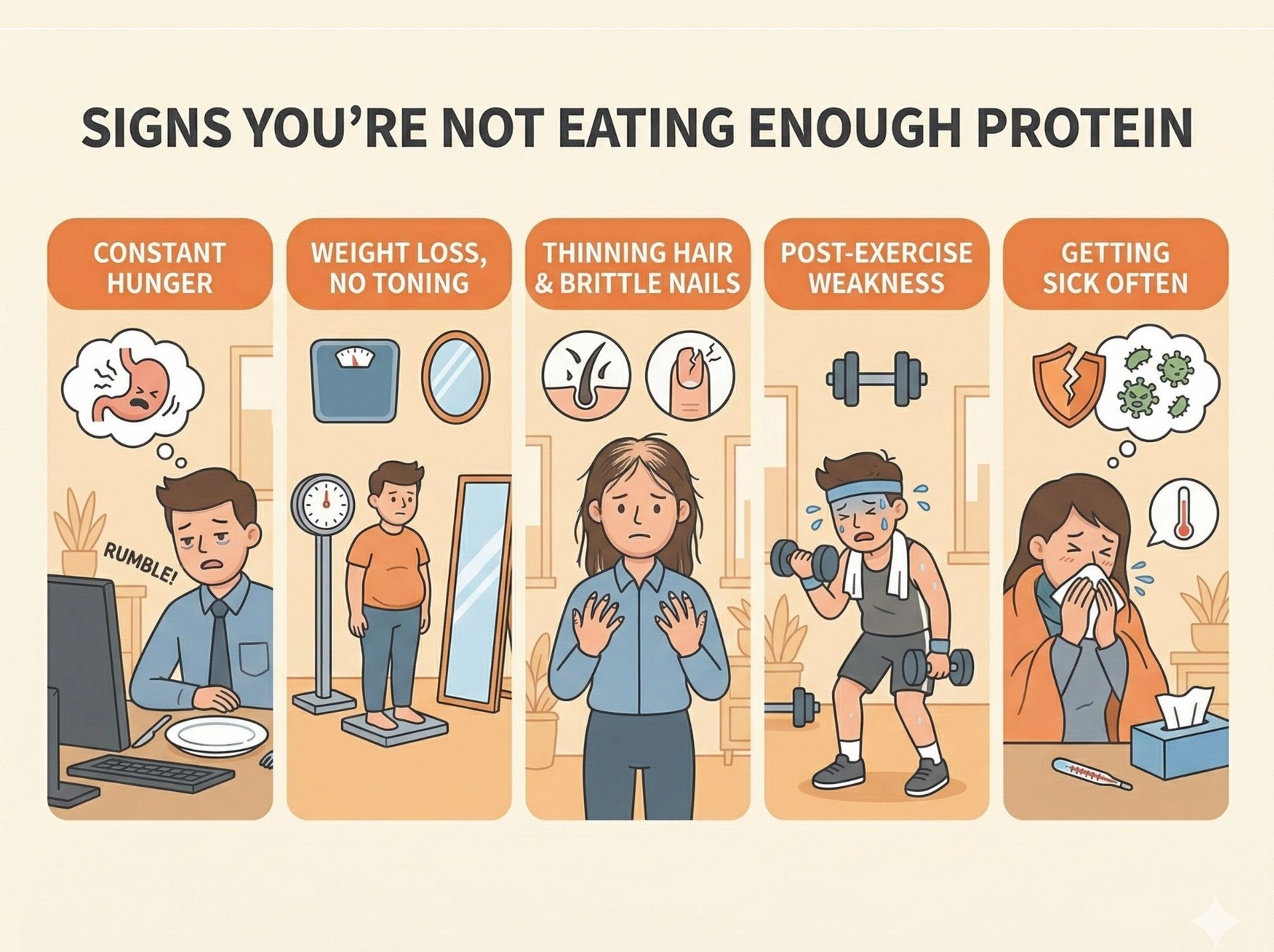
You're always hungry between meals. If you eat a full meal and feel hungry again within 2 hours, your protein intake is likely too low. Protein is the most satiating macronutrient. When it's missing, no amount of rice or bread will keep you full.
You're losing weight but not looking more toned. If the scale is going down but you don't look any leaner in the mirror, you might be losing muscle along with fat. This happens when protein is too low during a calorie deficit.
Your hair is thinning or your nails are brittle. Hair and nails are made of protein (keratin). When your body doesn't get enough protein from food, it prioritizes vital organs and diverts resources away from "non-essential" things like hair and nails.
You feel weak despite regular exercise. If you're training consistently but your strength isn't improving, or you feel unusually sore for days after workouts, inadequate protein for recovery is a likely culprit.
You get sick frequently. Your immune system relies on amino acids from protein to produce antibodies. Chronic low protein intake can weaken immune function, making you more susceptible to infections, especially relevant in Bangkok's urban environment.
FAQ
How much protein do I need per day to lose weight?
For weight loss, aim for 1.6 to 2.2 grams of protein per kilogram of body weight per day. For a 70 kg person, that's 112 to 154 grams daily. This amount is significantly higher than the basic minimum (0.8g/kg) because during a calorie deficit, your body is more likely to break down muscle for energy. Higher protein intake protects your muscle mass, keeps your metabolism running efficiently, and helps you stay full so you eat less overall.
Is 100 grams of protein a day enough?
It depends on your body weight and goals. For a 50 to 60 kg person doing moderate exercise, 100 grams per day falls within the recommended range and is likely sufficient. For a 75 to 90 kg person who exercises regularly or is trying to build muscle, 100 grams is probably not enough. Use the formula: multiply your body weight in kilograms by 1.6 for a good minimum target, or by 2.0 if you're in a calorie deficit for fat loss.
Can I eat too much protein?
For healthy adults with normal kidney function, protein intakes up to 2.2 grams per kilogram of body weight per day are well-supported by research and considered safe. Going above 2.5g/kg has diminishing returns for muscle building and may not provide additional benefits. The main practical downside of eating "too much" protein is that it can be expensive and may displace other important nutrients like fiber, healthy fats, and micronutrients from fruits and vegetables. If you have existing kidney disease, consult your doctor about appropriate protein levels.
What are the best high-protein foods available in Thailand?
Thailand has excellent protein sources. Chicken breast (gai yang or gai op) provides about 31g protein per 100g. Eggs are cheap and available everywhere, with 7g per egg. Fish and seafood (pla, goong, pla muek) are abundant and protein-dense. Tofu and tempeh are affordable plant-based options. Greek yogurt is available at most supermarkets (Tops, Villa Market, Gourmet Market). For convenience, macro-counted meal services like Easy Health offer meals with exact protein content displayed, making it easy to track without cooking.
Do I need protein powder to hit my daily target?
No, you can hit your protein target entirely through whole foods. However, protein powder is a convenient and cost-effective tool, especially if you're consistently falling short. A single scoop of whey protein delivers 24 to 30 grams of protein for about 120 calories, making it one of the most efficient protein sources available. It's especially useful for adding protein to breakfast (mixed into oats or smoothies) or as a quick post-workout shake.
Should I eat protein before or after my workout?
Both matter, but total daily protein intake matters most. The old idea that you must eat protein within 30 minutes of your workout (the "anabolic window") has been significantly softened by recent research. Eating protein anywhere within 2 hours of your workout supports recovery effectively. A practical approach is to have a protein-rich meal 2 to 3 hours before training and another protein-rich meal within 2 hours after. If you train first thing in the morning on an empty stomach, prioritize eating protein as soon as possible after your session.
Ready to Hit Your Protein Target Without the Guesswork? Download the Easy Health App
You know your number. Now let the Easy Health App help you hit it every day. Every meal shows exact protein, calories, carbs, and fat. No food scales, no calorie counting apps, no guessing at restaurant portions. Just fresh, macro-counted meals delivered to your door.
Here's what you get:
Easy Ordering · Browse 160+ menu items, filter by protein content, and build your daily meals in seconds
Track Your Nutrition (Calories & Macros) · See exact protein for every dish, so you always know you're on target
Personalized Meal Planning · Choose from 6 curated plans (Lean, Balance, Active, Athlete, Keto, Vegetarian) designed with optimal protein for your goals
Exclusive Rewards · Earn points with every order and unlock special deals available only in the app
Download now and start eating smarter today:
📱 Android: Download on Google Play
🍏 iOS: Download on the App Store
References & Links
References:
Morton, R.W. et al. (2018). "A systematic review, meta-analysis and meta-regression of the effect of protein supplementation on resistance training-induced gains in muscle mass and strength in healthy adults." British Journal of Sports Medicine, 52(6), 376-384. · https://bjsm.bmj.com/content/52/6/376
Jäger, R. et al. (2017). "International Society of Sports Nutrition Position Stand: protein and exercise." Journal of the International Society of Sports Nutrition, 14, 20. · https://jissn.biomedcentral.com/articles/10.1186/s12970-017-0177-8
Leidy, H.J. et al. (2015). "The role of protein in weight loss and maintenance." American Journal of Clinical Nutrition, 101(6), 1320S-1329S. · https://academic.oup.com/ajcn/article/101/6/1320S/4564492