
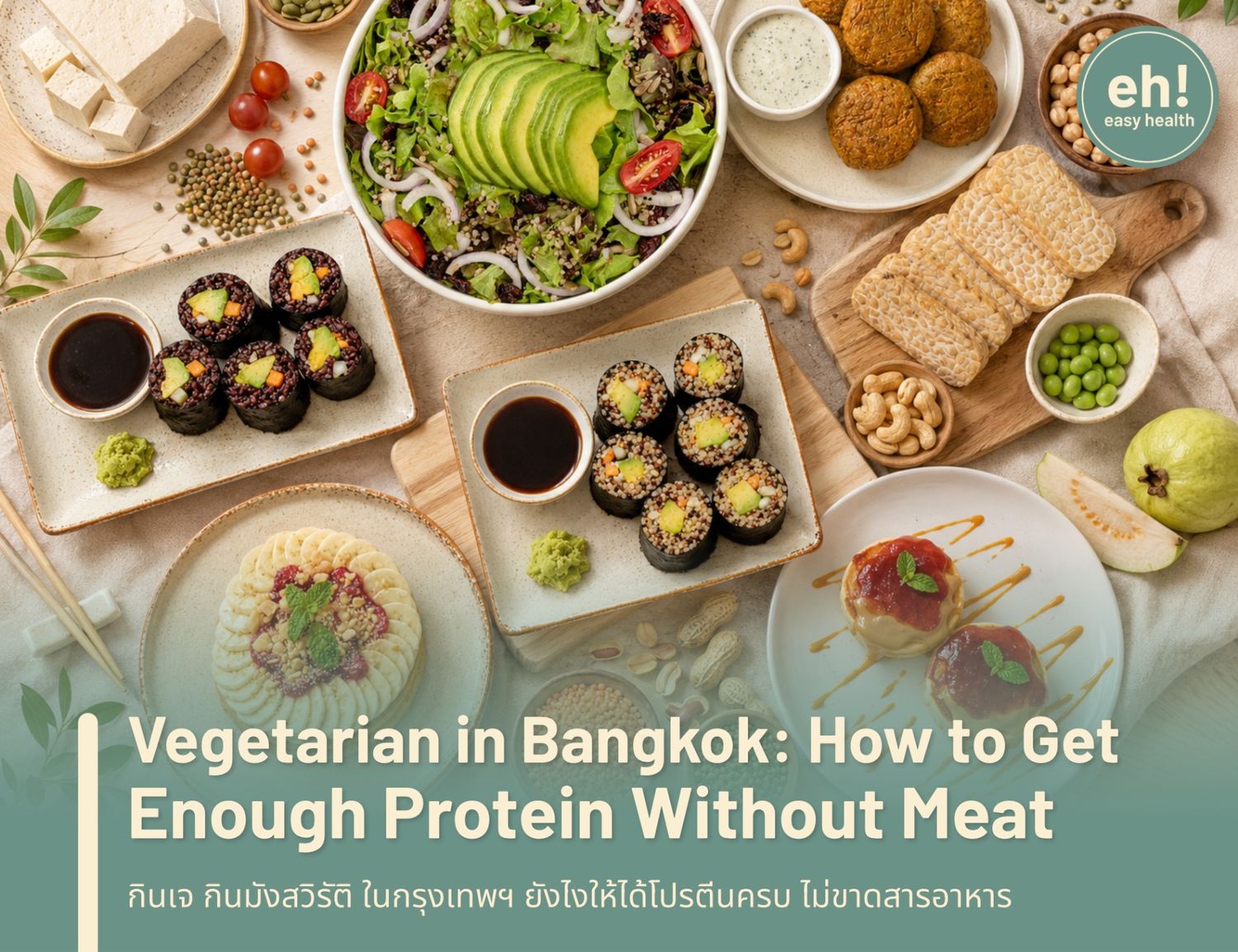
Vegetarian in Bangkok: How to Get Enough Protein Without Meat
Whether you are going vegetarian for health, ethics, religion, or the environment, one question follows you everywhere: "But where do you get your protein?" In Bangkok, this question carries extra weight. Thai cuisine is built around meat, fish sauce, oyster sauce, and shrimp paste. Navigating vegetarian protein in Bangkok requires real strategy, not just good intentions.
The good news: it is entirely possible to meet all your protein needs on a vegetarian or vegan diet in Bangkok, and Thailand actually offers some of the best plant-based protein sources in the world. The challenge is knowing what to eat, how much you need, and how to combine foods for complete nutrition. A poorly planned vegetarian diet can leave you tired, losing muscle, and deficient in critical nutrients. A well-planned one can match or exceed the nutritional quality of a meat-based diet.
This guide covers the simple science of plant protein, exactly how much you need, the best vegetarian protein sources available in Bangkok, nutrients vegetarians commonly lack, how to build complete meals, and practical strategies for eating plant-based in a city that puts fish sauce in almost everything.
The Science of Plant Protein: What You Need to Know
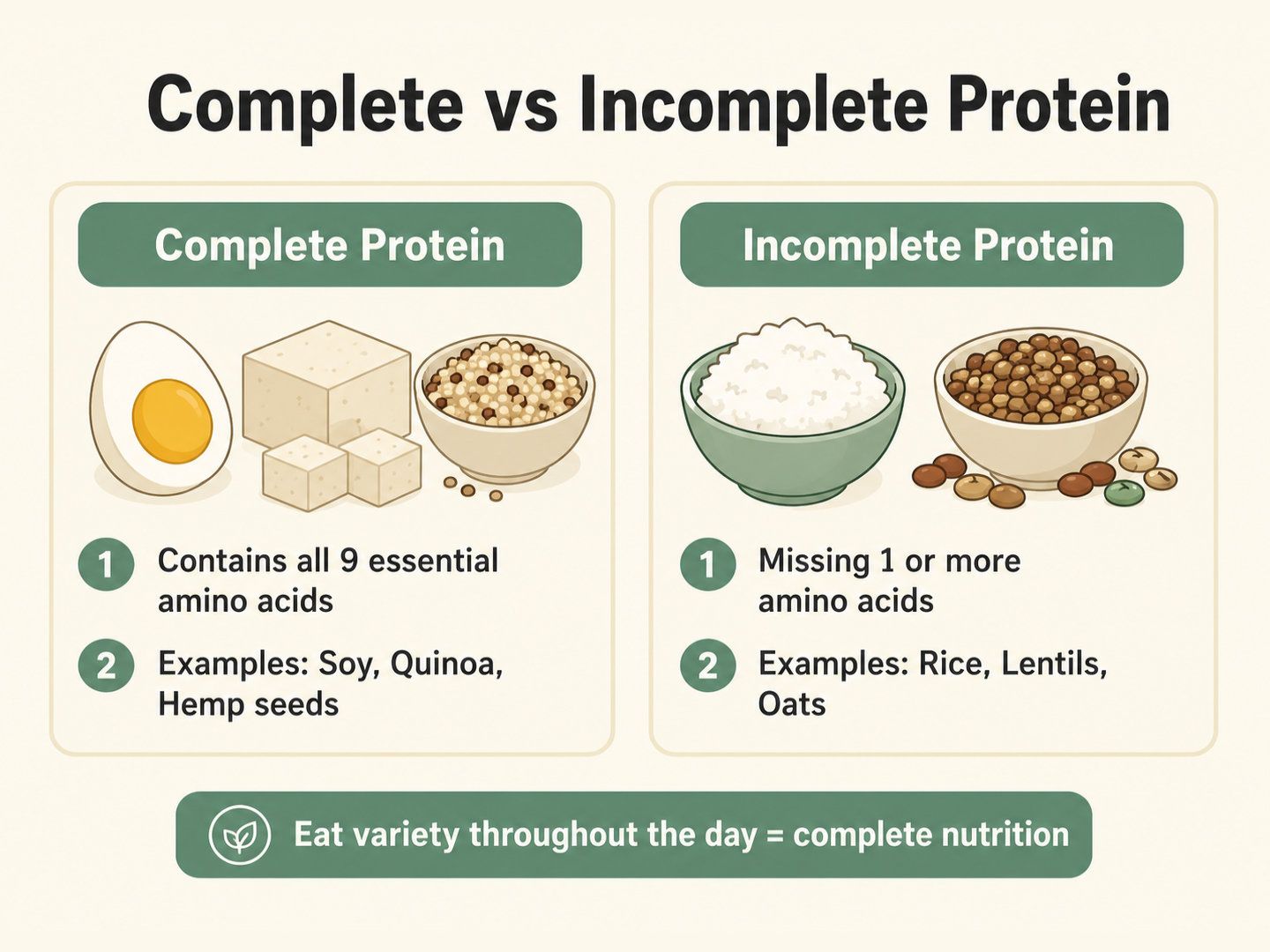
Complete vs. Incomplete Proteins
Protein is made of 20 amino acids. Your body can produce 11 of them (non-essential amino acids), but the remaining 9 must come from food (essential amino acids). Animal proteins contain all 9 essential amino acids in adequate proportions, making them "complete" proteins. Most individual plant proteins are "incomplete," meaning they are low in one or more essential amino acids.
However, this does not mean plant protein is inferior. Nutrition experts confirm that well-planned plant-based diets provide adequate protein quality when your total intake is sufficient and you eat a variety of foods. The outdated concept that you must combine specific proteins at every single meal (like rice and beans together) has been replaced by a simpler truth: eating a variety of plant proteins throughout the day achieves the exact same result.
The most common limiting amino acids in plant foods are lysine (low in grains) and methionine (low in legumes). Knowing this allows you to strategically combine foods over the course of your day.
How Much Protein Do Vegetarians Actually Need?
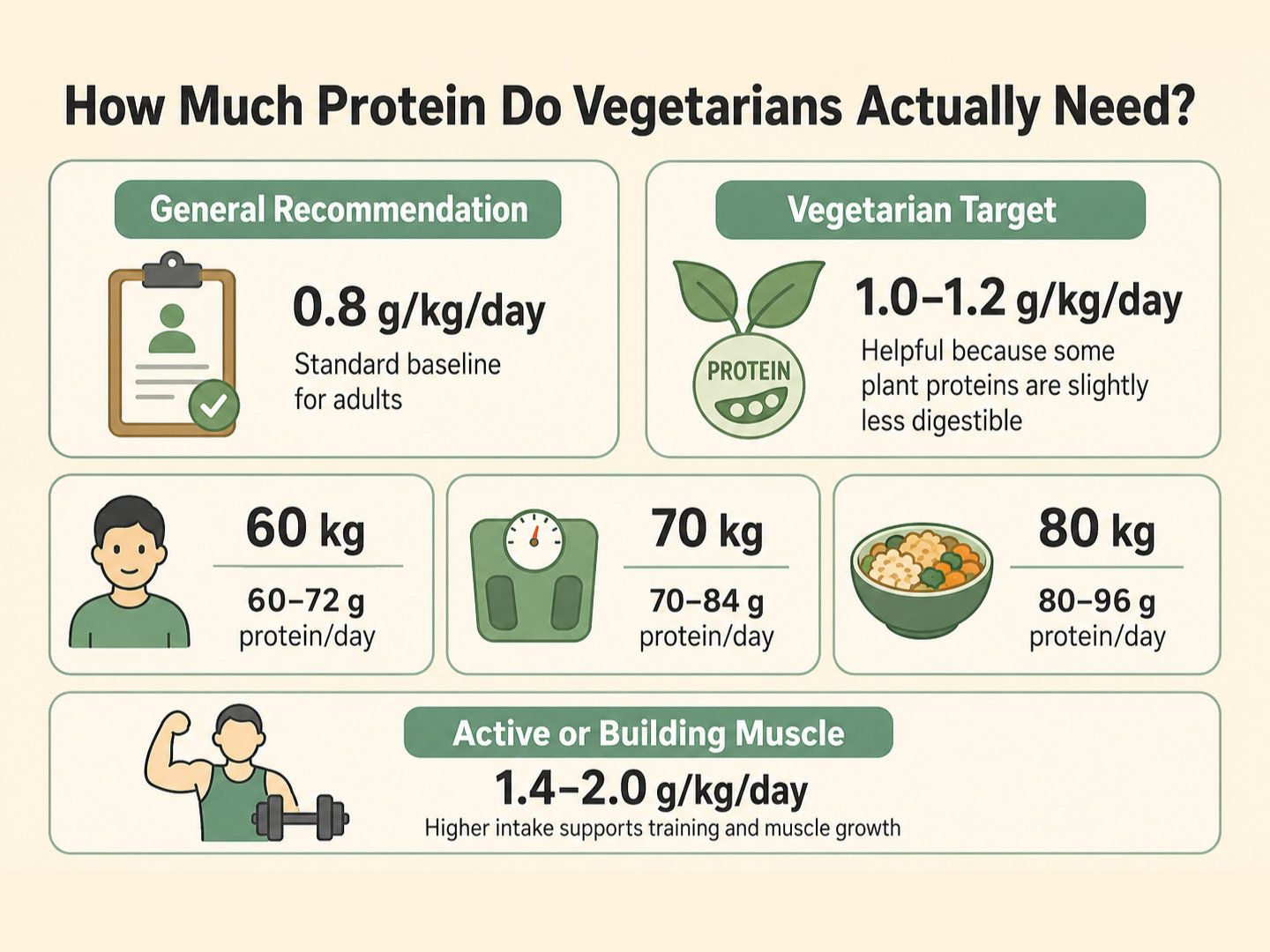
The general protein recommendation is 0.8 grams per kilogram of body weight per day. However, sports nutrition guidelines suggest that vegetarians may benefit from consuming 1.0-1.2 grams per kilogram due to the slightly lower digestibility of some plant proteins.
For practical reference:
A 60kg person needs 60-72g protein per day
A 70kg person needs 70-84g protein per day
A 80kg person needs 80-96g protein per day
Active individuals or those building muscle should aim for 1.4-2.0g per kilogram
These numbers are easily achievable on a plant-based diet, but they require intentional planning. You cannot rely on rice, vegetables, and fruit alone and expect to hit these targets.
The Best Vegetarian Protein Sources in Bangkok
Thailand offers an exceptional variety of plant proteins. Here are the best options, ranked by protein density and local availability.
Tofu and Soy Products
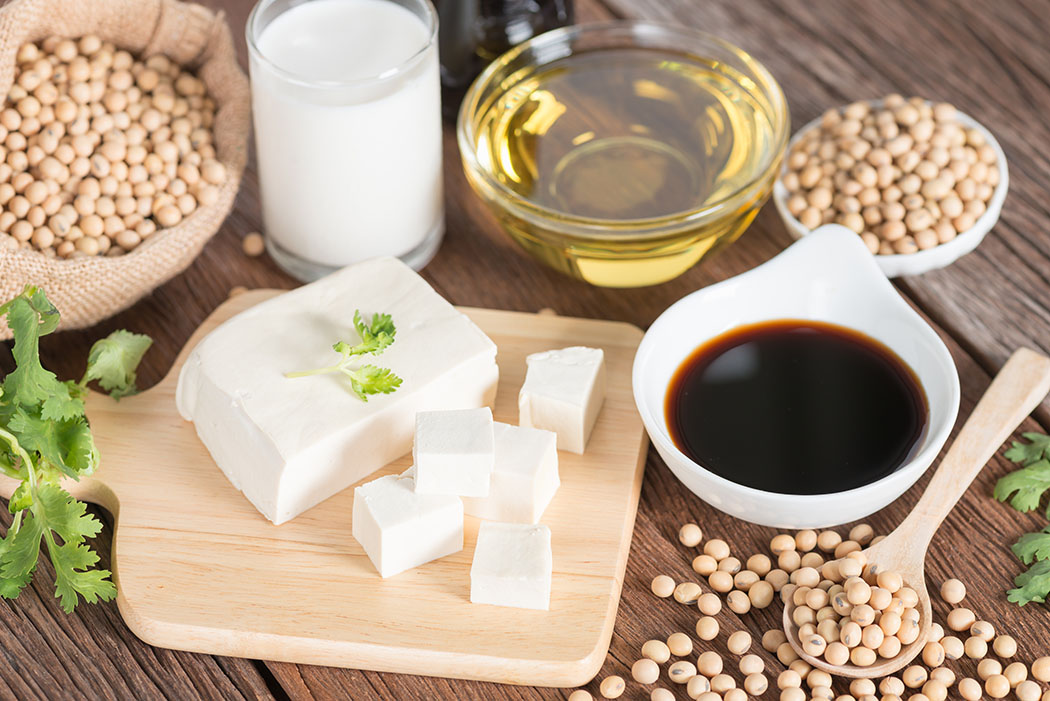
Soy is the king of plant protein because it is one of the few plant sources that is a complete protein, containing all 9 essential amino acids. Studies consistently show that soy protein supports muscle synthesis just as well as animal protein when total intake is matched.
Firm tofu: 17g protein per 100g. Widely available in Bangkok from street vendors to supermarkets. Cost: 15-30 THB per block.
Tempeh: 19g protein per 100g, plus probiotics from fermentation that support gut health. Increasingly available at health food stores and some Thai markets.
Edamame: 11g protein per 100g. Found at Japanese restaurants, supermarkets, and convenience stores across Bangkok.
Soy milk (unsweetened): 7g protein per 250ml. Available everywhere, but always check the label for unsweetened versions, as most Thai brands add significant sugar.
Important note: The annual Thai vegetarian festival (Tesagan Gin Je) in October proves that Bangkok can accommodate plant-based eating on a massive scale. During this period, thousands of restaurants offer "jay" food marked with a yellow-and-red flag. Many of these specialized restaurants actually operate year-round!
Legumes: Lentils, Chickpeas, and Thai Beans
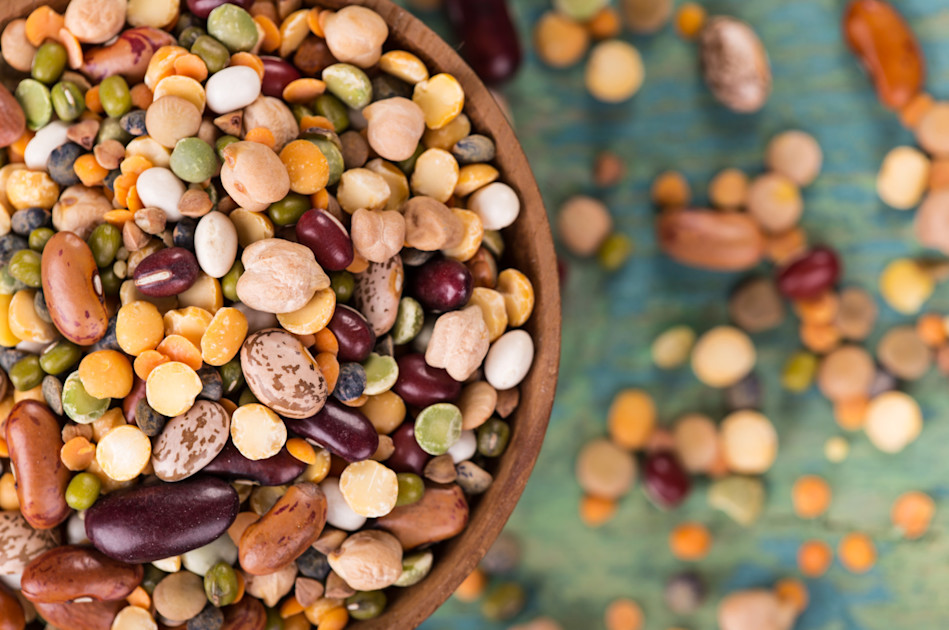
Legumes are protein powerhouses that also deliver fibre, iron, and B vitamins. They are perfect complements to grains because they provide the amino acids that rice and wheat lack.
Lentils: 9g protein per 100g cooked. Red and yellow lentils cook quickly and work well in Thai-style soups.
Chickpeas: 8.9g protein per 100g cooked. Available canned or dried at most Bangkok supermarkets.
Black beans: 8.9g protein per 100g cooked.
Mung beans (thua khiao): 7.0g protein per 100g cooked. A Thai staple used in both savoury dishes and desserts. Available at every wet market.
Peanuts: 26g protein per 100g. Technically a legume, not a nut. Used extensively in Thai cooking (pad thai, satay sauce, som tum).
Easy Health's Hummus Bowl (239 kcal, 13g protein, 195 THB) delivers chickpea-based protein with balanced macros, making it a convenient plant-protein option from the Easy Health menu.
Nuts and Seeds

Nuts and seeds provide protein along with healthy fats, vitamin E, magnesium, and zinc. They are calorie-dense, so watch your portions if you are managing weight.
Pumpkin seeds: 30g protein per 100g. Also extremely rich in zinc (critical for vegetarians).
Hemp seeds: 31g protein per 100g and a complete protein. Easily found at Bangkok health stores.
Almonds: 21g protein per 100g. A handful (28g) provides 6g of protein.
Chia seeds: 17g protein per 100g, plus omega-3s and fibre.
Cashews (met mamuang himaphan): 18g protein per 100g. Grown in Thailand and widely available.
Whole Grains

Grains are not protein superstars individually, but they contribute meaningful amounts when eaten in sufficient quantity. They pair perfectly with legumes to create a complete amino acid profile.
Quinoa: 14g protein per 100g dry, and one of the few grain-like foods that is a complete protein.
Oats: 13g protein per 100g dry. An easy, protein-rich breakfast base.
Brown rice: 7.5g protein per 100g cooked. A meaningful contributor when eaten in standard Thai-sized portions.
Whole wheat bread: 9-13g protein per 100g depending on the brand.
Thai-Specific Plant Proteins
Thailand has unique plant protein sources that many expats and even locals overlook:
Moringa leaves (bai ma rum): 9g protein per 100g fresh leaves. One of the highest-protein green vegetables in the world. Available at Thai wet markets for almost nothing.
Sataw (stink beans/petai): 6g protein per 100g. A Southern Thai delicacy with surprisingly good protein content.
Cha-om (acacia shoots): 5g protein per 100g. Commonly used in Thai omelettes and curries. An excellent protein-boosting vegetable.
Jackfruit (khanun): Young jackfruit is used as a meat substitute in curries, providing great texture though moderate protein (1.7g per 100g).
Mushrooms: Oyster mushrooms, shiitake, and enoki provide protein along with vitamin D and immune-supporting beta-glucans. Mushrooms are central to many Thai vegetarian dishes.
The Critical Nutrients Vegetarians Often Miss
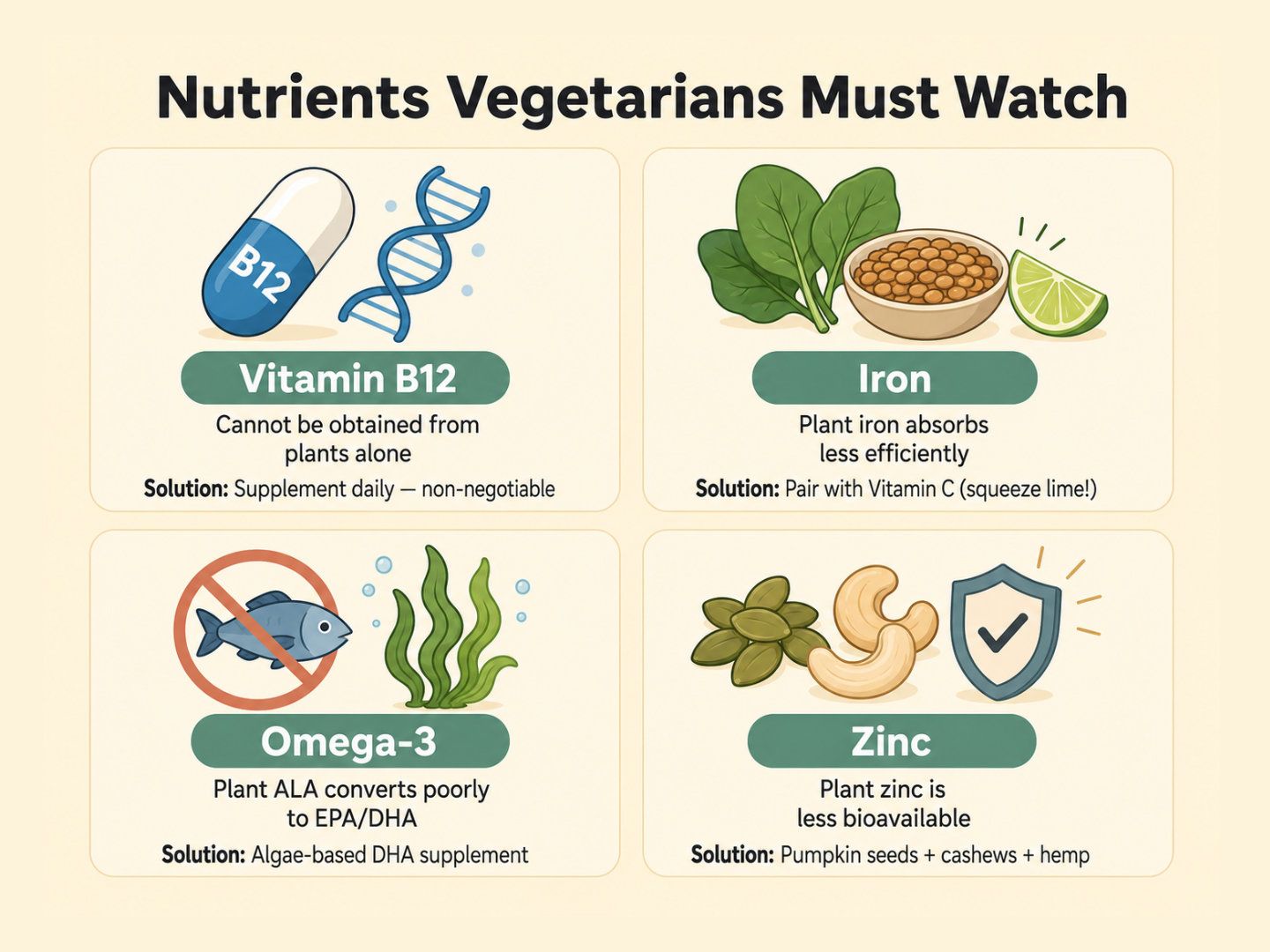
Protein gets the most attention, but several other nutrients require careful planning on a vegetarian diet.
Vitamin B12
This is the one nutrient that simply cannot be obtained from plant foods in meaningful amounts. Vitamin B12 is essential for nerve function and energy. Studies show that a vast majority of vegans and vegetarians who don't supplement are deficient. Solution: Take a B12 supplement or consume B12-fortified foods daily. This is non-negotiable for vegans and strongly recommended for all vegetarians.
Iron
Plant-based iron is harder for your body to absorb than animal-based iron. However, you can significantly enhance absorption by consuming vitamin C alongside iron-rich foods. Squeezing lime over your food—a natural Thai habit—can increase iron absorption by up to 67%. Best sources: Lentils, chickpeas, spinach, tofu, and pumpkin seeds. (Pro tip: avoid drinking tea or coffee with meals, as tannins block iron absorption).
Omega-3 Fatty Acids
Plant foods provide ALA, which your body converts to the essential EPA and DHA omega-3s, but the conversion rate is very low. Solution: Consume ALA-rich foods daily (flaxseeds, chia seeds, walnuts), and consider an algae-based DHA supplement (which is where fish get their omega-3s from in the first place!).
Zinc
Plant-based zinc is less bioavailable due to compounds in grains and legumes that bind to it. Best sources: Pumpkin seeds are your best friend here, along with cashews, chickpeas, and hemp seeds.
How to Build Complete Vegetarian Meals in Bangkok
The key principle is combining legumes with grains throughout the day.
Breakfast Options
Tofu scramble with vegetables and whole grain toast: 25-30g protein. Make it at home or order a plant-based breakfast at cafes like Broccoli Revolution, Veganerie, or Bonita Cafe.
Oatmeal with soy milk, peanut butter, chia seeds, and banana: 20-25g protein. Easy to prepare at home.
Congee (jok) with tofu and mushrooms: Traditional Thai breakfast adapted for vegetarians. (Ask for the vegetarian version, as many use chicken broth).
Lunch Options
Jay food from street vendors: Look for the yellow "jay" flag. Expect tofu, mushroom, and vegetable stir-fries with rice. Choose tofu-heavy options to maximize protein.
Pad thai with tofu (no fish sauce): Request "mai sai nam pla" (no fish sauce) and "sai tao hu" (add tofu) for a protein-rich plant-based version.
Chickpea or lentil curry over brown rice: Available at Indian restaurants throughout Bangkok (Sukhumvit, Silom, Khao San areas).
Dinner Options
Massaman curry with tofu and peanuts: Rich, flavourful, and protein-dense. Use coconut milk-based curry paste (check the label to ensure there is no shrimp paste).
Stir-fried tempeh with basil (pad kra pao tempeh): A twist on Thailand's most popular dish. Tempeh provides a massive 19g of protein per 100g.
Tom kha with tofu and mushrooms: A classic coconut galangal soup adapted with plant protein.
The Easy Health Vegetarian Option
If building complete vegetarian meals from scratch feels overwhelming, Easy Health's structured meal plans include a dedicated Vegetarian Plan (1,400-1,600 kcal, 2,799 THB/5 days). Every meal is designed with complete protein planning, meaning the amino acid gaps in individual plant foods are balanced perfectly across the day.
Other Easy Health plans also feature fantastic plant-based options. The Peanut Butter Berry Jam Bowl (431 kcal, 21g protein, 175 THB) combines legume-based protein with berries and healthy fats. Browse the full Easy Health menu to find plant-based options that fit your protein goals. All meals are prepared with zero added sugar, zero MSG, and zero artificial preservatives.
Sample High-Protein Vegetarian Day in Bangkok
Here is a realistic day that hits 80+ grams of plant protein effortlessly:
Breakfast: Oatmeal (5g) with soy milk (7g), peanut butter 2 tbsp (7g), chia seeds 1 tbsp (3g), and a banana. Total: ~22g protein.
Mid-morning snack: Handful of pumpkin seeds 30g (9g) and an edamame cup (6g). Total: ~15g protein.
Lunch: Tofu pad thai (no fish sauce) with extra tofu. Tofu 150g (25g) plus noodles and peanuts (5g). Total: ~30g protein.
Afternoon snack: Easy Health Hummus Bowl (13g protein, 195 THB).
Dinner: Tempeh stir-fry 100g (19g) with brown rice 200g (5g) and stir-fried morning glory. Total: ~24g protein.
Daily total: approximately 104g protein. This exceeds the recommended protein targets even for an active 80kg adult!
Practical Tips for Being Vegetarian in Bangkok
Learn the Thai phrases:
"Gin jay" (กินเจ) means eating strictly vegan (no meat, dairy, eggs, garlic, or onions).
"Gin mangsa wirat" (กินมังสวิรัติ) means vegetarian in the broader sense.
"Mai sai nam pla" (ไม่ใส่น้ำปลา) means no fish sauce.
"Mai sai sauce hoi" (ไม่ใส่ซอสหอย) means no oyster sauce. These phrases will save you from countless unwanted fish sauce encounters.
Know your hidden animal products: Thai cooking uses fish sauce, oyster sauce, and shrimp paste (kapi) as foundational seasonings. Even "vegetable" dishes at most Thai restaurants contain these. Always ask.
Explore Bangkok's vegetarian scene: Bangkok has a booming plant-based restaurant scene. Areas like Ari, Thonglor, and Ekkamai have multiple dedicated vegetarian and vegan spots. Chinatown (Yaowarat) has numerous "jay" food shops open year-round.
Use the Visakha Bucha connection: Visakha Bucha Day (May) is a major Buddhist holiday, and many Thai people eat vegetarian on this day. It is a great cultural moment to explore plant-based eating.
The Bigger Picture: Why Vegetarian Eating Matters
Major global health organizations agree that a predominantly plant-based diet is optimal for both human health and planetary sustainability. A well-planned vegetarian diet is associated with lower rates of heart disease, type 2 diabetes, and obesity.
In Bangkok's context, where street food is cheap and meat-heavy, making the vegetarian choice requires slightly more effort. But the infrastructure is improving rapidly. More restaurants, more delivery options, and more awareness mean that being vegetarian in Bangkok has never been easier.
The key is planning. Know your protein sources. Understand which nutrients need attention. Build meals that combine complementary proteins. With these strategies, you can thrive on a vegetarian diet in Bangkok without compromising your health, muscle mass, or enjoyment of amazing Thai food.
Frequently Asked Questions
Can you get enough protein on a vegetarian diet without supplements?
Yes, absolutely. As long as your diet is varied and intentional, you can easily hit your protein goals. The key is combining complementary protein sources throughout the day: legumes (like beans and peanuts) with grains (like rice and oats). Foods like soy (tofu/tempeh), quinoa, and hemp seeds are complete proteins on their own. A 70kg person needs about 70-84g of protein daily, which is highly achievable through whole foods without resorting to protein powders.
Is it hard to eat vegetarian in Bangkok?
It is easier than most people expect, but it requires a little local knowledge. The main challenge is that Thai cooking uses fish sauce, oyster sauce, and shrimp paste as base seasonings. Learning to say "mai sai nam pla" (no fish sauce) and "gin jay" (I eat vegan) is essential. Bangkok has a fantastic scene of dedicated vegetarian restaurants, and meal delivery services like Easy Health make getting balanced, plant-based meals completely hassle-free.
What is the difference between "jay" and "mangsa wirat" in Thailand?
"Jay" (เจ) follows strict Chinese Buddhist dietary rules: no meat, dairy, eggs, garlic, or onions. It is essentially vegan plus a few restrictions. "Mangsa wirat" (มังสวิรัติ) is a broader term for vegetarianism that typically allows dairy and eggs. When you see the yellow-and-red flag at restaurants, expect strict "jay" food.
Do vegetarians need to worry about losing muscle?
Not if protein intake is adequate. Studies show no significant difference in muscle mass or strength gains between plant and animal protein when total protein intake is matched. If you are active or lifting weights, aim for 1.4-2.0g of protein per kilogram of body weight, distribute it across 3-4 meals per day, and include high-quality sources like tofu and tempeh.
What are the best quick vegetarian protein sources in Bangkok convenience stores?
Bangkok's convenience stores (7-Eleven, FamilyMart) offer several quick options: unsweetened soy milk, edamame cups, mixed nut packets, tofu packs, and peanut butter.
Is soy safe to eat in large amounts?
Yes. Extensive research shows that soy is safe and healthy for most people. It does not adversely affect testosterone levels in men, and it supports cardiovascular health. Moderate soy consumption (2-4 servings daily) is associated with health benefits in populations that have consumed it for thousands of years. Just stick to minimally processed soy products like tofu, tempeh, and edamame.
Ready to Make Plant-Based Eating Easy in Bangkok?
Every meal on the Easy Health menu is built without added sugar, MSG, or artificial preservatives. Our dedicated Vegetarian Plan (1,400-1,600 kcal, 2,799 THB/5 days) is designed with complete protein planning so you never need to worry about amino acid gaps.
160+ menu items with full macro and micronutrient transparency
Zero added sugar, zero MSG, zero artificial preservatives
Dedicated Vegetarian Plan with complete protein balancing
Fresh daily preparation, never frozen, delivered across Bangkok
Download the Easy Health app:
Or explore online:
References
Mariotti, F., & Gardner, C. D. (2019). Dietary protein and amino acids in vegetarian diets: a review. The American Journal of Clinical Nutrition, 110(4), 918-926. https://doi.org/10.1093/ajcn/nqaa351
Jager, R., et al. (2017). International Society of Sports Nutrition Position Stand: protein and exercise. Journal of the International Society of Sports Nutrition, 14, 20. https://doi.org/10.1186/s12970-017-0177-8
Messina, M. (2016). Soy and Health Update: Evaluation of the Clinical and Epidemiologic Literature. Nutrients, 8(12), 754. https://doi.org/10.3390/nu11112661
Pawlak, R., et al. (2013). How prevalent is vitamin B12 deficiency among vegetarians? Nutrition Reviews, 71(2), 110-117. https://doi.org/10.1093/ajcn/89.5.1693S
Hunt, J. R. (2003). Bioavailability of iron, zinc, and other trace minerals from vegetarian diets. The American Journal of Clinical Nutrition, 78(3), 633S-639S. https://doi.org/10.1093/jn/131.5.1452S
Welch, A. A., et al. (2010). Dietary intake and status of n-3 polyunsaturated fatty acids in a population of fish-eating and non-fish-eating meat-eaters, vegetarians, and vegans. Prostaglandins, Leukotrienes and Essential Fatty Acids, 83(6), 367-372. https://doi.org/10.1016/j.plefa.2009.05.013
Willett, W., et al. (2019). Food in the Anthropocene: the EAT-Lancet Commission. The Lancet, 393(10170), 447-492. https://doi.org/10.1016/S0140-6736(18)31788-4
Melina, V., et al. (2016). Position of the Academy of Nutrition and Dietetics: Vegetarian Diets. Journal of the Academy of Nutrition and Dietetics, 116(12), 1970-1980. https://doi.org/10.1016/j.jand.2016.09.025
Hevia-Larrain, V., et al. (2021). High-Protein Plant-Based Diet Versus a Protein-Matched Omnivorous Diet. British Journal of Sports Medicine, 55(13), 750-756. https://doi.org/10.1136/bjsports-2017-097582