

Running Nutrition: What to Eat Before, During, and After Your Run
You train consistently. You follow a programme. You bought the right shoes. But you still bonk at kilometre 15, cramp at the 25K mark, or feel completely destroyed for two days after a long run. The missing piece is almost always nutrition.
Running is one of the most demanding activities you can do. A 70kg runner burns approximately 700 calories per hour at a moderate pace. Your muscles burn through energy reserves within 90-120 minutes. You lose 1-2 litres of sweat per hour in Bangkok's heat. And the physical stress on muscles and joints requires specific nutrients for repair.
Yet most runners in Bangkok fuel with whatever is convenient: a banana grabbed on the way out, pad kra pao from the office canteen after, maybe an energy gel during a race. This haphazard approach leaves massive performance on the table.
This guide covers the simple science of running nutrition, exactly what to eat before, during, and after your runs, hydration strategies specific to Bangkok's tropical climate, and practical meal planning that fits a runner's lifestyle. Whether you are training for your first 10K or preparing for a marathon, getting your nutrition right will make you faster, reduce injury risk, and cut recovery time significantly.
The Science of Running Fuel
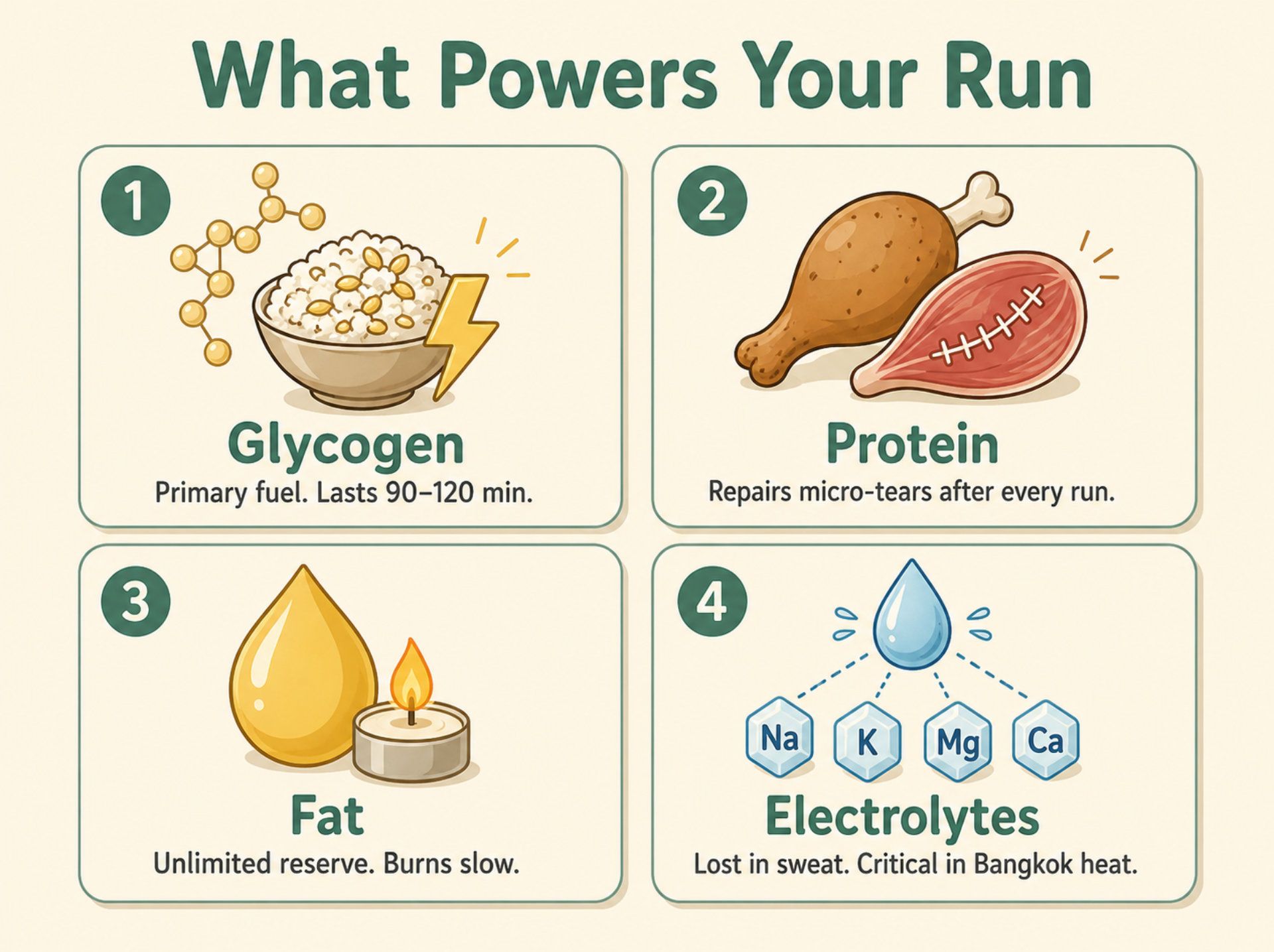
Understanding how your body fuels running helps you make better decisions about what to eat and when.
Glycogen: Your Primary Running Fuel
During moderate-intensity running, your body uses a mix of carbohydrates and fat for fuel. As you run faster, your body relies more heavily on carbohydrates. At race pace, carbohydrates provide 80-90% of your energy.
Your body stores carbohydrates as glycogen in your muscles and liver. This gives you enough energy for about 90-120 minutes of moderate running. After that, you "hit the wall" as glycogen depletes and your body struggles to keep up. Research confirms that carbohydrate availability is the single most important nutritional factor for endurance performance.
Protein: The Repair Material
Running creates micro-tears in your muscle fibres. This is normal and is how muscles adapt and strengthen. But repair requires protein. Endurance athletes actually need more protein than the general population—about 1.2 to 1.6 grams per kilogram of body weight daily.
Fat: The Endurance Reserve
Fat provides virtually unlimited fuel, but it burns more slowly than glycogen. Training at lower intensities improves your body's ability to use fat as fuel, saving your glycogen for high-intensity efforts. However, this does not mean you should eat high-fat diets before running. Fat slows digestion and can cause stomach issues during runs.
Electrolytes: The Conductors
Sodium, potassium, magnesium, and calcium enable muscle contraction, nerve signalling, and fluid balance. You lose significant electrolytes through sweat, and in Bangkok's heat, these losses are amplified.
What to Eat Before a Run
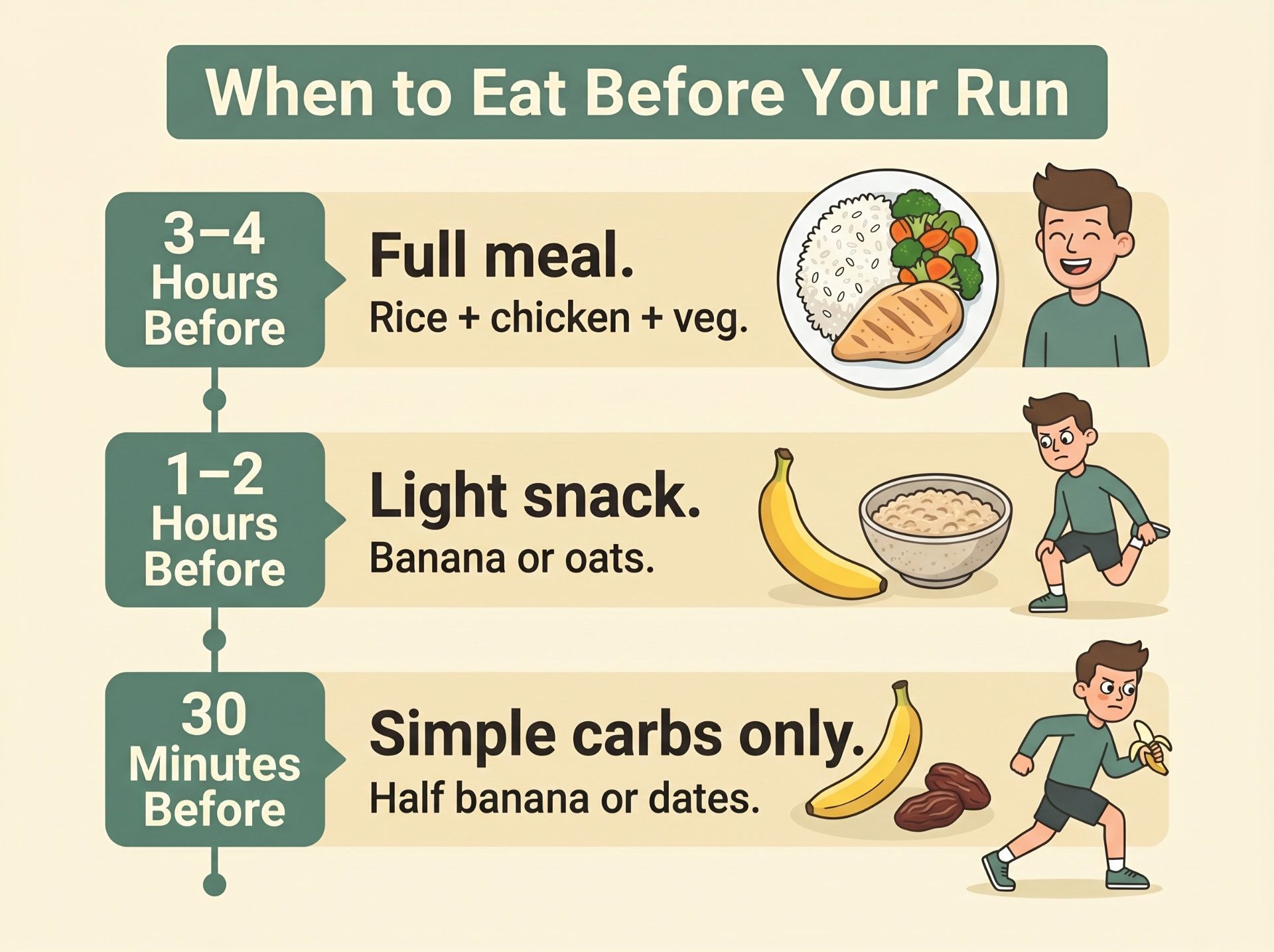
Pre-run nutrition depends entirely on how far in advance you eat and how long you plan to run.
3-4 Hours Before (Full Meal)
If you have time for a complete meal before your run, this is the ideal window. Your body has enough time to digest, absorb nutrients, and top off energy stores.
What to eat: A balanced meal focused on complex carbohydrates, moderate protein, and low fat. Fat slows digestion, so keep it minimal. Examples:
Oatmeal with banana and a small amount of nut butter
Rice with grilled chicken and steamed vegetables
Whole grain toast with eggs and avocado (small portion)
Easy Health Option: Hearty Breakfast Wrap (Balanced macros with enough carbs without excessive fat).
1-2 Hours Before (Light Snack)
Most Bangkok runners train early morning or evening to avoid peak heat. A light snack 1-2 hours before is often more practical than a full meal.
What to eat: Easily digestible carbohydrates with minimal fat and fibre. Fibre slows digestion and can cause discomfort. Examples:
1-2 bananas (the quintessential Thai runner's fuel)
White rice with a small amount of chicken
Energy bar or granola bar (check sugar content)
Easy Health Option: Peanut Butter Berry Jam Bowl (Good carb-to-protein ratio).
30 Minutes Before (Quick Fuel)
For very early morning runners who cannot eat a full meal, a small amount of fast-absorbing carbohydrates provides enough blood sugar to start.
What to eat: Simple sugars or easily digestible carbs. No protein, fat, or fibre. Examples:
Half a banana
2-3 dates
A few swallows of sports drink
Fasted Running (Zero Fuel)
Some runners train fasted (usually morning runs before breakfast) to improve their body's ability to burn fat. This works, but only for easy-pace runs under 60 minutes. Any intense or long session requires fuel. Running fasted in Bangkok's heat also adds dehydration risk, so prioritise water even if skipping food.
What to Eat During a Run
For runs under 60 minutes, you do not need to eat anything during the run. Water is sufficient. For runs over 60 minutes, fuelling during the run becomes critical.
The 60-90 Minute Rule
60-90 minutes: Aim for 30-60g of carbohydrates per hour. This matches your body's absorption rate. Over 90 minutes: Aim for 60-90g of carbohydrates per hour using a mix of sources (like energy gels that combine glucose and fructose). This allows your body to absorb more energy.
Practical Mid-Run Fuel Options
Energy gels: 20-25g carbs per gel. Easy to carry, fast absorbing. Take with water.
Sports drinks: Provide carbs and electrolytes simultaneously.
Real food for ultra-distance: For runs over 3 hours, some runners prefer real food: rice balls, boiled potatoes with salt, banana pieces, dates.
Salt tablets or electrolyte capsules: Essential for Bangkok runners on runs over 90 minutes.
Bangkok-Specific Fuelling Advice
Bangkok's heat and humidity dramatically increase fuelling requirements.
Start drinking before you feel thirsty.
For runs over 75 minutes, electrolyte replacement is non-negotiable.
Avoid running between 11 AM and 3 PM. Early morning or evening reduces heat stress by 30-40%.
What to Eat After a Run: The Recovery Window
Post-run nutrition is where most runners leave the biggest gains on the table. The 30-60 minutes after your run is the most metabolically critical eating window of the day.
The 30-Minute Window
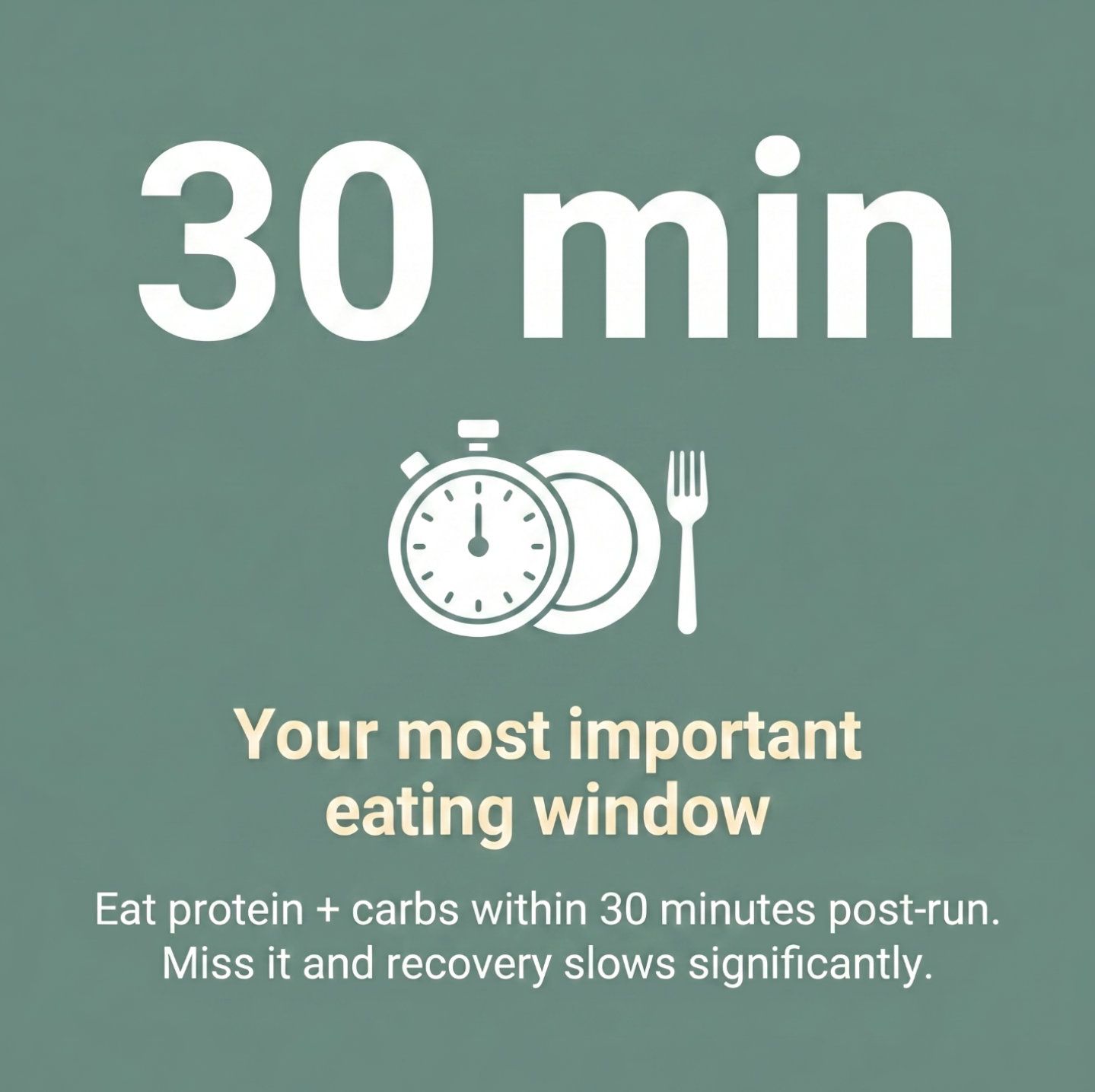
Consuming protein and carbohydrates within 30 minutes post-exercise maximises energy restoration and muscle repair. Delaying nutrition reduces your recovery rate significantly.
What to eat immediately:
Quick protein + carb combination
Chocolate milk
Protein shake with banana
Greek yogurt with fruit
The Recovery Meal (1-2 Hours Post-Run)
After the initial recovery snack, eat a complete meal within 1-2 hours.
What to eat:
High-quality protein (chicken, fish, eggs, tofu) for muscle repair
Complex carbohydrates (brown rice, sweet potato, whole grains) for energy replenishment
Vegetables for antioxidants
Healthy fats (in moderation)
Easy Health Recovery Meals:
Ranchero Skillet: Massive protein load for serious recovery after long runs or speed sessions.
Power Fit Combo: The ultimate post-run meal for high-mileage runners.
Pad Thai Clean Version: Good carb-to-protein balance for energy replenishment plus muscle repair.
Farmer Omelette: Protein-dense recovery option when you need nutrients without a massive meal.
Browse all recovery-friendly options at easyhealth.asia/menu.
The Runner's Daily Nutrition Framework
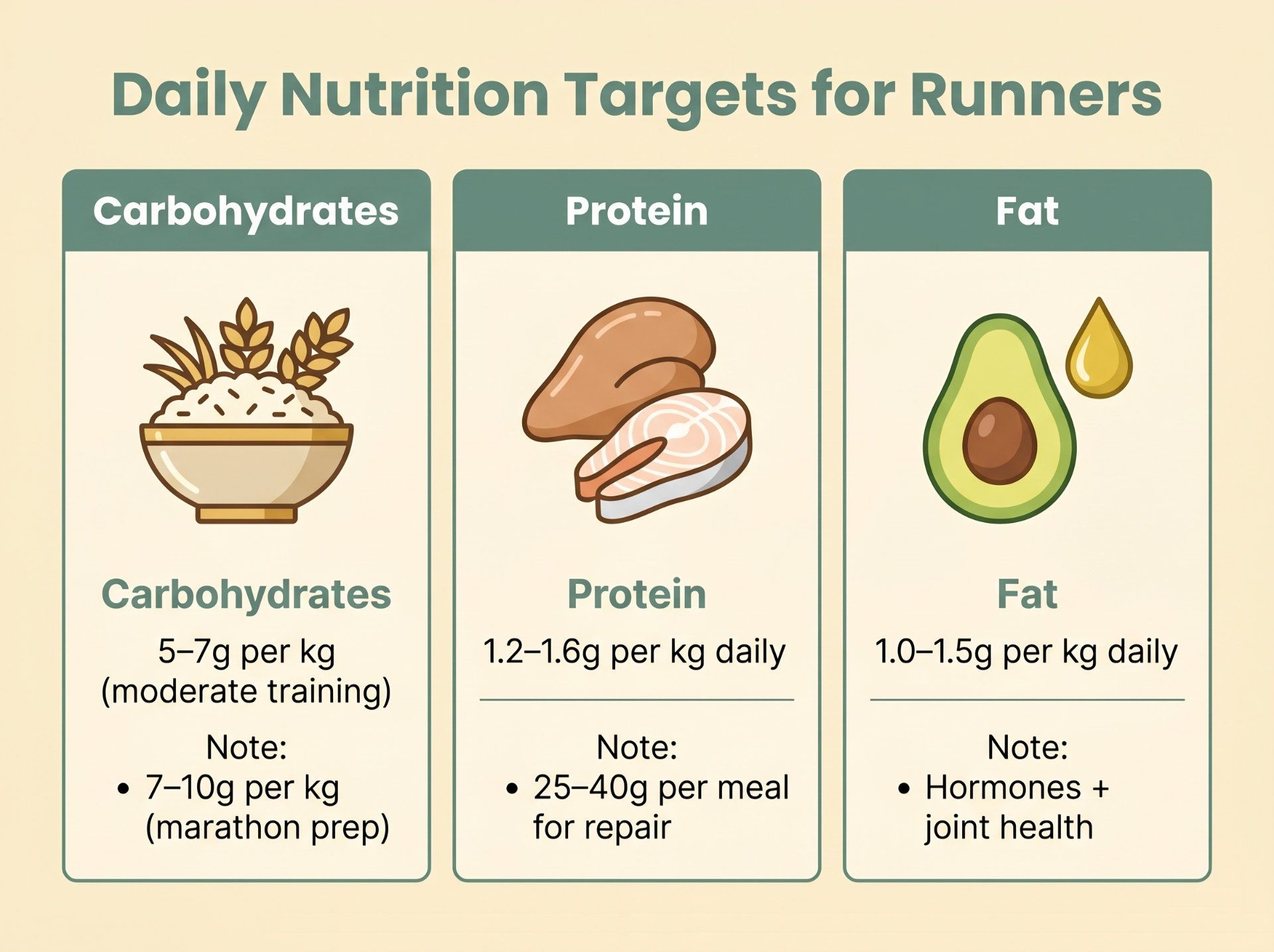
Your overall daily eating pattern determines training adaptation, recovery quality, and race-day performance.
Macronutrient Targets for Runners
Carbohydrates: 5-7g per kg bodyweight for moderate training. 7-10g per kg for heavy training or marathon preparation.
Protein: 1.2-1.6g per kg bodyweight daily. Distribute across meals (25-40g per meal) for optimal muscle repair.
Fat: 1.0-1.5g per kg bodyweight. Essential for hormone production and joint health.
Meal Plans for Runners
Consistent nutrition is the foundation of consistent training. Easy Health meal plans match different training loads:
Active Plan: For recreational runners (20-40 km/week) maintaining fitness.
Athlete Plan: For serious runners (50-80 km/week) in training blocks.
Balance Plan: For runners focused on weight management while maintaining performance.
Vegetarian Plan: Plant-based running nutrition with complete amino acid profiles.
Every meal is free from added sugar, MSG, and ultra-processed ingredients, meaning faster recovery and no stomach issues on race day.
Race Week and Race Day Nutrition
Carb Loading (3 Days Before Race)
The traditional "carb loading" protocol of eating massive pasta dinners is outdated. Instead, simply increase your carbohydrate intake for 2-3 days before a long race. Focus on familiar, easily digestible carb sources: white rice, sweet potatoes, pasta, bread, bananas.
Race Morning
Eat a normal, familiar dinner the night before (high carb, moderate protein, low fat, low fibre). On race morning, have a light snack (banana, toast with jam) 60-90 minutes before the gun. Do not try anything new on race day.
During the Race
Follow your trained fuelling plan. Drink at every aid station in Bangkok races—the heat means you need 150-250ml every 15-20 minutes.
Common Running Nutrition Mistakes
Running on empty: Skipping pre-run fuel for runs over 60 minutes limits performance.
Too much fibre before running: High-fibre foods within 2 hours of running cause stomach distress.
Ignoring post-run nutrition: The "I'll eat later" approach wastes the recovery window.
Hydrating only with water: Plain water during runs over 60 minutes in Bangkok heat can cause dangerously low sodium levels.
Trying new food on race day: Never try anything new on race day.
FAQ
What should I eat before a morning run? For easy runs under 60 minutes, you can run fasted with just water (or half a banana). For longer or intense runs, eat a light snack 60-90 minutes before (e.g., a banana or white toast with jam). Avoid fat and fibre.
How much protein do runners need? Runners need more protein than the average person—about 1.2 to 1.6 grams per kilogram of body weight daily. Distribute this across your meals for the best results.
What should I eat after a long run? Prioritise two windows: a quick protein-carb snack within 30 minutes (like a protein shake and banana), followed by a complete meal within 1-2 hours featuring high-quality protein and complex carbs.
How do I stay hydrated while running in Bangkok's heat? Drink 150-250ml every 15-20 minutes. For runs over 60 minutes, you MUST add electrolytes. Plain water alone is not enough in this heat.
Is it better to run fasted or fuelled? Fasted running is okay for easy runs under 60 minutes. But for any intense session or long run, you must fuel.
What should runners eat the night before a race? Eat a familiar, carbohydrate-rich dinner. Avoid spicy food, high-fibre vegetables, and anything you haven't eaten before training runs.
Fuel Your Running with Real Food
Every meal on the Easy Health menu is designed with whole-food ingredients, complete macro transparency, and zero added sugar, MSG, or ultra-processed ingredients. For runners, this means clean fuel in, clean performance out.
160+ menu items with full macro and micronutrient data
Zero added sugar, zero MSG, zero artificial preservatives
Fresh daily preparation, delivered across Bangkok
Download the Easy Health app: