
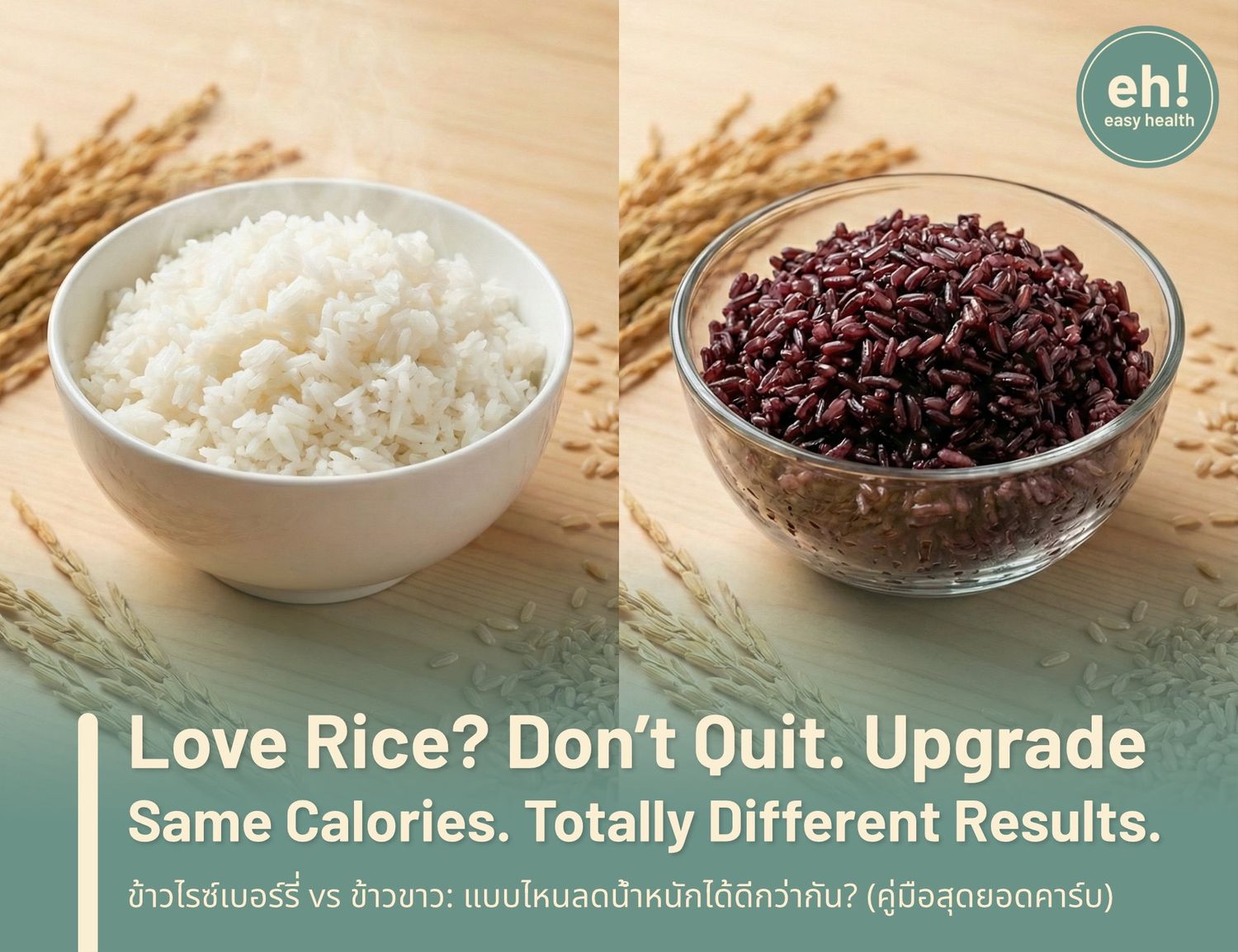
Riceberry vs White Rice: Which Is Better for Weight Loss?
Welcome to Thailand, where the common greeting "Kin khao rue yang?" literally translates to "Have you eaten rice yet?" If you are living in Bangkok - whether you are a local executive, an expat, or a long-term traveler - rice is the foundation of almost every meal. But when you decide to get fit and start a weight loss journey, you are immediately hit with a dilemma: "Do I have to stop eating rice completely?"
The short answer is: No, you don't. You just need to choose the right rice.
Walk into any healthy restaurant in Bangkok (including Easy Health), and you will notice a distinct, deep purple rice on the menu: Riceberry. But is it really a magic weight-loss superfood, or just an overpriced trend? Let’s sit down and settle the debate between classic White Rice and the modern hero, Riceberry, once and for all.
The Problem with White Rice (Why You Are Always Hungry)
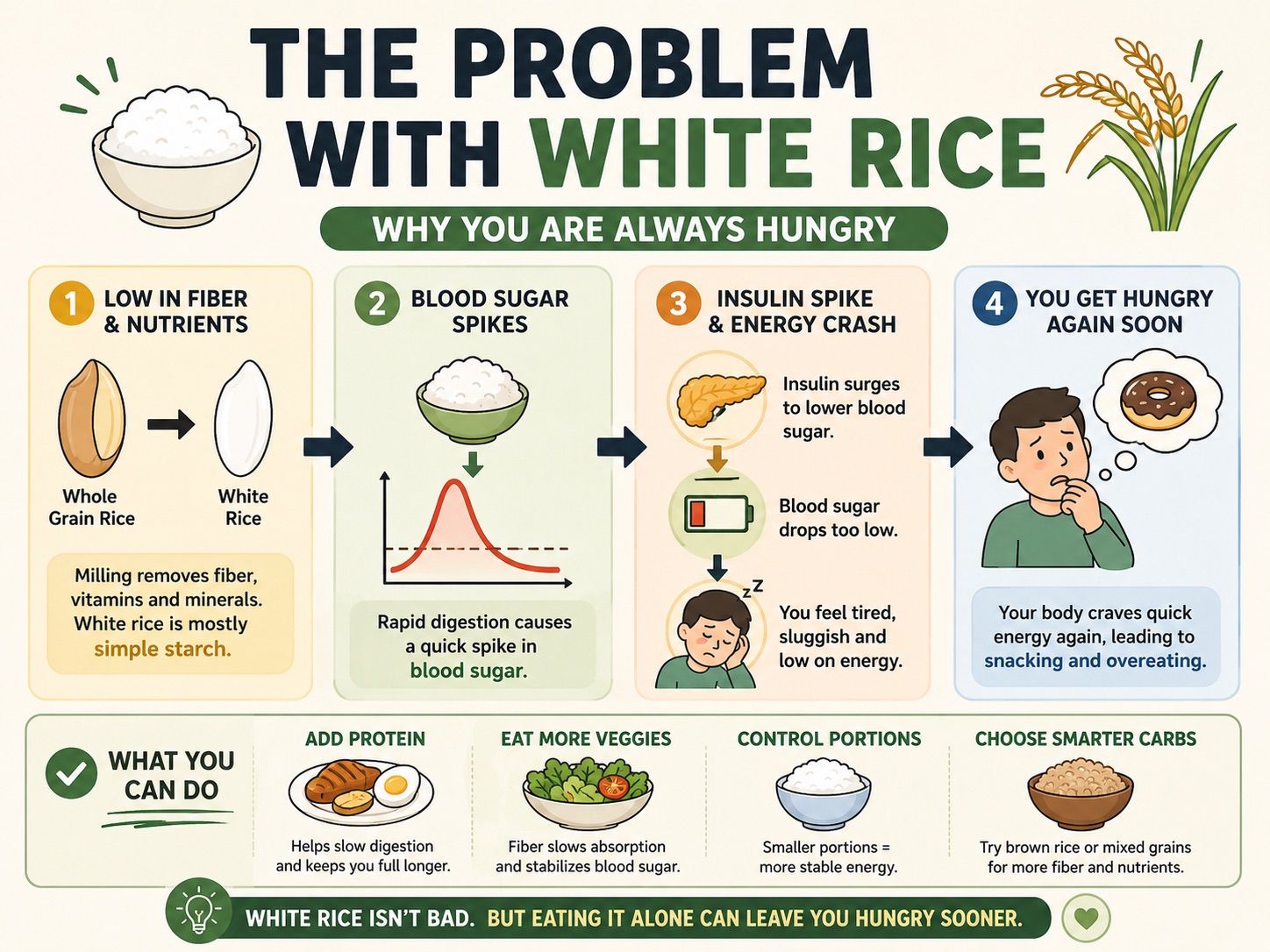
Let’s be real. Fresh, steaming Jasmine white rice tastes amazing. But from a biological standpoint, it is pure, fast-acting energy.
During the milling process, white rice is stripped of its bran and germ. What is left is mostly simple starch.
The Blood Sugar Spike: Because it lacks fiber, white rice digests incredibly fast. It spikes your blood sugar (Glucose) quickly.
The Crash: Your body releases a flood of insulin to bring that sugar down, which often leads to the dreaded "Afternoon Food Coma."
The Hunger Trap: Because the digestion process was so fast, your stomach empties quickly. An hour after eating a big plate of Pad Kra Pao with white rice, you are somehow craving a sugary snack.
If you are a highly active athlete running 10 kilometers a day, white rice is great for quick energy. But if you sit at an office desk all day, those fast-absorbing carbs will quickly be stored as belly fat.
Enter the Hero: What is Riceberry?
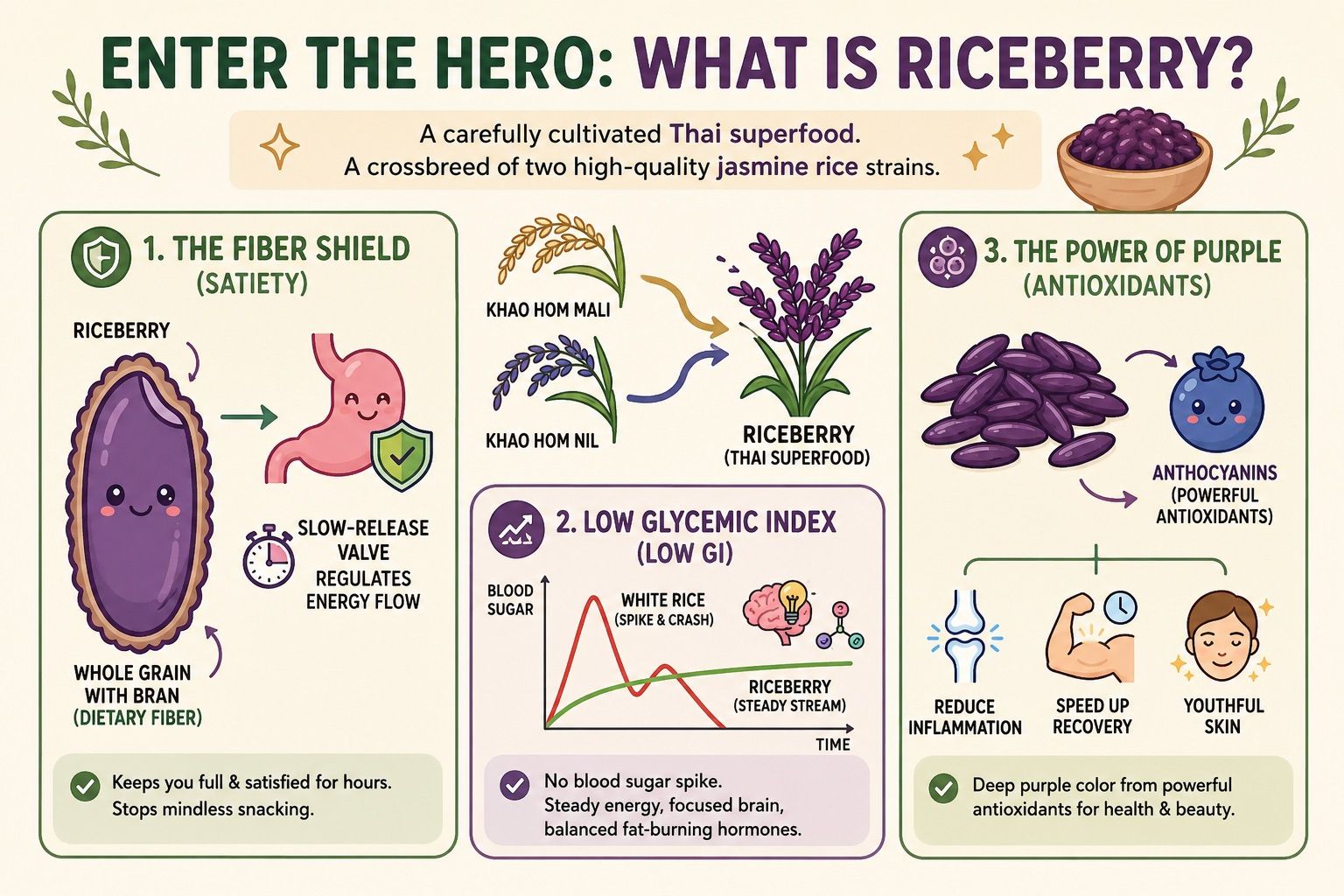
Riceberry isn't just a trendy name; it’s a carefully cultivated Thai superfood. It is a crossbreed between two high-quality strains of jasmine rice (Khao Hom Mali and Khao Hom Nil).
Here is why fitness coaches and nutritionists absolutely love it:
1. The Fiber Shield (Satiety)
Riceberry is a whole grain. It keeps its outer bran layer, which is packed with dietary fiber. Fiber acts like a slow-release valve for energy. It takes your body much longer to break it down, keeping you feeling full and satisfied for hours. This naturally stops you from mindless snacking.
2. Low Glycemic Index (Low GI)
Unlike white rice, Riceberry has a medium-to-low Glycemic Index. It doesn't spike your blood sugar. It provides a steady, calm stream of energy, keeping your brain focused and your fat-burning hormones in balance.
3. The Power of Purple (Antioxidants)
That deep purple color isn't just for Instagram. It comes from Anthocyanins - the same powerful antioxidants found in blueberries. These antioxidants help reduce inflammation in your body, speed up recovery after a workout, and keep your skin looking youthful.
The Verdict: Which is Better for Weight Loss?
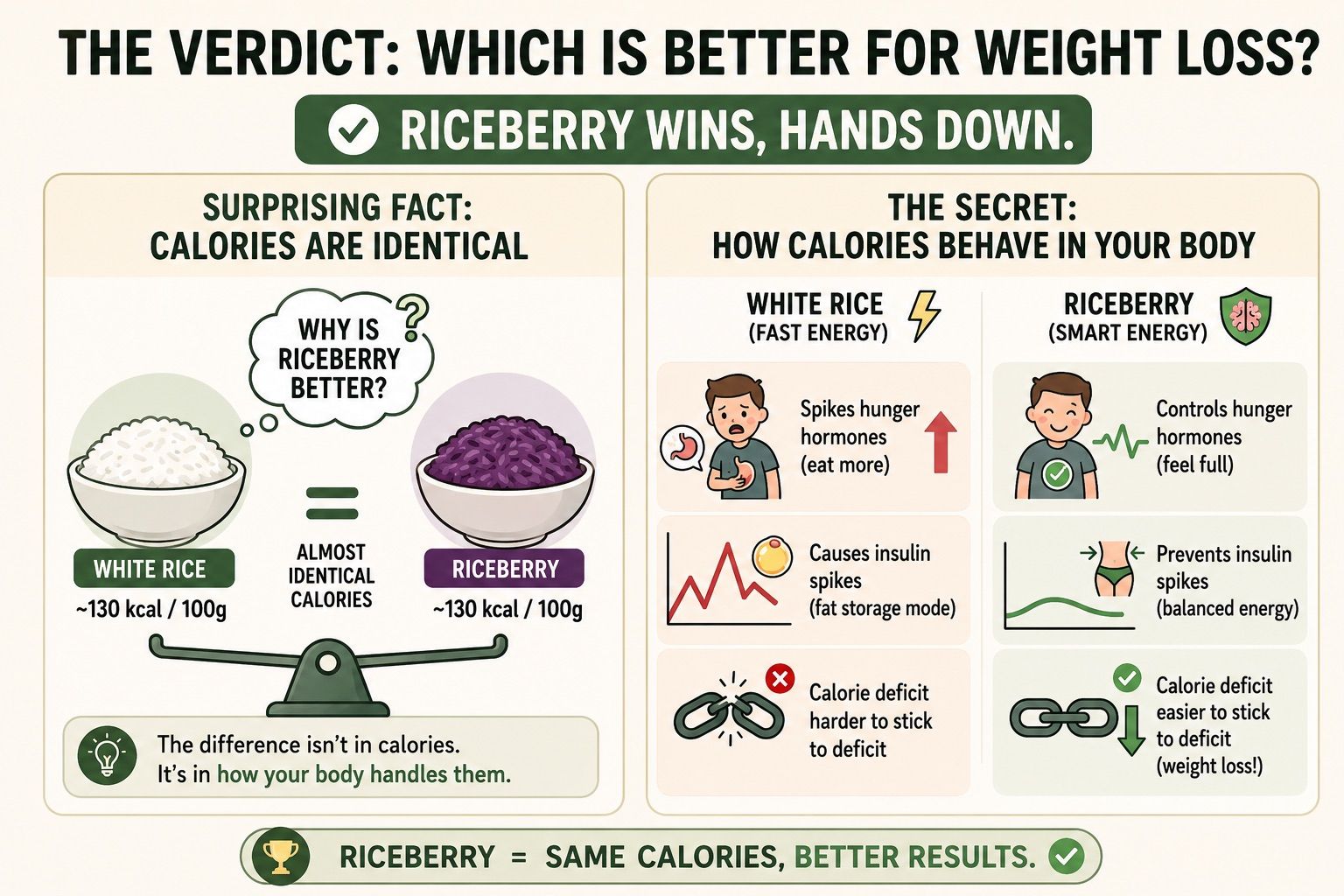
Riceberry wins, hands down.
Here is a surprising fact: The calories in White Rice and Riceberry are almost identical. (About 130 calories per 100 grams of cooked rice).
Wait, if the calories are the same, why does Riceberry help you lose weight?
Because weight loss isn't just about the number of calories; it’s about how those calories behave in your body. Riceberry controls your hunger hormones, prevents insulin spikes, and makes sticking to a Calorie Deficit significantly easier.
How to Make the Switch Without Suffering
Many people avoid whole grains because they think they taste dry or rubbery. The beauty of Riceberry is that it retains a soft, slightly chewy texture and a sweet, nutty aroma that pairs perfectly with both Thai and Western flavors.
If you don't have the time to cook and portion it yourself, Easy Health makes the transition effortless. We use premium grade Riceberry in our most popular weight-loss bowls:
Tsunami Bowl: Grilled chicken, edamame, and a light teriyaki sauce over warm Riceberry. The perfect low-GI lunch.
Sombrero Bowl: Grass-fed beef, avocado, and black beans over Riceberry. A high-protein, high-fiber powerhouse that keeps you full until bedtime.
FAQ: Your Riceberry Questions Answered
Q: Can I still lose weight eating White Rice?
A: Yes, weight loss always comes down to a Calorie Deficit. You can lose weight eating white rice if you strictly control your portions. However, it requires much more willpower because you will likely feel hungry and tired between meals. Riceberry makes the process painless.
Q: Does Riceberry cause bloating?
A: Since it is high in fiber, if you suddenly switch from zero fiber to a massive bowl of Riceberry, you might feel a bit gassy. Start with moderate portions and drink plenty of water to help your gut microbiome adjust.
Q: I hate the taste of standard brown rice. Will I like Riceberry?
A: Most likely, yes! Traditional brown rice can be tough and grainy. Riceberry is specifically bred to be softer, more aromatic, and much more pleasant to chew. It feels like an upgrade, not a punishment.
Upgrade Your Carbs Today! Download the Easy Health App
Stop fighting your hunger. Switch to smart, complex carbs that work with your body, not against it. Let Easy Health deliver perfectly portioned Riceberry meals directly to your door in Bangkok and Pattaya.
Order your healthy bowls today:
Android: Download via Google Play Store
iOS: Download via App Store
References
Harvard T.H. Chan School of Public Health. (2024). Carbohydrates and Blood Sugar.
Mahidol University (Thailand). (2024). Nutritional Benefits of Riceberry.
Mayo Clinic. (2024). Dietary fiber: Essential for a healthy diet.