
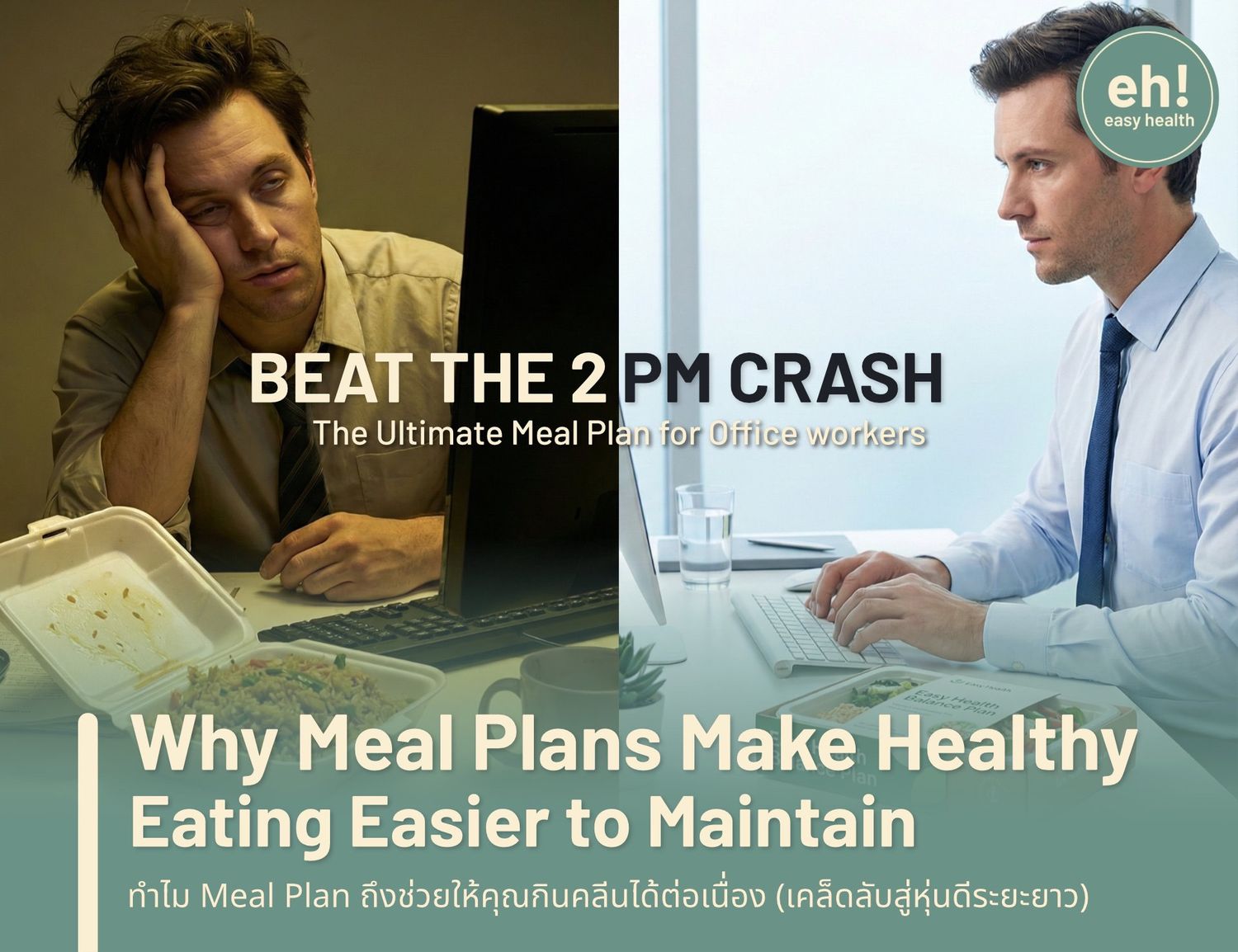
Meal Plans for Office Workers in Bangkok: Stay Full and Avoid Afternoon Slumps
It’s 2:00 PM. You’re back at your desk in Sathorn or Asoke with emails piling up and a meeting coming up fast. Instead of feeling focused, your energy dips, your concentration slips, and staying alert becomes a challenge.
This familiar pattern is the afternoon slump, and for many office workers in Bangkok, lunch is the main reason it happens. Popular midday meals such as Pad Thai, oily stir-fries with white rice, or quick sandwiches are often heavy in refined carbohydrates. These meals raise blood sugar quickly, followed by a sharp drop that leads to fatigue, brain fog, and reduced productivity.
Eating well at work is not about eating more, but eating smarter. A balanced approach to meal plans for office workers helps fuel both the brain and body, keeping energy stable throughout the afternoon. This guide explains how Easy Health supports consistent energy, lasting fullness, and improved focus throughout the workday.
The Science Behind the Afternoon Slump and How Lunch Triggers It
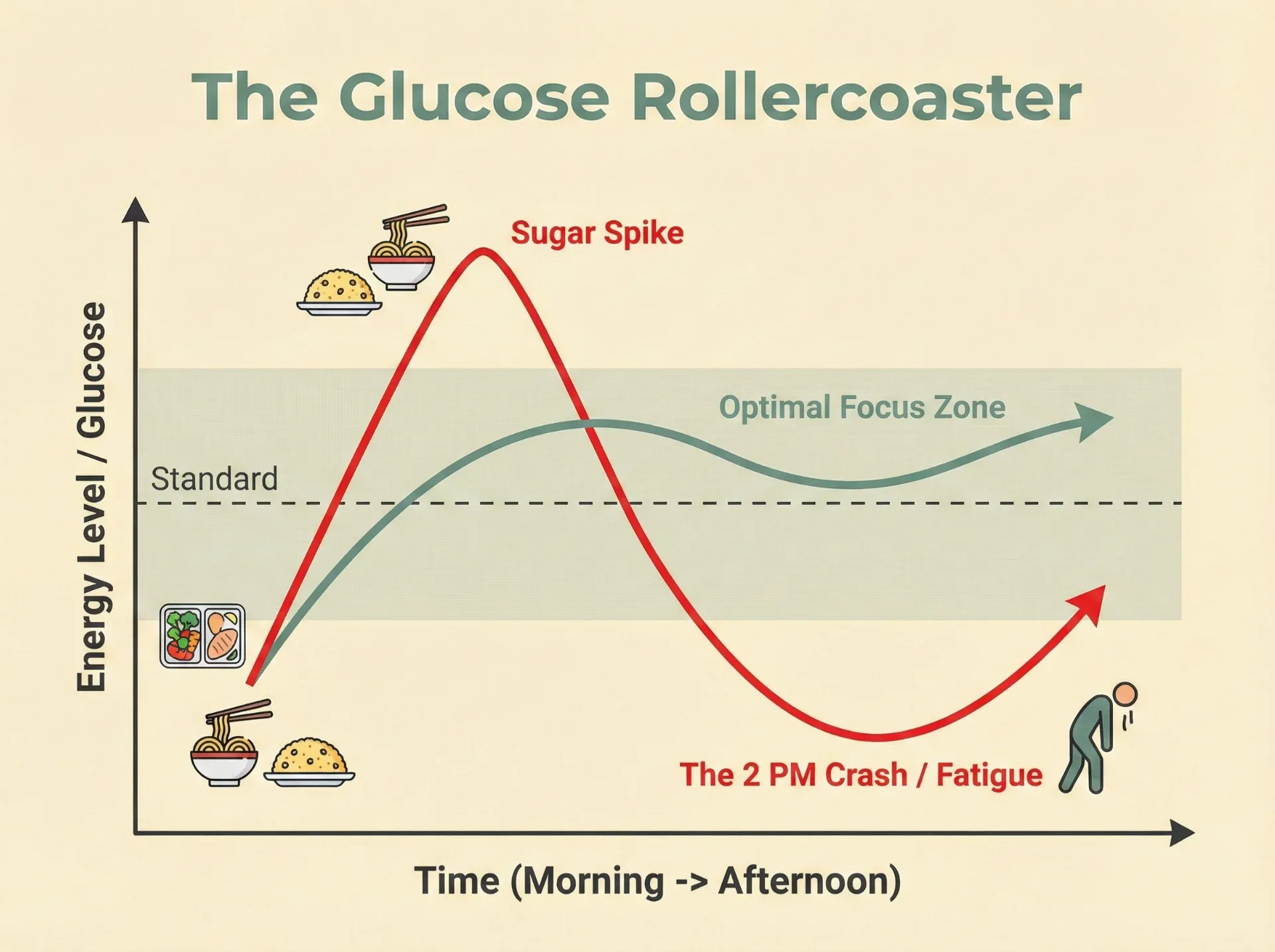
The main cause is what’s often called the glucose rollercoaster. When a lunch is high in refined carbohydrates such as white rice, noodles, or sugar and lacks sufficient fiber and protein:
The Spike: Blood sugar rises rapidly, creating a short-lived burst of energy.
The Drop: Insulin is released to regulate the surge, causing blood sugar levels to fall sharply.
The Crash: Blood sugar drops too low, resulting in fatigue, mental fog, and renewed cravings for sugar.
The Fix: Aim for steady energy release by combining complex carbohydrates such as riceberry or quinoa with lean protein and healthy fats.
The Perfect Office Nutrition Strategy: The Balanced Plan
For the average office worker who spends most of the day sitting but still wants to stay healthy, The Balance Plan at 1,400 to 1,600 kcal is designed to support daily energy and overall wellness.
Here’s why it’s a smarter choice for working professionals:
1. Portion Control Prevents the “Stuffed” Feeling
Large meals quickly lead to sluggishness and post-lunch fatigue. The Balance Plan structures the day around three controlled meals and one snack, helping professionals stay satisfied without feeling heavy or overfull.
Result: You stay comfortably full and energised, without the heaviness or bloating that slows you down.
2. Ingredients That Support Focus and Mental Performance
We replace ingredients that drain focus with options that actively support mental clarity and sustained concentration:
White Rice → Riceberry: A lower glycemic index supports steadier blood sugar and more consistent energy.
Vegetable Oil → Olive Oil and Healthy Fats: Supplies essential fats that support brain health and mental clarity.
Processed Meat → Free-Range Chicken or Fish: Delivers high-quality protein and amino acids needed for neurotransmitter function.
3. Convenient “Desktop Dining” for Busy Workdays

In Bangkok’s heat, stepping out for lunch can be tiring, and long queues at food courts quickly cut into your limited break time.
The Meal Plan Advantage: Daily delivery to your office lobby or reception removes the need to leave the building for lunch, freeing up 30 to 40 minutes each day for a proper break, a quick call with someone you care about, or wrapping up work sooner.
A Typical Day for a High-Performance Office Worker
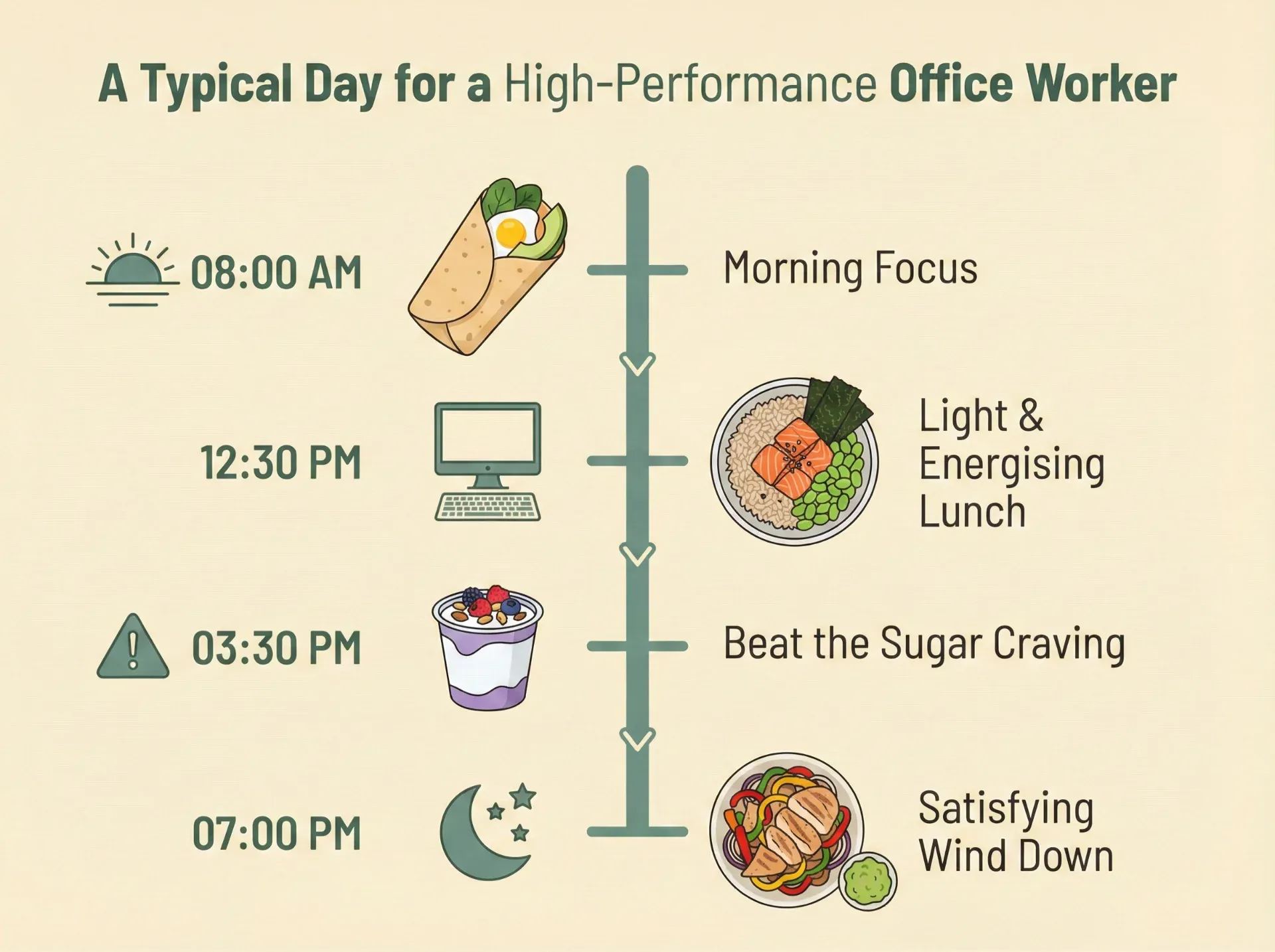
Here’s how The Balance Plan supports focus and energy across a typical workday:
08:00 AM (Breakfast): A hearty breakfast wrap provides protein from eggs and cheese, helping you stay focused and alert through morning meetings.
12:30 PM (Lunch): A Hawaii Taco or Sumo Bowl delivers fresh flavours and balanced nutrition, keeping the meal light enough to avoid afternoon sluggishness.
03:30 PM (The “Danger Zone”): Instead of reaching for a sugary iced coffee, you have a planned snack such as Oriental Quinoa or Greek Yogurt, supporting stable blood sugar when energy typically drops.
07:00 PM (Dinner): A Fajita Bowl offers a satisfying end to the day without heaviness, helping you unwind without interfering with sleep.
FAQ: Office Nutrition Questions
Q1: I often have client lunches. Can I pause my plan?
Yes. The Easy Health app lets you pause deliveries for specific days, so you only pay for the meals you actually receive.
Q2: Is 1,500 kcal enough if I work long hours?
Mental work uses glucose but does not burn calories at the same rate as physical activity. For most office-based roles, 1,500 to 1,600 kcal supports stable energy and daily maintenance. If you train after work, upgrading to the Active Plan (2,000 kcal) may be more suitable.
Q3: Does the delivery arrive before lunch?
Yes. Meals are delivered in the morning so your lunch is ready when you need it, without waiting for riders during peak hours.
Upgrade Your Workday. Download the Easy Health App.
Stop letting poor lunch choices drain your afternoon focus. Choose a meal plan designed to support your productivity throughout the workday.
Select the "Balance Plan" for peak focus:
Android: Download via Google Play Store
References
Harvard Business Review. (2024). What You Eat Affects Your Productivity. Retrieved from https://hbr.org/
Cleveland Clinic. (2024). Why You Get Tired After Eating. Retrieved from https://health.clevelandclinic.org/tired-after-eating
National Sleep Foundation. (2024). Food and Sleep: The Connection. Retrieved from https://www.sleepfoundation.org/nutrition