
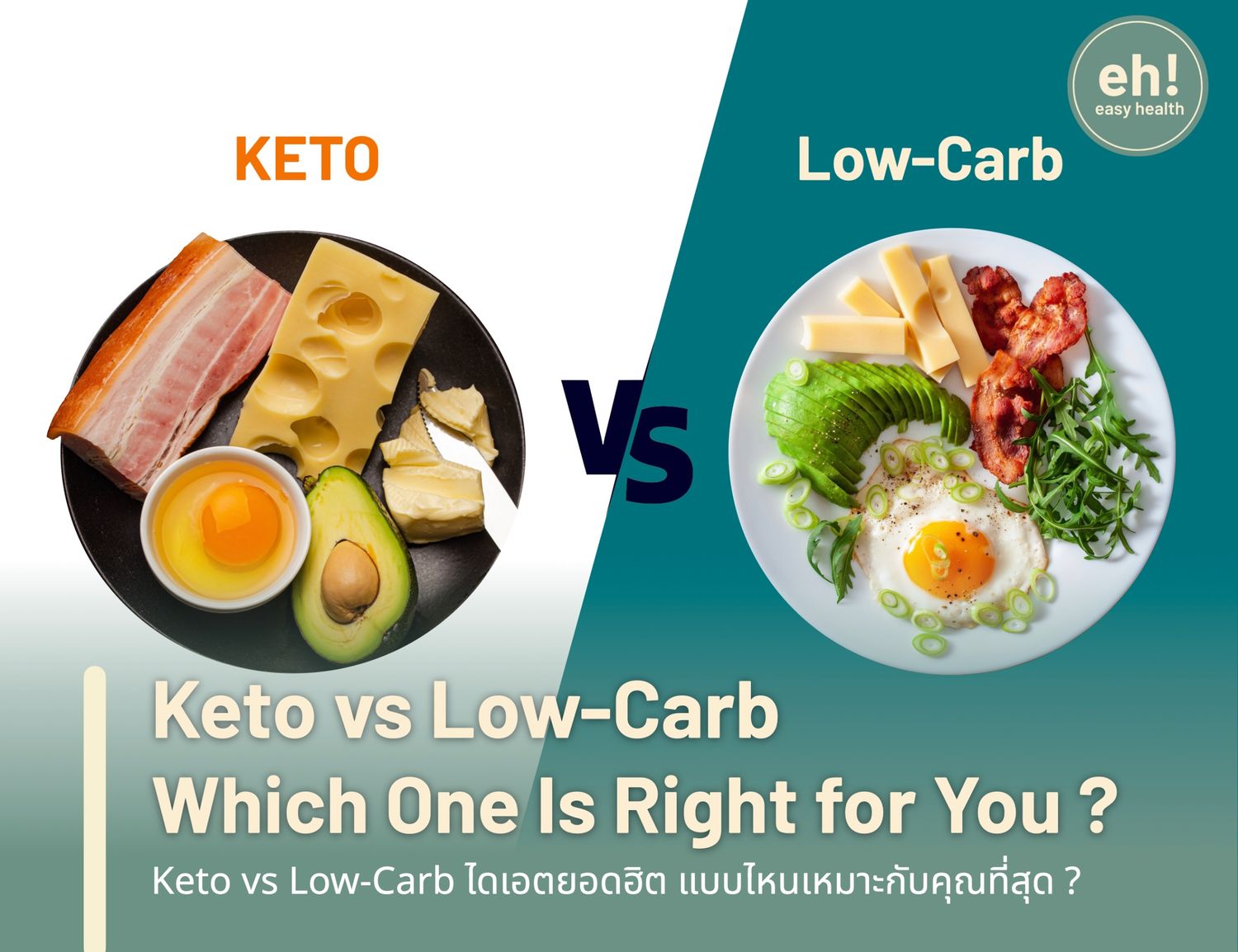
Keto vs Low-Carb: What Is the Real Difference and Which One Actually Works for You?
Both keto and low-carb reduce carbohydrates. Both can help you lose weight. Both have passionate followers who swear their approach is the only one that works. But they are not the same thing, and picking the wrong one for your lifestyle can mean weeks of misery followed by giving up entirely.
The confusion makes sense. "Keto" and "low-carb" get used interchangeably online, in gyms, and even by some nutritionists who should know better. But the difference between them is not a minor technicality. It changes what you can eat, how your body produces energy, how fast you see results, and most importantly, whether you can actually sustain the approach long enough for it to matter.
This guide explains the real difference, compares the two side by side with actual science, shows you what real meals look like for each approach (with full macros and prices), and helps you decide which one fits your life. No bias toward either. Just clarity.
The Core Difference in 30 Seconds
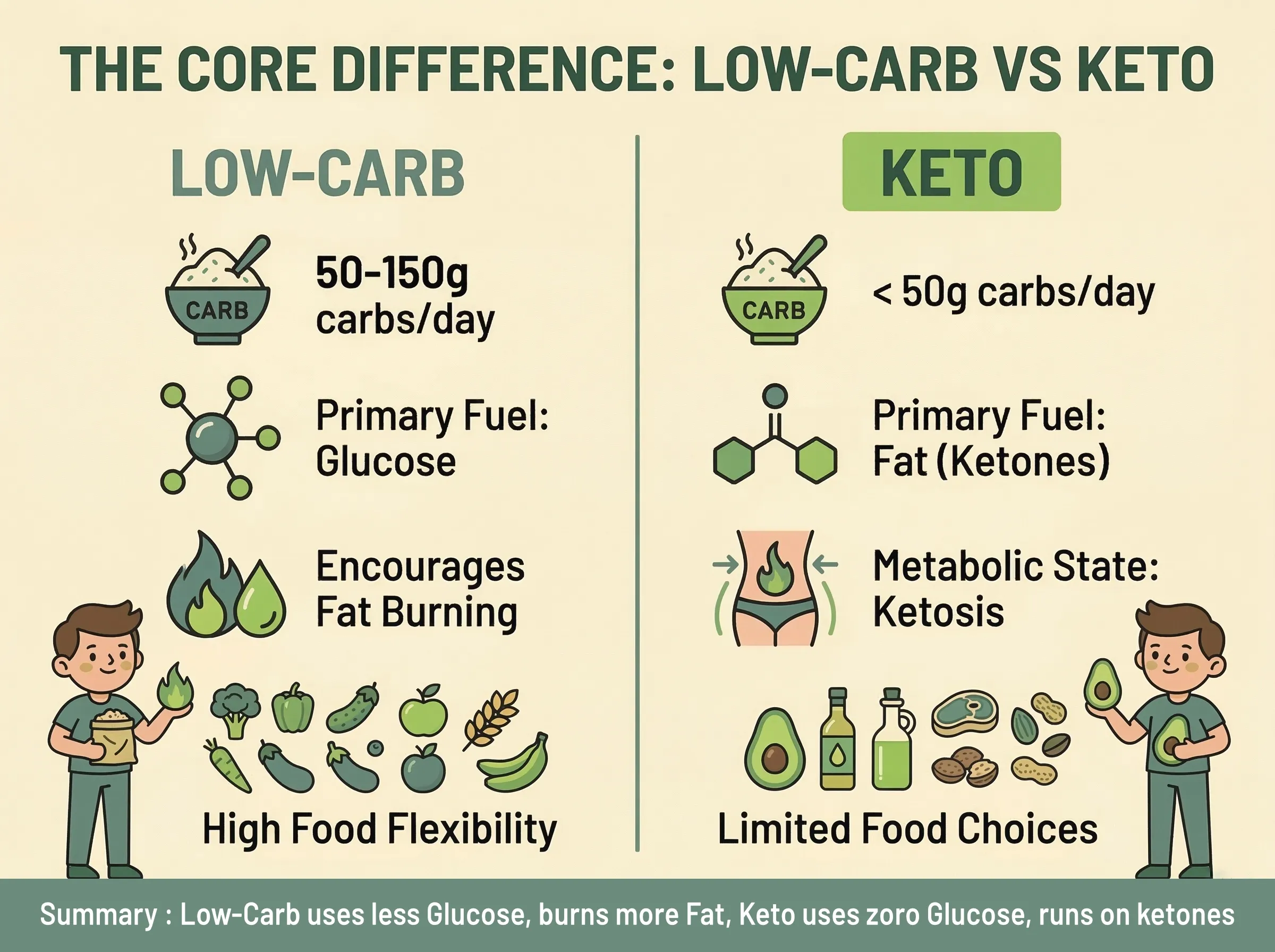
Low-carb means eating roughly 50 to 150 grams of carbohydrates per day. Your body still runs primarily on glucose but uses less of it, which reduces insulin spikes and encourages more fat burning. You have significant flexibility in food choices.
Keto (ketogenic) means eating fewer than 50 grams of carbs per day, often as low as 20 to 30 grams. At this level, your body runs out of glucose and switches to burning fat as its primary fuel source, producing molecules called ketones. This metabolic state is called ketosis.
The key distinction: low-carb reduces your carb intake. Keto eliminates it to the point where your entire metabolism shifts. Everything else (food choices, side effects, sustainability, results) flows from this one difference.
How Each Diet Works: The Science
Low-Carb: Reducing the Fuel
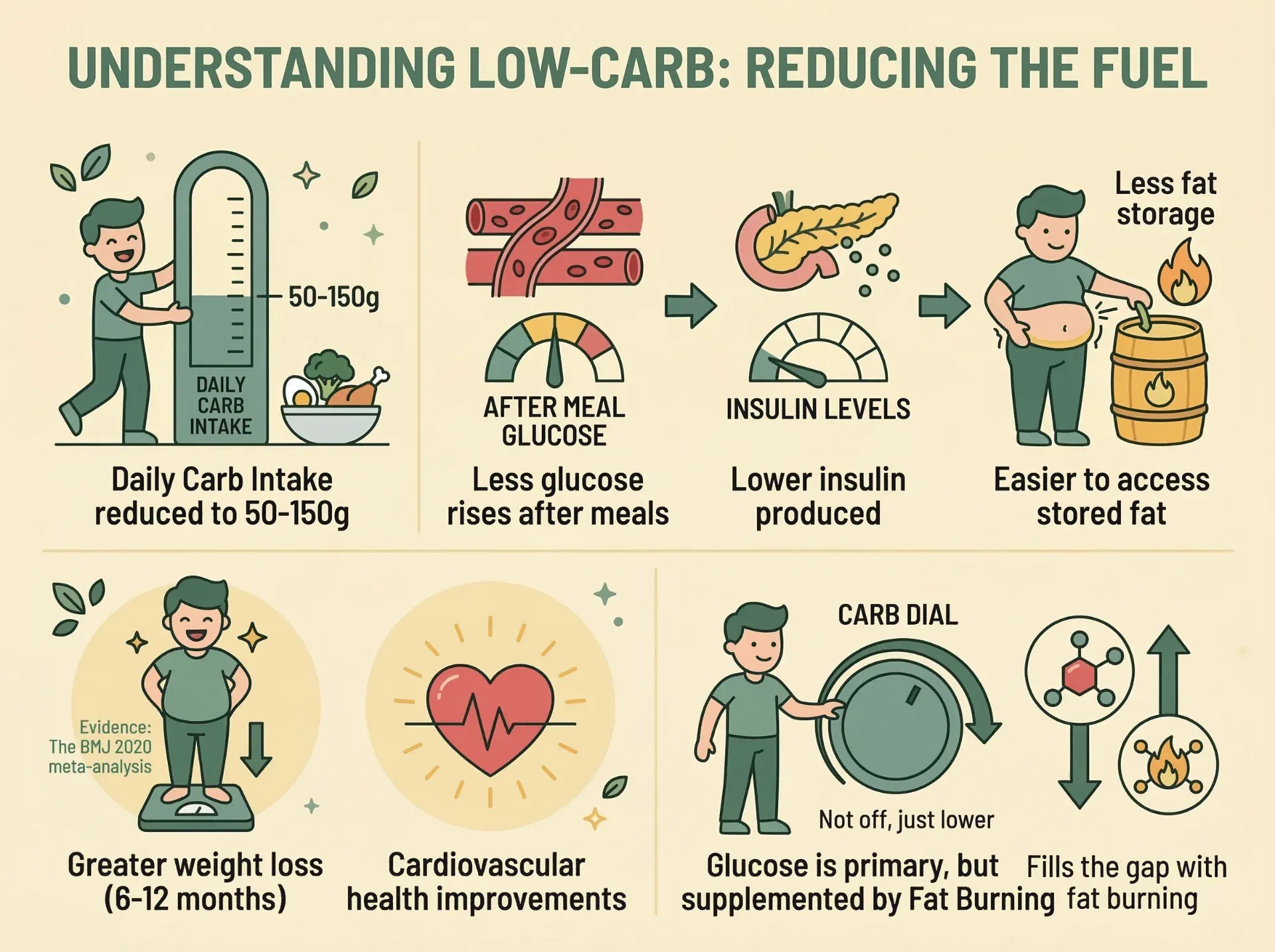
When you cut carbs to 50-150g per day, your blood sugar rises less after meals. Lower blood sugar means less insulin. Less insulin means your body stores less fat and accesses stored fat more easily. A 2020 meta-analysis in The BMJ found that low-carb diets produced greater weight loss and cardiovascular risk improvements compared to low-fat diets over 6 to 12 months.
Your body still uses glucose as its primary fuel. It just uses less of it and fills the gap with some fat burning. Think of it as turning down the carb dial rather than switching it off.
Keto: Switching the Fuel Source
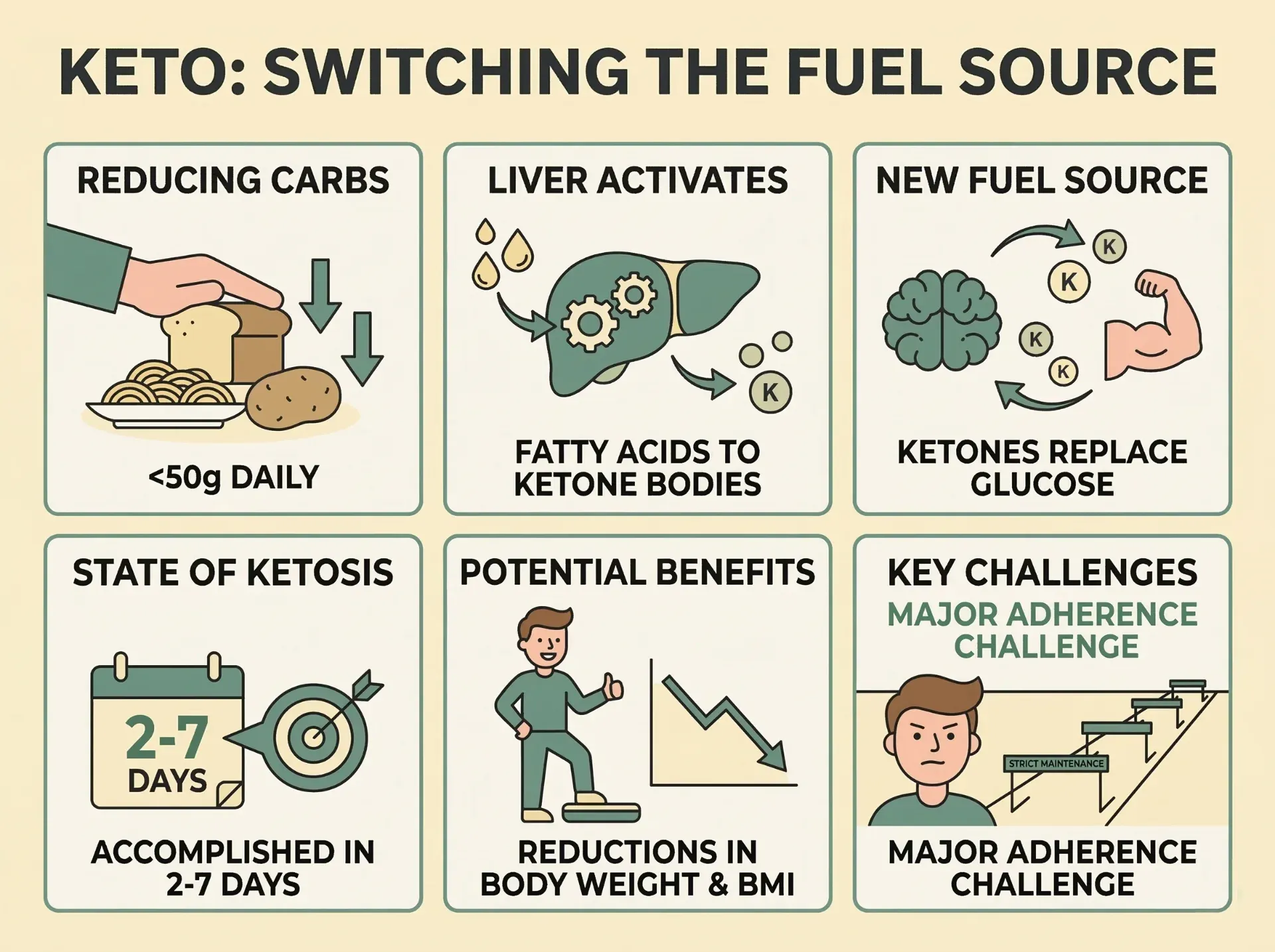
When carbs drop below roughly 50g per day, your liver starts converting fatty acids into ketone bodies. These ketones replace glucose as the primary fuel for your brain, muscles, and organs. This state, called ketosis, typically takes 2 to 7 days to achieve and requires strict maintenance.
A 2013 meta-analysis in the British Journal of Nutrition found that ketogenic diets were associated with significant reductions in body weight and body mass index. However, the same research noted that long-term adherence was a major challenge.
The metabolic shift is real and measurable. But it comes with trade-offs that matter in daily life.
Side-by-Side Comparison
Carb Limit
Low-carb: 50-150g per day. You can eat a small portion of brown rice, half a sweet potato, or a piece of fruit and stay within range.
Keto: Under 50g per day, often 20-30g. Half an apple could knock you out of ketosis. Every gram counts.
Fat Intake
Low-carb: Moderate fat, higher protein. Typical split is roughly 40% protein, 30% fat, 30% carbs (flexible).
Keto: Very high fat (60-75% of calories), moderate protein (20-25%), very low carb (5-10%). You eat fat as your primary fuel.
Protein
Low-carb: Emphasises protein. Great for muscle building and exercise recovery.
Keto: Must moderate protein. Too much protein can convert to glucose (gluconeogenesis) and disrupt ketosis.
Speed of Results
Low-carb: Steady, gradual fat loss. Typically 0.5-1 kg per week. Sustainable pace.
Keto: Rapid initial weight loss (mostly water weight in week 1-2), then steady fat loss. Dramatic early results but can plateau.
Side Effects
Low-carb: Minimal. Some people feel slightly lower energy during the first few days.
Keto: "Keto flu" in weeks 1-2 (headaches, fatigue, irritability, brain fog). Caused by the metabolic transition and mineral depletion.
Sustainability
Low-carb: High. Flexible enough to maintain for years. Compatible with eating out, social events, travel.
Keto: Low to moderate. Very difficult to maintain long-term. Harvard T.H. Chan School of Public Health notes that keto is hard to follow long-term and may not be suitable for everyone.
Exercise Compatibility
Low-carb: Good. Enough carbs to fuel workouts, especially if you time carb intake around exercise.
Keto: Can impair high-intensity exercise performance in the first 4-6 weeks. Better for low-intensity steady-state cardio once adapted.
Eating Out in Bangkok
Low-carb: Easy. Order grilled protein with vegetables, skip the rice, done. Most restaurants accommodate this.
Keto: Difficult. Hidden carbs in sauces, seasonings, and cooking oils make it hard to guarantee you stay in ketosis. Thai food is particularly challenging due to sugar in many sauces.
What Real Meals Look Like: Keto vs Low-Carb Examples
Theory is useful. Seeing actual meals with real numbers is better. Here are examples from the Easy Health menu that show what each approach looks like in practice. Every meal is cooked fresh daily in Bangkok, with zero MSG, zero added sugar, and full macro transparency.
Low-Carb Meals (50-150g carbs/day)

366 kcal · 28g protein · 3g carbs · 27g fat
225 THB
Low-carb friendly: Extremely low carb, high protein, healthy fats from eggs and avocado.

615 kcal · 39g protein · moderate carbs
135 THB
Low-carb friendly: Yes, fits within a low-carb day. Real tamarind sauce, free-range chicken. You can eat Thai food and still be low-carb.

589 kcal · 56g protein · 27g carbs · 29g fat
289 THB
Low-carb friendly: 27g carbs is very manageable. 56g protein makes this one of the highest-protein meals available.

385 kcal · 33g protein · 13g carbs · 23g fat
229 THB
Low-carb friendly: Only 13g carbs with excellent protein. Great for lunch or dinner.

239 kcal · 13g protein
195 THB
Low-carb friendly: Plant-based option with chickpea protein and healthy fats from olive oil.
Keto-Friendly Meals (under 50g carbs/day total)
366 kcal · 28g protein · 3g carbs · 27g fat
225 THB
Keto friendly: Only 3g carbs. Perfect keto breakfast.

93 kcal · 14g protein · 6g carbs · 1g fat
75 THB
Keto friendly: 6g carbs, ultra-light. Good as a side or light meal.

165 kcal · 4g protein · 14g carbs · 10g fat
75 THB
Keto caution: 14g carbs takes a meaningful chunk of your daily 20-30g allowance. Pair carefully.
385 kcal · 33g protein · 13g carbs · 23g fat
229 THB
Keto caution: 13g carbs is workable but uses most of your carb budget if you are aiming for 20-30g/day.
Key Takeaway
Low-carb gives you access to most of the Easy Health menu with over 160 items. Keto limits you to the lowest-carb options and requires careful daily tracking. Both are possible, but low-carb is significantly easier to execute in daily life.
Sample Day: Low-Carb vs Keto
Low-Carb Sample Day (~1,400 kcal, ~100g protein, ~45g carbs)
Breakfast: Morning Omelette (366 kcal, 28g protein, 3g carbs) - 225 THB
Lunch: Farmer Omelette (385 kcal, 33g protein, 13g carbs) - 229 THB
Dinner: Tom Jued Soup + side salad (roughly 200 kcal, 18g protein, 10g carbs) - 75 THB
Snack: Peanut Butter Berry Jam Bowl (431 kcal, 21g protein, ~19g carbs) - 175 THB
Daily total: ~1,382 kcal · ~100g protein · ~45g carbs
Daily cost: ~704 THB
Keto Sample Day (~1,200 kcal, ~75g protein, ~22g carbs)
Breakfast: Morning Omelette (366 kcal, 28g protein, 3g carbs) - 225 THB
Lunch: Farmer Omelette (385 kcal, 33g protein, 13g carbs) - 229 THB
Dinner: Tom Jued Soup (93 kcal, 14g protein, 6g carbs) - 75 THB
Daily total: ~844 kcal · ~75g protein · ~22g carbs
Daily cost: ~529 THB
Note: This is very low calorie. Most keto practitioners would add healthy fats (avocado, olive oil, nuts) to reach 1,200-1,800 kcal while keeping carbs under 30g.
The contrast is clear: the low-carb day includes more variety and is easier to plan. The keto day requires more careful tracking and may need supplemental fats to hit adequate calories.
Who Should Choose Low-Carb
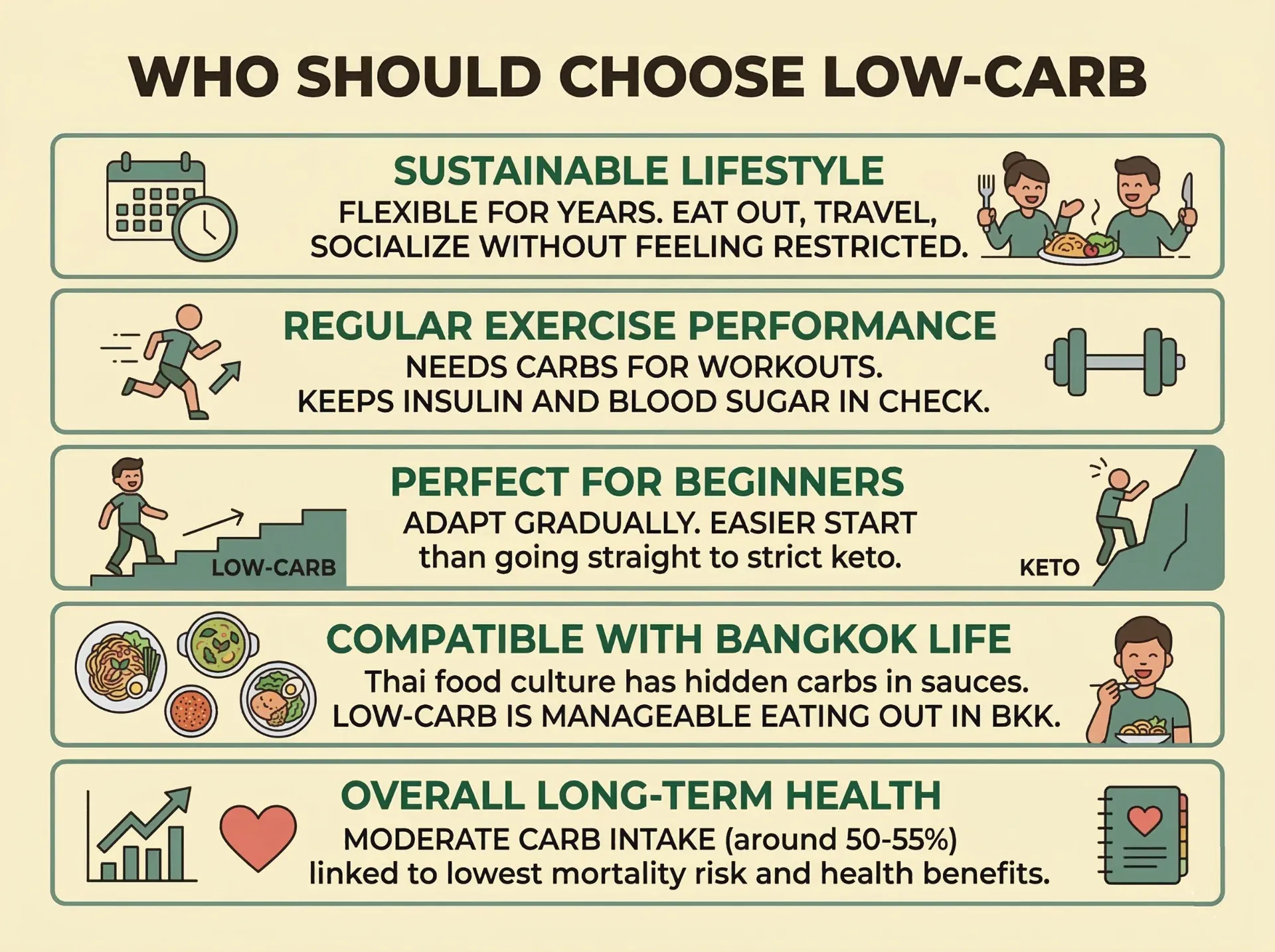
Low-carb is the better choice for most people. Here is why:
You want something sustainable. Low-carb is flexible enough to follow for years without feeling restricted. You can eat out at restaurants, attend social events, travel, and still stay on track.
You exercise regularly. If you train with weights, run, play sports, or do any high-intensity exercise, your body needs some carbohydrates for performance. Low-carb provides enough to fuel workouts while still keeping insulin and blood sugar in check.
You are a beginner. If you have never restricted carbs before, jumping straight to keto is like running a marathon when you have never jogged around the block. Low-carb lets you adapt gradually.
You live in Bangkok. Thai food culture involves sauces, seasonings, and ingredients that make strict keto extremely difficult to maintain when eating out. Low-carb is far more compatible with Bangkok life.
You want overall health improvement. A 2018 review in The Lancet Public Health found that moderate carbohydrate intake (around 50-55% of energy, which aligns with the upper end of low-carb) was associated with the lowest risk of mortality.
Who Should Choose Keto
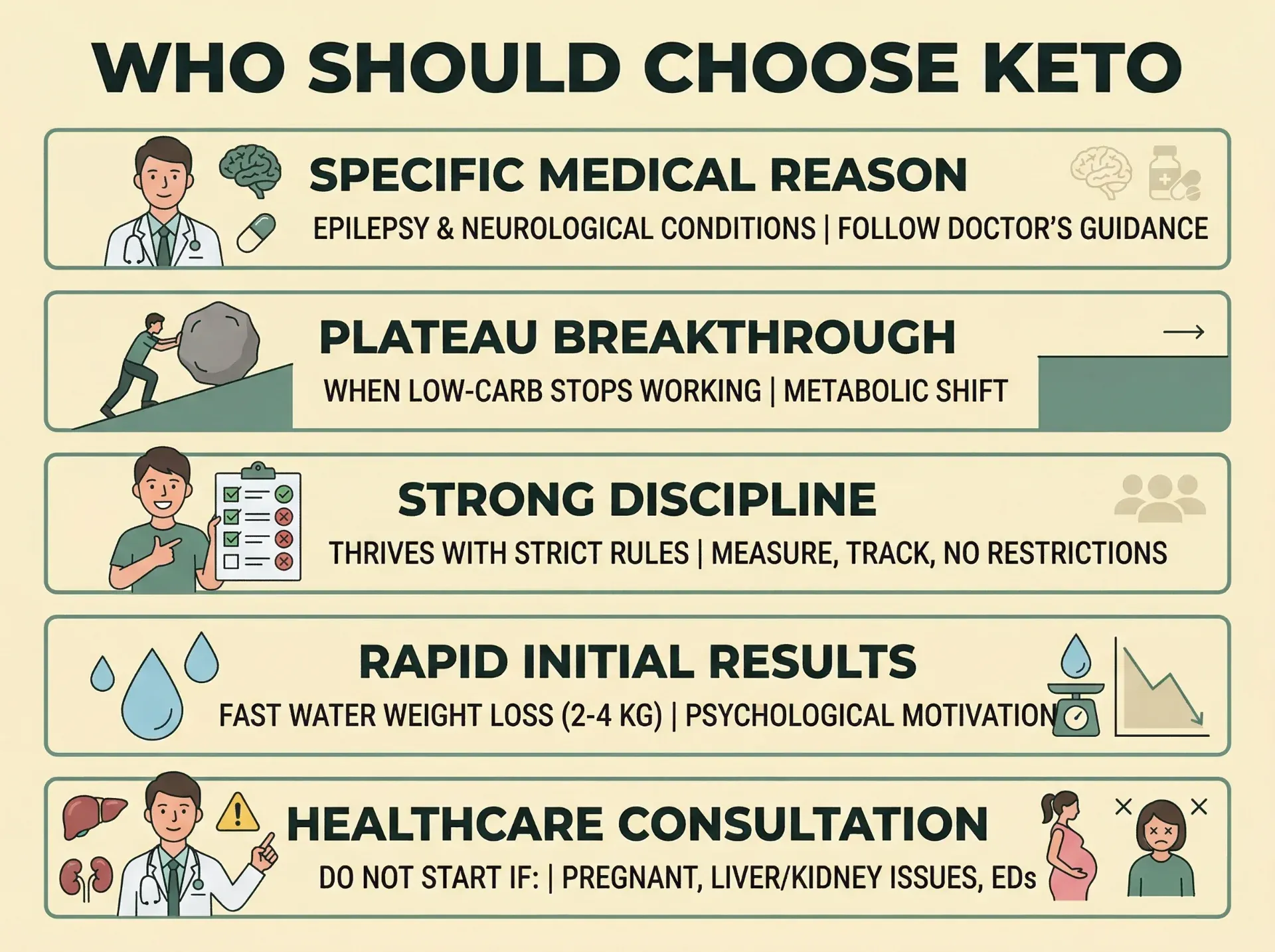
Keto can be the right choice in specific circumstances:
You have a specific medical reason. The ketogenic diet was originally developed to treat epilepsy and has evidence supporting its use for certain neurological conditions. If your doctor recommends it, follow their guidance.
You have tried low-carb and plateaued. If moderate carb reduction no longer produces results, the metabolic shift of ketosis can break through a weight loss plateau.
You have strong discipline and do not mind restricted food choices. Keto requires measuring, tracking, and saying no to many foods. If you thrive with strict rules and binary choices, keto's clarity can be an advantage.
You want rapid initial results for motivation. The fast water weight loss in the first two weeks of keto (typically 2-4 kg) provides strong psychological motivation, even though much of it is water rather than fat.
You are willing to consult a healthcare professional. Keto is not recommended for people with liver or kidney conditions, pregnant women, or those with a history of eating disorders without medical supervision.
Easy Health Meal Plans for Both Approaches
Whether you choose keto or low-carb, Easy Health has meal plans that support your approach:
For Low-Carb:
Lean Plan: 800-1,000 kcal/day, 1,899 THB/5 days. Ideal for weight loss with low-carb principles.
Balance Plan: 1,400-1,600 kcal/day, 3,399 THB/5 days. The most popular plan. Balanced macros with controlled carbs.
Active Plan: 1,800-2,000 kcal/day, 3,499 THB/5 days. For regular exercisers who need more fuel.
Vegetarian Plan: 1,400-1,600 kcal/day, 2,799 THB/5 days. Plant-based low-carb.
For Keto:
Keto Plan: Low-carb, high-fat, 3,499 THB/5 days. Specifically designed for ketogenic eating with quality fat sources, controlled protein, and minimal carbs.
For High-Performance:
Athlete Plan: 2,400-2,600 kcal/day, 4,799 THB/5 days. Maximum fuel for serious training.
All plans come with full macro transparency, fresh daily cooking, zero MSG, zero added sugar, and over 160 menu items to choose from.
What Actually Happens to Your Body: Week by Week
Understanding the timeline helps set realistic expectations and prevents you from quitting during the hardest phase.
Low-Carb Timeline
Week 1-2: You may feel slightly sluggish as your body adjusts to lower glucose availability. Mild cravings for sugar and bread are normal. Most people lose 1-2 kg, partly water weight from reduced glycogen stores.
Week 3-4: Energy stabilises. Cravings diminish significantly. Sleep often improves because blood sugar is no longer spiking and crashing. Fat loss becomes visible, especially around the midsection. Most people report feeling "lighter" after meals without the post-lunch crash.
Month 2-3: Your palate changes. Foods that used to taste normal now taste overly sweet. You start naturally gravitating toward protein and vegetables. Weight loss is steady at 0.5-1 kg per week. Bloodwork markers (fasting glucose, triglycerides, HbA1c) typically show improvement at this point.
Month 4+: Low-carb becomes your default way of eating rather than a "diet." The mental effort drops dramatically. You intuitively know which foods work for you and portion sizes become second nature.
Keto Timeline
Day 1-3: Glycogen stores deplete. You lose 1-3 kg of water weight as glycogen releases stored water. You feel increasingly tired and may experience headaches.
Day 4-7: The keto flu hits hardest. Fatigue, brain fog, irritability. Your body is running low on glucose but has not yet efficiently ramped up ketone production. This is the worst part and where most people quit.
Week 2-3: Ketone production increases. Energy starts returning, often with a notable sense of mental clarity that keto advocates describe as "brain fuel." Hunger decreases significantly because ketones suppress appetite hormones (ghrelin).
Week 4-6: You are fully fat-adapted. Energy is stable throughout the day without the highs and lows of glucose. Fat loss is visible. However, exercise performance may still lag, especially for high-intensity activities.
Month 2-3: Fat adaptation deepens. Exercise performance begins to recover for most activities. However, social eating situations remain challenging. Many people find it difficult to explain their restrictions at Thai restaurants or social gatherings.
Month 4+: Long-term keto requires ongoing commitment to tracking and food preparation. Some people cycle in and out of keto, using it as a tool rather than a permanent lifestyle. Others find a rhythm and sustain it, though the research on very long-term keto adherence is still limited.
The Bangkok Factor: Why Location Matters for Your Choice
Living in Bangkok creates unique considerations that most international diet advice does not address.
Thai cuisine loves sugar. Som tum dressing, pad thai sauce, larb seasoning, even basic stir-fry sauces contain sugar. For low-carb, this adds some carbs but stays manageable. For keto, hidden sugar in one restaurant meal can knock you out of ketosis for 24-48 hours.
Street food is affordable but unpredictable. You cannot ask a street vendor for exact macro breakdowns. Low-carb works because you can eyeball a grilled chicken and vegetables. Keto requires precision that street food cannot guarantee.
Social eating is central to Thai culture. Shared dishes, office lunch orders, family dinners. Low-carb is easy to navigate by choosing protein-heavy dishes and skipping rice. Keto requires explaining why you cannot eat most of what is on the table.
The heat affects electrolytes. Bangkok's tropical climate means you sweat more, losing sodium, potassium, and magnesium faster. This amplifies keto flu symptoms and makes electrolyte management even more critical during the keto adaptation phase. If you choose keto in Bangkok, electrolyte supplementation is not optional.
Easy Health solves the tracking problem. Every meal on the Easy Health menu displays exact macros. Whether you are low-carb or keto, you know precisely what you are eating. No guessing about hidden sugar in the sauce. No uncertainty about cooking oils. This is especially valuable for keto, where a margin of error in carb counting can mean the difference between staying in or falling out of ketosis.
5 Common Mistakes People Make with Both Diets
Mistake 1: Thinking keto and low-carb are the same thing
They share a family resemblance, but the metabolic mechanisms are completely different. Low-carb reduces glucose dependence. Keto eliminates it. Confusing them leads to eating too many carbs for keto (and not entering ketosis) or restricting too heavily for low-carb (and burning out unnecessarily).
Mistake 2: Not tracking macros
Both approaches require some awareness of what you eat. For keto, tracking is essential because even small carb overages can knock you out of ketosis. For low-carb, tracking helps you avoid "carb creep" where hidden sugars in sauces, dressings, and processed foods slowly push you over your target.
Mistake 3: Choosing bad fats
Reducing carbs is pointless if you replace them with deep-fried food, processed meat, and packaged snacks. The health benefits come from replacing refined carbs with quality protein, vegetables, and healthy fats (avocado, olive oil, nuts, fatty fish). Not from replacing rice with bacon.
Mistake 4: Ignoring fibre
When you cut carbs, you often cut fibre-rich foods like whole grains and certain vegetables. Low fibre intake leads to digestive problems, gut microbiome disruption, and increased cardiovascular risk. Make sure to include plenty of non-starchy vegetables, nuts, seeds, and other fibre sources regardless of which approach you follow.
Mistake 5: Going too extreme too fast
Jumping from a standard Thai diet (60%+ carbs) to strict keto overnight is a recipe for keto flu, low energy, and giving up within a week. A better approach: start with low-carb for 2-4 weeks, let your body adapt, then decide if you want to go further into keto territory.
FAQ
What is the main difference between keto and low-carb?
The metabolic goal. Low-carb (50-150g carbs/day) reduces carbohydrate intake while your body still runs primarily on glucose. Keto (under 50g carbs/day, often 20-30g) restricts carbs so severely that your body switches to burning fat and producing ketones as its primary fuel. This metabolic state, called ketosis, is what separates keto from general low-carb eating.
Can I eat fruit on keto or low-carb?
On low-carb, yes. Berries, apples, and other moderate-sugar fruits fit easily within 50-150g carbs per day. On keto, fruit is extremely limited. Most fruit contains too much fructose. Small portions of berries (strawberries, blueberries, raspberries) are the main exception, and even those need careful portioning to stay under your daily carb limit.
What is keto flu and how long does it last?
Keto flu is a group of symptoms (headaches, fatigue, irritability, brain fog, nausea) that occur during the first 1-2 weeks of keto as your body transitions from glucose to ketones. It is caused by the metabolic switch plus rapid loss of water and electrolytes. Not dangerous, but uncomfortable. Adequate water intake, electrolyte supplementation (sodium, potassium, magnesium), and gradual carb reduction can reduce symptoms.
Which diet is better for building muscle?
Low-carb is generally better for muscle building. It allows higher protein intake without the risk of disrupting ketosis, and provides enough carbohydrates to fuel resistance training. Keto can support muscle maintenance, but the restriction on both carbs and protein makes it harder to optimise for muscle growth.
Can I do keto or low-carb as a vegetarian?
Low-carb vegetarian is straightforward: tofu, tempeh, eggs, legumes, nuts, seeds, and dairy provide plenty of protein and fat options. Keto vegetarian is much harder because most plant-based protein sources (lentils, chickpeas, beans) contain significant carbohydrates. It requires very careful planning and heavy reliance on eggs, cheese, nuts, seeds, and oils.
Is one diet safer than the other long-term?
Research suggests that moderate carbohydrate restriction (low-carb range) is safe and potentially beneficial long-term. A 2018 study in The Lancet Public Health found that moderate carb intake was associated with the lowest mortality risk. Long-term keto data is more limited, and some experts raise concerns about sustained very-high-fat intake and potential effects on cardiovascular health. Consult a healthcare professional before starting any restrictive diet.
Ready to Start? Pick Your Plan
Whether you choose keto or low-carb, Easy Health delivers fresh, macro-transparent meals across Bangkok every day.
Over 160 menu items, all cooked fresh daily
Full macro info (calories, protein, carbs, fat) for every meal
Zero MSG, zero added sugar, zero preservatives
6 meal plans including a dedicated Keto Plan (3,499 THB/5 days)
Download the Easy Health app and find your plan:
Or explore online:
References
Ludwig, D. S., et al. (2020). Dietary fat: From foe to friend? Effects of carbohydrate restriction and high-fat diets on energy expenditure. The BMJ, 369, m1200. https://doi.org/10.1136/bmj.m1200
Bueno, N. B., et al. (2013). Very-low-carbohydrate ketogenic diet v. low-fat diet for long-term weight loss: a meta-analysis of randomised controlled trials. British Journal of Nutrition, 110(7), 1178-1187. https://doi.org/10.1017/S0007114513000548
Seidelmann, S. B., et al. (2018). Dietary carbohydrate intake and mortality: a prospective cohort study and meta-analysis. The Lancet Public Health, 3(9), e419-e428. https://doi.org/10.1016/S2468-2667(18)30135-X
Harvard T.H. Chan School of Public Health. Ketogenic Diet. The Nutrition Source. https://nutritionsource.hsph.harvard.edu/healthy-weight/diet-reviews/ketogenic-diet/
Volek, J. S., & Phinney, S. D. (2012). The Art and Science of Low Carbohydrate Living. Beyond Obesity LLC.
Paoli, A., et al. (2013). Beyond weight loss: a review of the therapeutic uses of very-low-carbohydrate (ketogenic) diets. European Journal of Clinical Nutrition, 67(8), 789-796. https://doi.org/10.1038/ejcn.2013.116
World Health Organization. (2020). Healthy Diet. Fact Sheet. https://www.who.int/news-room/fact-sheets/detail/healthy-diet
Thai Ministry of Public Health, Department of Health. "Reduce Sweet, Oily, Salty" Campaign. https://multimedia.anamai.moph.go.th/infographics/info648_food_15/