

How to Lose Belly Fat: Why Your Diet Matters More Than Ab Exercises
You have been doing sit-ups every morning. Planks after lunch. Maybe even bought one of those ab rollers gathering dust under your bed. Yet the belly remains. The stubborn ring of fat around your midsection refuses to budge despite hundreds of crunches per week.
Here is the uncomfortable truth that the fitness industry does not want you to hear: you cannot crunch your way to a flat stomach. Ab exercises strengthen muscles beneath the fat, but they do virtually nothing to remove the fat covering those muscles. A study testing exactly this had participants do abdominal exercises 5 days per week for 6 weeks. The result? Zero measurable reduction in abdominal fat. Their abs got stronger, but the fat stayed exactly where it was.
To lose belly fat, you need to understand what causes it, why it accumulates specifically around the midsection, and why your diet is the single most powerful tool for eliminating it. This guide covers the science of belly fat, the dietary strategies that actually work, what to eat and what to avoid, and how to apply these principles in Bangkok's food environment.
The Two Types of Belly Fat (and Why One Is Dangerous)
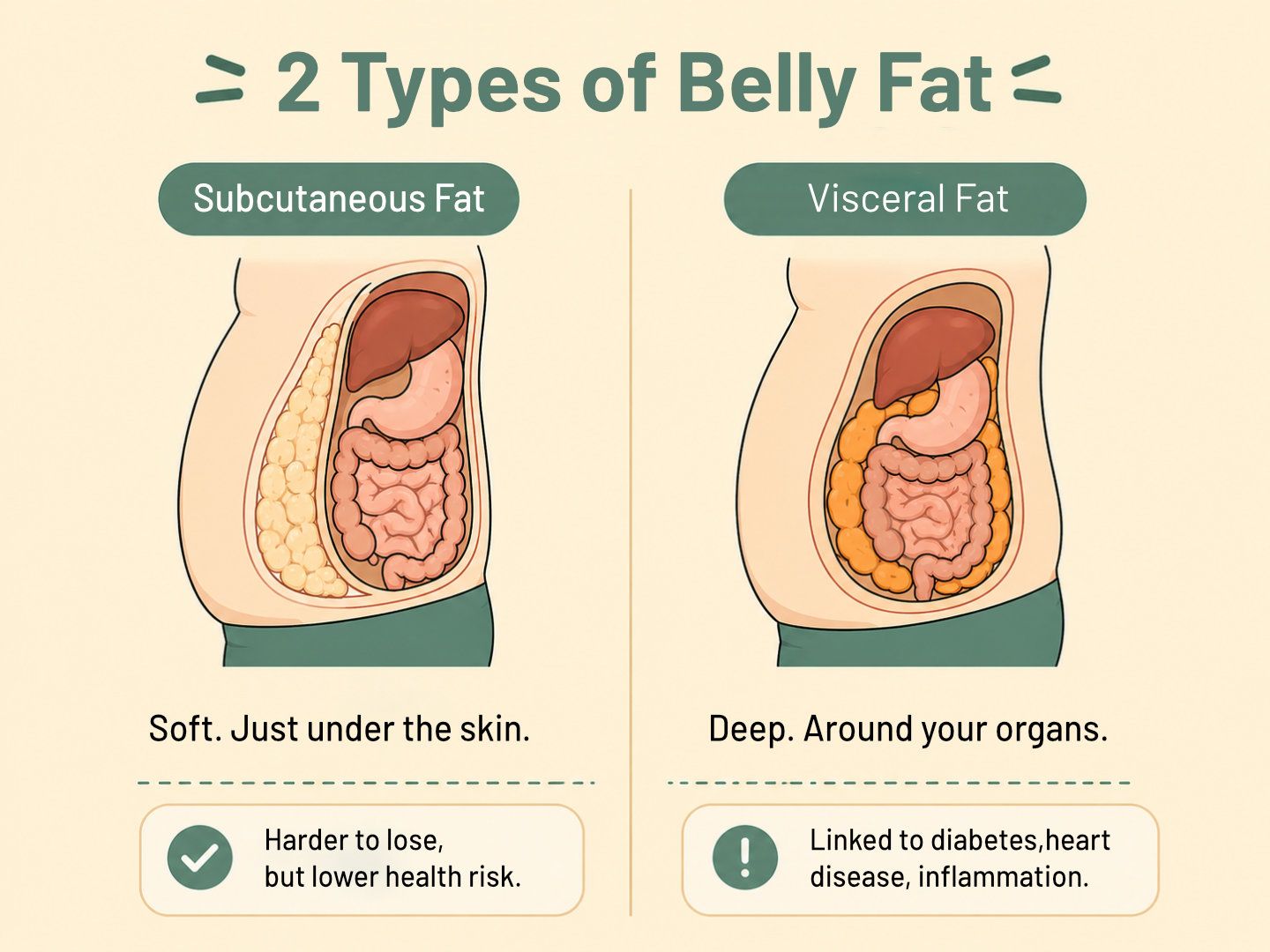
Not all belly fat is equal. Understanding the difference changes how you approach losing it.
Subcutaneous Fat
This is the fat you can pinch. It sits between your skin and abdominal muscles. While it affects appearance, subcutaneous fat is relatively benign from a health perspective. It is stubborn to lose but not actively harmful.
Visceral Fat
This is the fat you cannot see or pinch. It wraps around your internal organs: liver, intestines, pancreas, and kidneys. Visceral fat is metabolically active tissue that functions almost like an organ, secreting inflammatory chemicals, disrupting insulin signalling, and increasing stress hormone production.
A landmark study involving over 220,000 participants found that waist circumference (a proxy for visceral fat) was a stronger predictor of cardiovascular disease risk than BMI. Men with waist circumference above 102cm and women above 88cm face significantly elevated risk.
Research confirms that visceral fat directly contributes to insulin resistance, type 2 diabetes, and cardiovascular disease. This is the fat that matters most for both health and appearance.
The good news: visceral fat is actually the first fat your body burns when you create a calorie deficit. It responds to dietary changes faster than subcutaneous fat, meaning the most dangerous fat is also the most responsive to the right nutritional approach.
Why Ab Exercises Do Not Burn Belly Fat
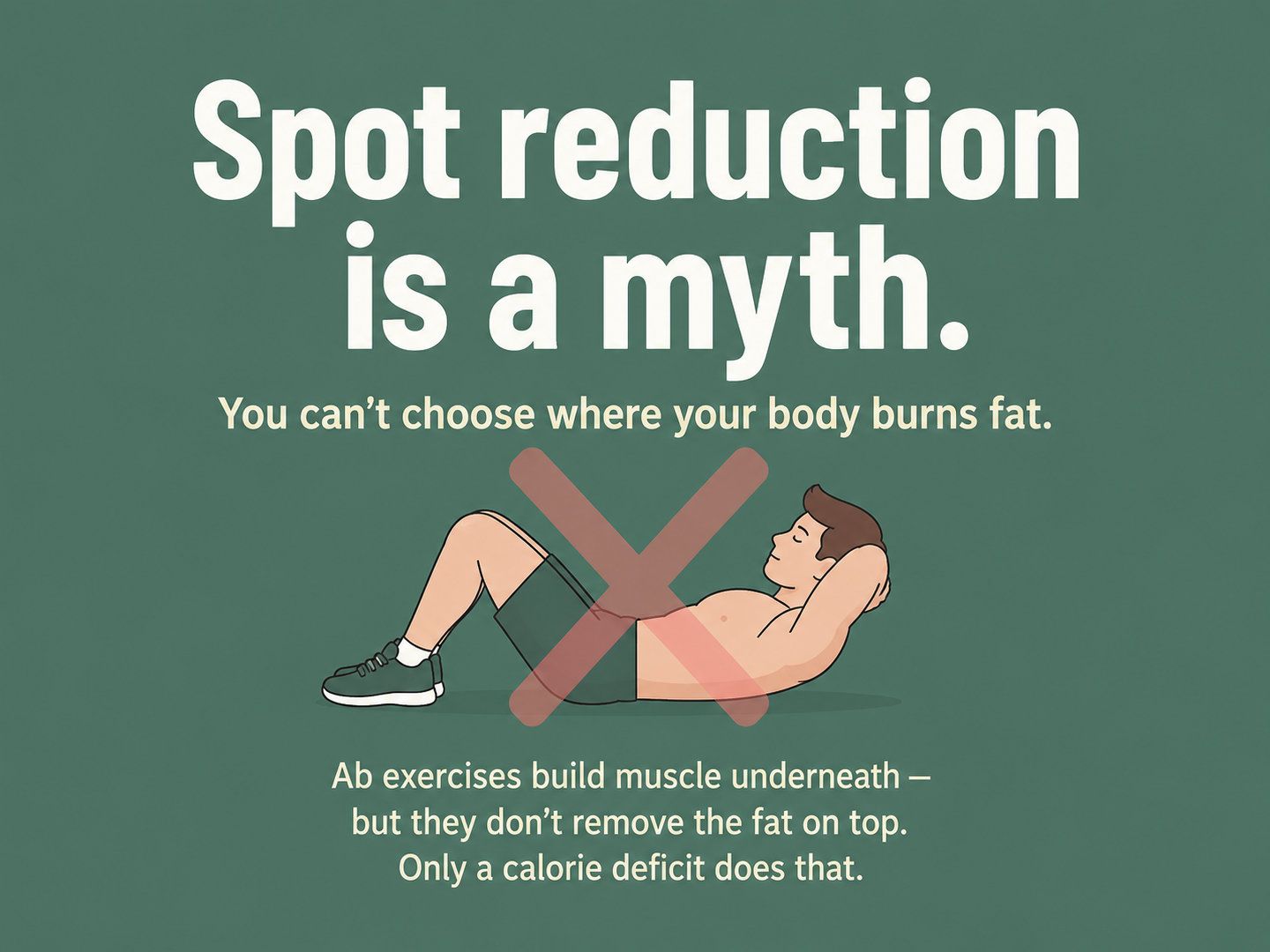
The concept of "spot reduction" (losing fat from a specific body part by exercising that area) is one of the most persistent myths in fitness.
Your body stores and mobilises fat systemically, not locally. When you create an energy deficit (burning more calories than you consume), your body draws from fat stores throughout the body according to genetic patterns and hormonal profiles. You cannot direct where fat comes from.
A study had participants perform leg exercises exclusively for 12 weeks. The result: they lost fat, but the fat loss occurred across the entire body, not specifically from the exercised leg. The same principle applies to ab exercises.
This does not mean exercise is useless for belly fat. It means you need to focus on exercises that create the largest total calorie burn and metabolic impact:
Resistance training increases muscle mass, which raises resting metabolic rate. More muscle means you burn more calories even while sitting.
High-intensity interval training (HIIT) burns more calories per minute than steady-state cardio and creates an "afterburn effect" that elevates metabolism for 24-48 hours.
Walking is underrated. Regular walking reduces visceral fat significantly, even without dietary changes.
But here is the critical point: even with optimal exercise, if your diet is wrong, belly fat stays. You cannot outrun a bad diet, and you definitely cannot out-crunch one.
Why Your Diet Matters More Than Exercise for Belly Fat
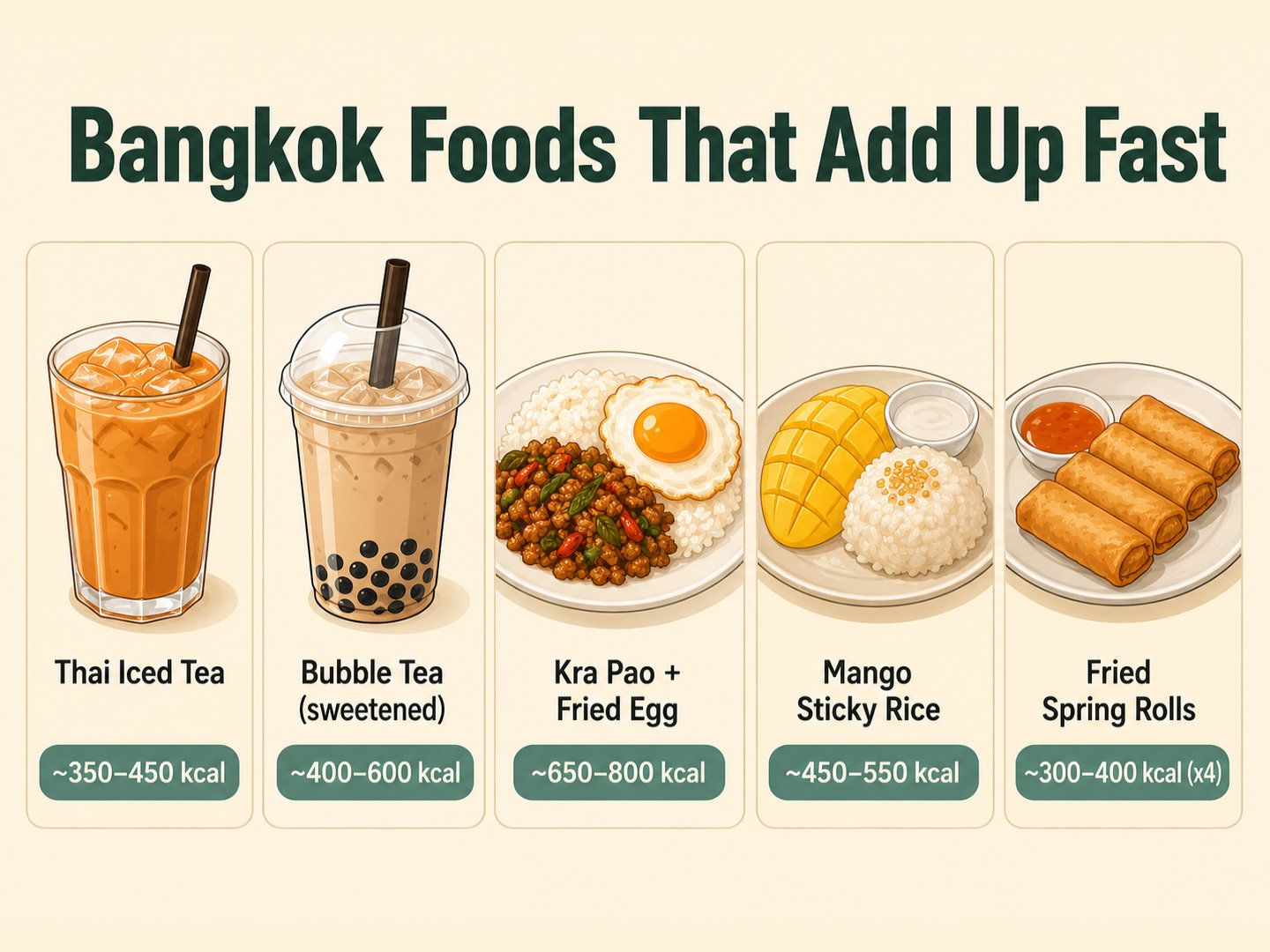
The math is straightforward. A 30-minute ab workout burns approximately 150-200 calories. A single plate of pad kra pao with rice from a street vendor contains approximately 600-800 calories. One mango sticky rice dessert: 400-500 calories. A Thai iced tea: 200-300 calories.
You would need to do ab exercises for 3-4 hours to offset a typical high-calorie Bangkok lunch. This is why diet is the dominant factor in belly fat loss.
But it goes deeper than just calories. Specific dietary factors directly promote visceral fat accumulation:
Sugar and Fructose
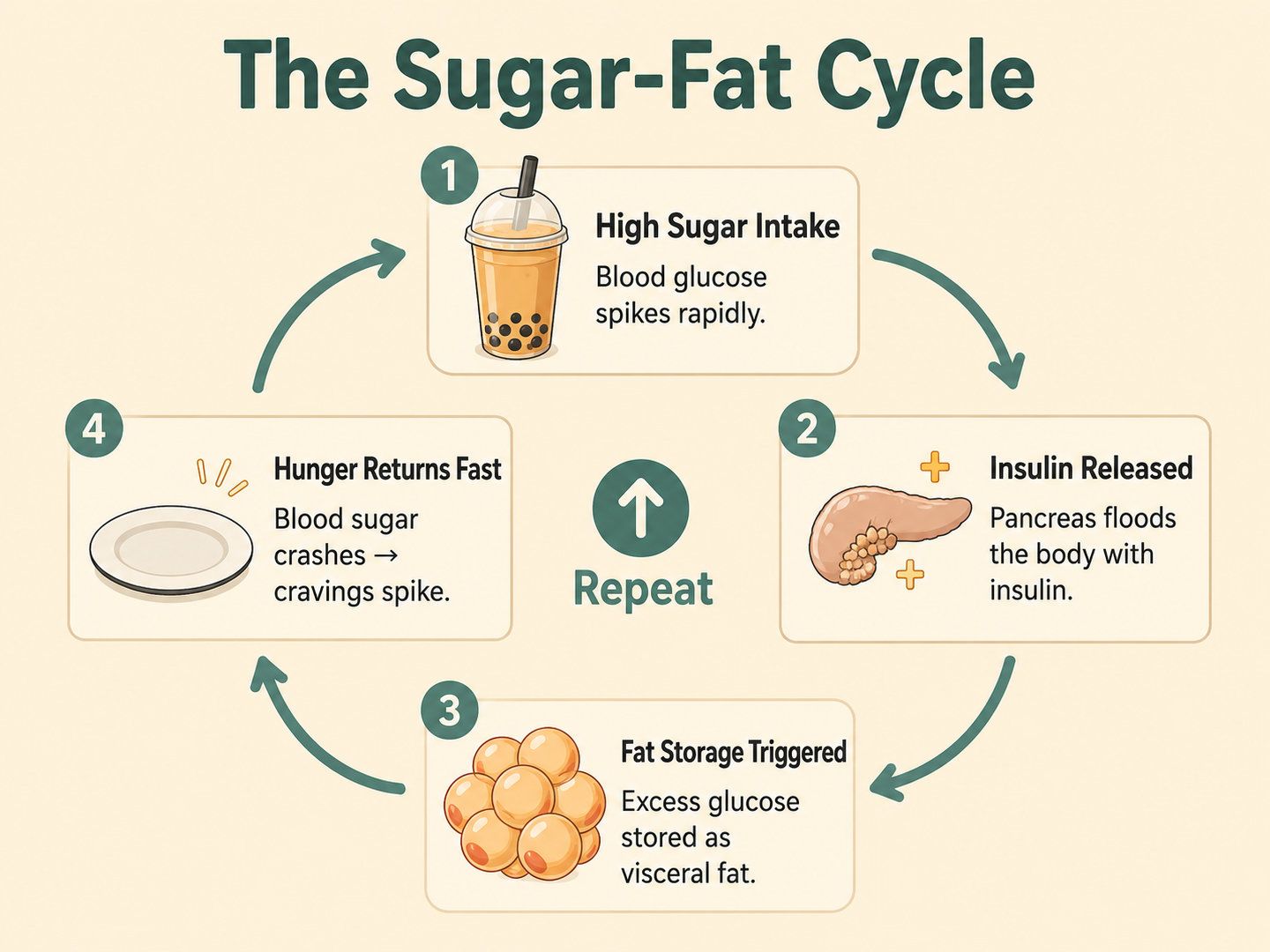
Research has demonstrated that fructose consumption specifically increases visceral fat deposition. Participants consuming fructose-sweetened beverages gained significantly more visceral fat than those consuming glucose-sweetened beverages, even with identical total calorie intake. The mechanism: fructose is metabolised almost exclusively by the liver, and excess fructose is converted directly to visceral fat.
In Bangkok, hidden fructose sources are everywhere: sweetened Thai teas and coffees (often containing 30-50g of sugar per glass), fruit smoothies marketed as "healthy," sweetened soy milk, and the generous use of sugar in Thai cooking.
Refined Carbohydrates and Insulin
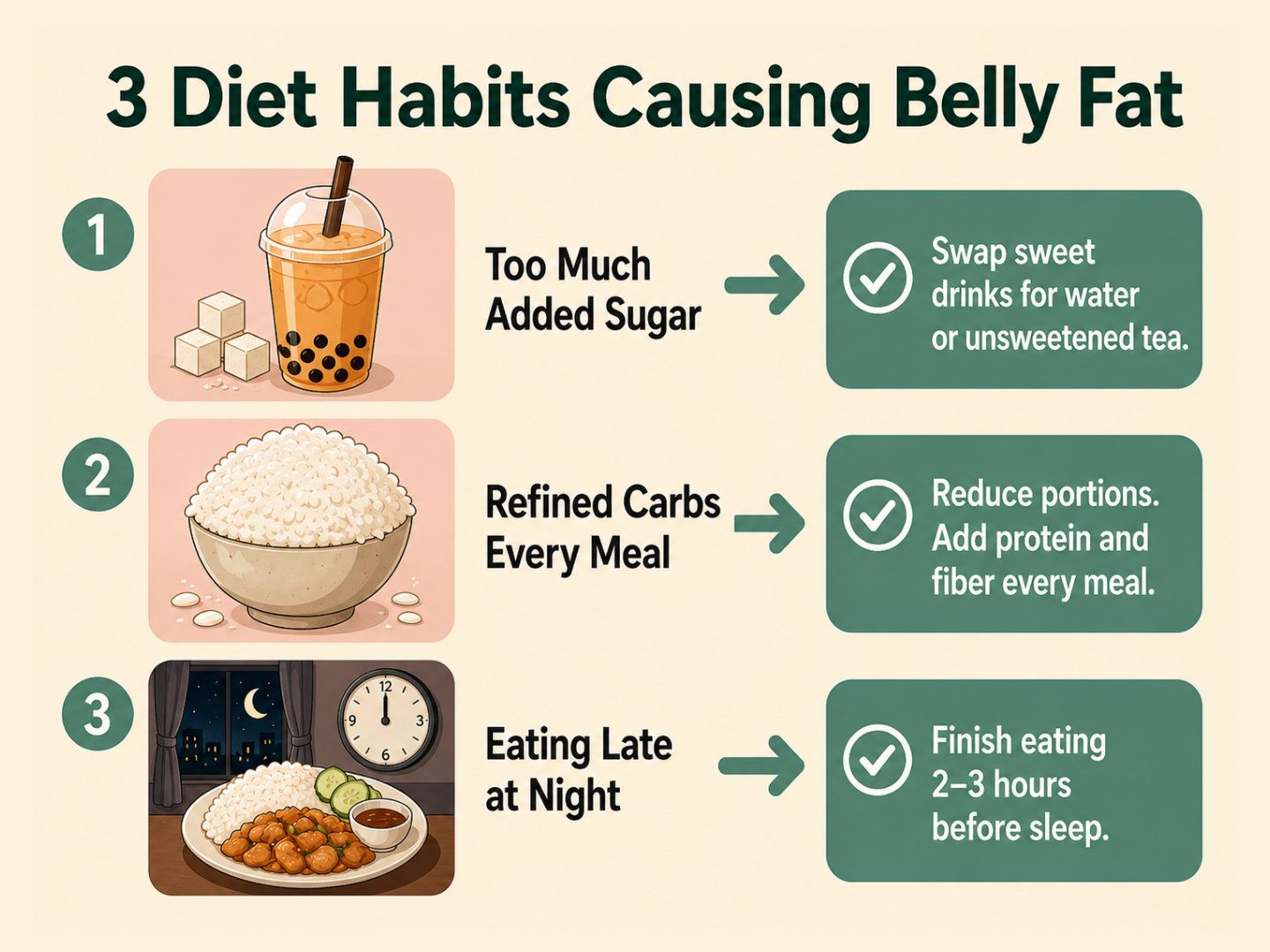
Refined carbohydrates (white rice, white bread, pastries, noodles) cause rapid blood sugar spikes followed by insulin surges. Chronically elevated insulin promotes fat storage, particularly in the abdominal region. Insulin literally signals your body to store belly fat.
A study found that participants on a low-glycemic diet lost significantly more visceral fat than those on a high-glycemic diet, even with identical calorie intake.
Bangkok challenge: Thai cuisine centres on white rice, noodles, and sweet sauces. A typical Bangkok office worker eats white rice 2-3 times daily, creating near-constant insulin elevation.
Alcohol
Research confirms that alcohol consumption preferentially increases visceral fat accumulation, which is where the term "beer belly" originates. Alcohol impairs fat oxidation (your body stops burning fat to process the alcohol first), disrupts sleep quality (increasing cortisol and belly fat), and typically accompanies high-calorie food choices.
Stress and Cortisol
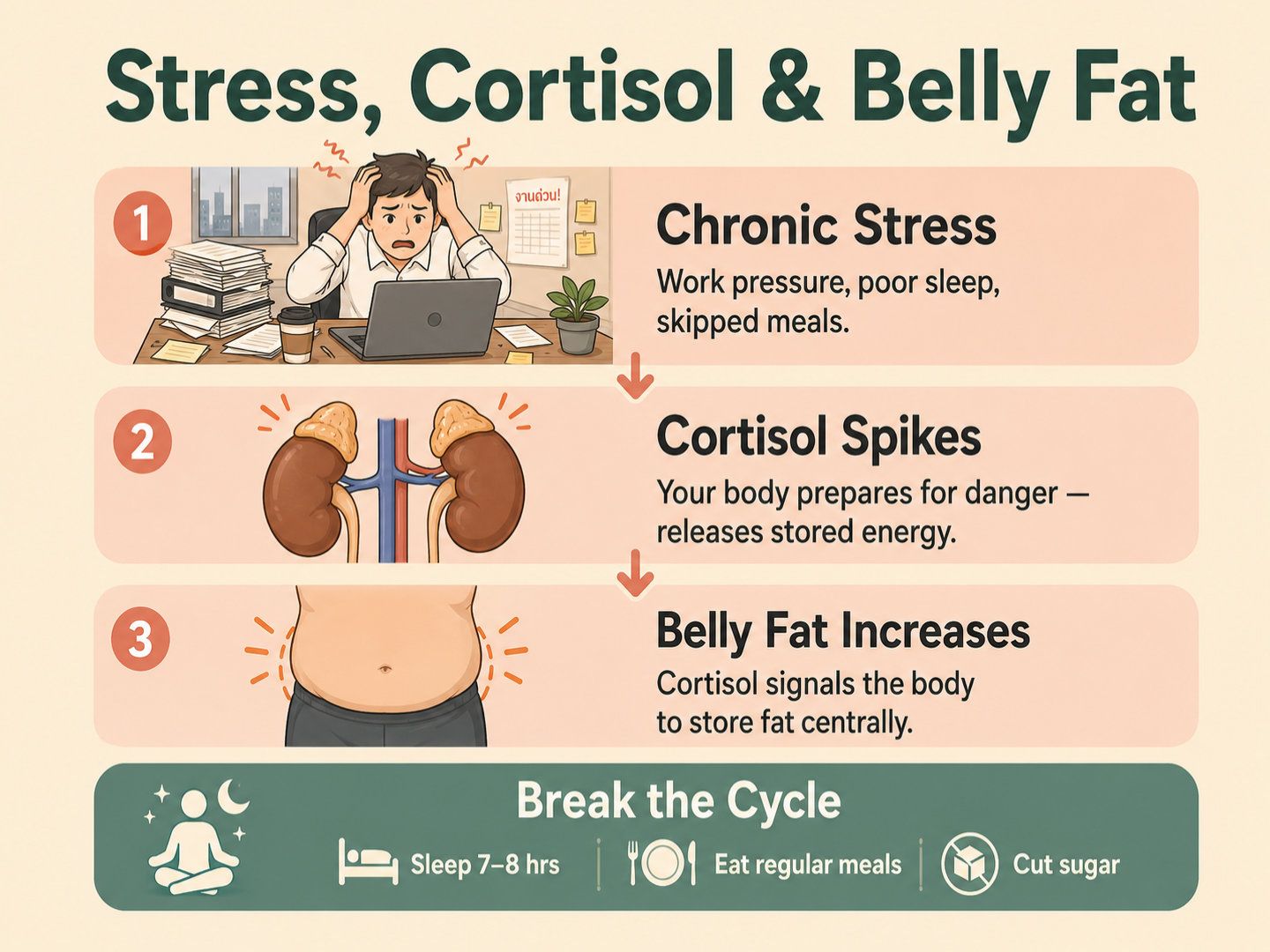
Cortisol, the stress hormone, has a direct relationship with visceral fat. Higher cortisol levels strongly predict greater visceral fat accumulation, independent of total body fat. Cortisol activates enzymes in visceral fat tissue that promote fat storage.
Bangkok's stressful environment (traffic, work pressure, noise, pollution) creates chronic cortisol elevation for many residents, directly contributing to belly fat accumulation even in people who eat reasonably well.
Ultra-Processed Food
A randomised controlled trial provided strong evidence: participants eating ultra-processed food consumed 500 more calories per day than those eating unprocessed food, despite meals being matched for available calories, macronutrients, sugar, fat, and fibre. The ultra-processed group gained weight and fat, while the unprocessed group lost both. The implications for belly fat are clear: the processing itself drives overconsumption.
The Belly Fat Loss Diet: What Actually Works
Now for the practical part. These are evidence-backed dietary strategies that target belly fat specifically.
Strategy 1: Create a Moderate Calorie Deficit (Not Extreme)
To lose belly fat, you must consume fewer calories than you burn. But extreme restriction (eating under 1,000 calories) backfires: it increases cortisol (promoting belly fat storage), reduces muscle mass (lowering metabolism), and triggers binge eating.
The sweet spot: a 300-500 calorie daily deficit. This produces 0.3-0.5 kg of fat loss per week while preserving muscle and keeping cortisol in check. For most adults in Bangkok, this means:
Women: 1,200-1,500 calories/day
Men: 1,500-1,800 calories/day
Strategy 2: Prioritise Protein at Every Meal
Protein is the most important macronutrient for belly fat loss for three reasons:
Thermic effect: Your body burns 25-30% of protein calories during digestion, compared to 6-8% for carbs and 2-3% for fat. Eating more protein literally increases calorie burn.
Satiety: Protein keeps you fuller longer, reducing total calorie intake. Increasing protein from 15% to 30% of calories reduced daily intake by over 400 calories without conscious restriction.
Muscle preservation: During a calorie deficit, adequate protein prevents muscle loss, maintaining metabolic rate.
Target: 1.6-2.2g of protein per kg of bodyweight daily. For a 70kg person, that is 112-154g of protein per day.
Strategy 3: Eliminate Added Sugar
This single change produces more belly fat loss than any other dietary intervention. When you cut added sugar, you reduce insulin spikes, eliminate fructose-driven visceral fat accumulation, and naturally reduce total calorie intake.
Practical steps for Bangkok:
Order drinks "mai waan" (not sweet) or "waan nit noi" (slightly sweet)
Replace Thai iced tea/coffee with black coffee or unsweetened tea
Check labels on packaged foods (sugar has dozens of aliases)
Avoid sweetened soy milk, yogurt drinks, and "health" smoothies with added sugar
Strategy 4: Replace Refined Carbs with Complex Carbs
You do not need to go zero-carb. You need to choose better carbs that do not spike insulin.
Replace:
White rice with brown rice or cauliflower rice
White bread with whole grain bread
Instant noodles with whole grain noodles or shirataki
Sugary breakfast cereals with oatmeal
Or better yet: reduce total carb portions and increase protein and vegetable portions. Instead of a plate that is 60% rice, aim for 25% complex carbs, 35% protein, and 40% vegetables.
Strategy 5: Eat Anti-Inflammatory Foods
Chronic inflammation promotes visceral fat storage. Anti-inflammatory foods reverse this process:
Fatty fish (salmon, mackerel) for omega-3s
Leafy greens and colourful vegetables for polyphenols
Turmeric and ginger (widely available in Thai cooking)
Nuts and seeds for vitamin E and healthy fats
Berries for anthocyanins
Extra virgin olive oil for healthy fats
Strategy 6: Manage Stress and Sleep
This is dietary-adjacent but critical. Sleep deprivation increases ghrelin (hunger hormone) by 28% and decreases leptin (satiety hormone) by 18%. This hormonal shift specifically drives cravings for high-sugar, high-carb foods that promote belly fat.
Target: 7-9 hours of sleep per night. Avoid caffeine after 2 PM. Limit screen time before bed.
Real Belly-Fat-Friendly Meals in Bangkok
Theory is useful, but you need real food options that work in your daily life. Every meal on the Easy Health menueliminates three of the biggest belly fat drivers: added sugar, MSG, and ultra-processed ingredients.
High-Protein, Low-Carb Options (Belly Fat Focused):
Morning Omelette: 366 kcal, 28g protein. Only 3g of carbs means virtually zero insulin response. Ideal for belly fat loss.
Tom Jued Soup: 93 kcal, 14g protein. Ultra-light, high protein-to-calorie ratio. Add to any meal for satiety without calorie load.
Farmer Omelette: 385 kcal, 33g protein. Added vegetables for fibre and micronutrients with controlled carbs.
Balanced Options (Sustainable Belly Fat Loss):
Ranchero Skillet: 589 kcal, 56g protein. 56g of protein in one meal keeps you full for hours and preserves muscle during your deficit.
Hearty Breakfast Wrap: 375 kcal, 27g protein. Balanced macros for sustained energy without the insulin spike.
Hummus Bowl: 239 kcal, 13g protein. Fibre-rich chickpeas and olive oil provide sustained satiety.
Post-Workout Recovery (For Those Combining Diet with Exercise):
Power Fit Combo: 1,043 kcal, 83g protein. For serious trainers who need maximum protein after resistance training.
Pad Thai Clean Version: 615 kcal, 39g protein. Balanced carbs for glycogen replenishment with quality protein.
Meal Plans for Belly Fat Loss
Structured nutrition removes the daily decision-making that leads to impulsive, belly-fat-promoting choices. Easy Health meal plans are designed for different goals:
Lean Plan: Aggressive but controlled deficit for rapid belly fat loss. Best used for 2-4 week phases, not long-term.
Balance Plan: The sweet spot for sustainable belly fat loss with adequate nutrition.
Active Plan: For people combining diet with regular exercise.
Keto Plan: Keeps insulin chronically low, maximising belly fat mobilisation.
Vegetarian Plan: Plant-based belly fat loss with fibre-rich foods.
Athlete Plan: For serious athletes with high training loads who still want to manage body composition.
How Long Does It Take to Lose Belly Fat?
The timeline depends on your starting point, but research provides clear benchmarks:
Week 1-2: Water weight and bloating decrease. Waistline may reduce 1-2 cm from reduced inflammation and less water retention. This is not fat loss yet, but it is visible and motivating.
Week 3-4: Actual fat loss begins at a measurable rate. With a 400-calorie daily deficit, you lose approximately 0.4 kg of fat per week. Visceral fat begins reducing first, which improves how you feel (more energy, better sleep) before it changes how you look.
Month 2-3: Visible changes become apparent. A 5-10% reduction in body weight produces a 10-30% reduction in visceral fat, because visceral fat is preferentially mobilised. At this stage, clothes fit differently and waist measurement decreases noticeably.
Month 4-6: Significant transformation. Consistent calorie deficit with adequate protein and exercise typically produces 8-12 cm reduction in waist circumference over 6 months.
Important: Belly fat loss is not linear. You will have weeks with visible progress and weeks with none. Hormonal fluctuations, water retention, stress, and sleep all affect short-term measurements. Trust the process over 12+ weeks, not daily or weekly changes.
FAQ
How do I lose belly fat specifically?
You cannot spot-reduce fat from your belly alone. Belly fat loss requires a systemic approach: create a moderate calorie deficit (300-500 calories/day), prioritise protein at every meal, eliminate added sugar (the primary driver of visceral fat), replace refined carbohydrates with complex carbs or more protein and vegetables, eat anti-inflammatory foods, manage stress and sleep, and include resistance training. The good news: visceral fat responds to dietary changes faster than subcutaneous fat.
Does diet or exercise matter more for losing belly fat?
Diet matters significantly more. A 30-minute ab workout burns 150-200 calories. A single plate of pad kra pao with rice contains 600-800 calories. You would need 3-4 hours of exercise to offset one high-calorie meal. Dietary changes produce 2-3 times more fat loss than exercise alone. However, combining both is optimal: diet creates the calorie deficit while exercise preserves muscle mass, boosts metabolism, and reduces visceral fat independently.
What foods cause belly fat?
The primary dietary drivers of belly fat accumulation are: added sugar and fructose, refined carbohydrates like white rice, white bread, and noodles, alcohol, ultra-processed foods, and trans fats. In Bangkok specifically, the combination of sweetened drinks, white rice at every meal, and frequent deep-fried snacks creates a highly belly-fat-promoting default diet.
How long does it take to lose belly fat?
With a consistent 400-calorie daily deficit, expect: weeks 1-2 for reduced bloating, weeks 3-4 for measurable fat loss beginning, months 2-3 for visible changes, and months 4-6 for significant transformation. Visceral fat responds fastest, so health markers improve before appearance changes. Belly fat loss is not linear. Consistency in nutrition matters more than perfection.
Can I lose belly fat without giving up rice?
Yes, but you need to modify your rice consumption. White rice is high-glycemic, causing insulin spikes that promote belly fat storage. Three strategies: first, switch to brown rice or cauliflower rice. Second, reduce portion size by half and replace the volume with more protein and vegetables. Third, eat protein and vegetables before rice so that fibre and protein slow the absorption of carbohydrates.
Why do I gain weight around my stomach even though I exercise?
This is common and usually indicates a hormonal or dietary issue rather than insufficient exercise. The most frequent causes: chronic stress elevating cortisol, poor sleep quality, hidden sugar in drinks and sauces, consuming too many calories despite exercising, and high alcohol intake. The solution is typically dietary rather than adding more exercise.
Ready to Lose the Belly Fat for Good?
Every meal on the Easy Health menu eliminates three of the biggest belly fat triggers: added sugar, MSG, and ultra-processed ingredients. When every meal is built from whole-food ingredients with complete macro transparency, belly fat loss becomes straightforward. You know exactly what you are eating, and nothing in your food is secretly working against your goals.
160+ menu items with full macro transparency
Zero added sugar, zero MSG, zero ultra-processed ingredients
Fresh daily preparation, delivered across Bangkok
Download the Easy Health app: