
Best Breakfast for Weight Loss: How to Stay Full Until Lunch Without Overeating
Here's a scenario most people in Bangkok know too well. You wake up, grab a coffee and a piece of toast (or skip breakfast entirely), feel fine for about two hours, and then suddenly you're starving by 10 AM. Your focus drops. Your energy crashes. And by the time lunch rolls around, you're so hungry that you order the biggest pad kra pao with a fried egg and an iced Thai tea, easily blowing past 800 calories before 1 PM.
Then you wonder why the scale isn't moving.

The problem isn't your willpower. It's your breakfast. Or more specifically, it's what your breakfast is missing.
A well-designed weight loss breakfast does two things. First, it gives you enough protein and fiber to keep you genuinely satisfied for 4 to 5 hours. Second, it keeps your blood sugar stable so you don't get that mid-morning crash that sends you straight to the nearest 7-Eleven for a chocolate croissant.
This guide breaks down exactly what makes a breakfast work for weight loss, which common breakfasts are sabotaging your goals, and how to build a morning meal that keeps you full, focused, and on track until lunch.
The Science Behind Why Breakfast Matters for Weight Loss
Let's clear something up first. You've probably seen headlines claiming "breakfast is the most important meal of the day" and other headlines saying "skipping breakfast helps you lose weight." Both sides have research to back them up, and both are oversimplified.
Here's what the science actually shows.
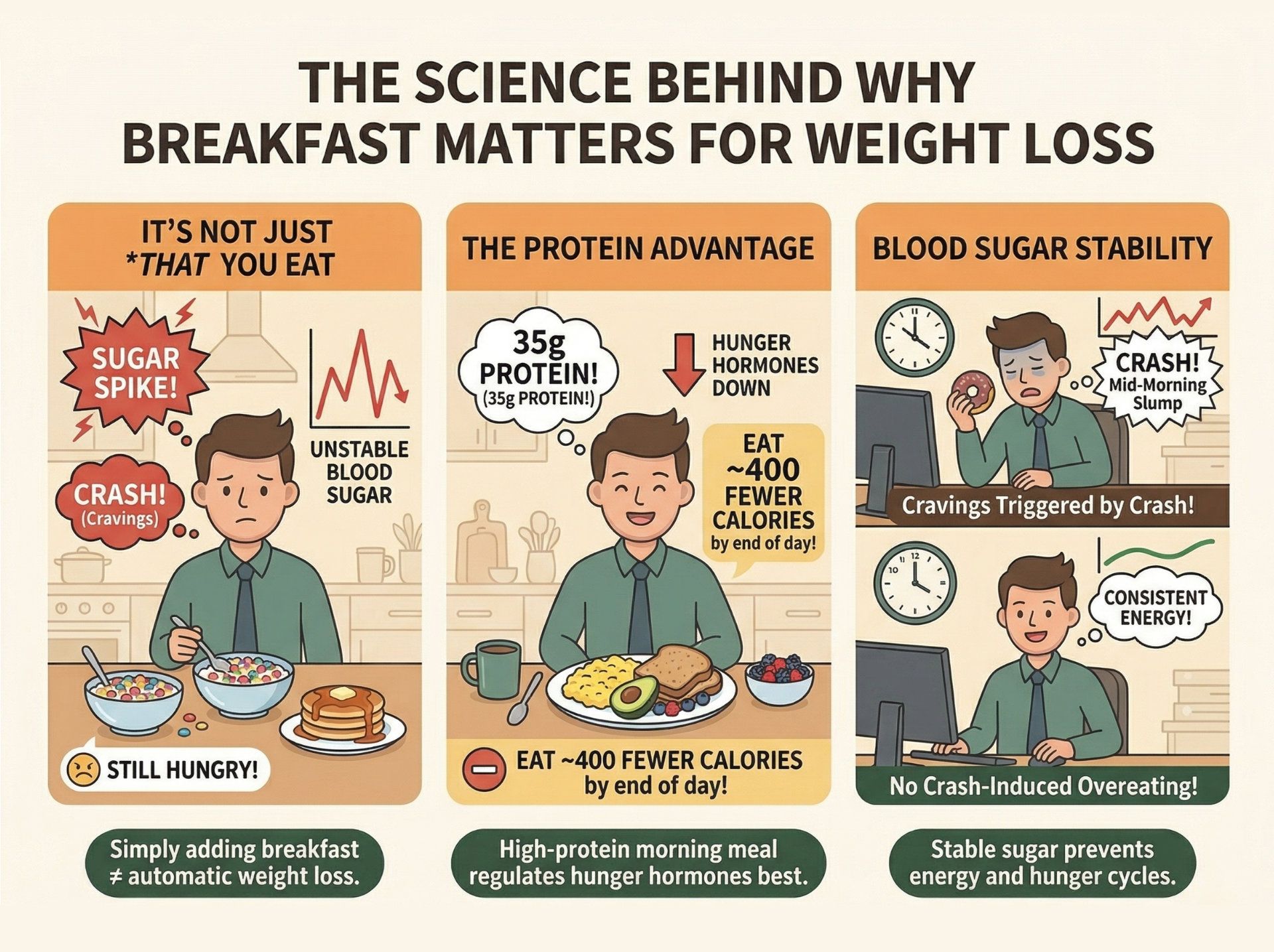
Eating breakfast doesn't automatically cause weight loss. A 2019 meta-analysis published in the BMJ analyzed 13 randomized controlled trials and found no significant difference in weight loss between breakfast eaters and breakfast skippers. Simply adding breakfast to your day, without changing what or how much you eat, won't make you lose fat.
However, eating the right breakfast can significantly reduce total daily calorie intake. Research from the University of Missouri found that high-protein breakfasts (35 grams of protein) reduced hunger hormones throughout the day and led to participants consuming 400 fewer calories by the end of the day compared to when they ate a standard carb-heavy breakfast. That's the key distinction. It's not about whether you eat breakfast. It's about what you eat.
Protein at breakfast has a stronger satiety effect than at any other meal. A study in the American Journal of Clinical Nutrition showed that protein consumed in the morning has a greater impact on fullness and appetite regulation than the same amount of protein consumed at lunch or dinner. This is partly because your body is in a fasted state after sleeping, and the thermic effect of food (the energy your body uses to digest) is highest in the morning.
Blood sugar stability determines your energy and cravings. When you eat a high-sugar or high-refined-carb breakfast (think sweetened cereal, white bread with jam, pancakes with syrup), your blood sugar spikes rapidly and then crashes within 2 to 3 hours. That crash triggers hunger, cravings for more sugar, and the mid-morning energy slump that makes your second coffee feel absolutely essential. A breakfast that combines protein, healthy fat, and complex carbs prevents this spike-and-crash cycle entirely.
So the bottom line is simple. If you choose to eat breakfast, make it count. And if you're trying to lose weight, a protein-rich, blood-sugar-stable breakfast can be one of the most effective tools in your daily routine.
What Makes a Weight Loss Breakfast Actually Work?
Not all breakfasts are created equal. A 400-calorie breakfast of eggs, vegetables, and avocado will keep you full for hours. A 400-calorie breakfast of a sugary muffin and a latte will leave you starving by 10 AM. Same calories, completely different results.
Here are the four things your breakfast needs if you want to stay full until lunch and lose weight.
1. At Least 25 to 35 Grams of Protein
Protein is the single most important macronutrient for satiety. It takes longer to digest than carbs, triggers the release of fullness hormones (GLP-1 and PYY), and suppresses the hunger hormone ghrelin.
Most people dramatically undereat protein at breakfast. A typical Thai or Western breakfast might include toast, rice porridge, or cereal, giving you maybe 8 to 12 grams of protein. That's not even close to enough.
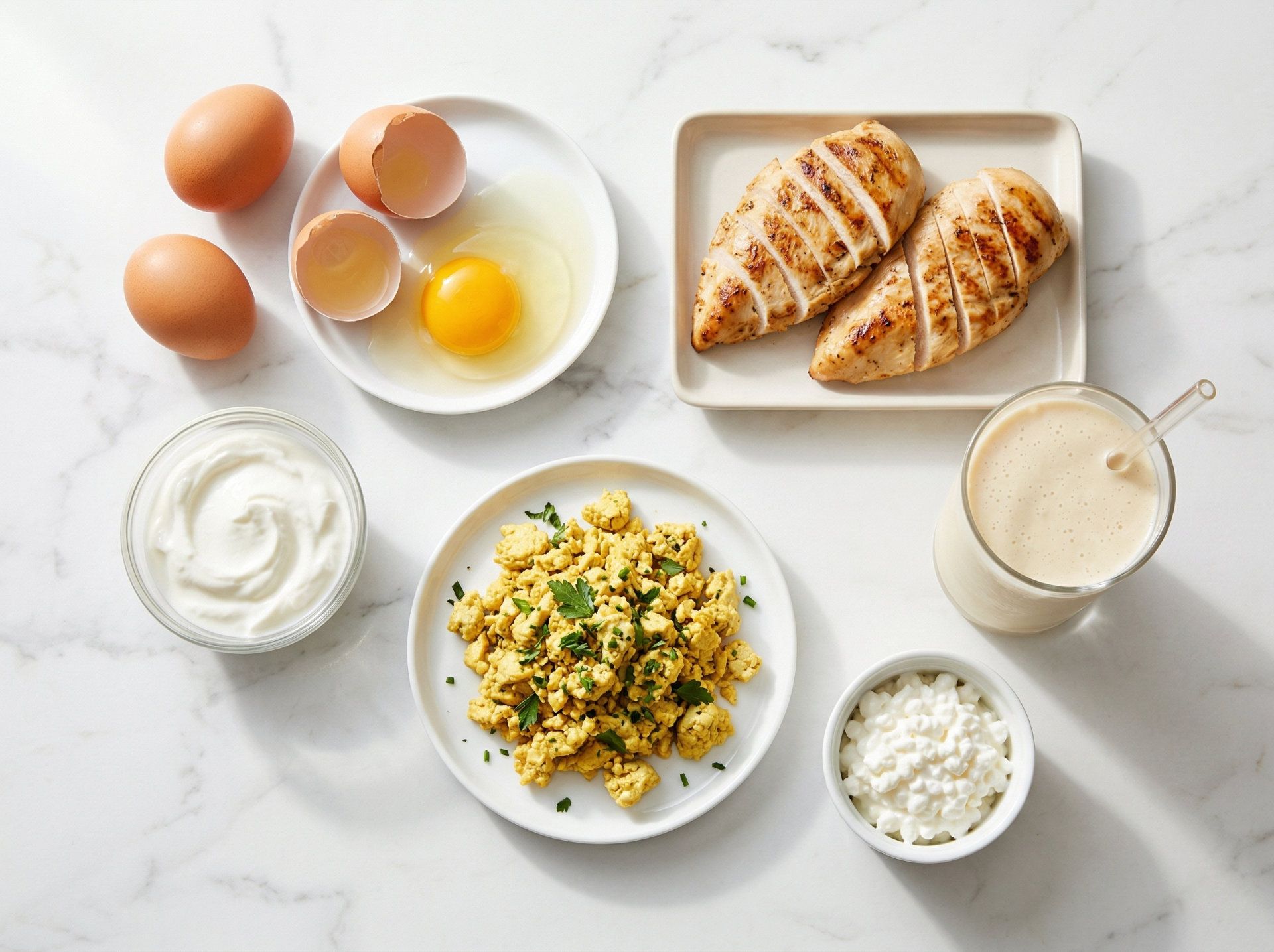
Good high-protein breakfast sources:
Eggs (3 whole eggs give you about 21 grams of protein)
Greek yogurt, unsweetened (15 to 20 grams per serving)
Chicken breast or turkey slices (for savory breakfast lovers)
Protein smoothie with whey or plant protein powder
Cottage cheese
Tofu scramble (for plant-based eaters)
2. Fiber From Whole Foods (Not From a Fiber Bar)
Fiber slows digestion, which means the food you eat takes longer to move through your system. This creates a sustained feeling of fullness rather than a quick burst followed by a crash.
Aim for at least 5 to 8 grams of fiber at breakfast.
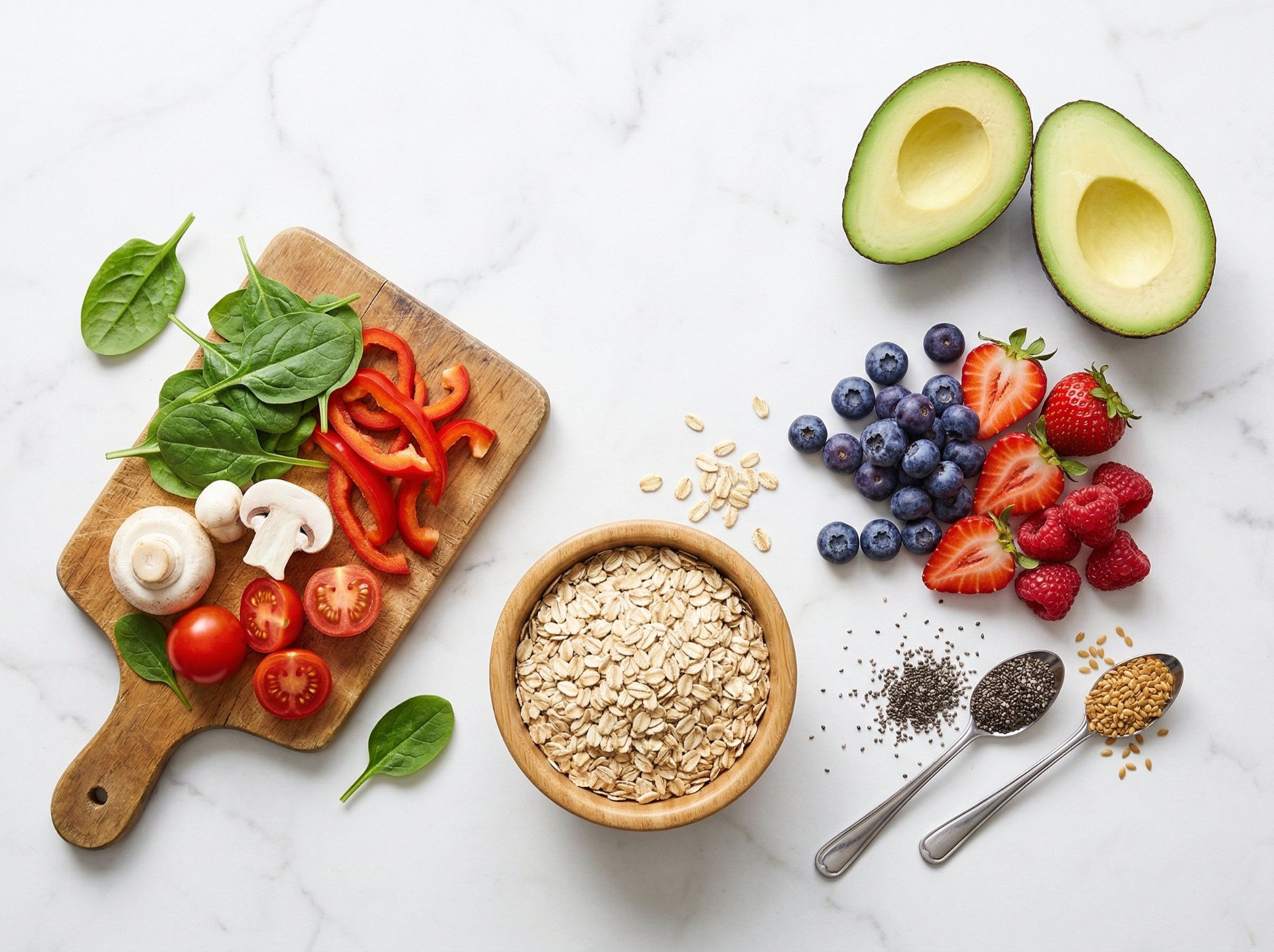
Good fiber sources for breakfast:
Oats (about 4 grams of fiber per half cup)
Berries: blueberries, strawberries, raspberries (great fiber-to-sugar ratio)
Chia seeds (about 10 grams of fiber per 2 tablespoons)
Flaxseeds
Vegetables in omelettes or scrambles (spinach, peppers, mushrooms, tomatoes)
Avocado (about 5 grams of fiber per half)
3. Healthy Fat to Slow Absorption
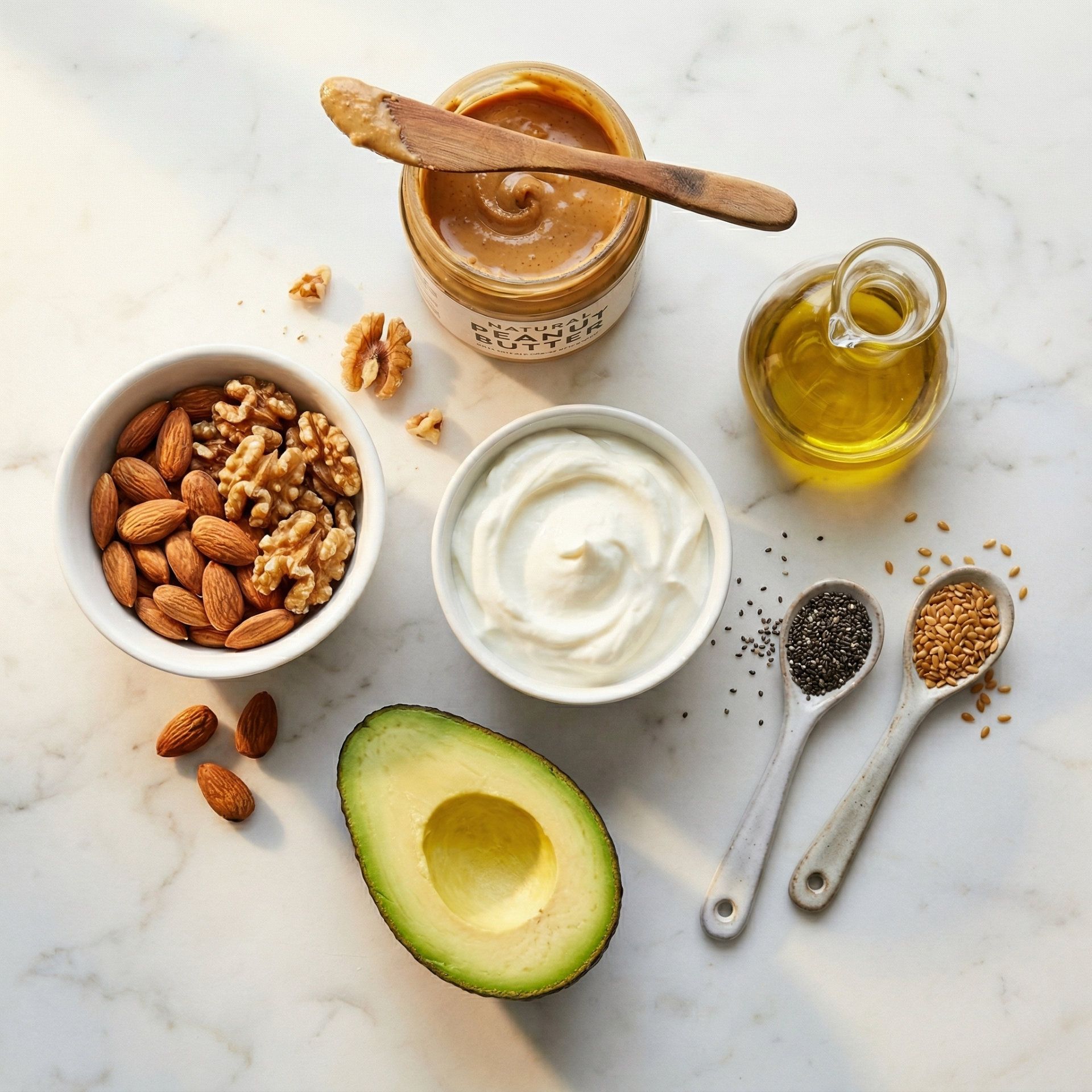
Fat is the slowest macronutrient to digest. Including a moderate amount of healthy fat at breakfast helps slow the overall absorption of your meal, keeping your blood sugar steady and your stomach satisfied.
You don't need a lot. About 10 to 15 grams is enough.
Good fat sources for breakfast:
Half an avocado
A handful of almonds or walnuts
Natural peanut butter (no added sugar)
Olive oil for cooking eggs
Chia or flax seeds
Full-fat Greek yogurt
4. Low Added Sugar (This Is Where Most People Fail)
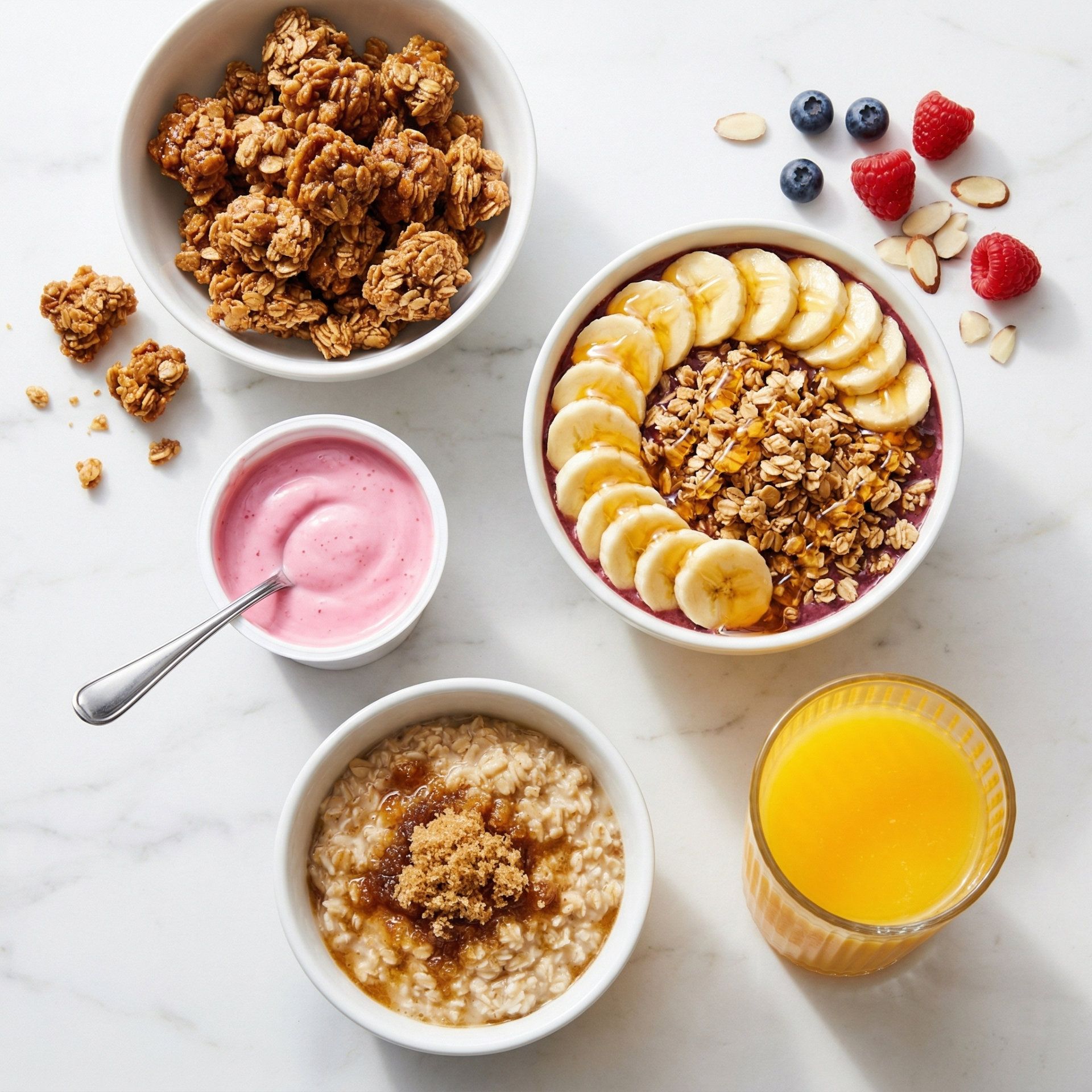
Sugar is the silent saboteur of weight loss breakfasts. Many foods marketed as "healthy breakfast options" are loaded with added sugar, including granola, flavored yogurt, acai bowls with honey and banana, sweetened oatmeal, and fruit juices.
The rule is simple: if your breakfast tastes like dessert, it's probably working against your goals.
Check labels for added sugar. For a weight loss breakfast, aim for less than 5 grams of added sugar in the entire meal.
The 5 Worst Breakfasts for Weight Loss (That Most People Think Are Healthy)
This is where it gets tricky. Some of the most popular "healthy" breakfasts in Bangkok are actually terrible for weight loss. Let's go through them.
1. Sweetened Acai Bowl from a Café
The idea is healthy: acai, fruit, granola, superfoods. But the reality? Most café acai bowls contain 50 to 70 grams of sugar from the acai blend, banana, honey, granola, and sweetened toppings. That's more sugar than two cans of Coke. Your blood sugar will spike hard, crash by mid-morning, and leave you hungrier than if you'd eaten nothing.
The fix: Make your own or choose one with no added honey, limited fruit, and a protein source on top. Look for versions that have at least 15 grams of protein.
2. Toast with Jam or Nutella
White bread with jam is essentially sugar on sugar. Even whole wheat toast with jam gives you very little protein (maybe 5 grams) and a lot of rapidly digested carbs. You'll be hungry again within 90 minutes.
The fix: If you love toast, switch to whole grain bread with 2 scrambled eggs and half an avocado on top. Now you've got protein, fiber, and healthy fat. Same base, completely different outcome.
3. Thai Rice Porridge (Jok) Without Added Protein
Rice porridge is a Thai breakfast staple, and on its own it's essentially refined carbs in liquid form. A plain bowl of jok is mostly white rice that's been broken down into an even more rapidly digestible form. Your blood sugar responds almost the same as eating straight white rice.
The fix: Add a soft-boiled egg (or two), extra lean pork or chicken, and a side of vegetables. The protein and fat slow down the glucose absorption and keep you fuller much longer.
4. Fruit Juice or Smoothie (Without Protein)
A glass of fresh orange juice sounds healthy, but it's basically concentrated fructose without the fiber that whole fruit provides. A typical glass of OJ has about 26 grams of sugar. Even green smoothies without any protein source will spike your blood sugar and leave you hungry within an hour or two.
The fix: If you drink smoothies, always add a protein source (protein powder, Greek yogurt, or nut butter). This turns a sugar bomb into a balanced meal.
5. Granola and Flavored Yogurt
Most commercial granola contains 12 to 16 grams of sugar per serving. Pair it with flavored yogurt (which often has another 15 to 20 grams of sugar per cup), and you're starting your day with the equivalent of a candy bar in sugar content. The packaging says "healthy." Your blood sugar says otherwise.
The fix: Switch to plain Greek yogurt (unsweetened) with a small portion of low-sugar granola or raw oats, and top with berries instead.
5 Weight Loss Breakfast Ideas That Actually Work in Bangkok
Let's get practical. Here are five breakfast templates that hit the right macros, keep you full until lunch, and are realistic for people living in Bangkok.
Breakfast 1: The Protein Omelette
3 eggs scrambled or as an omelette with spinach, mushrooms, and bell peppers
Half an avocado on the side
Approximate macros: 420 kcal, 28g protein, 8g fiber, 30g fat, 10g carbs
Why it works: High protein, high fat, almost zero sugar. You won't think about food until 1 PM.
Breakfast 2: Greek Yogurt Power Bowl
200g plain unsweetened Greek yogurt
1 tablespoon chia seeds
Handful of mixed berries (blueberries, strawberries)
10 almonds
Approximate macros: 350 kcal, 25g protein, 8g fiber, 15g fat, 25g carbs
Why it works: Protein from yogurt, fiber from chia and berries, healthy fat from almonds. Tastes like a treat but keeps blood sugar steady.
Breakfast 3: Overnight Oats with Protein
Half cup rolled oats soaked overnight in almond milk
1 scoop whey or plant protein powder mixed in
1 tablespoon natural peanut butter
Sliced banana (half a banana, not a whole one)
Approximate macros: 450 kcal, 35g protein, 7g fiber, 15g fat, 45g carbs
Why it works: Prep it the night before, grab it from the fridge in the morning. The protein powder transforms basic oats into a proper weight loss meal.
Breakfast 4: Savory Thai-Inspired Breakfast
2 boiled eggs
Small portion of brown rice or cauliflower rice
Stir-fried morning glory or bok choy with garlic
Side of grilled chicken breast (50 to 80 grams)
Approximate macros: 400 kcal, 38g protein, 5g fiber, 12g fat, 30g carbs
Why it works: If you prefer savory, Thai-style breakfasts, this hits your protein target while keeping calories controlled. The vegetables add volume and fiber.
Breakfast 5: Protein Smoothie (Done Right)
1 scoop protein powder (whey or plant-based)
1 tablespoon almond butter
Half a banana
Handful of spinach
250ml unsweetened almond milk
Ice
Approximate macros: 350 kcal, 30g protein, 5g fiber, 12g fat, 25g carbs
Why it works: Quick, portable, and hits all the targets. The almond butter and banana provide healthy fat and natural sweetness without the blood sugar spike of a fruit-only smoothie.
The "Stay Full Until Lunch" Checklist
Before you eat breakfast tomorrow, run through this quick mental checklist:
Does this meal have at least 25g of protein? (If not, add eggs, Greek yogurt, or protein powder)
Does it have fiber from whole foods? (Vegetables, oats, berries, chia seeds)
Does it include some healthy fat? (Avocado, nuts, seeds, olive oil)
Is the added sugar under 5 grams? (Check labels on yogurt, granola, sauces)
Will this keep me satisfied for 4 to 5 hours? (If your current breakfast doesn't pass this test, something needs to change)
If your breakfast checks all five boxes, you're set. If it doesn't, you now know exactly what to adjust.
Common Breakfast Mistakes That Stall Weight Loss
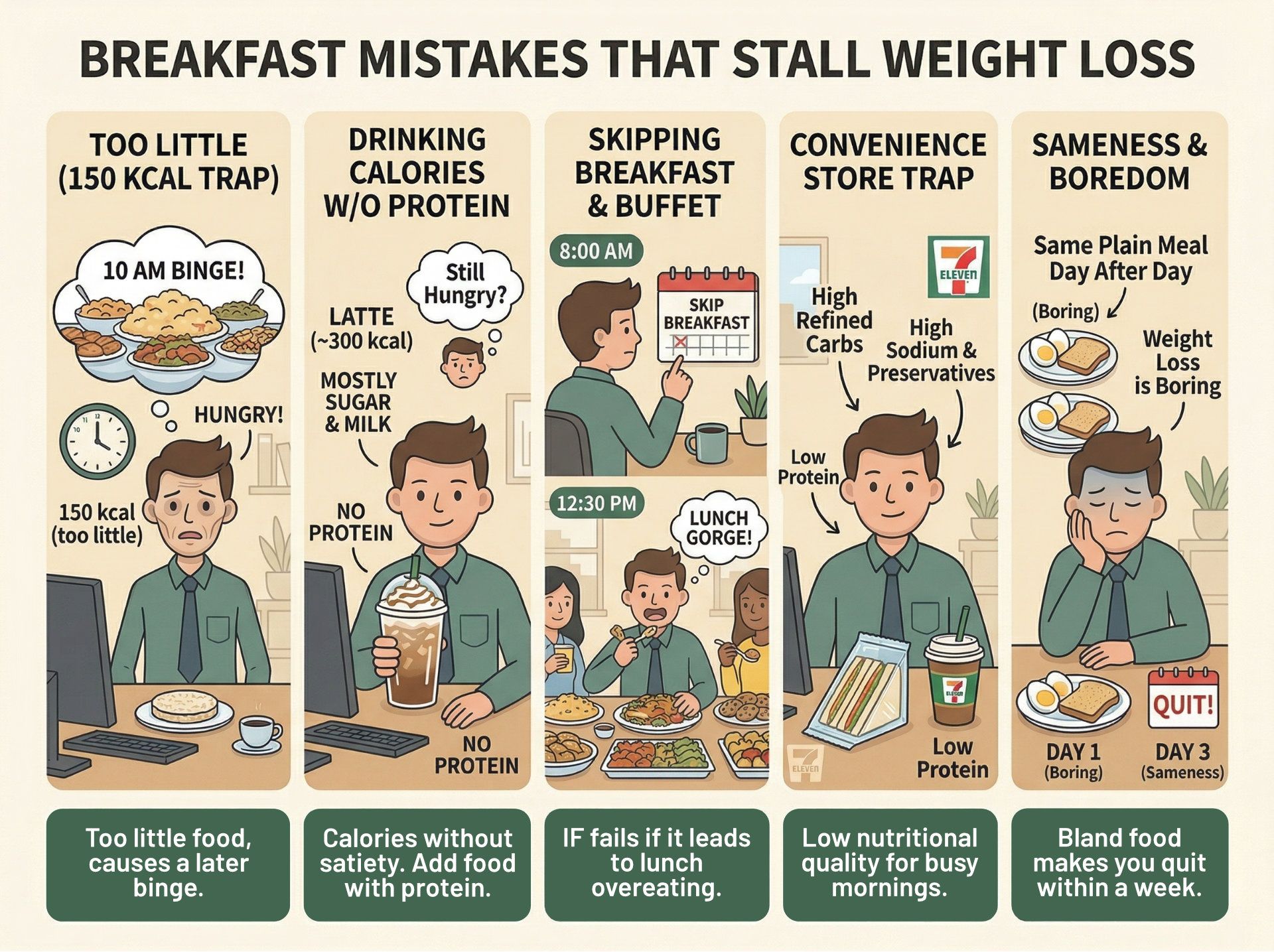
Even people who think they're eating a healthy breakfast often make these mistakes.
Mistake 1: Eating too little and calling it discipline. A 150-calorie breakfast of a rice cake and black coffee isn't virtuous. It's a setup for a 10 AM binge. Your body needs adequate fuel in the morning. Eating too little at breakfast almost always leads to overeating later in the day. A well-structured 350 to 500 calorie breakfast is far more effective for weight loss than a 150-calorie breakfast followed by uncontrolled snacking.
Mistake 2: Drinking your calories without protein. A large iced latte from most Bangkok coffee shops contains 200 to 300 calories, mostly from sugar and milk. That's fine if it's part of a balanced breakfast. But if that's your entire breakfast, you've consumed calories without any satiety benefit. Always pair your coffee with actual food that has protein.
Mistake 3: Skipping breakfast, then going to a buffet at lunch. Intermittent fasting works for many people, but if skipping breakfast consistently leads you to overeat at lunch, it's not working for you. The best meal timing is the one that helps you control your total daily intake. For some people, that means eating a proper breakfast.
Mistake 4: Relying on convenience store breakfasts. A sandwich and a sweetened coffee from 7-Eleven might seem convenient, but most convenience store breakfast options are high in refined carbs, low in protein, and loaded with preservatives and sodium. If convenience is your priority (and for busy Bangkok mornings, it usually is), there are better options.
Mistake 5: Eating the same boring breakfast and giving up. If you eat plain boiled eggs and dry toast every morning because you think weight loss food has to be bland, you'll quit within a week. A weight loss breakfast should taste good. If it doesn't, you'll eventually abandon it for something that does, and that something usually involves sugar and refined carbs.
How Easy Health Makes Weight Loss Breakfasts Effortless
This is where things get practical for people living and working in Bangkok.
The hardest part of eating a proper weight loss breakfast isn't knowing what to eat. It's having the time and energy to prepare it every morning. Between the commute, the heat, the early meetings, and the general chaos of Bangkok mornings, meal prepping a high-protein breakfast at 6 AM is a tough ask.
That's exactly why Easy Health exists.
Every meal from Easy Health is prepared fresh daily with zero added sugar and no MSG. Every dish shows exact calories, protein, carbs, and fat on the label. You don't have to calculate anything, check any apps, or guess whether the chef added sugar to the sauce. It's all right there.
Here are breakfast options from Easy Health that fit perfectly into a weight loss plan:
Morning Omelette · A fluffy, protein-packed omelette loaded with fresh vegetables and herbs. 366 kcal, 28g protein, only 3g carbs, 27g fat. 225 THB. This is a near-perfect weight loss breakfast: high protein, almost zero carbs, healthy fats from eggs. You'll stay full for hours.
Farmer Omelette · A hearty omelette with mushrooms, peppers, and onions. 385 kcal, 33g protein, 13g carbs, 23g fat. 229 THB. A bit more substance than the Morning Omelette, with extra vegetables for fiber and volume.
Hearty Breakfast Wrap · Scrambled eggs, fresh vegetables, and a savory sauce wrapped up and ready to eat. 375 kcal, 27g protein. 179 THB. Perfect if you need something portable for the BTS commute.
Peanut Butter Berry Jam Bowl · Protein-rich oats with fresh berries and real peanut butter. 431 kcal, 21g protein. 175 THB. Great if you prefer something slightly sweet in the morning without the blood sugar spike.
Acai Berry Bowl · Creamy acai with granola and fresh fruits, made without added honey or excess sugar. 413 kcal, 16g protein. 275 THB. The café-style bowl you love, without the 60 grams of hidden sugar.
For people who want their entire week of meals handled, the Easy Health Meal Plans take the guesswork out of breakfast, lunch, and dinner:
Lean Plan (800 to 1,000 kcal/day) at 1,899 THB / 5 days. Ideal for aggressive fat loss. Every meal is calorie-controlled and macro-balanced.
Balance Plan (1,400 to 1,600 kcal/day) at 3,399 THB / 5 days. Perfect for sustainable weight loss with enough energy to get through your day and still train.
Keto Plan (Low-Carb / High-Fat) at 3,499 THB / 5 days. Great if your weight loss approach focuses on cutting carbs and keeping blood sugar extremely stable.
The beauty of using Easy Health for your weight loss breakfast is simplicity. You order the night before, it arrives fresh, and you eat a meal that you know is macro-counted, sugar-free, and designed to keep you satisfied. No prep time, no guesswork, no compromises.
When Skipping Breakfast Might Actually Be Better

This article is about choosing the right breakfast for weight loss, but it would be incomplete without addressing intermittent fasting.
Some people lose weight more effectively by skipping breakfast entirely and eating their first meal at noon. This approach, typically a 16:8 intermittent fasting schedule, works because it naturally reduces the eating window and often leads to lower total daily calorie intake.
Skipping breakfast might work better for you if:
You genuinely aren't hungry in the morning and forcing yourself to eat leads to eating more total calories
You prefer larger, more satisfying meals at lunch and dinner rather than spreading calories across three smaller meals
You've tried eating breakfast for weight loss and it didn't help you control your overall intake
You do well with simple rules (like "I eat between noon and 8 PM") rather than macro tracking at every meal
Skipping breakfast is probably NOT a good idea if:
You get genuinely hungry by 9 or 10 AM and end up snacking on whatever's available
You tend to overeat at lunch when you've been fasting all morning
You exercise in the morning and need fuel for performance and recovery
You have blood sugar regulation issues (prediabetes, hypoglycemia)
There's no single right answer. The best approach is the one that helps you consistently eat the right amount of total calories throughout the day. For many people, a high-protein breakfast is the most effective tool for making that happen. For others, intermittent fasting achieves the same result through a different path.
FAQ
What is the best breakfast for weight loss?
The best breakfast for weight loss is one that contains at least 25 to 35 grams of protein, 5 to 8 grams of fiber, a moderate amount of healthy fat, and very little added sugar. Eggs, Greek yogurt, protein oats, and vegetable omelettes are all excellent options. The most important factor is that your breakfast keeps you full for 4 to 5 hours so you don't overeat later in the day. Research shows that high-protein breakfasts reduce total daily calorie intake by up to 400 calories.
Should I skip breakfast to lose weight?
It depends on how your body responds. Some people do well with intermittent fasting and naturally eat fewer calories when they skip breakfast. Others get extremely hungry by mid-morning and end up overeating at lunch. Neither approach is universally better. The right choice depends on your hunger patterns, activity level, and which method helps you control total daily intake most effectively.
How many calories should a weight loss breakfast have?
A good weight loss breakfast typically contains between 300 and 500 calories, depending on your total daily calorie target and how many meals you eat per day. If you're aiming for 1,500 calories per day across three meals, a 400-calorie breakfast is a reasonable target. The calorie count matters less than the composition. A 400-calorie breakfast high in protein and fiber will keep you much fuller than a 400-calorie breakfast of pastry and juice.
Is it true that eating breakfast boosts your metabolism?
This is a common myth. While eating does temporarily increase your metabolic rate through the thermic effect of food, this happens regardless of when you eat. Having breakfast at 7 AM doesn't "jumpstart" your metabolism more than eating the same food at noon. What breakfast does help with is appetite regulation and blood sugar stability, both of which can indirectly support weight loss by preventing overeating later.
What should I avoid eating for breakfast if I'm trying to lose weight?
Avoid breakfasts high in added sugar and refined carbs with little protein. The biggest offenders include sweetened cereal, flavored yogurt with added sugar, white toast with jam, fruit juice without whole fruit, sugar-loaded granola, and café-style smoothie bowls with honey and sweetened toppings. These foods spike your blood sugar, cause an energy crash, and leave you hungry within 1 to 2 hours.
Can I eat the same breakfast every day for weight loss?
Yes, and many successful dieters do exactly that. Eating the same breakfast daily eliminates decision fatigue and makes it easy to track calories. The key is choosing a breakfast you actually enjoy and that hits your macro targets. If you get bored, rotate between 2 to 3 options. For example, alternate between a protein omelette, overnight oats with protein powder, and a Greek yogurt bowl. Variety is nice, but consistency matters more for results.
Ready to Make Your Weight Loss Breakfast Effortless? Download the Easy Health App
You know what to eat. Now let the Easy Health App handle the how. Every breakfast is fresh, macro-counted, and made with zero added sugar, so you start your day right without spending 30 minutes in the kitchen.
Here's what you get:
Easy Ordering · Browse 160+ menu items, pick your breakfast, and order in seconds
Track Your Nutrition (Calories & Macros) · See exact calories, protein, carbs, and fat for every dish, so you know your morning meal supports your weight loss goals
Personalized Meal Planning · Choose from 6 curated plans (Lean, Balance, Active, Athlete, Keto, Vegetarian) that cover breakfast, lunch, and dinner
Exclusive Rewards · Earn points with every order and unlock special deals available only in the app
Download now and start eating smarter today:
📱 Android: Download on Google Play
🍏 iOS: Download on the App Store
References & Links
References:
Sievert, K. et al. (2019). "Effect of breakfast on weight and energy intake: systematic review and meta-analysis of randomised controlled trials." BMJ, 364, l42. · https://www.bmj.com/content/364/bmj.l42
Leidy, H.J. et al. (2015). "The role of protein in weight loss and maintenance." American Journal of Clinical Nutrition, 101(6), 1320S-1329S. · https://academic.oup.com/ajcn/article/101/6/1320S/4564492
Hoertel, H.A., Will, M.J., & Leidy, H.J. (2014). "A randomized crossover, pilot study examining the effects of a normal protein vs. high protein breakfast on food cravings and reward signals in overweight/obese 'breakfast skipping' late-adolescent girls." Nutrition Journal, 13, 80. · https://nutritionj.biomedcentral.com/articles/10.1186/1475-2891-13-80