
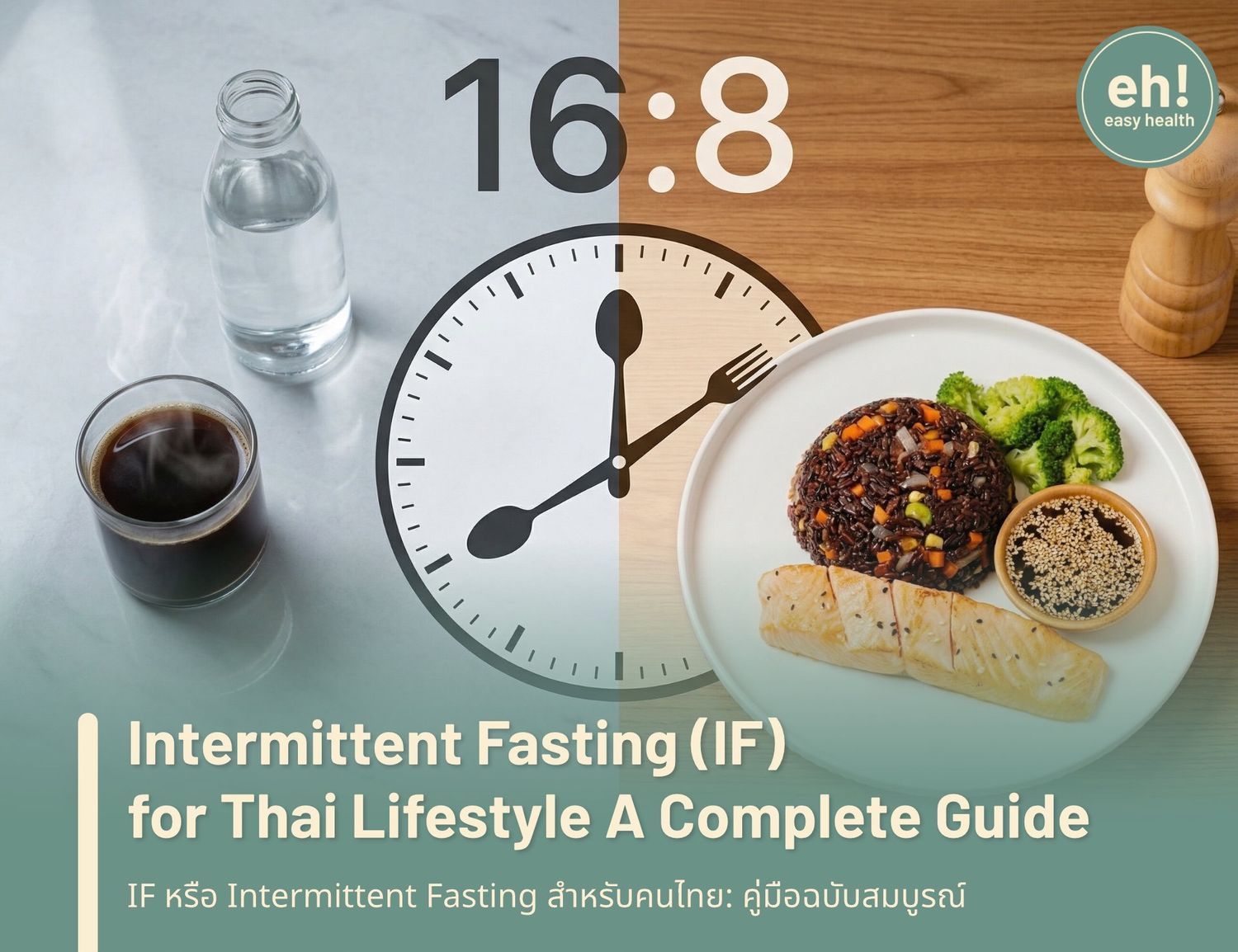
Intermittent Fasting for Thai Lifestyle: A Complete Guide
You've Heard About Intermittent Fasting. But Can It Actually Work in Thailand?
Intermittent fasting is everywhere right now. Your gym buddy swears by it. Your favorite health influencer won't stop talking about it. And honestly, the science behind it is solid.
But here's the problem. Most intermittent fasting guides are written by people who live in countries where meals happen at predictable times, portions are reasonable, and there isn't a som tam cart calling your name at 10 PM on a Tuesday.
Thailand is a different beast. Food is everywhere, all the time. Office culture revolves around group lunch orders. Street food stalls open at 6 AM and don't close until midnight. Social eating is deeply woven into Thai culture, and saying "no thanks, I'm fasting" at a team dinner can feel awkward.
So the real question isn't whether intermittent fasting works. It does. The real question is: how do you make intermittent fasting work when you're living in Thailand?
That's exactly what this guide is about. We'll break down how to adapt IF to the Thai lifestyle, which fasting schedule fits Bangkok's rhythm, what to eat during your eating window, and how to stay consistent without turning into "that person" who can't eat anything at the office lunch.
What Is Intermittent Fasting? (A Quick Refresher)
Intermittent fasting, often called IF, isn't a diet. It's an eating pattern. Instead of telling you what to eat, it focuses on when you eat.
The core idea is simple: you cycle between periods of eating and periods of fasting. During the fasting window, you consume zero calories (water, black coffee, and plain tea are fine). During the eating window, you eat your meals as normal.
The reason intermittent fasting is so popular is that it works on multiple levels at once. When you fast, your body goes through several biological changes that promote fat loss and overall health.
Insulin levels drop significantly. Lower insulin makes stored body fat more accessible for energy. This is why many people find fat loss easier with IF compared to traditional calorie restriction alone.
Human Growth Hormone (HGH) increases. Studies show HGH can increase by up to 5 times during fasting periods. This supports fat burning and muscle preservation.
Cellular repair kicks in. Your body initiates autophagy, a process where cells clean out damaged components and recycle them. Think of it as your body's built-in maintenance system.
Gene expression changes. Fasting triggers changes in gene function related to longevity and disease protection.
The important thing to understand is that intermittent fasting doesn't require you to eat less food overall (though many people naturally do). It simply compresses your eating into a shorter window, which gives your body more time in the fasted state where these benefits occur.
The Most Popular Intermittent Fasting Methods (And Which One Fits Thailand Best)
There are several ways to do intermittent fasting. Let's look at the most common methods and how well each one fits into a Thai lifestyle.
16:8 Method (Best for Most People in Thailand)
Fast for 16 hours, eat within an 8-hour window
Example: Eat from 12:00 PM to 8:00 PM, fast from 8:00 PM to 12:00 PM the next day
Why it works in Thailand: This schedule lets you skip breakfast (which many Thais already do naturally), enjoy a full lunch with colleagues, have an afternoon snack, and eat dinner at a normal time. You don't miss any social meals.
Difficulty: Easy to moderate. Most people adjust within 3 to 5 days.
18:6 Method (For Faster Results)
Fast for 18 hours, eat within a 6-hour window
Example: Eat from 12:00 PM to 6:00 PM, fast from 6:00 PM to 12:00 PM the next day
Why it's tricky in Thailand: Thai dinner culture usually starts at 7:00 PM or later. A 6:00 PM cutoff means you'll miss dinner invitations regularly. Doable if you work from home or have a flexible social life.
Difficulty: Moderate. Requires more planning around social events.
20:4 Method / Warrior Diet (Advanced)
Fast for 20 hours, eat within a 4-hour window
Example: Eat from 2:00 PM to 6:00 PM
Why it's tough in Thailand: Very restrictive. Hard to get adequate nutrition in 4 hours, especially if you're active. The Thai social eating culture makes this almost impossible to sustain long-term.
Difficulty: Hard. Not recommended for beginners.
5:2 Method (The Flexible Option)
Eat normally for 5 days, restrict to 500 to 600 calories on 2 non-consecutive days
Example: Fast on Monday and Thursday, eat normally the rest of the week
Why it works in Thailand: Maximum flexibility. You never have to turn down a social meal because you can schedule your fasting days around your calendar. Great for people with unpredictable social schedules.
Difficulty: Easy on eating days, mentally tough on fasting days.
Our recommendation for people living in Thailand: start with 16:8. It's the most sustainable, the most socially compatible, and it still delivers meaningful results. Once you've done 16:8 comfortably for 4 to 6 weeks, you can experiment with 18:6 if you want to push further.
A Realistic 16:8 Intermittent Fasting Schedule for Bangkok Life
Let's build a schedule that actually works for someone living and working in Bangkok.
Morning (6:00 AM to 12:00 PM) · Fasting Window
Wake up and drink a full glass of water. Hydration is critical because your body loses water during sleep.
Black coffee or plain green tea is fine. No sugar, no milk, no creamer. If you get your morning coffee from a Thai café, be specific. Ask for "black, no sugar" because many shops add sweetened condensed milk by default.
If you commute on the BTS, bring a water bottle. Bangkok heat plus fasting can dehydrate you quickly.
Feeling hungry around 10 AM is normal for the first week. It passes. Your body is adjusting.
Lunch (12:00 PM) · Break Your Fast
This is your first meal of the day, so make it count. Don't break your fast with a sugary drink or a bag of chips.
Prioritize protein first, then vegetables, then healthy carbs. A good target: 30 to 40 grams of protein in this meal.
Good options: grilled chicken over rice with extra vegetables, a protein-rich wrap or bowl, or Thai dishes like gai yang with som tam (skip the extra sugar in the papaya salad dressing).
Avoid breaking your fast with heavy fried food. After 16 hours of fasting, your digestive system needs something that's easy to process. Save the pad kra pao with a fried egg for your second meal.
Afternoon Snack (3:00 to 4:00 PM)
Keep it light but nutritious. Greek yogurt, a handful of almonds, a protein smoothie, or fresh fruit.
This is a good time to front-load some extra protein if your lunch was carb-heavy.
If you're in an office, keep healthy snacks at your desk so you're not tempted by the random box of Krispy Kreme that appears every Friday.
Dinner (6:30 to 7:30 PM) · Last Meal
This is your final meal before the fasting window begins. Make it satisfying.
Again, prioritize protein. A full day of intermittent fasting on the 16:8 schedule gives you 2 to 3 meals to hit your protein target. Most active adults need 1.6 to 2.2 grams of protein per kilogram of body weight daily.
Good options: grilled fish with vegetables, a macro-balanced bowl, soup with a protein-rich main, or a Thai stir-fry with extra chicken or tofu.
Try to finish eating by 8:00 PM. This gives you a full 16 hours of fasting before your next meal at noon tomorrow.
Evening (8:00 PM onward) · Fasting Window Begins
Water, herbal tea, and sparkling water are fine.
If you get late-night cravings (and you will, especially with all the street food on Sukhumvit), remind yourself that the craving usually passes within 15 to 20 minutes.
Going to bed earlier helps. Less time awake means less time thinking about food.
The Biggest Challenges of Intermittent Fasting in Thailand (And How to Handle Them)
Challenge 1: Thai Social Eating Culture
Thai culture is deeply social around food. "Gin khao yang?" (Have you eaten yet?) is practically a greeting. Refusing food can feel rude, and team lunches are a daily ritual in most Thai offices.
How to handle it: The beauty of 16:8 is that your eating window covers lunch and dinner. You don't have to refuse anything. If someone invites you to eat at 11:30 AM and your window doesn't open until noon, just push your window 30 minutes earlier that day. Flexibility is the whole point.
Challenge 2: Street Food Temptation Is Everywhere
Bangkok has over 300,000 street food vendors. They're on every corner, every soi, every BTS station exit. The smells alone can break your willpower during a fasting window.
How to handle it: Have a plan. Know exactly what your first meal will be before your eating window opens. When you have a plan, random temptation loses its power. Also, remind yourself: you're not saying "no forever." You're just saying "not right now."
Challenge 3: Sugar Is Hidden in Everything
This one catches a lot of people off guard. Thai cooking traditionally adds sugar to many dishes that don't seem sweet: stir-fries, curries, salad dressings, marinades. Even "healthy" green curry at many restaurants contains several teaspoons of sugar.
How to handle it: Be selective about where you eat. Choose restaurants and meal delivery services that are transparent about ingredients. If you're ordering street food, ask for "mai sai nam tan" (no sugar). Not every vendor will accommodate, but many will.
Challenge 4: The Bangkok Heat Makes Fasting Harder
Fasting in 35-degree heat with 80% humidity is a different experience than fasting in a cool European city. Dehydration is a real risk, and it can make you feel dizzy, tired, and unfocused.
How to handle it: Drink more water than you think you need. Aim for at least 2 to 3 liters during your fasting window alone. Add a pinch of Himalayan salt to your water for electrolytes if you're sweating a lot. Black coffee is a mild diuretic, so if you drink it in the morning, follow it with an extra glass of water.
Challenge 5: Late-Night Eating Culture
Many social gatherings in Bangkok happen late. Dinner at 8 PM, followed by drinks, followed by roti or khao tom (rice porridge) at midnight. This directly conflicts with an 8 PM fasting cutoff.
How to handle it: On social nights, shift your entire window forward. Instead of 12:00 PM to 8:00 PM, do 2:00 PM to 10:00 PM. You still get your 16 hours of fasting. The specific clock times matter less than the total duration of the fast.
What to Eat During Your Eating Window (Thai-Friendly Options)
Intermittent fasting isn't about eating less. It's about eating smarter within a compressed window. Here's how to structure your eating window for maximum results.
Protein Should Be Your Priority
When you're eating in a shorter window, getting enough protein becomes even more important. Protein keeps you full, preserves muscle mass, and has the highest thermic effect of any macronutrient (your body burns more calories digesting protein than carbs or fat).
Aim for 30 to 50 grams of protein per meal. Good Thai-friendly protein sources:
Grilled chicken breast (gai yang or gai op)
Steamed or grilled fish (pla neung or pla pao)
Eggs (2 to 3 eggs give you about 18 to 21 grams of protein)
Tofu and tempeh for plant-based eaters
Greek yogurt as a snack
Don't Fear Carbs, But Choose Wisely
Carbs aren't the enemy. But the type and quantity matter, especially in Thailand where white rice comes with literally everything.
Brown rice or cauliflower rice instead of white rice when possible
Sweet potato instead of regular potato
Glass noodles instead of rice noodles (lower glycemic index)
Fresh fruits like papaya, dragon fruit, and guava over processed sweets
Include Healthy Fats
Healthy fats help you stay full during the fasting window and support hormone function.
Avocado (increasingly available at Bangkok supermarkets and health cafés)
Nuts and seeds: almonds, cashews, chia seeds
Coconut oil or olive oil for cooking
Fatty fish like salmon or mackerel
Foods to Avoid or Minimize
Sugary Thai iced tea and iced coffee (a single glass can contain 30+ grams of sugar)
Deep-fried street food as your first meal after fasting
Processed snacks and convenience store meals
Sweetened condensed milk (used in many Thai beverages and desserts)
How Easy Health Makes Intermittent Fasting Easier in Thailand
Here's where things get practical. One of the hardest parts of intermittent fasting isn't the fasting itself. It's making sure the meals you eat during your window are actually well-balanced, macro-counted, and free from hidden sugars.
That's exactly what Easy Health was designed for.
Every meal from Easy Health is prepared fresh daily with zero added sugar and no MSG. Every dish shows exact calories, protein, carbs, and fat. So when you break your fast at noon, you don't have to guess whether your meal fits your goals. You already know.
Here's how Easy Health fits into a typical 16:8 intermittent fasting day:
12:00 PM (Break your fast): Order a Balance Plan meal or an à la carte option like the Pad Thai (615 kcal, 39g protein, 135 THB) or a Burrito Bowl. Start your eating window with solid protein and controlled carbs.
3:00 PM (Snack): Grab a smoothie or a light side like Pumpkin Soup (165 kcal, 75 THB). Keeps you fueled without overeating.
7:00 PM (Final meal): End your day with something satisfying. The Power Fit Combo (soup + main + smoothie, 1,043 kcal, 83g protein, 319 THB) is perfect for your last meal before the fast begins.
The Easy Health Meal Plans also work brilliantly with intermittent fasting:
Lean Plan (800–1,000 kcal/day) at 1,899 THB / 5 days pairs perfectly with IF for aggressive fat loss
Balance Plan (1,400–1,600 kcal/day) at 3,399 THB / 5 days is ideal for sustainable IF with enough energy to train
Keto Plan (Low-Carb / High-Fat) at 3,499 THB / 5 days combines two powerful fat-loss strategies: IF + ketosis
The beauty is that you don't have to think about what to eat. The meal planning, macro counting, and ingredient sourcing are handled for you. All you have to do is decide when to eat.
Common Intermittent Fasting Mistakes to Avoid
After helping thousands of people with their nutrition, we've seen the same mistakes come up over and over. Here are the ones that trip people up most often.
Mistake 1: Breaking your fast with junk food. Your body is primed to absorb nutrients after a fast. If the first thing you eat is a sugary iced coffee and a bag of fried pork skins, you're spiking your insulin and setting yourself up for cravings all day. Break your fast with protein and vegetables.
Mistake 2: Not drinking enough water during the fast. Many people forget that a significant portion of daily water intake usually comes from food. When you're not eating for 16 hours, you need to consciously drink more water. Dehydration causes headaches, fatigue, and brain fog, all of which people mistakenly blame on fasting itself.
Mistake 3: Thinking fasting means you can eat anything during the window. Intermittent fasting is a powerful tool, but it's not magic. If you eat 3,000 calories of pad see ew and bubble tea during your 8-hour window, you're not going to lose fat. The quality and quantity of food still matter.
Mistake 4: Going too extreme too fast. Starting with 20:4 or OMAD (One Meal A Day) when you've never fasted before is a recipe for failure. Start with 14:10 or 16:8 and build up gradually. Consistency beats intensity every time.
Mistake 5: Ignoring your body's signals. If you feel genuinely lightheaded, shaky, or unable to focus, eat something. Intermittent fasting should make you feel better over time, not worse. If you have any underlying health conditions (diabetes, eating disorders, pregnancy), consult a doctor before starting IF.
Who Should NOT Do Intermittent Fasting?
Intermittent fasting is safe for most healthy adults, but it's not for everyone. You should avoid IF or consult your doctor first if you:
Are pregnant or breastfeeding
Have a history of eating disorders
Have Type 1 diabetes or are on medication that requires food intake at specific times
Are under 18 years old
Have a BMI below 18.5 (underweight)
Experience chronic low blood pressure
If you're unsure, talk to a healthcare professional. This guide is for informational purposes and should not replace medical advice.
FAQ
Q : What can I drink during the intermittent fasting window?
A : You can drink water, black coffee (no sugar, no milk), plain green tea, herbal tea, and sparkling water. Anything with calories, including fruit juice, milk, sweetened coffee, and Thai iced tea, will break your fast. In Bangkok, be careful when ordering coffee because many shops add sugar or sweetened condensed milk by default. Always specify "no sugar, no milk."
Q : How long does it take to see results from intermittent fasting?
A : Most people notice reduced bloating and improved energy within the first week. Visible fat loss typically appears within 2 to 4 weeks, depending on your overall calorie intake and activity level. For significant body composition changes, give it 8 to 12 weeks of consistent practice.
Q : Can I exercise while doing intermittent fasting?
A : Yes. Many people train in a fasted state and report improved focus and fat oxidation. If you prefer to train with food in your system, schedule your workout near the start of your eating window so you can eat shortly after. For heavy strength training, eating before your session may help performance. Listen to your body and find what works best for you.
Q : Is intermittent fasting safe for women?
A : Intermittent fasting is generally safe for women, but some research suggests women may respond differently to extended fasts. Hormonal fluctuations can affect energy and hunger levels. Many female practitioners find that a gentler approach, like 14:10 instead of 16:8, works better. If you notice changes in your menstrual cycle, energy levels, or mood, consider shortening your fasting window and consulting a healthcare provider.
Q : Will I lose muscle if I do intermittent fasting?
A : Not if you eat enough protein and continue resistance training. Research from the American Journal of Clinical Nutrition shows that intermittent fasting combined with adequate protein intake (1.6 to 2.2g per kg of body weight) preserves muscle mass effectively. The key is making sure each meal in your eating window contains at least 30 grams of protein.
Q : Can I do intermittent fasting while eating Thai food every day?
A : Absolutely. Thai cuisine is diverse and can be very nutritious. The key is choosing dishes that are high in protein and vegetables while watching out for hidden sugars in sauces and dressings. Grilled meats (gai yang, moo yang), clear soups (tom jued), stir-fries without sugar, and papaya salad (request no sugar) all fit perfectly into an IF eating window. For even easier tracking, meal delivery services like Easy Health provide Thai-inspired dishes with full macro transparency.
Ready to Make Intermittent Fasting Even Easier? Download the Easy Health App
You've got the fasting schedule figured out. Now let the Easy Health App handle the eating part. Every meal is fresh, macro-counted, and made with zero added sugar, so you can break your fast with confidence instead of guesswork.
Here's what you get:
Easy Ordering · Browse 160+ menu items, pick your meals, and order in seconds
Track Your Nutrition (Calories & Macros) · See exact calories, protein, carbs, and fat for every dish, so you know your eating window is dialed in
Personalized Meal Planning · Choose from 6 curated plans (Lean, Balance, Active, Athlete, Keto, Vegetarian) that pair perfectly with your IF schedule
Exclusive Rewards · Earn points with every order and unlock special deals available only in the app
Download now and start eating smarter today:
Android: Download on Google Play
References & Links
References:
de Cabo, R. & Mattson, M.P. (2019). "Effects of Intermittent Fasting on Health, Aging, and Disease." New England Journal of Medicine, 381(26), 2541-2551. · https://www.nejm.org/doi/full/10.1056/NEJMra1905136
Moro, T. et al. (2016). "Effects of eight weeks of time-restricted feeding (16/8) on basal metabolism, maximal strength, body composition, inflammation, and cardiovascular risk factors in resistance-trained males." Journal of Translational Medicine, 14(1), 290. · https://translational-medicine.biomedcentral.com/articles/10.1186/s12967-016-1044-0
Harvard T.H. Chan School of Public Health, "Diet Review: Intermittent Fasting for Weight Loss" · https://www.hsph.harvard.edu/nutritionsource/healthy-weight/diet-reviews/intermittent-fasting/