
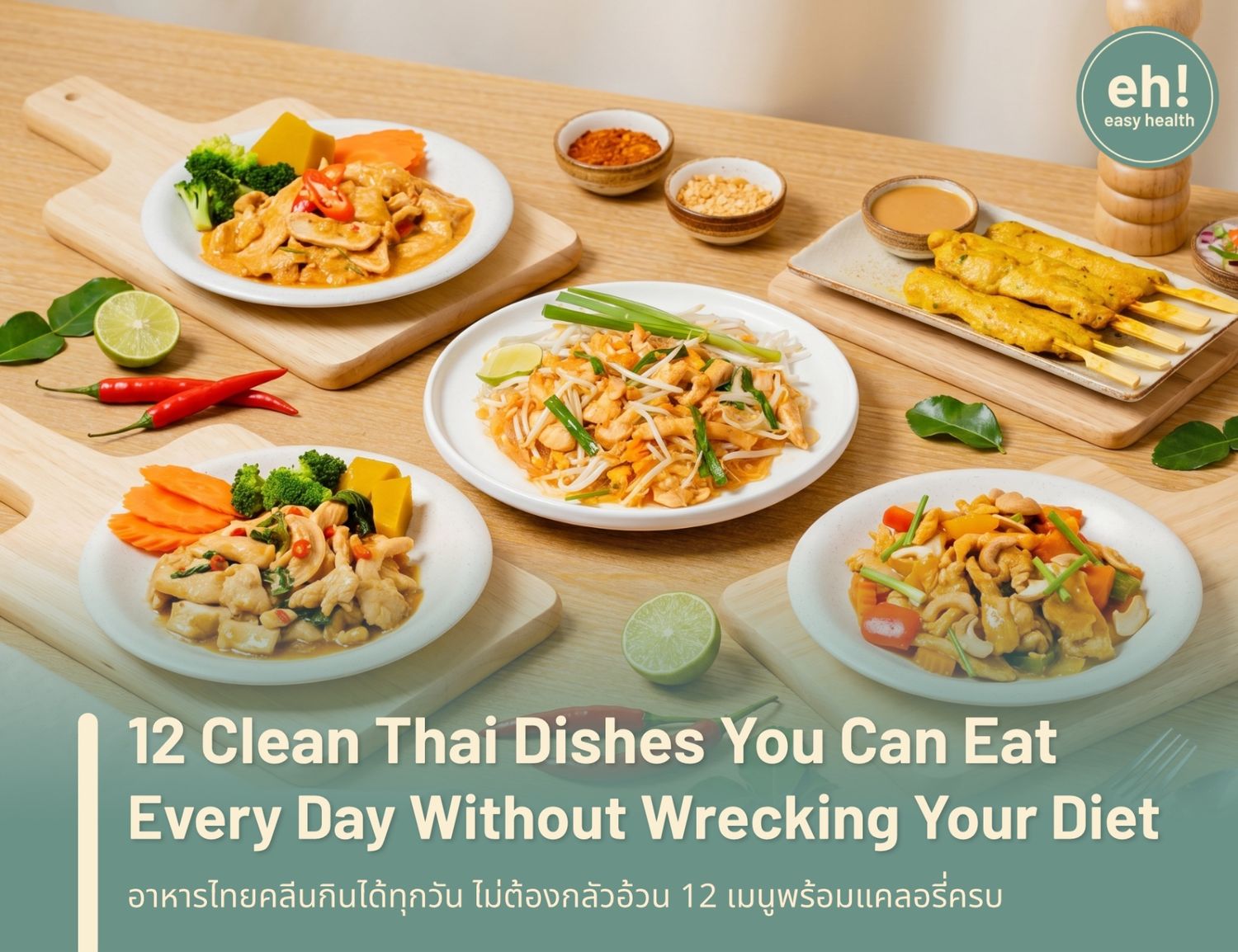
12 Clean Thai Dishes You Can Eat Every Day Without Wrecking Your Diet
Most people assume that the moment they start eating clean, Thai food is off the table. And you can understand why. The average plate of khao pad (fried rice) packs 700+ calories. A bowl of massaman curry with rice can easily top 900. Street-vendor pad see ew? Around 650 calories, most of it from oil.
But here is the thing people miss: Thai cuisine was never designed to be heavy. The original cooking traditions relied on grilling, steaming, boiling in broths, and pounding fresh herbs into pastes. It was fast, seasonal, and built around balance. Somewhere along the way, cheap vegetable oil, refined sugar, and MSG became the defaults, and "Thai food" turned into something your fitness tracker dreads.
The good news? Clean Thai food is not a modern invention. It is a return to how Thai food was always meant to be cooked. And once you understand the principles, you can eat Thai dishes every single day without derailing your nutrition goals.
This guide breaks down exactly what makes a Thai dish "clean," shows you 12 dishes (with full macros and prices) that prove healthy Thai food can taste incredible, and gives you a practical framework for building Thai meals that support fat loss, muscle gain, or just feeling better overall.
12 Clean Thai Dishes You Can Actually Eat Every Day
Now for the part you came here for. These are real dishes from the Easy Health menu, each one built on the clean cooking principles above. Every dish comes with full macros so you can plan your day with zero guesswork.
Breakfast and Morning Meals
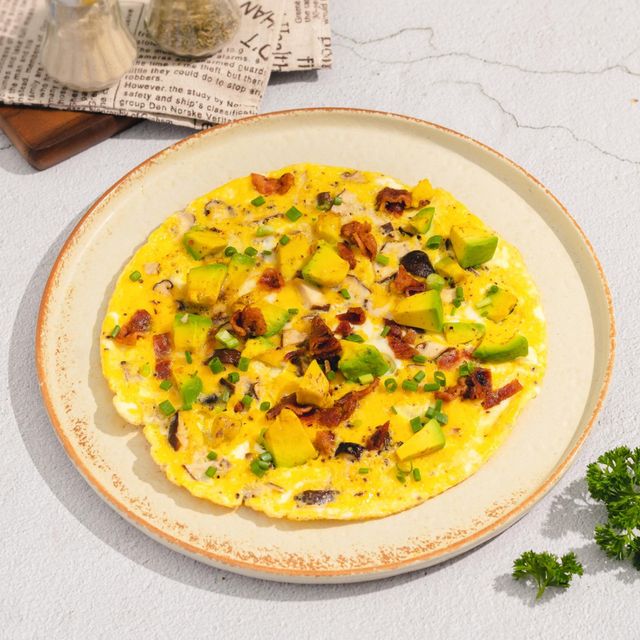
1. Morning Omelette A thick, fluffy omelette loaded with vegetables and served with a side salad. Simple, satisfying, and perfect for anyone following a low-carb or keto approach.
366 kcal · 28g protein · 3g carbs · 27g fat · 225 THB
Why it works: High protein-to-calorie ratio with almost zero carbs. Keeps you full well into the afternoon without the blood sugar spike of a typical Thai breakfast like jok (rice porridge) or pa-tong-ko (deep-fried dough sticks).
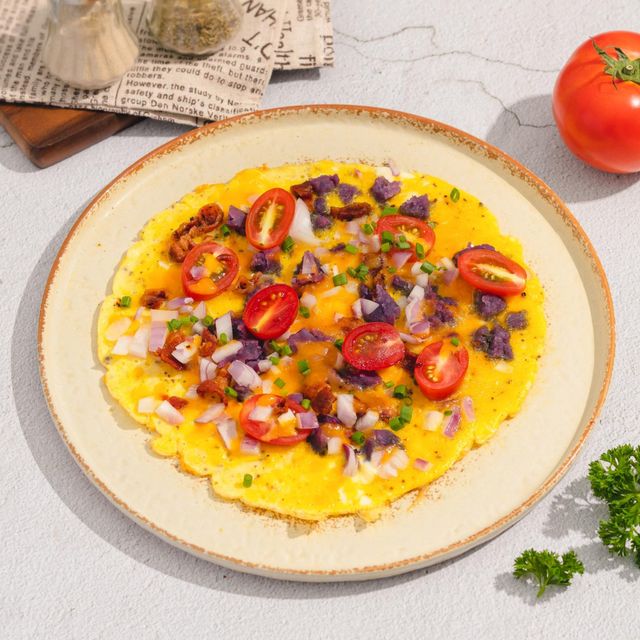
2. Farmer Omelette A heartier version with more vegetables and a slightly bigger portion, ideal for active mornings when you need sustained energy.
385 kcal · 33g protein · 13g carbs · 23g fat · 229 THB
Why it works: 33 grams of protein in one meal covers roughly 40% of the daily target for most people trying to lose fat or maintain muscle. The moderate carbs from vegetables provide energy without excess.
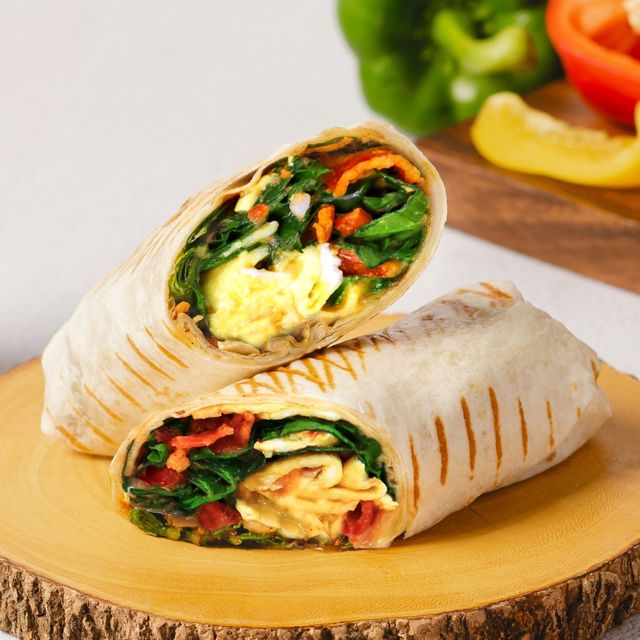
3. Hearty Breakfast Wrap A portable wrap filled with eggs, lean protein, and fresh vegetables. Great if you eat on the go or prefer not to sit down for a full plate meal.
375 kcal · 27g protein · 179 THB
Why it works: The wrap format makes it easy to eat between meetings or on the commute. Under 400 calories with 27g of protein means you can pair it with a coffee and be set until lunch.
Thai-Inspired Mains
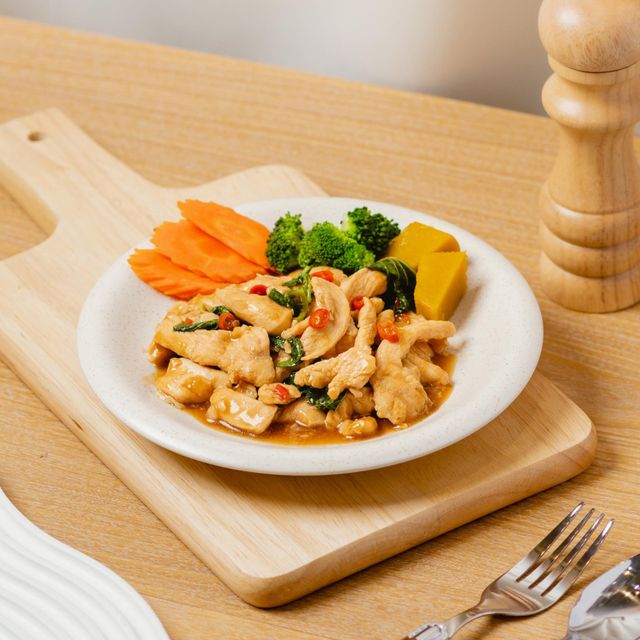
4. Stir-Fried Thai Basil (Pad Krapow) The undisputed king of Thai lunch dishes, reimagined for clean eating. Made with your choice of protein, fresh holy basil, and real chilies. Served with boiled vegetables and pumpkin instead of the usual white rice and fried egg.https://d2ijhro8jdnps2.cloudfront.net/products/1755150658955-8429572802.jpeg?format=auto&width=640&quality=80
Approx. 350-450 kcal depending on protein choice
Why it works: Traditional pad krapow from a street vendor runs 600-750 calories (white rice + fried egg + oily stir-fry). This version delivers the same punchy, spicy flavor with roughly half the calories. The pumpkin adds natural sweetness and fiber that white rice cannot match.
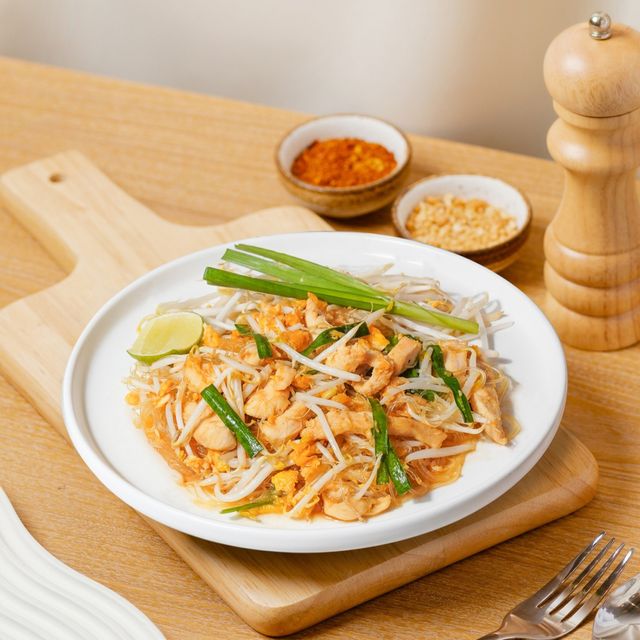
5. Pad Thai A clean take on Thailand's most famous noodle dish. Papaya noodles or keto noodles replace traditional rice noodles, tossed with pad Thai sauce, bean sprouts, egg, and crushed peanuts.
615 kcal · 39g protein · 135 THB
Why it works: Regular pad Thai from most restaurants averages 700-900 calories, with the bulk coming from refined noodles and oil. Swapping to papaya noodles drops the carb count dramatically while keeping the flavor profile intact. At 39g protein and only 135 THB, this is one of the best value-for-nutrition meals in Bangkok.
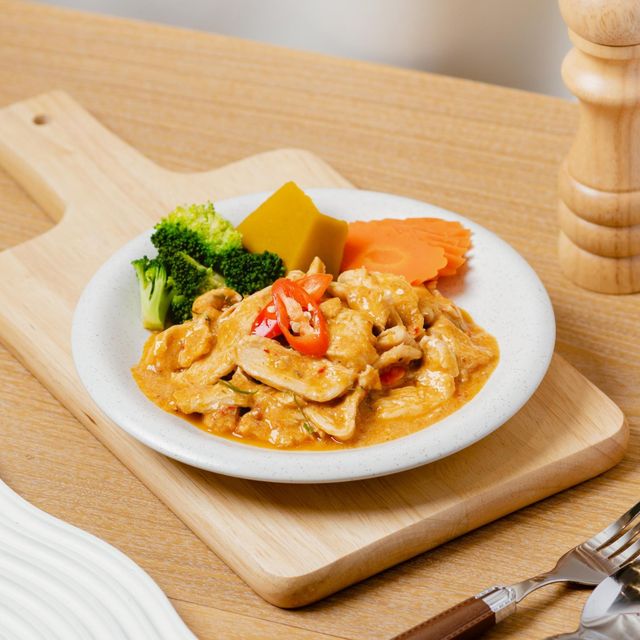
6. Red Curry (Gaeng Phet) A rich, aromatic curry made with coconut milk, your choice of protein, and fresh Thai herbs. The difference is portion-controlled coconut milk and carefully balanced seasoning.
Approx. 400-500 kcal depending on protein choice
Why it works: Most people avoid curry entirely when eating clean, which is unnecessary. The issue with restaurant curries is not the curry paste (which is mostly herbs and spices) but the volume of coconut milk and the mountain of white rice underneath. Easy Health controls the coconut milk ratio and serves it with a smarter carb base.
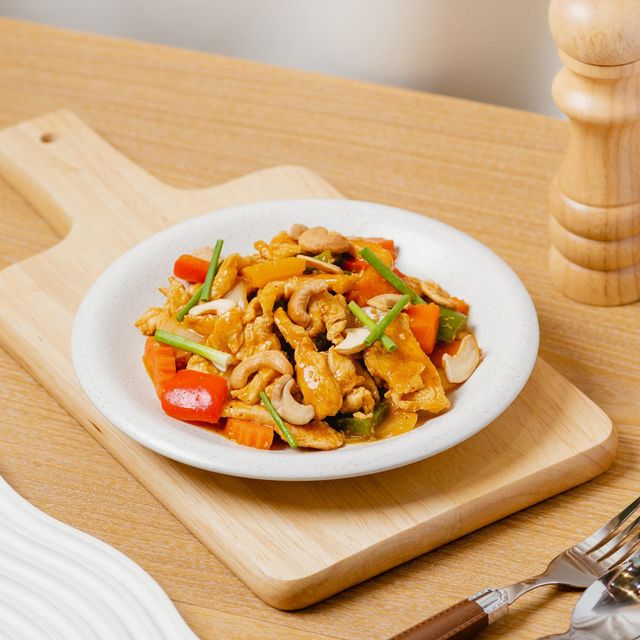
7. Stir-Fried Cashew Nuts A Thai-Chinese classic featuring your choice of protein, roasted cashews, fresh vegetables, and a light coconut milk base.
Approx. 400-500 kcal depending on protein choice
Why it works: Cashews add healthy fats and a satisfying crunch, but restaurants often go overboard with oil and oyster sauce. This version uses a controlled amount of coconut milk as the base, giving you the creamy texture without drowning the dish in fat.
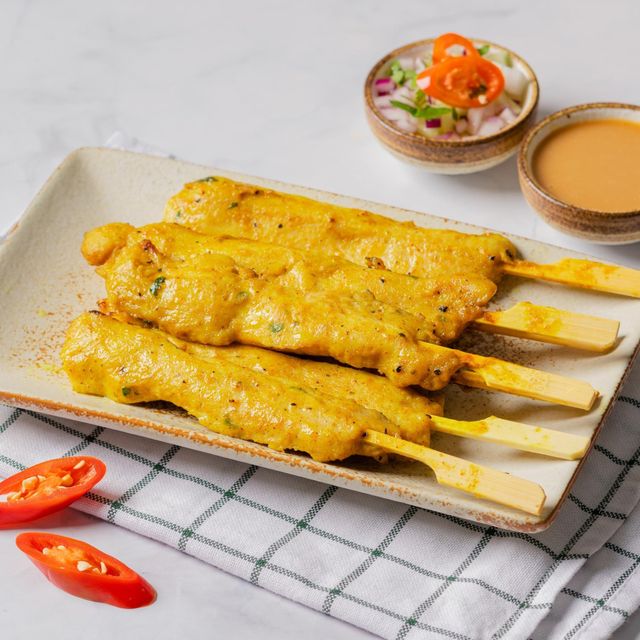
8. Free-Range Chicken Satay Tender grilled chicken skewers with a homemade peanut sauce and cucumber relish. A classic Thai appetizer turned into a clean main course.
High protein, low carb (exact macros vary by serving size)
Why it works: Grilling is the cleanest cooking method in Thai cuisine, and satay is the perfect showcase. The homemade peanut sauce controls the sugar and oil that commercial versions dump in. Free-range chicken also tends to have a better omega-6 to omega-3 ratio than factory-farmed poultry.
Thai-Inspired Wraps
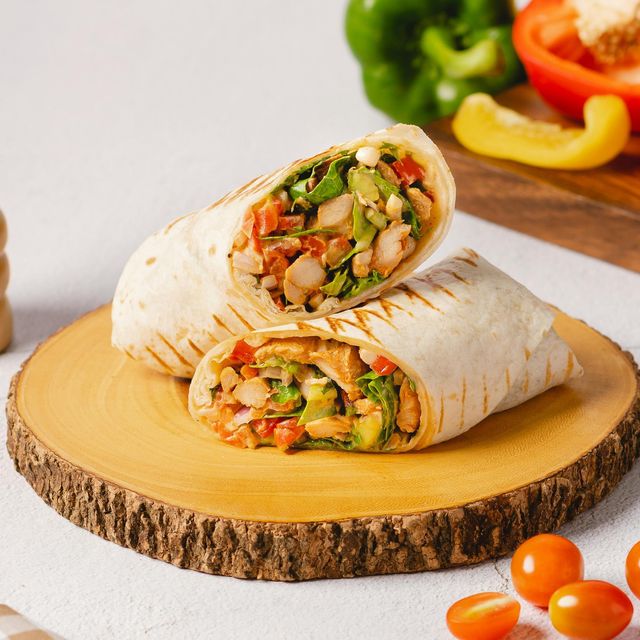
9. Wram Yum Wrap A wrap inspired by the flavors of tom yum: free-range chicken, baby kale, tomatoes, mushrooms, shallots, avocado, and coriander in a spicy tom yum dressing.
High protein, nutrient-dense
Why it works: Takes the sour-spicy flavor profile of Thailand's most famous soup and puts it in a portable format. The combination of kale, avocado, and mushrooms makes this one of the most micronutrient-rich items on the menu.
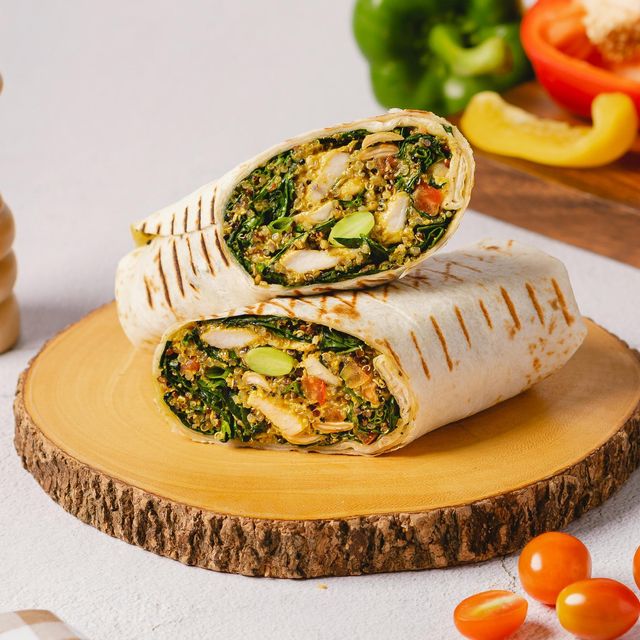
10. Phuket Wrap A Southern Thai-inspired wrap with free-range chicken, quinoa, spinach, edamame, tomatoes, and cashews, served with a smooth yellow curry sauce.
High protein, balanced macros
Why it works: The yellow curry sauce gives it an unmistakably Thai flavor, but the quinoa and edamame base makes it protein-rich and filling. Quinoa is one of the few plant foods that contains all nine essential amino acids, making this wrap particularly good for anyone reducing meat intake.
Clean Thai Soups
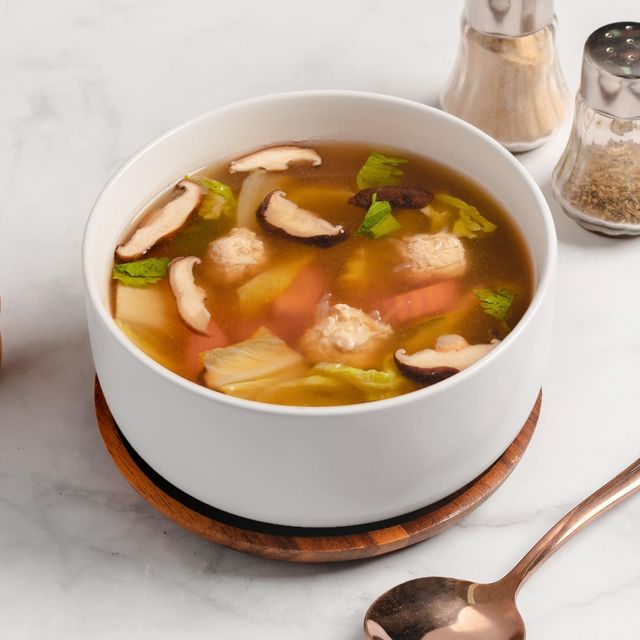
11. Tom Jued Soup A clear, light Thai soup with vegetables, glass noodles, and your choice of protein. The kind of soup Thai grandmothers make when someone needs nourishing without heaviness.
93 kcal · 14g protein · 6g carbs · 1g fat · 75 THB
Why it works: At just 93 calories with 14 grams of protein, this might be the most efficient meal on the entire menu. Perfect as a starter, a light dinner, or a side dish to boost your protein intake without adding meaningful calories. Compare this to tom kha gai at a typical restaurant: 300-400 calories per bowl, mostly from coconut milk.
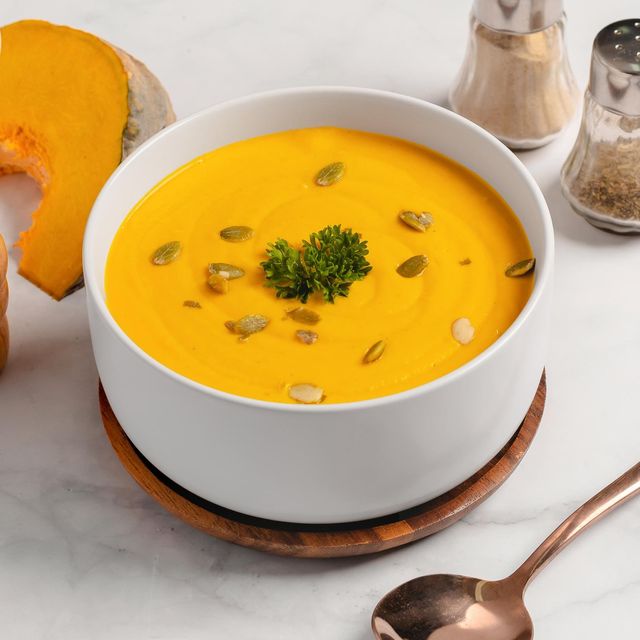
12. Pumpkin Soup A creamy, comforting soup made from roasted pumpkin with Thai-inspired seasoning.
165 kcal · 4g protein · 14g carbs · 10g fat · 75 THB
Why it works: Pumpkin is loaded with beta-carotene (which converts to vitamin A), potassium, and fiber. At 165 calories, this is a satisfying light meal or side dish. The natural sweetness of pumpkin means no added sugar is needed, which is a problem with many Thai soups that compensate for thin flavor by adding palm sugar.
The Calorie Reality Check: Regular vs. Clean Thai Food
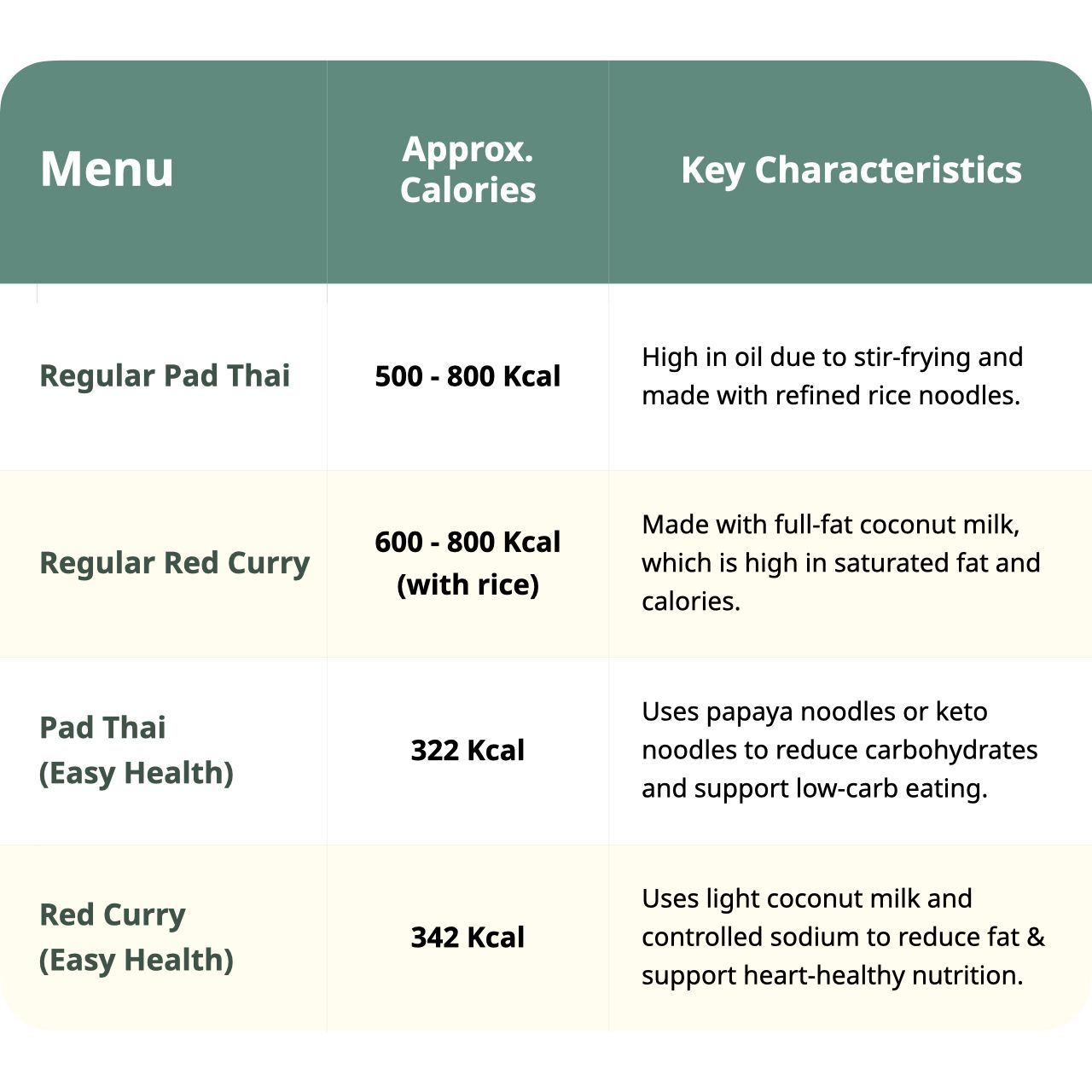
Seeing the numbers side by side makes the impact impossible to ignore. Here is how popular Thai dishes compare when prepared traditionally versus the clean way:
Pad Krapow with rice and fried egg: Regular 650-750 kcal vs. Clean (with boiled veg and pumpkin) 350-450 kcal. Savings: ~300 kcal per meal.
Pad Thai: Regular 700-900 kcal vs. Clean (papaya noodles) 615 kcal. Savings: ~150-285 kcal per meal.
Green/Red Curry with rice: Regular 700-850 kcal vs. Clean (controlled coconut milk, smart carb base) 400-500 kcal. Savings: ~250-350 kcal per meal.
Thai fried rice (Khao Pad): Regular 650-800 kcal vs. Clean (cauliflower rice base) ~350-400 kcal. Savings: ~300-400 kcal per meal.
Tom Kha Gai: Regular 300-400 kcal vs. Clean (light coconut milk) ~150-200 kcal. Savings: ~150-200 kcal per meal.
Fried chicken (Gai Tod): Regular 500-600 kcal vs. Clean grilled chicken (satay-style) ~250-350 kcal. Savings: ~200-300 kcal per meal.
If you eat two Thai meals a day and switch both to clean versions, you could save 400-600 calories daily. Over a month, that is 12,000-18,000 calories, which translates to roughly 1.5-2.5 kg of fat loss from cooking method changes alone, without eating less food.
How to Build a Full Day of Clean Thai Meals
Knowing individual dishes is useful, but the real power comes from stringing them together into a full day that hits your targets. Here are three sample days for different goals:
Breakfast: Morning Omelette (366 kcal, 28g protein, 225 THB)
Lunch: Pad Thai with papaya noodles (615 kcal, 39g protein, 135 THB)
Snack: Pumpkin Soup (165 kcal, 4g protein, 75 THB)
Daily total: ~1,146 kcal · 71g protein · 435 THB
This day keeps you under 1,200 calories while delivering over 70 grams of protein. The Morning Omelette anchors the morning with fat and protein to control hunger, the Pad Thai provides a satisfying and filling lunch, and the Pumpkin Soup gives you something warm and comforting in the afternoon without adding serious calories.
Breakfast: Farmer Omelette (385 kcal, 33g protein, 229 THB)
Lunch: Pad Krapow with boiled vegetables (approx. 420 kcal, ~35g protein)
Afternoon: Tom Jued Soup (93 kcal, 14g protein, 75 THB)
Dinner: Red Curry with lean protein (approx. 450 kcal, ~30g protein)
Daily total: ~1,348 kcal · 112g protein
A well-rounded day with four meals that never feel like you are restricting. Over 110 grams of protein supports muscle maintenance, and the variety of flavors (savory omelette, spicy basil, light soup, rich curry) keeps things interesting. This is the kind of day where you forget you are "eating clean" because the food is just good.
Breakfast: Hearty Breakfast Wrap (375 kcal, 27g protein, 179 THB) + Acai Berry Bowl (413 kcal, 16g protein, 275 THB)
Lunch: Pad Thai (615 kcal, 39g protein, 135 THB)
Post-workout: Tom Jued Soup (93 kcal, 14g protein, 75 THB) + Pumpkin Soup (165 kcal, 4g protein, 75 THB)
Daily total: ~1,661 kcal · 100g protein · 739 THB
For people who train regularly and need more fuel, stacking a wrap with an acai bowl in the morning gives you a solid calorie and carb base. The post-workout soups replenish fluids and add easy-to-digest protein without heaviness.
5 Rules for Ordering Thai Food Clean (Anywhere)
Even when you are not ordering from Easy Health, you can apply these principles at any Thai restaurant:
Rule 1: Lead With the Cooking Method
Before looking at what a dish contains, ask how it is cooked. "Is this fried or grilled?" is the single most important question you can ask at a Thai restaurant. Choose ย่าง (grilled), นึ่ง (steamed), or ต้ม (boiled/soup) over ทอด (fried) or ผัด (stir-fried in heavy oil).
Rule 2: Control the Carb Base
Ask for brown rice, riceberry, or half-portion rice. Better yet, ask if they can substitute vegetables for the rice entirely. Many Bangkok restaurants are now accommodating these requests. At Easy Health, we automatically pair dishes with smarter carb options like pumpkin, boiled vegetables, or cauliflower rice.
Rule 3: Request Sauce on the Side
Thai curries, stir-fries, and noodle dishes get most of their excess calories from the sauce. Asking for sauce on the side lets you control the amount. You will often find that half the usual sauce is more than enough flavor.
Rule 4: Skip the Fried Extras
Fried garlic, fried shallots, fried egg on top, crispy pork rind. These "extras" can add 100-200 calories each. Ask for a boiled egg instead of fried, and skip the crispy toppings.
Rule 5: Finish With Herbs, Not Sugar
Many Thai restaurants add sugar at the end of cooking to balance flavors. If you are cooking at home, try finishing with a squeeze of lime, a handful of Thai basil, or sliced chilies instead. These add brightness and complexity without the calorie cost.
Why Thai Food Is Actually Ideal for Clean Eating
Here is something that might surprise you: Thai cuisine is structurally better suited for clean eating than most other cuisines. Here is why:
The herb-and-spice foundation. Italian food relies on olive oil and cheese for flavor. French food depends on butter and cream. American food leans on salt, sugar, and fat. Thai food gets its flavor from lemongrass, galangal, kaffir lime, chili, fish sauce, and lime juice. Most of these have virtually zero calories. The flavor infrastructure of Thai cooking is inherently lean.
Built-in vegetable diversity. A typical Thai meal naturally includes 5-8 different vegetables. Morning glory, baby corn, Thai eggplant, long beans, pumpkin, mushrooms, tomatoes, and various greens all show up regularly. This is not a salad-on-the-side culture. Vegetables are woven into the main dish.
Protein flexibility. Thai dishes work with almost any protein. The same pad krapow recipe works with chicken, pork, beef, shrimp, tofu, or fish. This makes it easy to customize for your macro targets without changing the flavor profile.
Portion-friendly soups. Thai soup culture (tom yum, tom kha, gaeng jued, gaeng liang) provides high-volume, low-calorie meals that fill you up physically. Starting a meal with soup is one of the most well-researched appetite-control strategies, and Thai cuisine does this naturally.
A 2019 study in the European Journal of Clinical Nutrition found that meals with higher water content (like soups) reduced subsequent calorie intake by 20% compared to drier meals with the same calorie count. Thai soup culture is essentially a built-in appetite-management system.
Common Myths About Clean Thai Food
Myth: Clean Thai food tastes bland
This is the number one concern, and it is completely unfounded. Clean Thai cooking relies on the same herbs, spices, and aromatics as traditional Thai cooking. The difference is the cooking method and the amount of oil, sugar, and processed seasonings. When you grill a chicken satay with a proper marinade, it does not taste "diet." It just tastes like really good chicken.
Myth: You cannot eat curry when eating clean
You absolutely can. The issue is not curry paste (which is mostly shrimp paste, chilies, galangal, lemongrass, and garlic). The issue is swimming the protein in a liter of full-fat coconut milk and serving it over a mountain of white rice. Control the coconut milk portion, choose a lighter carb base, and curry is completely fine.
Myth: Thai food has too much sodium to be healthy
Thai food can be high in sodium if you use bottled sauces and MSG liberally. But traditional Thai seasoning is more nuanced than that. Fish sauce in moderation (1-2 teaspoons per dish), lime juice, and fresh herbs create a complex salty-sour-spicy profile that actually requires less total sodium than most people think. The key is cooking from scratch rather than relying on premade sauce packets.
Myth: You need to avoid all coconut milk
Coconut milk contains medium-chain triglycerides (MCTs), which are metabolized differently from other fats and may even support fat burning. A 2015 review in the Journal of the Academy of Nutrition and Dietetics found that MCT consumption was associated with modest reductions in body weight. The issue was never coconut milk itself but the quantity. Using 2-3 tablespoons per serving instead of a full cup changes the math entirely.
Myth: Street food cannot be clean
This one is mostly true, unfortunately. Street vendors optimize for speed, flavor, and cost, which usually means lots of oil, sugar, MSG, and white rice. There are exceptions (grilled chicken vendors, som tum makers who go easy on the sugar), but consistently eating clean from street food is difficult. This is exactly why meal delivery services like Easy Health exist: you get the Thai flavors you love with the nutritional control you need.
Easy Health: Clean Thai Food Delivered Daily
At Easy Health, every dish is built on the principles in this article. Here is what that means in practice:
Free-range chicken and grass-fed beef as standard proteins. No factory-farmed poultry, no processed meats.
All sauces made in-house with controlled sodium and sugar. No bottled sauces, no MSG, no artificial preservatives.
Zero added refined sugar across the entire menu. Natural sweetness comes from ingredients like pumpkin, honey, and fresh fruit.
Full macro transparency on every single dish. Calories, protein, carbs, and fat, so you always know exactly what you are eating.
160+ menu items that rotate regularly, so clean eating never gets repetitive.
Whether you are focused on fat loss, muscle building, or just eating better, our Thai-inspired dishes prove that clean food does not mean sacrificing the flavors you grew up with.
Browse the full menu at easyhealth.asia/menu or find a meal plan that fits your goals at easyhealth.asia/meal-plans.
Calories Comparison : Regular vs. Clean Thai Dishes
To see the difference more clearly, let’s compare the calorie content of popular Thai dishes with their clean food alternatives from Easy Health.
Why Cooking Method Matters More Than Ingredients
The same ingredient can have very different calorie counts depending on how it’s cooked. For example, 100 grams of grilled chicken breast contains about 165 calories, but when it’s battered and deep-fried, the total can rise to 300–400 calories due to the absorbed oil and flour. This is why clean eating places strong emphasis on choosing the right cooking method to maintain nutritional balance.
What Actually Makes a Thai Dish "Clean"?
Before we get to specific dishes, it helps to understand the two pillars that determine whether a Thai meal supports your goals or sabotages them: the cooking method and the ingredients.
Pillar 1: The Cooking Method Changes Everything
The exact same chicken breast can range from 165 calories (grilled) to 400+ calories (battered and deep-fried). That is not a small difference. Over the course of a week, choosing the wrong cooking method for just one meal per day could add 1,600+ extra calories, which is nearly half a pound of fat.
Here is how common Thai cooking methods rank from cleanest to heaviest:
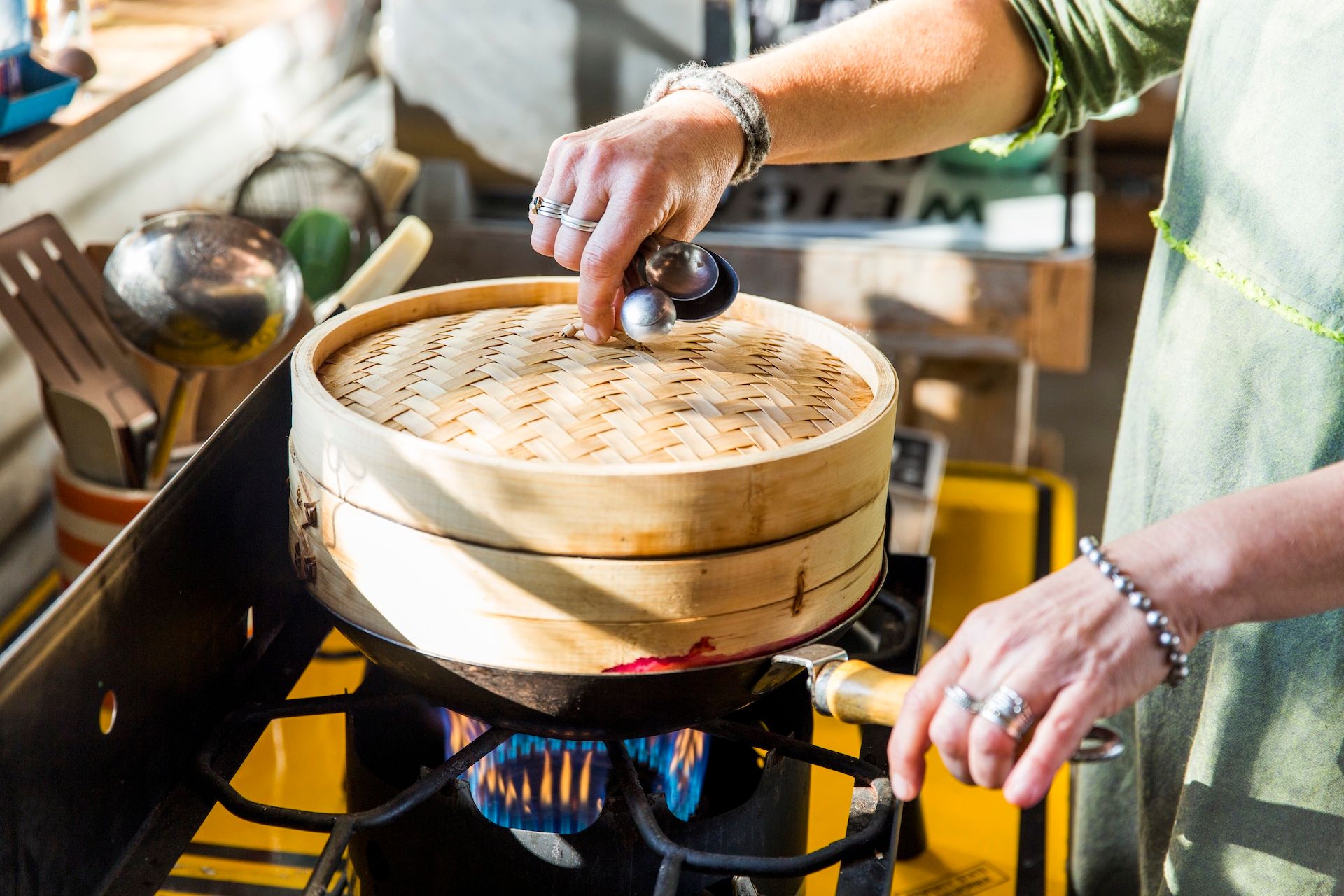
Grilling (ย่าง) and steaming (นึ่ง) are the gold standard. Almost zero added fat, and they preserve water-soluble vitamins like vitamin C and B-complex better than boiling. Think grilled satay, steamed fish with lime, or steamed chicken over rice.
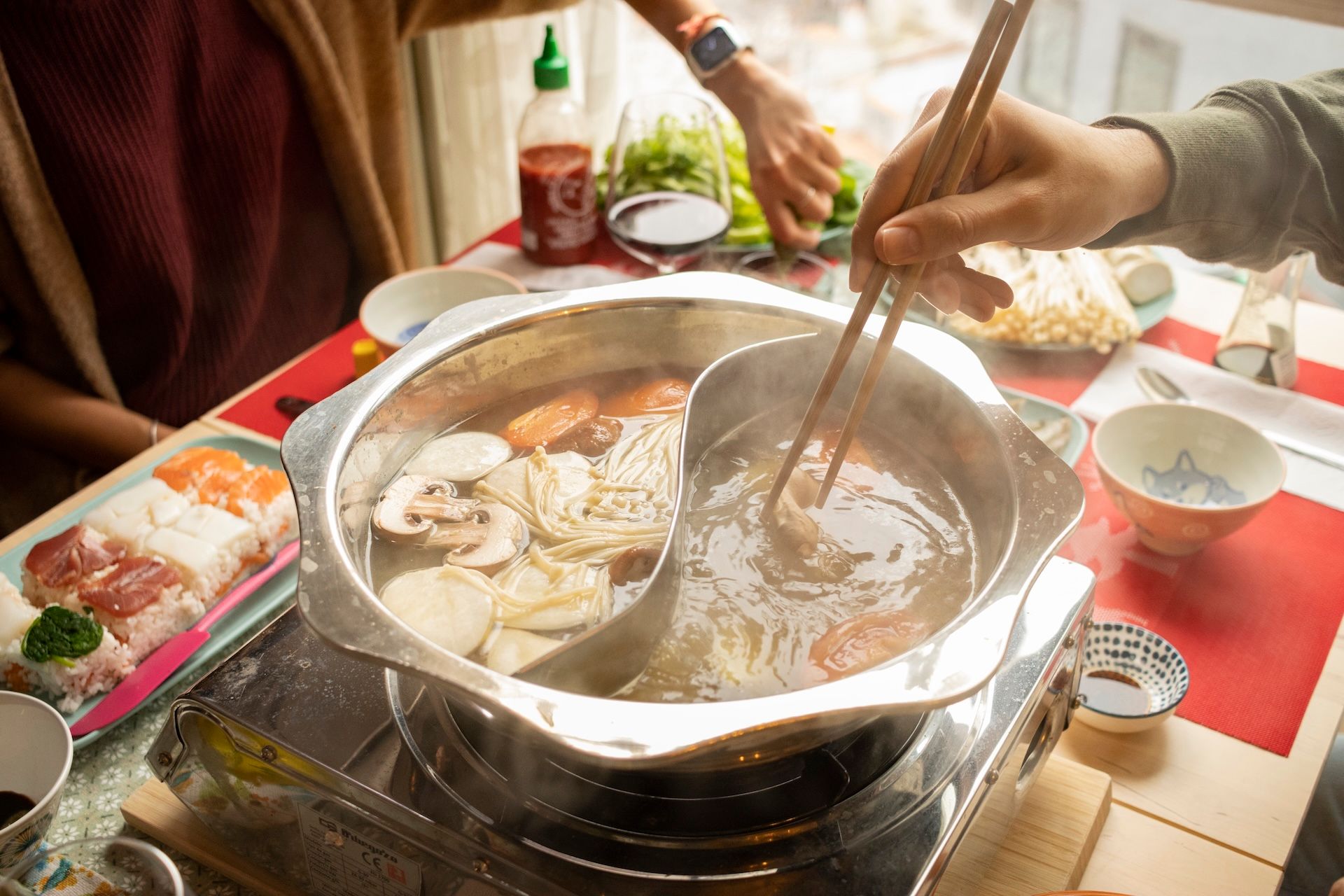
Boiling in broth (ต้ม) is excellent for soups. Tom yum, tom kha (light version), and gaeng jued all use broth as the base, keeping calories low while extracting flavor from herbs and aromatics. A clear tom yum soup typically runs 80-150 calories per bowl before protein.
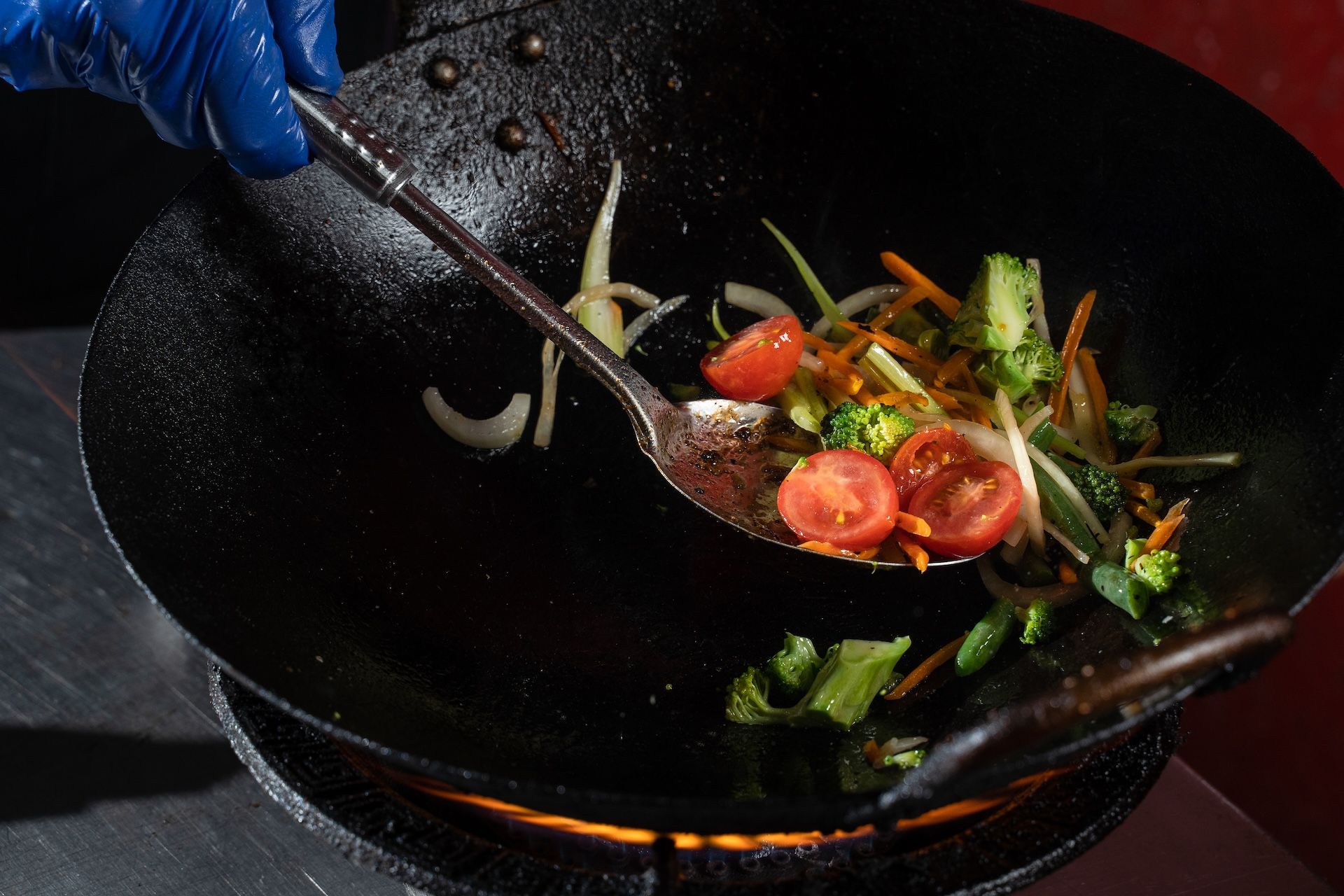
Quick stir-frying (ผัด) can be clean if done right: a small amount of quality oil, high heat, and short cooking time. The problem is that most Thai restaurants use 3-4 tablespoons of oil per dish (that is 360-480 extra calories from oil alone). Clean stir-frying uses a fraction of that.
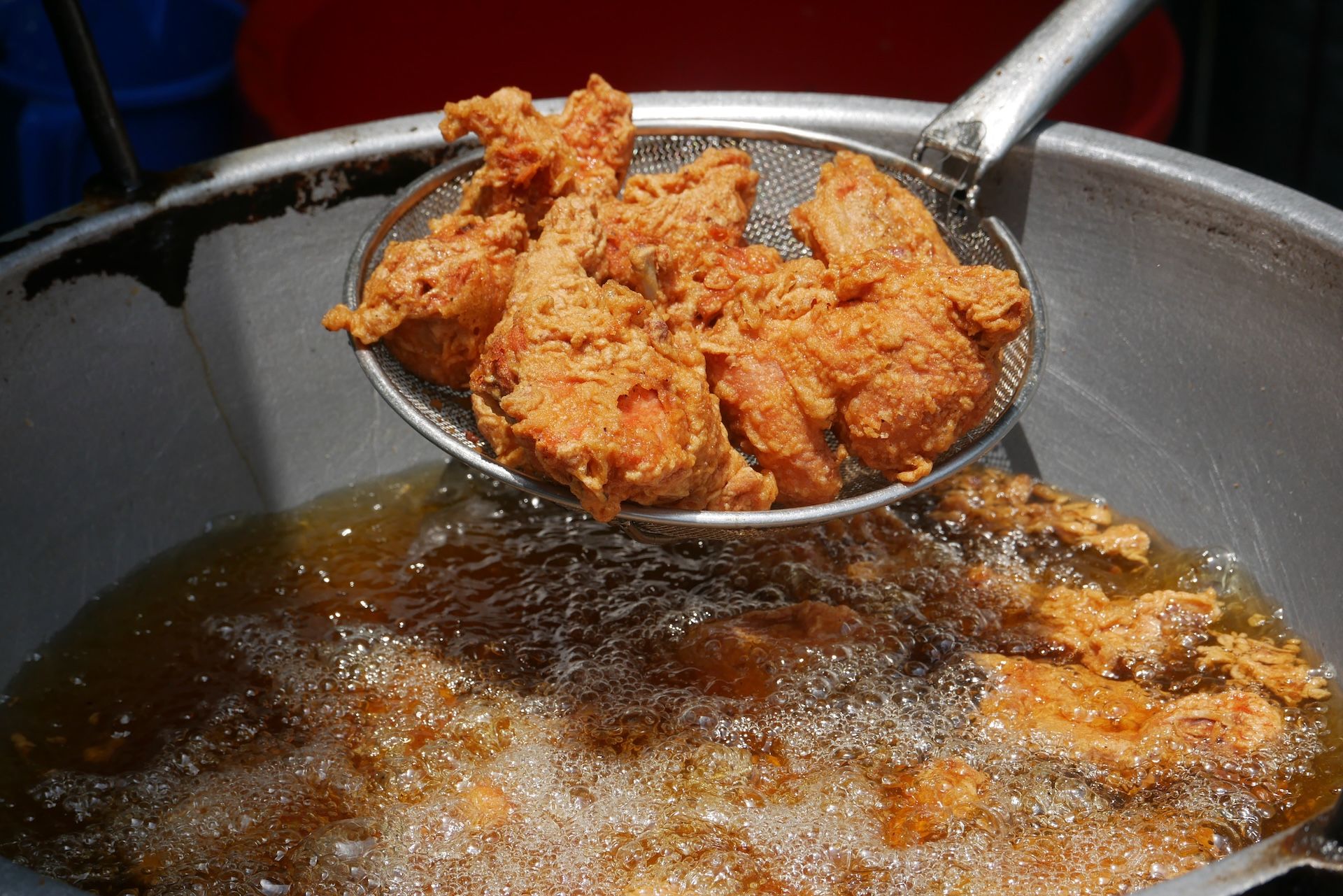
Deep-frying (ทอด) is where things go sideways. Tod mun (fish cakes), gai tod (fried chicken), and spring rolls can absorb 30-40% of their weight in oil. A single plate of fried pork belly with crispy garlic can exceed 800 calories.
Coconut-milk-based curries sit in a gray zone. Full-fat coconut milk adds about 400 calories per cup. But you do not need a full cup per serving, and light coconut milk cuts that in half. The key is portion control and preparation, not avoidance.
A 2018 study published in the Journal of Food Science and Technology found that steaming and grilling retained 85-95% of B-vitamins in chicken and fish, while deep-frying dropped retention to 50-70%. So cleaner cooking methods do not just save calories. They also give you more actual nutrition per bite.
Pillar 2: The Ingredients Make or Break It
Thai cooking has a built-in advantage that most Western cuisines lack: an herb-and-spice arsenal that adds massive flavor with virtually zero calories. Lemongrass, galangal, kaffir lime leaves, Thai basil, fresh chilies, lime juice, and fish sauce (in moderation) create complex flavor profiles without needing sugar, cream, or butter.
The clean ingredient playbook for Thai food comes down to a few swaps:
Protein: Free-range chicken, wild-caught fish, eggs, and grass-fed beef instead of processed sausages, fatty pork belly, or mock meats loaded with sodium and fillers. Lean protein keeps you full longer and supports muscle recovery without the calorie overhead of fatty cuts.
Carb base: Brown rice, riceberry, cauliflower rice, or papaya noodles instead of white jasmine rice and refined rice noodles. One cup of brown rice has 3.5g of fiber versus 0.6g in white rice, and it scores lower on the glycemic index, meaning more stable energy and fewer cravings.
Vegetables: The more color, the better. Thai cooking already uses a wide range: morning glory, Thai eggplant, pumpkin, baby corn, long beans, and various leafy greens. Loading up on vegetables adds volume and nutrients without adding significant calories.
Fats: Coconut oil in moderation, avocado, cashews, and peanuts in measured amounts. These are not "bad" but they are calorie-dense (9 calories per gram versus 4 for protein and carbs), so portions matter.
Seasonings: Fresh herbs over bottled sauces. A typical commercial pad krapow sauce contains sugar, MSG, and preservatives. Making the sauce from fresh chilies, garlic, and a controlled amount of oyster sauce and fish sauce keeps the flavor authentic while cutting the junk.
Conclusion : Clean Thai Dishes for Real-Life Wellness
Eating clean Thai food is neither complicated nor boring. It’s a smart and sustainable way to eat that supports long-term health. By understanding the basics of clean cooking and making mindful ingredient choices, you can enjoy the authentic flavors of your favorite dishes while maintaining your health and fitness goals every day.
Download the Easy Health App
The easiest way to order clean Thai food daily is through the Easy Health app. Browse 160+ dishes, see full macros for every meal, and get healthy food delivered to your door.
Full macro transparency · Every dish shows calories, protein, carbs, and fat
Flexible meal plans · Choose from Lean, Balance, Active, Athlete, Keto, or Vegetarian
Daily fresh preparation · Never frozen, cooked fresh every morning
Easy ordering · Browse, customize, and order in under 2 minutes
Download for Android: play.google.com/store/apps/details?id=com.easyHealth.app
Download for iOS: apps.apple.com/th/app/easy-health/id6667109383
FAQ
Q: Is clean Thai food more expensive than regular Thai food?
A: Street food is cheaper, but the gap is smaller than you think. A street vendor pad krapow runs 50-60 THB, but it comes with excess oil, MSG, and white rice. An Easy Health clean pad krapow costs more, but includes premium protein (free-range chicken or grass-fed beef), full macro data, and controlled ingredients. When you factor in the health costs of eating poorly over time, clean food is the more economical choice long-term.
Q: Can I eat clean Thai food every day without getting bored?
A: Easily. Thai cuisine has one of the broadest flavor ranges of any cuisine in the world: sour, sweet, salty, spicy, bitter, and umami all show up regularly. With 160+ items on the Easy Health menu alone, you could eat a different clean Thai dish every day for over five months without repeating.
Q: Is clean Thai food suitable for keto or low-carb diets?
A: Many Thai dishes are naturally keto-friendly once you remove the rice and noodles. Curries, stir-fries, grilled meats, soups, and salads all work within a keto framework. Easy Health offers a dedicated Keto meal plan (3,499 THB for 5 days) with dishes specifically designed for low-carb, high-fat eating.
Q: How much protein can I get from clean Thai dishes?
A: More than most people expect. A single Morning Omelette delivers 28g of protein. Pad Thai gives you 39g. Tom Jued Soup packs 14g in just 93 calories. By stacking two to three protein-rich Thai dishes per day, most people can hit 80-120g of protein without supplements.
Q: Are Thai soups really good for weight loss?
A: Research consistently shows that starting meals with broth-based soups reduces overall calorie intake. Thai clear soups like tom yum nam sai, gaeng jued, and tom jued are extremely low in calories (often under 150 kcal) while being filling and satisfying. They are one of the best tools for appetite control in any cuisine.
Q: Can I order clean Thai food for my whole family?
A: Absolutely. Clean Thai dishes use the same flavors and recipes your family already loves. Kids will not notice the difference between a well-made clean pad krapow and a regular one. Easy Health offers meal plans from Lean (800-1,000 kcal, 1,899 THB/5 days) all the way up to Athlete (2,400-2,600 kcal, 4,799 THB/5 days), so every family member can get the right portion for their needs.
References and Further Reading
Prodhan, U.K., et al. (2018). "Effect of different cooking methods on the content of vitamins and minerals in selected vegetables." Journal of Food Science and Technology, 55(9), 3656-3663. https://pmc.ncbi.nlm.nih.gov/articles/PMC6049644/
Rolls, B.J., et al. (2019). "Soup preloads in a variety of forms reduce meal energy intake." European Journal of Clinical Nutrition, 61, 727-735. https://pubmed.ncbi.nlm.nih.gov/17180154/
Mumme, K., & Stonehouse, W. (2015). "Effects of medium-chain triglycerides on weight loss and body composition: a meta-analysis." Journal of the Academy of Nutrition and Dietetics, 115(2), 249-263. https://pubmed.ncbi.nlm.nih.gov/25636220/
Monteiro, C.A., et al. (2019). "Ultra-processed foods: what they are and how to identify them." Public Health Nutrition, 22(5), 936-941. https://pubmed.ncbi.nlm.nih.gov/30744710/
Hall, K.D., et al. (2019). "Ultra-Processed Diets Cause Excess Calorie Intake and Weight Gain." Cell Metabolism, 30(1), 67-77. https://pubmed.ncbi.nlm.nih.gov/31105044/
How Different Cooking Methods Impact Nutrient Retention - beehive_restaurant_lounge, accessed October 19, 2025, https://beehiverl.com/how-different-cooking-methods-impact-nutrient-retention/
Effect of different cooking methods on the content of vitamins and ..., accessed October 19, 2025, https://pmc.ncbi.nlm.nih.gov/articles/PMC6049644/
Chicken Pad Thai | National Kidney Foundation, accessed October 27, 2025, https://www.kidney.org/nutrition/recipes/chicken-pad-thai
ผัดไทย 1 จาน พลังงาน เท่าไร? - Eatwellconcept, accessed October 27, 2025, https://eatwellconcept.com/2025/04/22/pad-thai-kcal/
ตารางแคลอรี่ในอาหารไทย สำหรับคนต้องการควบคุมน้ำหนัก - Sanook.com, accessed October 27, 2025, https://www.sanook.com/health/36501/