
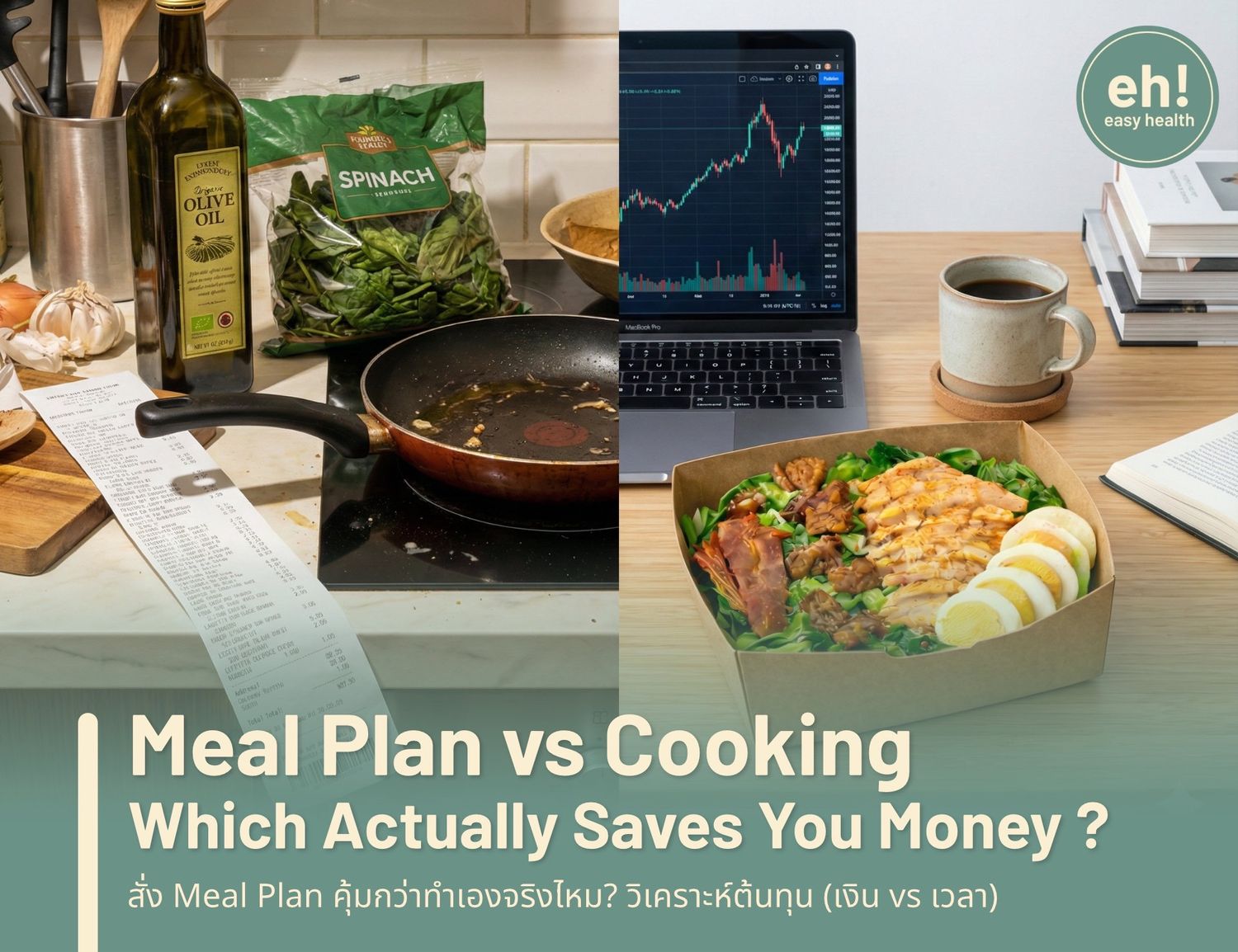
Is a Meal Plan Worth It Compared to Cooking Yourself? A Real Cost Analysis in Bangkok
“I could just make this myself for half the price.”
If you live in Bangkok, that thought has probably crossed your mind while scrolling through a healthy meal delivery menu. At first glance, buying raw ingredients from the supermarket appears cheaper than subscribing to a meal plan. Chicken, vegetables, and rice look affordable when priced individually, making home cooking seem like the obvious choice.
However, raw ingredient costs tell only part of the story. Once you factor in the realities of daily life in Bangkok, the comparison becomes far more complex. Time spent navigating traffic to the supermarket, hours lost to meal prep and cleanup, and food that expires before it is used all add to the real cost of cooking for yourself.
In a fast-paced city like Bangkok, money is not the only resource that matters. Time, mental energy, and consistency often carry greater value. When these hidden costs are included, the perceived savings of DIY cooking begin to shrink.
This article breaks down the true return on investment of a meal plan versus cooking at home. By looking beyond sticker prices and examining time, waste, and effort, Easy Health helps answer the real question: is a meal plan actually worth it in Bangkok?
1. The “Cheaper” Myth: Why Cooking at Home Can Cost More Than You Think
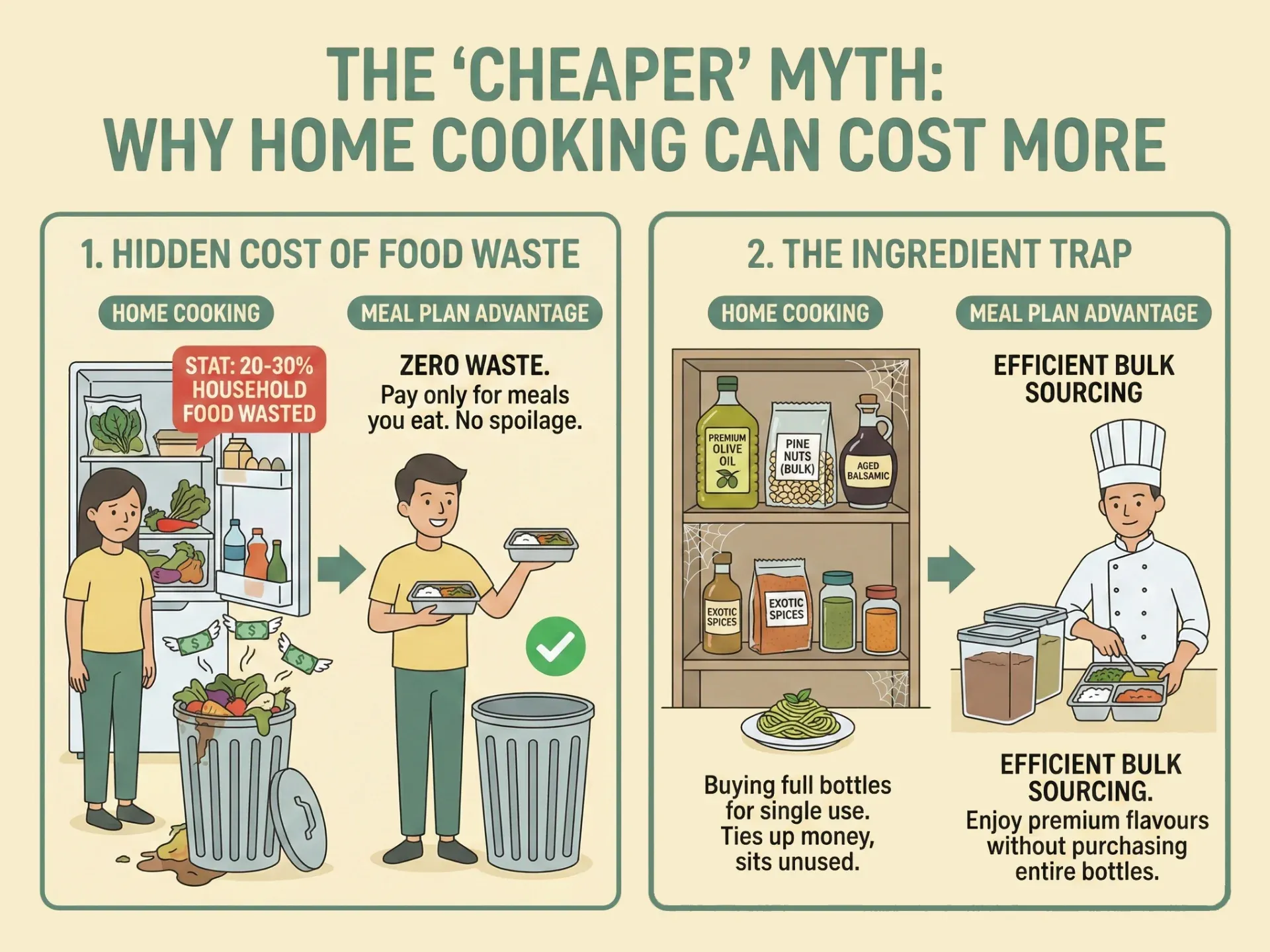
Let’s examine the hidden costs of home cooking that never show up on your grocery receipt.
The Hidden Cost of Food Waste
How often do you buy a bag of spinach, use a small portion, and end up throwing the rest away a week later once it has spoiled in the fridge?
The Stat: The average household wastes around 20 to 30 percent of the fresh food it buys, often due to over-purchasing and short shelf life.
The Meal Plan Advantage: Zero waste. You pay only for the meals you eat, with no unused ingredients spoiling in the fridge or ending up in the bin.
The Ingredient Trap
To make something as simple as pesto pasta, you still need to buy basil, pine nuts, parmesan, olive oil, and garlic, each as a separate ingredient rather than in the small amounts you actually use.
The Reality: Home cooking often requires buying full bottles or large packs of premium ingredients, such as pine nuts or high-quality olive oil, even if you only need a small amount. The rest ends up sitting unused in your pantry for months, tying up money without adding value.
The Meal Plan Advantage: By sourcing ingredients in bulk, we use premium components efficiently. You enjoy the depth and complexity of high-quality flavours without the cost or waste of purchasing entire bottles yourself.
2. The Currency of Time: What Is Your Hour Really Worth?
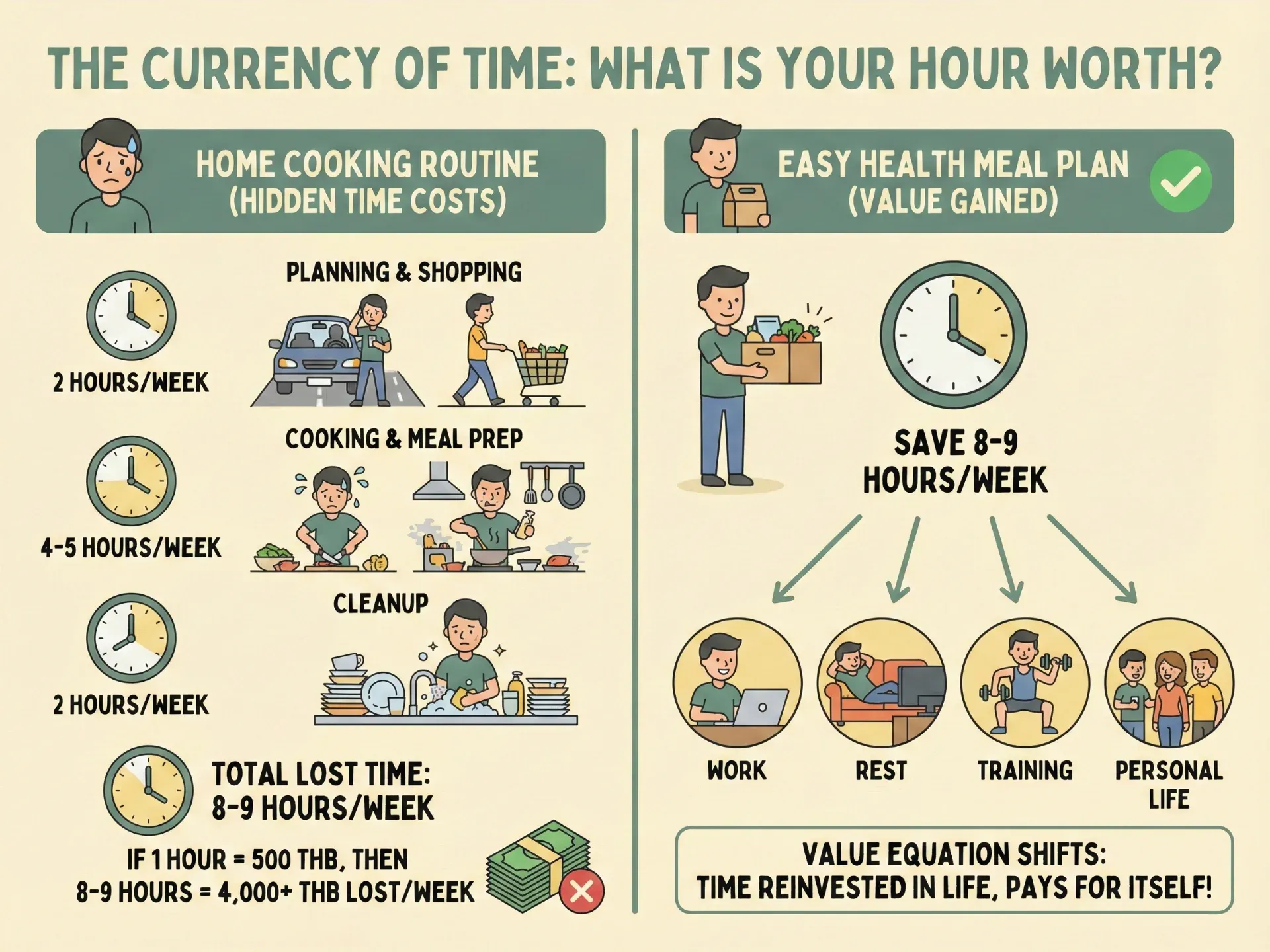
This is often the most important factor for professionals and expats. Let’s break down the real time cost of a typical home-cooking routine in Bangkok:
Planning and shopping: Around 2 hours per week, often spent navigating traffic to places like Villa Market or Gourmet Market.
Cooking and meal prep: Approximately 4 to 5 hours per week.
Cleanup: Another 2 hours per week washing dishes and storing leftovers.
Total time spent: Roughly 8 to 9 hours every week dedicated solely to home cooking.
Ask yourself a simple question: what is your time actually worth? If you earn even 500 THB per hour, spending eight or more hours each week on planning, shopping, cooking, and cleaning translates to 4,000 THB or more in lost time, just to feed yourself.
When you compare that hidden cost with the price of an Easy Health meal plan, the value equation shifts. For many professionals, the subscription effectively pays for itself by giving those hours back, time that can be reinvested into work, rest, training, or personal life instead of standing in traffic or washing dishes.
3. The Nutrition Gap: Home Cooking vs. Chef-Prepared Macros
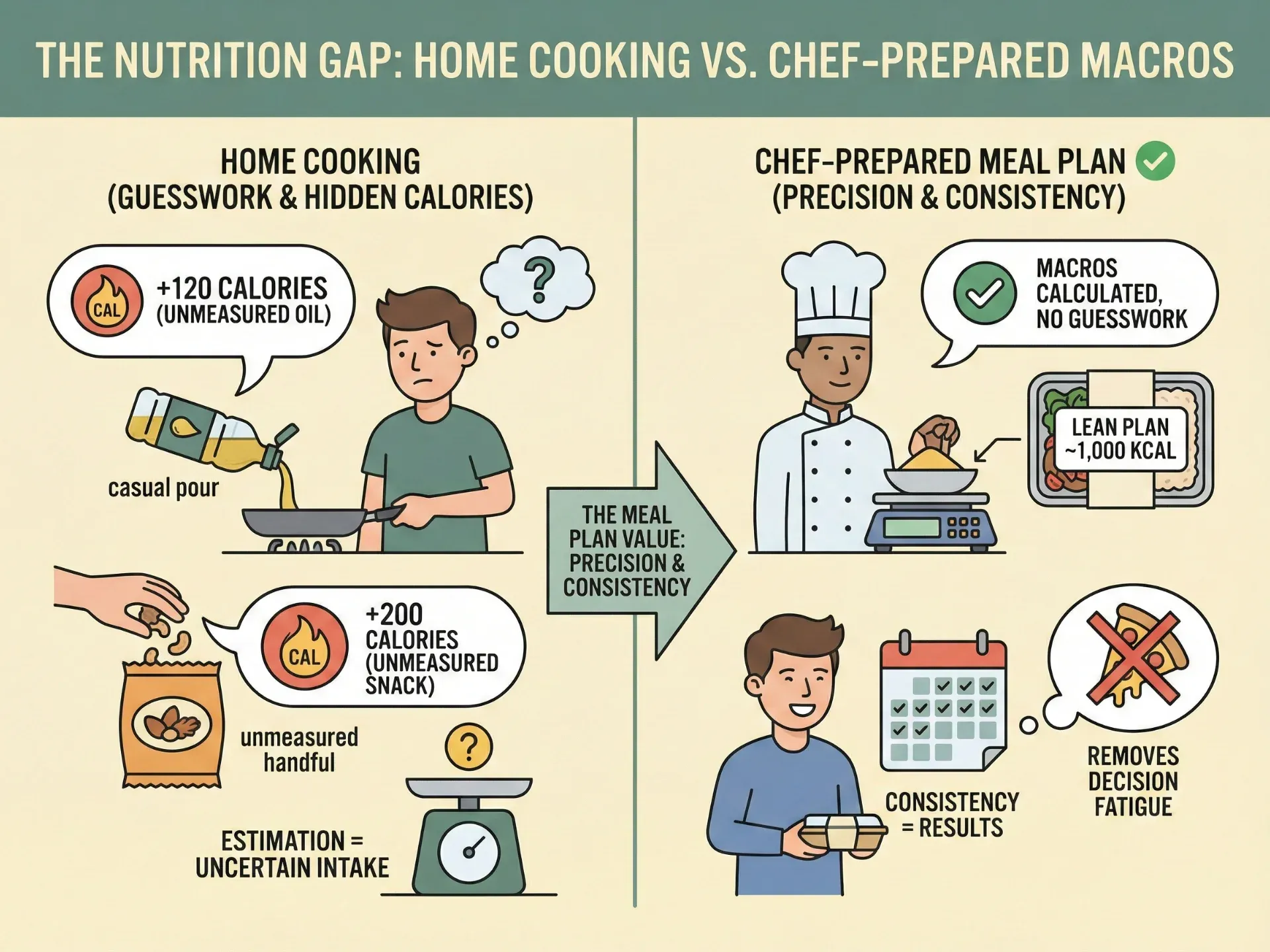
Unless you are carefully weighing every gram of oil and protein with a digital scale, home cooking often relies on estimation rather than precision.
A casual pour of cooking oil can quietly add 120 extra calories.
An unmeasured handful of nuts can contribute 200 calories or more before you realise it.
The Meal Plan Value:
Precision: Macros are calculated for you. When you choose the Lean Plan, you know your intake sits at around 1,000 kcal, without guesswork or hidden extras.
Consistency: Results come from repetition, not perfection. A meal plan removes the late-day decision fatigue that often ends with ordering pizza instead of cooking something balanced.
Verdict: When Is a Meal Plan the Smarter Investment?
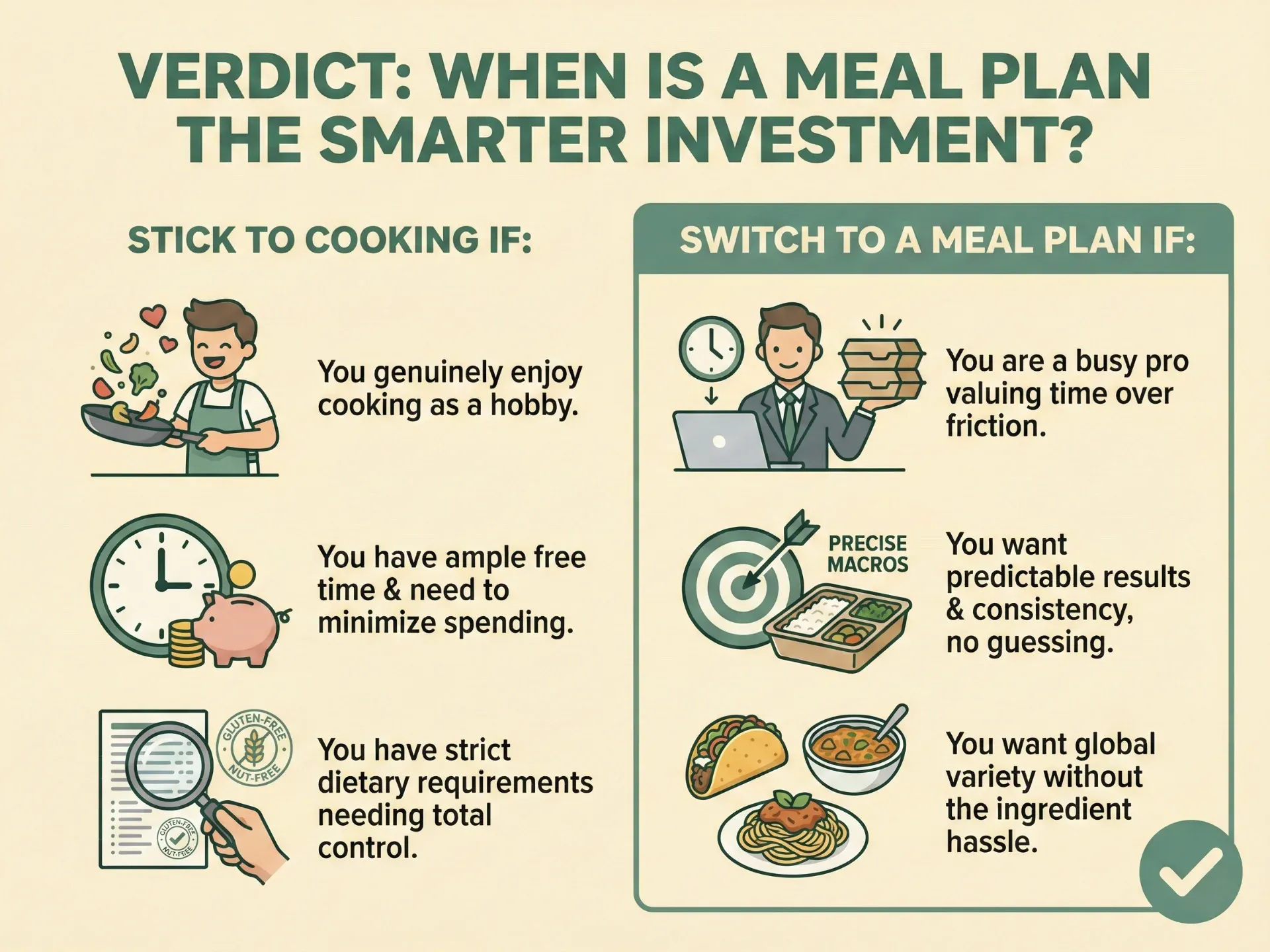
Stick to Cooking If:
You genuinely enjoy cooking and treat it as a hobby rather than a chore.
You have ample free time and need to minimize food spending as much as possible.
You have strict medical dietary requirements that require complete personal control over ingredients and preparation.
Switch to a Meal Plan If:
You are a busy professional and value your time. Outsourcing nutrition removes friction and frees hours each week.
You want predictable results and are done guessing calories or portion sizes. A structured plan provides consistency.
You want variety without the hassle. Enjoy tacos, curry and pasta the same week without buying dozens of separate ingredients.
Invest in Yourself. Download the Easy Health App.
Stop giving up your free time to grocery runs and dirty dishes. Choose a meal plan that delivers health, convenience, and great flavour without the extra effort.
See the menu and pricing today:
Android: Download via Google Play Store
References
Forbes. (2024). The Real Cost of Cooking at Home vs. Ordering Out. Retrieved from https://www.forbes.com/sites/priceonomics/2018/07/11/what-costs-more-cooking-at-home-or-eating-out/
Environmental Protection Agency (EPA). (2024). Sustainable Management of Food. Retrieved from https://www.epa.gov/sustainable-management-food
Harvard Business Review. (2024). Time is Money: Valuing Your Free Time. Retrieved from https://hbr.org/2019/01/time-for-happiness