
What Happens When You Cut Sugar for 30 Days (The Real Timeline)
When you cut sugar for 30 days, the first week brings cravings and fatigue, weeks 2 to 3 bring steadier energyand clearer skin, and by week 4 most people lose 1 to 3 kg and improve insulin sensitivity. The biggest resultscome from cutting added sugar in drinks and sauces, not natural sugar in fruit. In Bangkok, the hidden sugar instreet food and Thai iced tea is the real challenge.
What does “cutting sugar” actually mean?
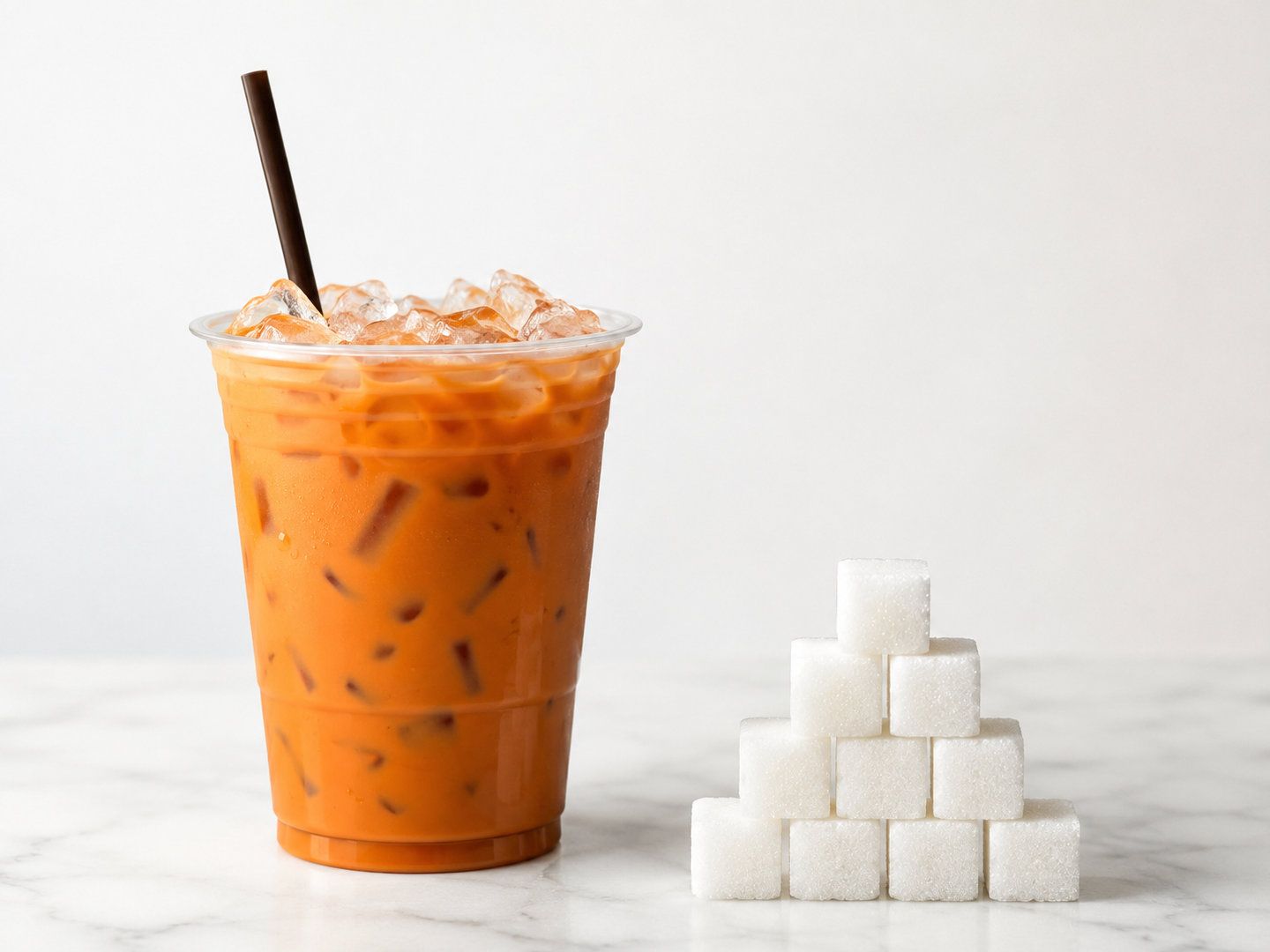
Added sugar is the kind you are trying to cut. It is the sugar stirred into drinks, baked into snacks, blended intosauces, and added during food processing. Natural sugar in whole fruit, vegetables, and unsweetened dairy isa different story. Your body processes it differently because the fiber and nutrients in whole food slow theabsorption down.
A practical goal for 30 days is to eliminate added sugar, not to fear a mango or avoid riceberry. The Thai diet isnot the problem. The hidden sugar in sauces, drinks, and packaged snacks is where most people’s intake isactually coming from. In Bangkok that means the nam prik pao stirred into your pad kra pao, the oyster sauceon your morning egg, and the smoothie that gets a scoop of condensed milk before you even ask.
What is the week-by-week timeline when you cut sugar?
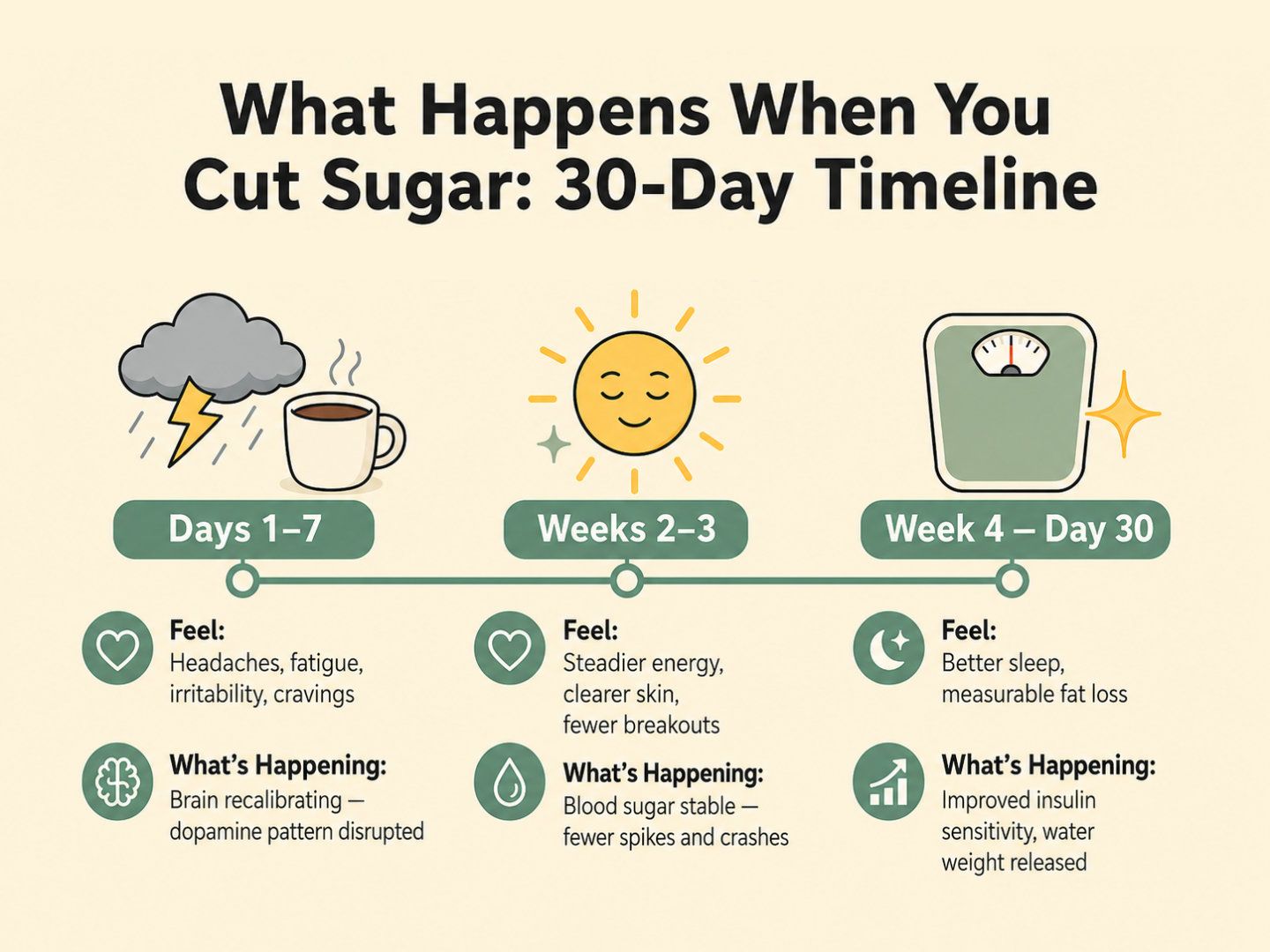
Here is the realistic timeline for most people, based on how much added sugar they were eating before.
Period What you feel What is happening Days 1to 7 Headaches, fatigue, irritability, strongcravings. Symptoms peak around day 3 to4. Brain recalibrating after losing a regular dopaminesource. Blood glucose stabilizing. Weeks2 to 3 Steadier energy, less oily skin, fewerbreakouts, sweet foods start tasting toosweet. Fewer blood sugar spikes and crashes. Lowerinsulin and sebum. Taste threshold shifting. Week4 (Day30) 1 to 3 kg lost, better sleep, measurablemetabolic change. Improved insulin sensitivity, water weightreleased, lower calorie intake from cutting sweetdrinks.
Why is the first week the hardest?
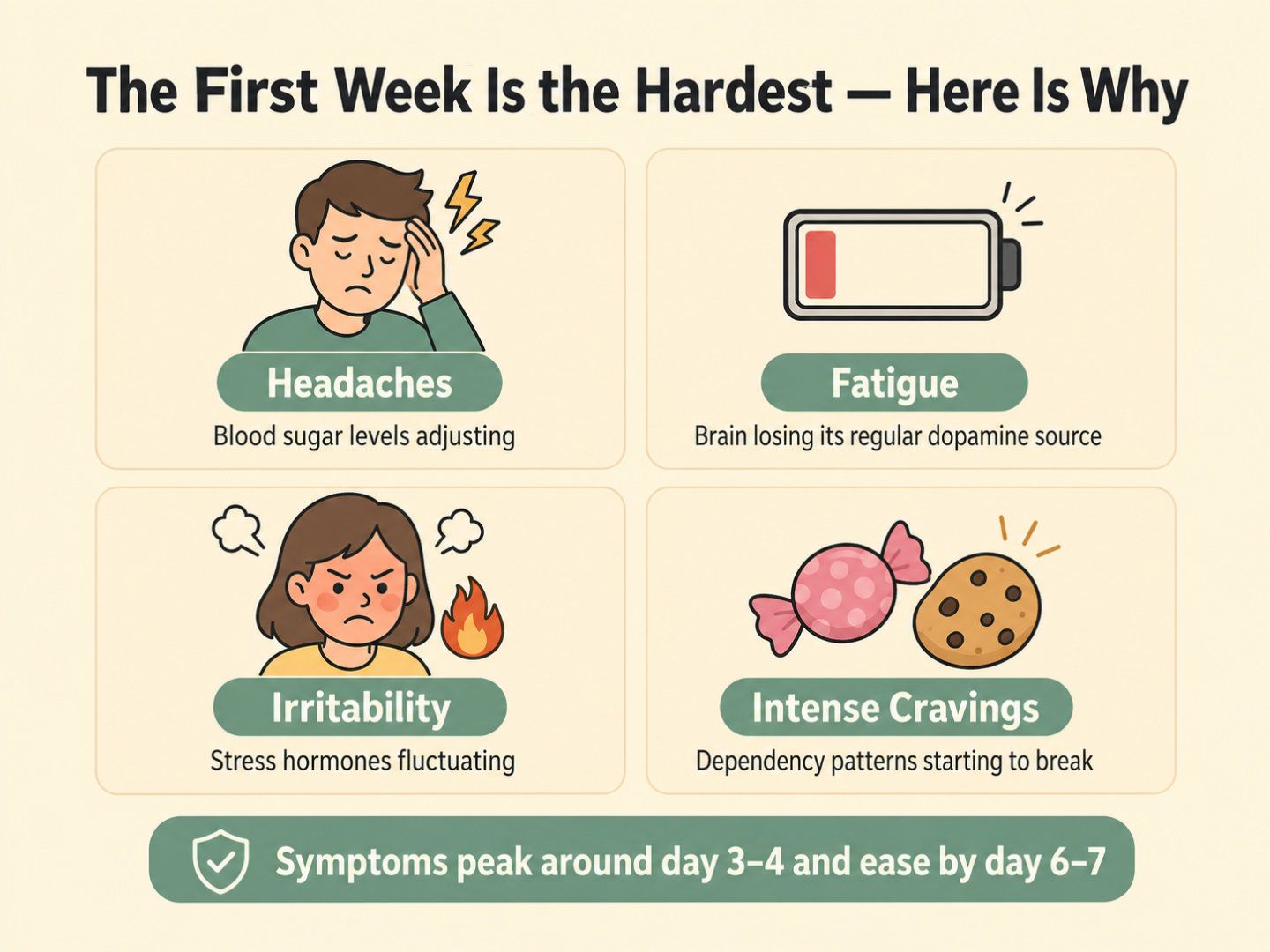
Days 1 through 7 are the hardest, and this is worth saying clearly so you are not blindsided. Sugar activates thesame dopamine pathways in the brain that drive cravings for other rewarding behaviors. When you remove it,some people experience genuine withdrawal effects including headaches, fatigue, irritability, and intensecravings for sweet things.
This is biologically normal and temporary. Research published in the British Journal of Sports Medicineconfirmed that sugar can produce dependency-like behaviors in humans, including withdrawal symptomswhen intake drops suddenly. The severity depends on how much added sugar you were consuming before. Byday 5 or 6, most people notice the cravings starting to dull. Push through this week and the rest becomesconsiderably easier.
What changes do you see in weeks 2 to 3?
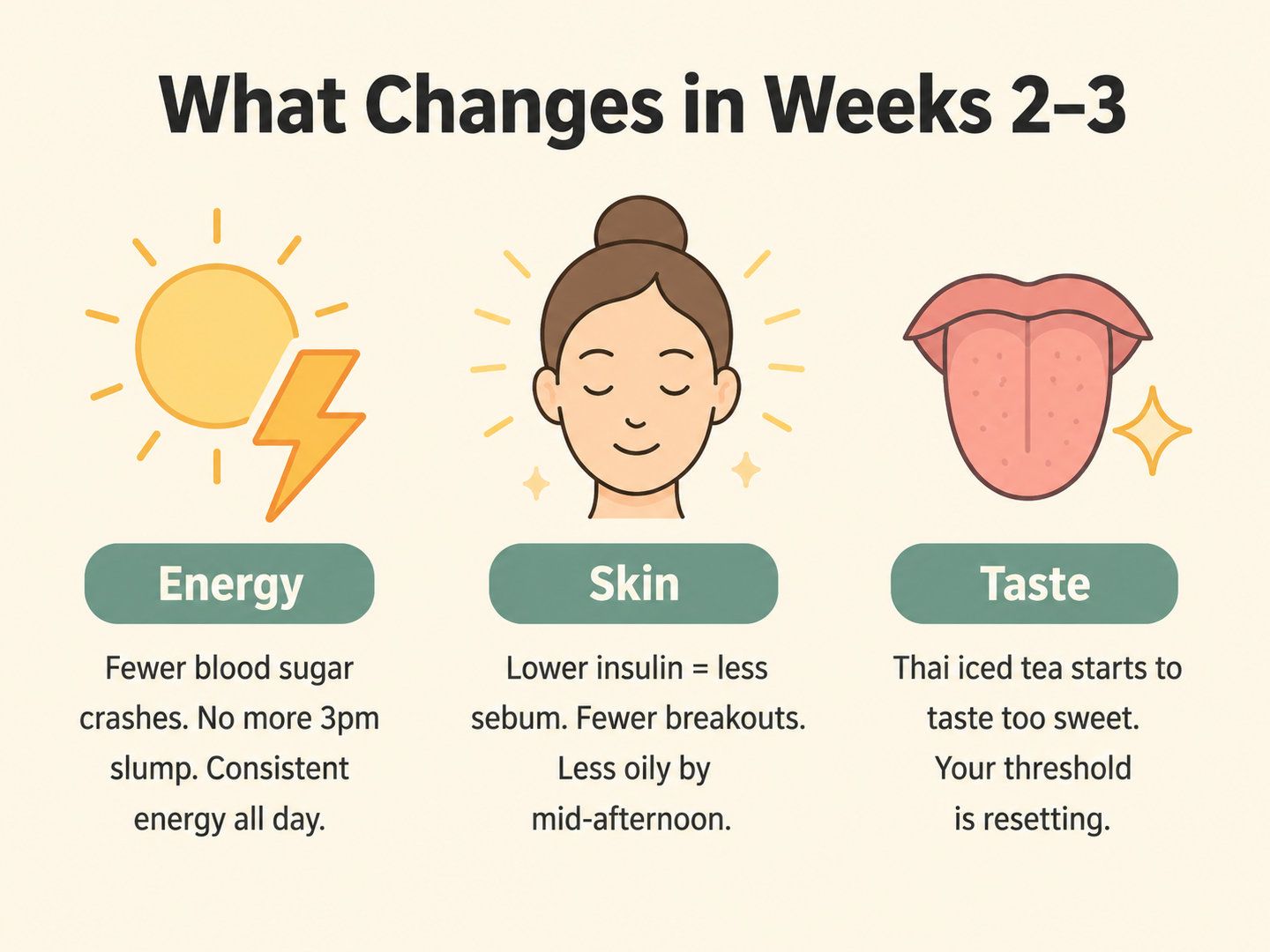
This is when most people report noticing something different, and it tends to show up in three specific ways.
Energy levels even out. The blood sugar spikes and crashes that come from high-sugar eating drive the mid-afternoon fatigue that most Bangkok office workers treat with another coffee or Thai tea. Without thosespikes, energy becomes more consistent across the day.
Skin starts to change. Sugar triggers insulin spikes, which increase androgen activity and sebum production, adirect driver of acne. A study in the Journal of Clinical and Aesthetic Dermatology found that low-glycemicdiets consistently reduced acne severity. Two to three weeks in, many people notice skin is less oily andbreakouts are less frequent.
The sweetness threshold shifts. Foods that tasted normal before start to taste aggressively sweet. A Thai icedtea, which contains around 8 to 10 teaspoons of sugar per glass, will taste completely different after twoweeks off added sugar.
What does the research show at day 30?
By week 4, the changes that were building up become measurable. The table below sums up the mainmarkers.
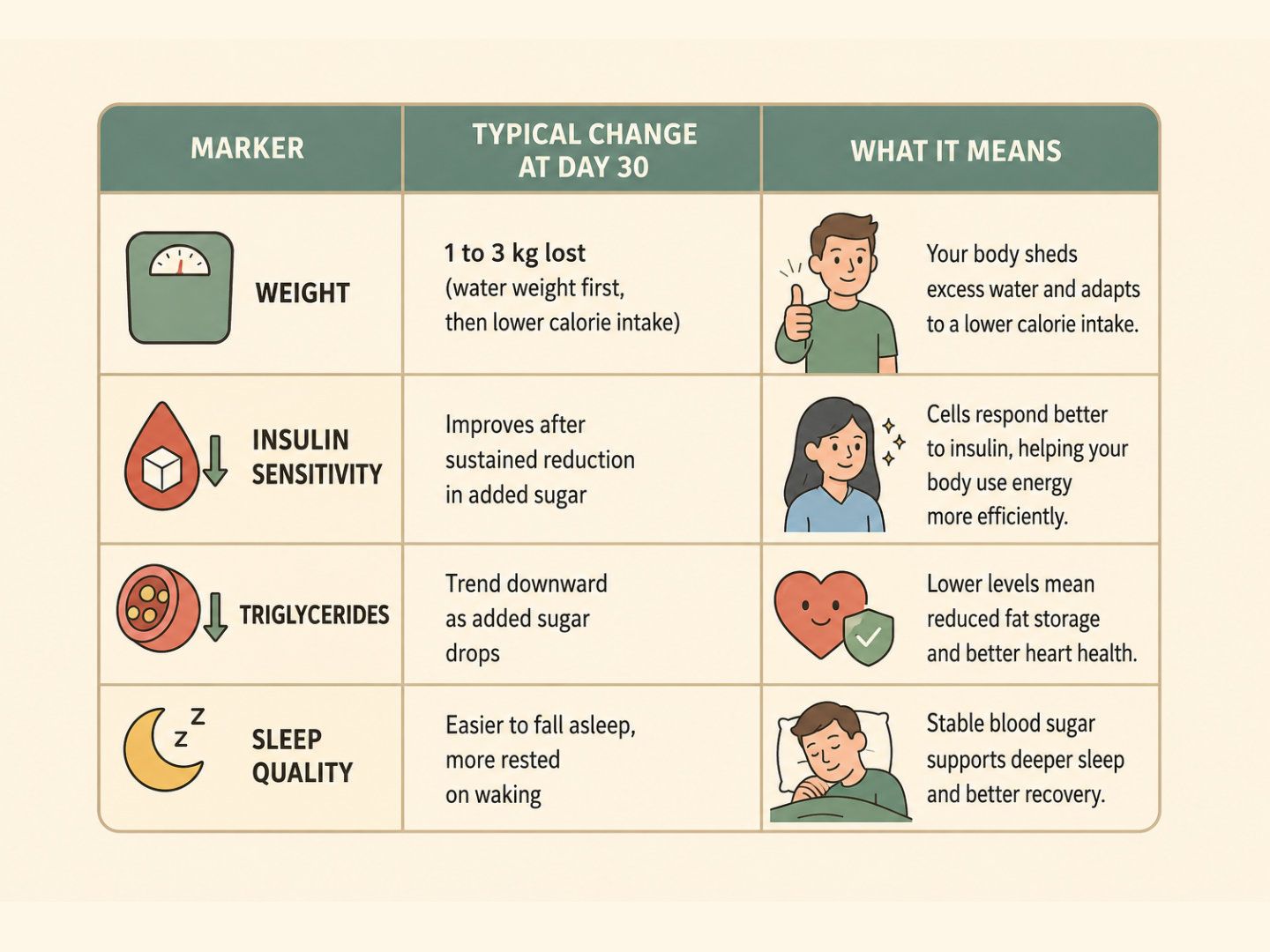
A 2016 review in Nutrients found that high added sugar consumption is independently associated with insulinresistance, metabolic syndrome, and elevated triglycerides. Reversing that intake for even 30 days starts tomove those markers in a better direction. Weight loss at this stage is real but modest. The first reductioncomes from losing water weight, since sugar causes the body to retain water. The second comes from thenatural calorie cut when you stop drinking sweetened beverages.
[INSERT REAL PHOTO: A glass of Thai iced tea next to a teaspoon stack showing 8 to 10 spoons of sugar. Alttext: how much sugar is in Thai iced tea when you cut sugar for 30 days. Filename: cut-sugar-for-30-days-thai-tea-sugar.jpg]
How do you cut sugar for 30 days while living in Bangkok?
The practical challenge in Bangkok is that added sugar is an ingredient, not just a condiment. It is cooked intosauces, dissolved into drinks, and used as a seasoning in ways that are not obvious. A few things make the 30days more achievable:
Switch from Thai iced tea and fruit smoothies to unsweetened drinks, black coffee, sparkling water, orlow-sugar kombucha
When ordering from hawker stalls, ask for “mai wan” (not sweet) and “mai sai nam tan” (no added sugar)for sauces and dressings
Cook with tamari or coconut aminos instead of oyster sauce and fish sauce blends, which often containadded sugar
Track what you eat for the first two weeks. Hidden sugar shows up fast when you can see the macrosclearly
This is where having your meals handled helps. The Easy Health meal delivery menu is built with zero addedsugar across every item, which removes the guesswork during the 30 days. Dishes like Stir-Fried Thai Basiland Red Curry use real ingredients without the sugar that street food versions typically add. For anyoneserious about a clean cut, having at least your weekday meals sorted without auditing every ingredient makesa real difference.
[INSERT REAL PHOTO: A real Easy Health meal box with macro label visible on the lid. Alt text: Easy Health noadded sugar meal box for a 30 day sugar cut in Bangkok. Filename: cut-sugar-for-30-days-easy-health-meal.jpg]
Which Easy Health plan fits a 30-day sugar cut?
Both plans below are built around clean, sugar-free whole food and are available across Bangkok branches inAsok, Sathorn, and Ekkamai, plus Pattaya.
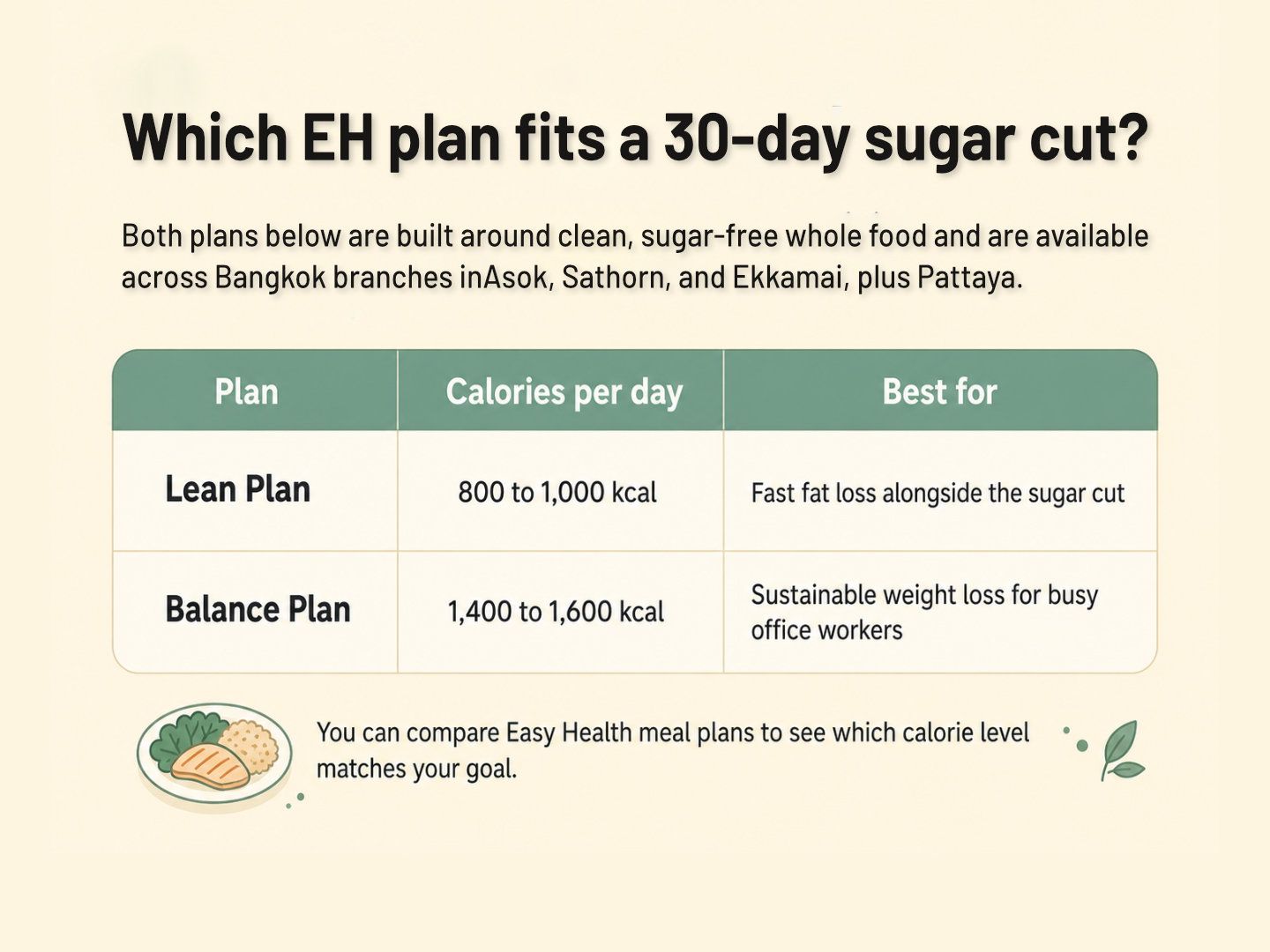
You can compare Easy Health meal plans to see which calorie level matches your goal.
Frequently Asked Questions
Do I have to give up fruit too during a 30-day sugar cut?
No. Whole fruit contains natural sugar but alsofiber, water, and micronutrients that change how your body absorbs it. The glycemic response from eating awhole mango is different from drinking mango juice. The 30-day goal is to eliminate added sugar, not naturalsugar in whole foods. If you are managing blood sugar issues, consult a doctor, but for most healthy peoplefruit is not the problem.
What about Thai drinks like iced coffee, fruit smoothies, and bubble tea?
These are often the biggesthidden source of added sugar and worth cutting first. A single glass of Thai iced tea typically contains 30 to40 grams of added sugar, close to or above the WHO daily limit in one drink. Street smoothies usually getcondensed milk or sugar syrup by default. Switching to black coffee, unsweetened tea, or water is where youwill feel the biggest difference.
Why do I feel worse in the first week if I am eating healthier?
Because your brain was adapted to regularsugar intake and is now recalibrating. Sugar triggers dopamine release, and removing a consistent sourcecauses a short-term withdrawal effect. This is not a sign that cutting sugar is wrong for you. It is a sign yourbody was dependent on it. Symptoms peak around day 3 to 4 and improve by day 6 or 7 for most people.
Is brown sugar, honey, or coconut sugar okay as a substitute?
These are all still added sugar and keep yourbrain and insulin response in the same pattern. Brown sugar, coconut sugar, and honey have marginallydifferent glycemic indices, but the difference is not meaningful enough to treat them as free alternativesduring a 30-day cut. For a clear result, avoid all forms of added sweetener for the full 30 days.
Does cutting sugar actually help with acne?
For most people, yes. Added sugar raises insulin, whichincreases androgen hormones, which stimulate sebum production in the skin. Diet-driven acne tends torespond visibly to reducing high-glycemic foods. The timeline is usually 2 to 3 weeks before skin changesshow. It will not fix hormonal acne from other causes, but for much of adult acne in the Bangkok context, dietis a significant factor.
After 30 days, will I gain everything back if I eat sugar again?
Not immediately. Most people who finish 30days naturally consume far less added sugar afterward because their taste preferences have changed. Thekey is not to treat day 31 as a return to old habits but to use the recalibrated baseline as a new normal.Occasional added sugar will not undo the metabolic improvements, but returning to high daily intake over timewill.
Cut sugar without the guesswork with Easy Health
The hardest part of a 30-day sugar cut in Bangkok is not willpower. It is navigating a food culture where addedsugar is a standard cooking ingredient. Every meal becomes a label-reading exercise or a negotiation with ahawker. Easy Health removes that friction:
160+ menu items with zero added sugar, zero MSG, and zero artificial preservatives
Full macro transparency on every dish, so you always know what you are eating
Lean Plan and Balance Plan both built around clean, sugar-free whole food
Fresh daily preparation, never frozen, delivered across Bangkok and available at branches in Bangkok andPattaya
Browse the full no-added-sugar menu at easyhealth.asia/menu.
Download the Easy Health app:
Easy Health on Google Play (Android)
Easy Health on App Store (iOS)
References
DiNicolantonio JJ, O’Keefe JH, Wilson WL. (2018). Sugar addiction: is it real? A narrative review. BritishJournal of Sports Medicine, 52(14), 910-913. https://doi.org/10.1136/bjsports-2017-097971
Rippe JM, Angelopoulos TJ. (2016). Relationship between Added Sugars Consumption and ChronicDisease Risk Factors: Current Understanding. Nutrients, 8(11), 697. https://doi.org/10.3390/nu8110697
Katta R, Desai SP. (2014). Diet and Dermatology: The Role of Dietary Intervention in Skin Disease. Journalof Clinical and Aesthetic Dermatology, 7(7), 46-51.
Te Morenga L, Mallard S, Mann J. (2012). Dietary sugars and body weight: systematic review and meta-analyses of randomised controlled trials and cohort studies. BMJ, 346, e7492.https://doi.org/10.1136/bmj.e7492
Stanhope KL. (2016). Sugar consumption, metabolic disease and obesity: The state of the controversy.Critical Reviews in Clinical Laboratory Sciences, 53(1), 52-67.https://doi.org/10.3109/10408363.2015.1084990
WHO. (2015). Guideline: Sugars intake for adults and children. World Health Organization.https://www.who.int/publications/i/item/9789241549028
Internal links: Easy Health menu | Easy Health meal plans
Schema Types: Article + FAQPage CTA Tracking: menu_click (browse_menu_cta), app_install_android(google_play_cta), app_install_ios (app_store_cta), plan_compare (meal_plans_cta) Open Graph: OG title“What Happens When You Cut Sugar for 30 Days” | OG description “The honest week-by-week timeline, plushow to actually do it in Bangkok.” | OG image: real photo of Thai iced tea sugar content or an Easy Health no-sugar meal box