
Bangkok Heat Is No Joke. When Should You Actually Work Out?
If you've ever tried to go for a run on Sukhumvit at 2 PM in April, you already know: exercising in Bangkok's heat is a completely different experience from working out in a temperate climate. The air is thick, the sun feels like it's personally targeting you, and within five minutes you're drenched in sweat wondering why you didn't just stay on the treadmill.
Bangkok averages 34 to 36 degrees Celsius from March to May, with humidity regularly hitting 70 to 85%. That combination creates a "feels like" temperature that can exceed 45 degrees. At that level, your body isn't just uncomfortable. It's under genuine physiological stress.
But here's the thing. Thousands of people in Bangkok exercise outdoors every single day. The runners in Lumpini Park, the bootcamp groups at Benjakitti, the cyclists on the airport road, the Muay Thai fighters training in open-air gyms with no air conditioning. They do it because they understand something important: it's not about avoiding exercise in the heat. It's about knowing when and how to do it safely.
This guide breaks down the best times to exercise in Bangkok's hot weather, the science behind why timing matters, how to adjust your nutrition and hydration, and the warning signs that mean you should stop immediately.
Why Exercising in Hot Weather Is Harder on Your Body
Before we talk about timing, it helps to understand what actually happens inside your body when you exercise in the heat. This isn't just about comfort. It's about performance, safety, and long-term health.
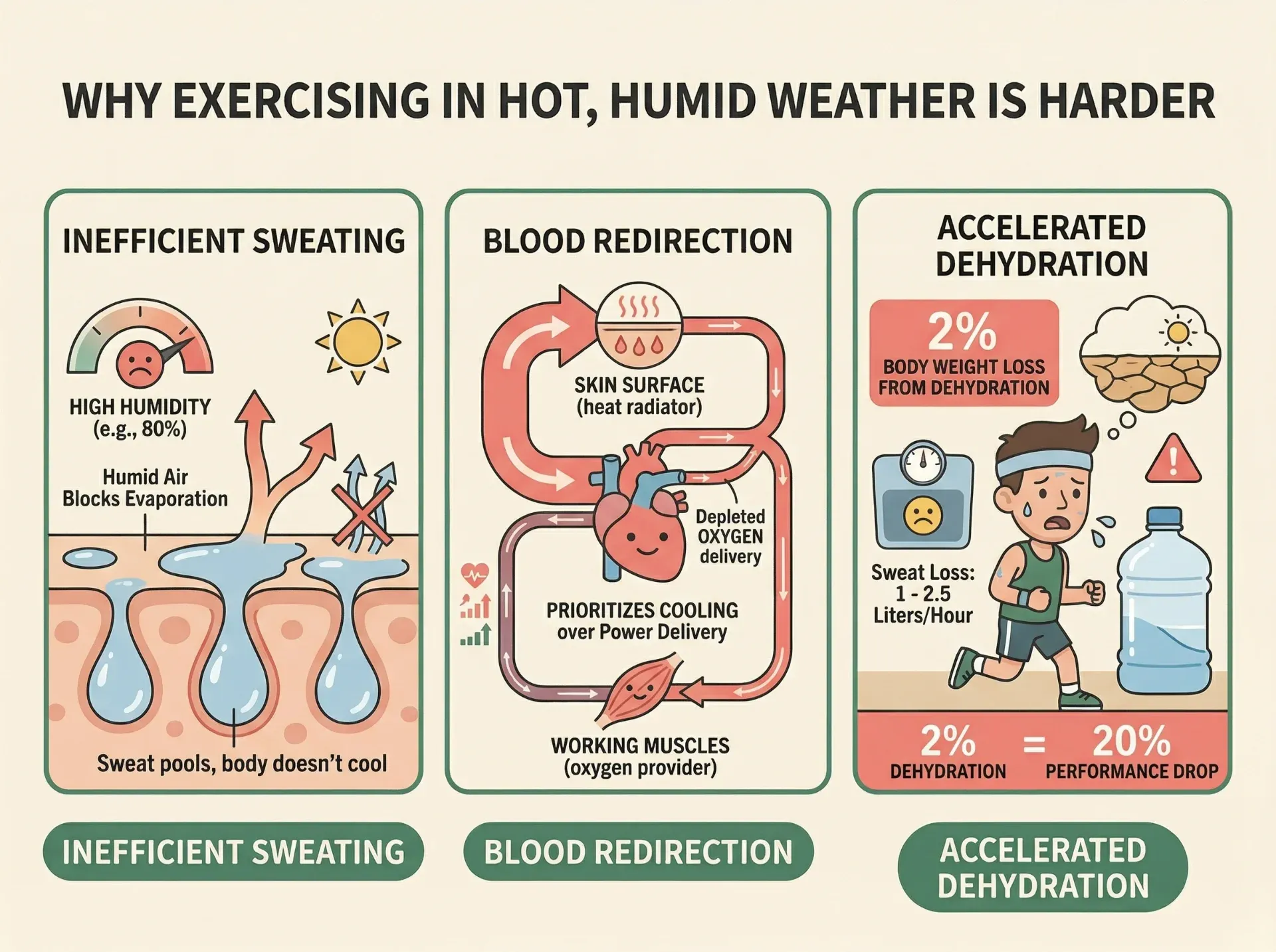
Your body has to cool itself AND power your muscles at the same time. When you exercise, your muscles generate heat. Your body needs to dissipate that heat to prevent your core temperature from rising dangerously. It does this primarily through sweating and by directing blood flow to your skin, where heat can radiate outward.
The problem in Bangkok is that both of these cooling mechanisms become less effective in hot, humid conditions.
Sweating becomes less efficient. Sweat cools you down through evaporation. But when humidity is 80%, the air is already saturated with moisture, so your sweat can't evaporate efficiently. You're still losing water and electrolytes, but you're not getting the cooling benefit. This is why Bangkok heat feels worse than dry heat at the same temperature.
Blood gets redirected away from muscles. Your body prioritizes cooling over performance. More blood flows to your skin for heat dissipation, which means less blood is available to deliver oxygen to your working muscles. The result: your heart rate increases, perceived effort goes up, and your performance drops, even at the same pace or intensity you'd normally handle easily.
Dehydration accelerates. In Bangkok's heat, you can lose 1 to 2.5 liters of sweat per hour during moderate to intense exercise. That's significantly more than in temperate climates. Even a 2% loss in body weight from dehydration can reduce endurance performance by up to 20%.
The net effect: exercising at the wrong time in Bangkok's heat means you perform worse, recover slower, burn out faster, and put yourself at real risk of heat-related illness.
The Best Times to Exercise in Bangkok (Ranked)
Based on temperature data, humidity patterns, and exercise physiology research, here are the best time windows for outdoor exercise in Bangkok, ranked from optimal to acceptable.
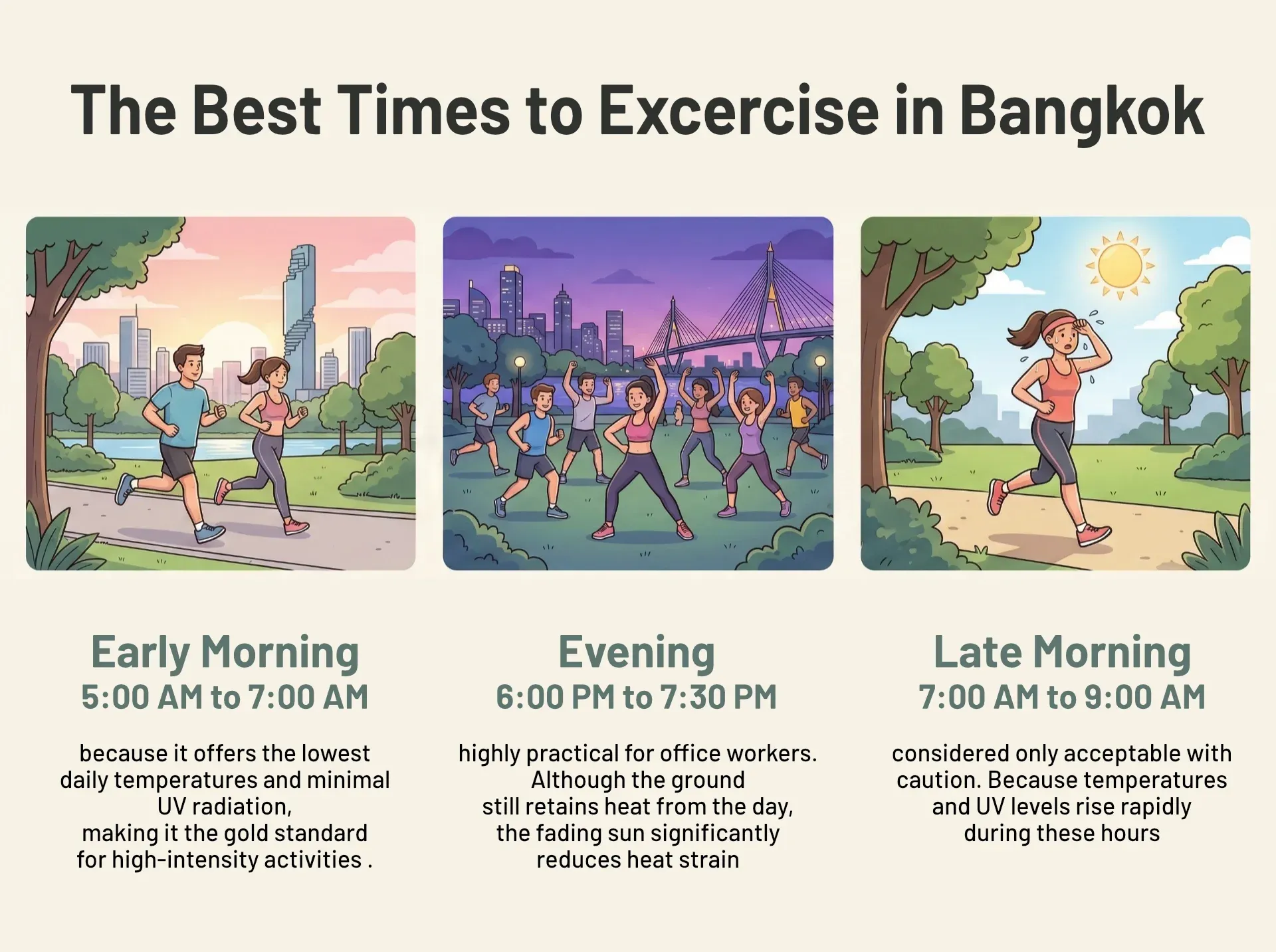
1. Early Morning: 5:00 AM to 7:00 AM (Best Overall)
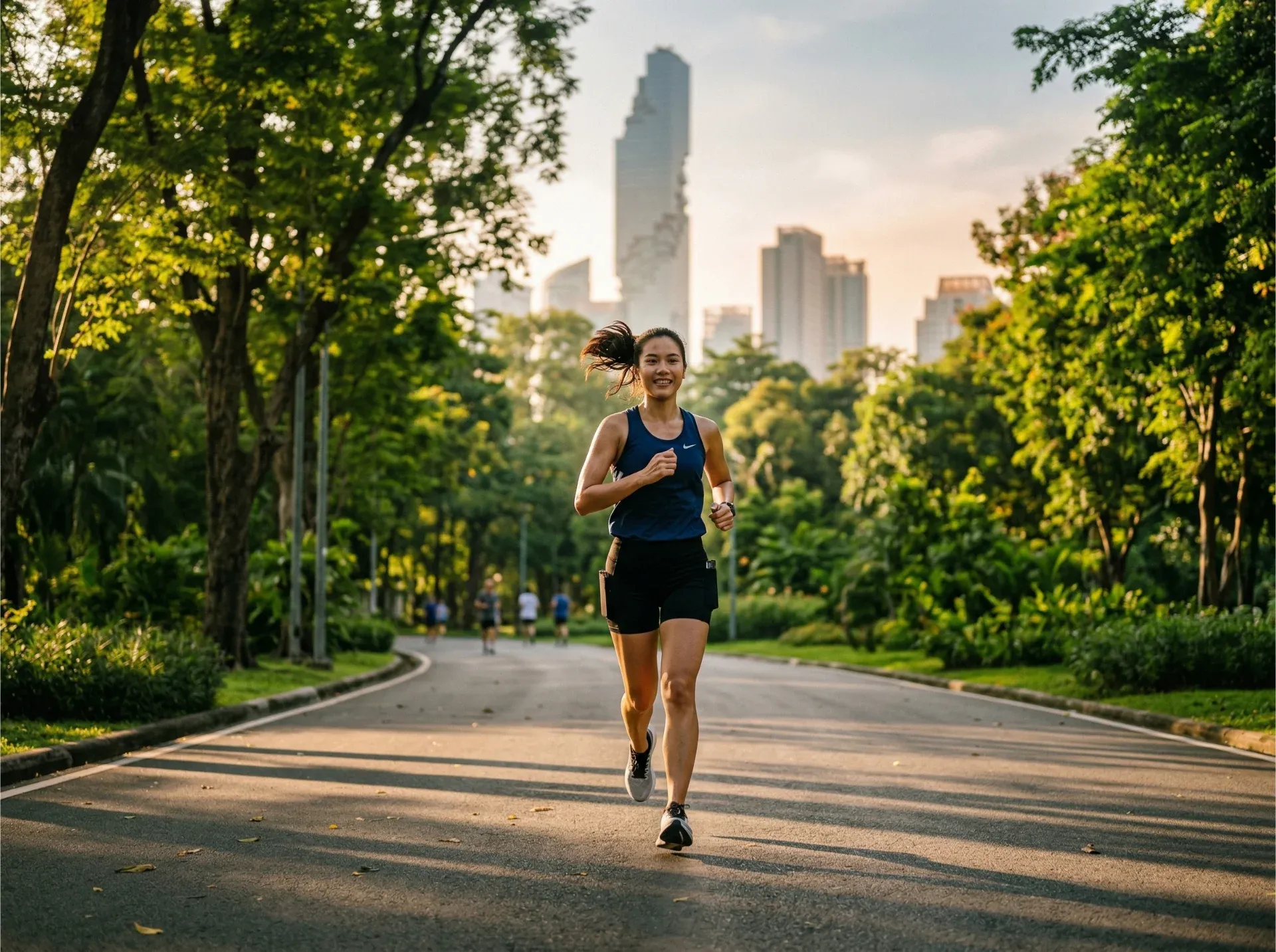
This is the gold standard for outdoor exercise in Bangkok. Here's why:
Temperature is at its daily low. Bangkok's coolest point is typically between 5:00 and 6:00 AM, when temperatures sit around 25 to 28 degrees. By 7:00 AM, it's usually still under 30 degrees.
Humidity is high but UV is low. Yes, early morning humidity is actually the highest of the day (often 80-90%). But UV radiation is minimal, which means less direct heat from the sun. The combination of lower temperature and no direct sunlight more than compensates for the humidity.
Air quality is often better. Traffic-related air pollution hasn't peaked yet, and if you exercise in a park (Lumpini, Benjakitti, Chatuchak), you're surrounded by trees that have been producing oxygen overnight.
Sets up your day. Research published in the British Journal of Sports Medicine shows that morning exercise improves cognitive function, decision-making, and attention span for the rest of the day. For office workers on Sukhumvit, this is a practical advantage.
Best for: Running, cycling, outdoor bootcamps, Muay Thai, any high-intensity outdoor activity.
Practical tip: If you commute by BTS, Lumpini Park opens at 4:30 AM and is a 5-minute walk from Sala Daeng station. Benjakitti Park is right next to Queen Sirikit station. Both are popular with the early-morning fitness crowd.
2. Evening: 6:00 PM to 7:30 PM (Second Best)
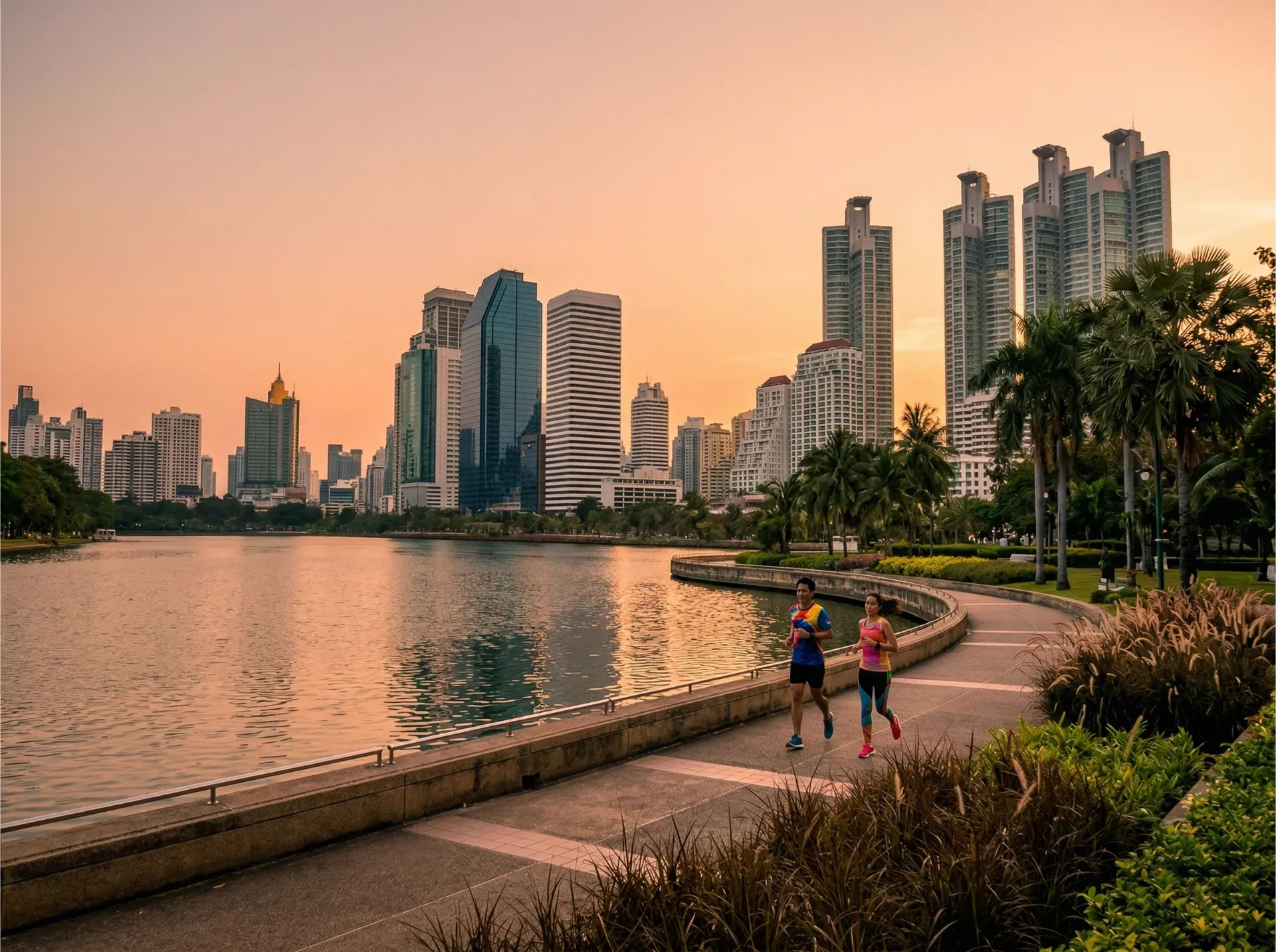
The evening window is the most popular time for exercise in Bangkok, and for good reason.
Temperature has dropped from the daytime peak. By 6:00 PM, temperatures typically fall to 30 to 32 degrees. Not cool, but significantly better than the 35+ degrees at midday.
The sun is low or setting. UV exposure drops sharply after 5:30 PM, reducing the direct heat load on your body.
It fits most work schedules. For office workers who finish at 5:00 or 6:00 PM, this window is the most practical. Most Bangkok gyms see their peak hours between 6:00 and 8:00 PM for exactly this reason.
The downside: Temperature and humidity can still be substantial. If there was a hot, sunny day with little wind, the retained ground heat can make 6:00 PM feel hotter than the numbers suggest. Also, if you exercise too close to bedtime (after 8:30 PM), it can disrupt sleep quality for some people.
Best for: Gym sessions, evening runs, group fitness classes, yoga in the park, social sports (football, badminton, tennis).
Practical tip: If you prefer outdoor running in the evening, routes near water (along the Chao Phraya, around Benjakitti Lake) tend to feel slightly cooler due to the evaporative effect from the water surface.
3. Late Morning: 7:00 AM to 9:00 AM (Acceptable with Caution)
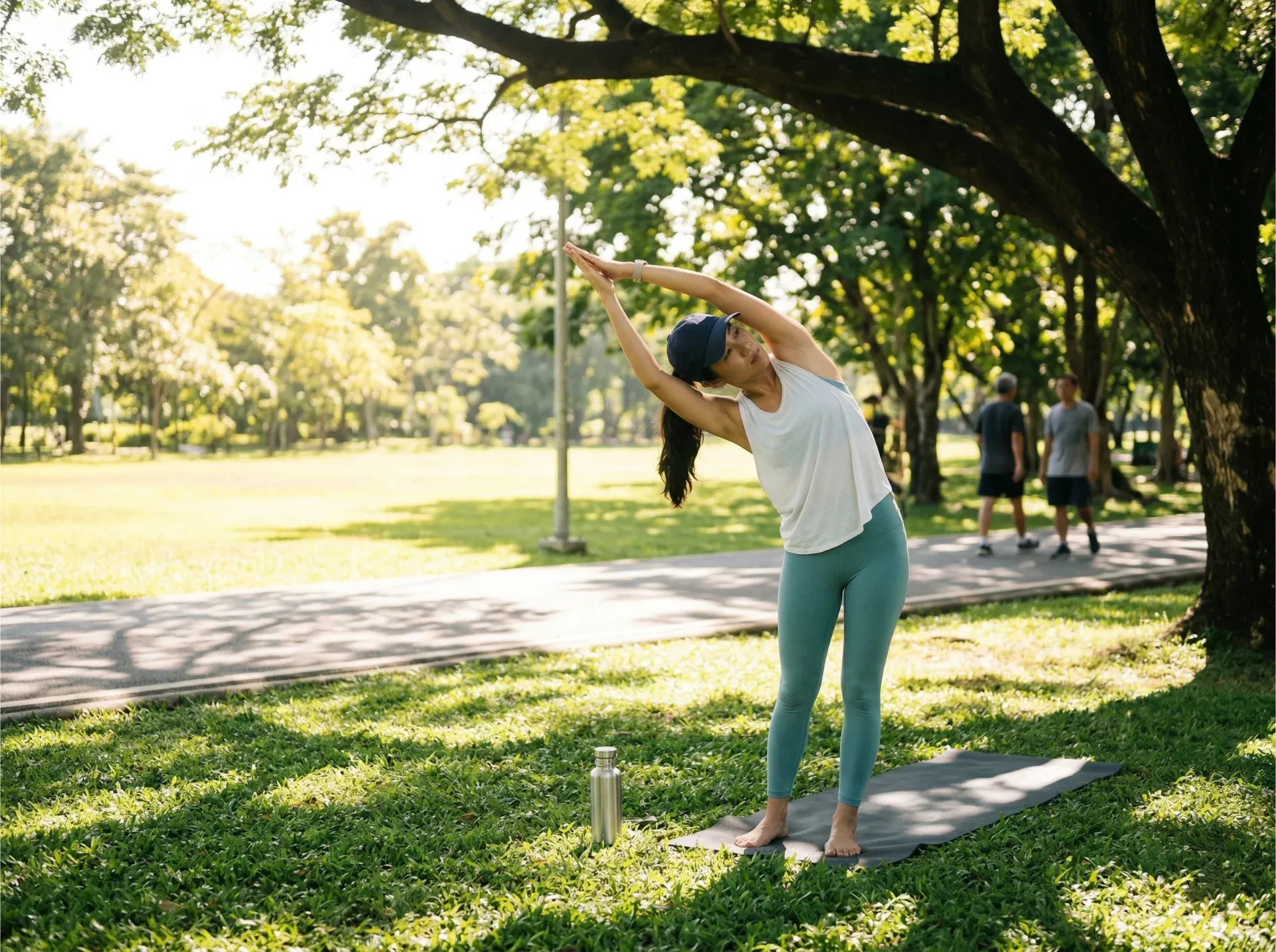
This window still works, but with caveats.
Temperature is rising quickly. Between 7:00 and 9:00 AM, Bangkok goes from pleasant to noticeably hot. By 8:30 AM on a sunny day, you'll already feel a significant difference from just an hour earlier.
UV radiation increases rapidly. The sun's angle gets progressively more direct, and UV levels climb from moderate to high during this window.
Acceptable for lower-intensity exercise. Walking, light jogging, swimming, or yoga are fine. But this isn't the time for a PR attempt or a high-intensity interval session.
Best for: Walking, light cardio, swimming, stretching, gentle cycling.
4. Midday to Afternoon: 11:00 AM to 4:00 PM (Avoid for Outdoor Exercise)
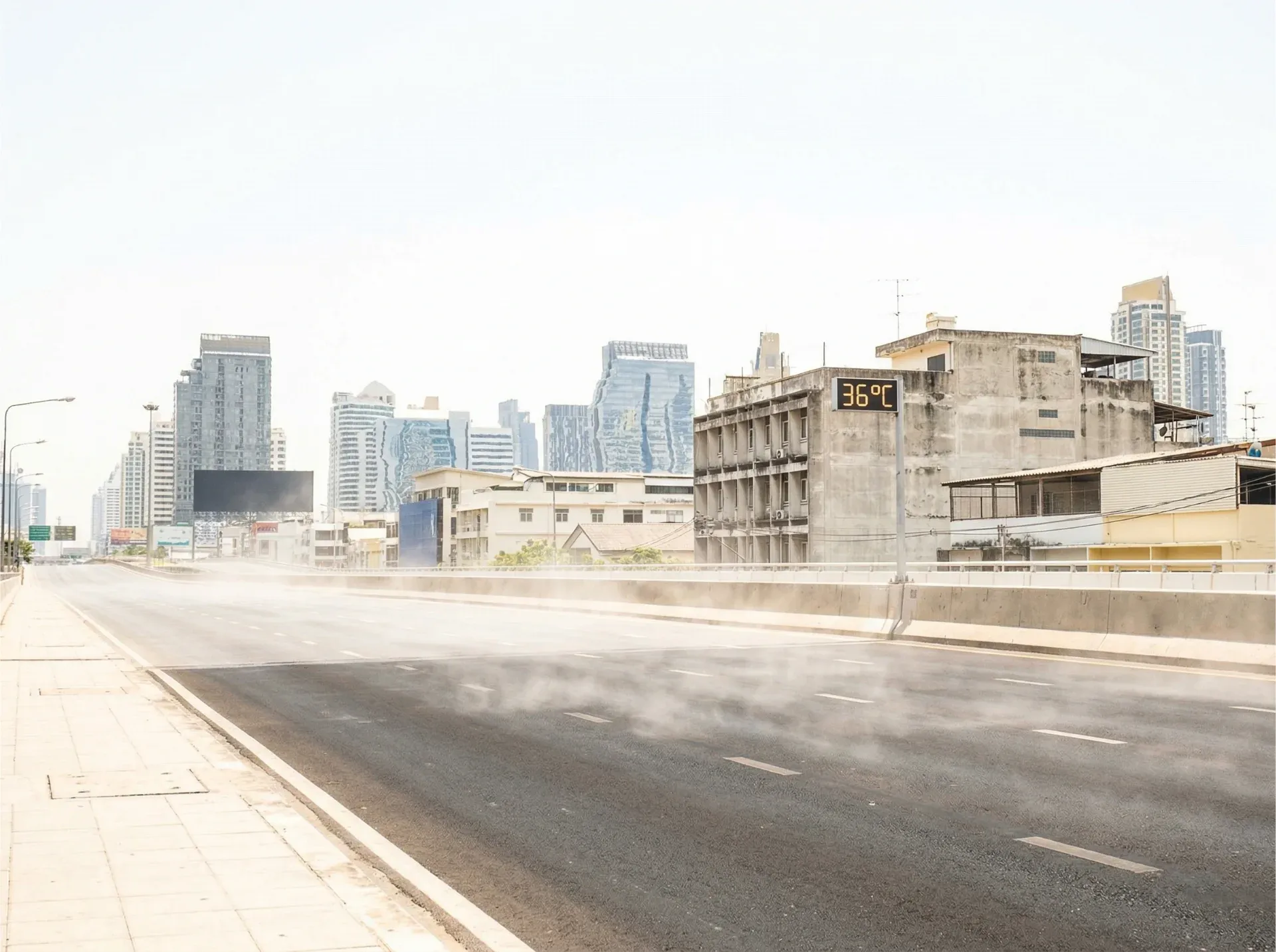
This is the danger zone. Unless you're exercising indoors with air conditioning, avoid this window entirely.
Peak temperature and UV. Bangkok typically hits its daily maximum between 1:00 and 3:00 PM. Temperatures of 35 to 38 degrees combined with 60 to 75% humidity create conditions where heat exhaustion can develop within 20 to 30 minutes of vigorous exercise.
Heat index can exceed 45 degrees. The "feels like" temperature during this window is often far higher than the actual air temperature. At 36 degrees with 70% humidity, the heat index is approximately 49 degrees Celsius.
UV index peaks at 10 to 12+. Thailand sits near the equator, and the midday UV index in Bangkok is among the highest in the world. Even 15 minutes of intense sun exposure without protection can cause sunburn.
If you must exercise during this window: Do it indoors. Air-conditioned gyms, indoor swimming pools, and fitness studios are your best options. This is when Bangkok's extensive gym culture really pays off.
How Bangkok's Seasons Affect Your Exercise Timing
Bangkok has three distinct seasons, and each one changes the equation for exercise timing.
Hot Season (March to May)
The most challenging period for outdoor exercise
Temperatures regularly hit 36 to 39 degrees during the day
Early morning (before 7:00 AM) becomes essential rather than just optimal
Hydration needs increase by 30 to 50% compared to the cool season
Consider shifting more workouts indoors during this period
Rainy Season (June to October)
Temperatures drop slightly (30 to 33 degrees), but humidity increases to 80 to 90%
Afternoon thunderstorms are common, usually between 3:00 and 6:00 PM
Morning exercise (5:30 to 7:00 AM) remains the best option
Evening exercise works well on days when rain has cooled the air
Watch for slippery surfaces if running after rain
Lightning safety: if you can hear thunder, move indoors immediately
Cool Season (November to February)
The most comfortable period for outdoor exercise in Bangkok
Morning temperatures can drop to 20 to 24 degrees
You can extend your exercise window significantly, from 5:30 AM through 9:00 AM and from 4:00 PM through 7:30 PM
Even midday exercise becomes tolerable on cooler days (28 to 30 degrees)
This is the ideal time to train for races, build endurance, or try new outdoor activities
Hydration Strategy for Exercising in Bangkok's Heat
Getting your hydration right is arguably more important than getting your timing right. You can exercise at the perfect time, but if you're dehydrated, you'll still perform poorly and put yourself at risk.
Before Exercise
Drink 400 to 600 ml of water in the 2 hours before your workout
Don't chug a liter right before starting. This causes bloating and doesn't improve hydration. Small sips over time are more effective.
Check your urine color. Pale yellow means you're well hydrated. Dark yellow means drink more before starting.
During Exercise
Aim for 150 to 250 ml every 15 to 20 minutes during exercise in Bangkok's heat
For sessions under 60 minutes, plain water is sufficient
For sessions over 60 minutes, add electrolytes. Sodium is the most important electrolyte you lose through sweat. A pinch of Himalayan salt in your water bottle works, or use an electrolyte tablet.
Avoid ice-cold water during exercise. It can cause stomach cramps. Cool water (around 15 degrees) is optimal.
After Exercise
Weigh yourself before and after your workout (without clothes, ideally). For every kilogram lost, drink 1.5 liters of fluid over the next 2 to 4 hours.
Include sodium in your post-workout fluid. This helps your body actually retain the water instead of just passing it through. Coconut water is a decent natural option that's widely available in Bangkok.
Don't rely on thirst alone. By the time you feel thirsty, you're already mildly dehydrated. Develop a drinking schedule and stick to it.
What to Eat Before and After Exercising in the Heat
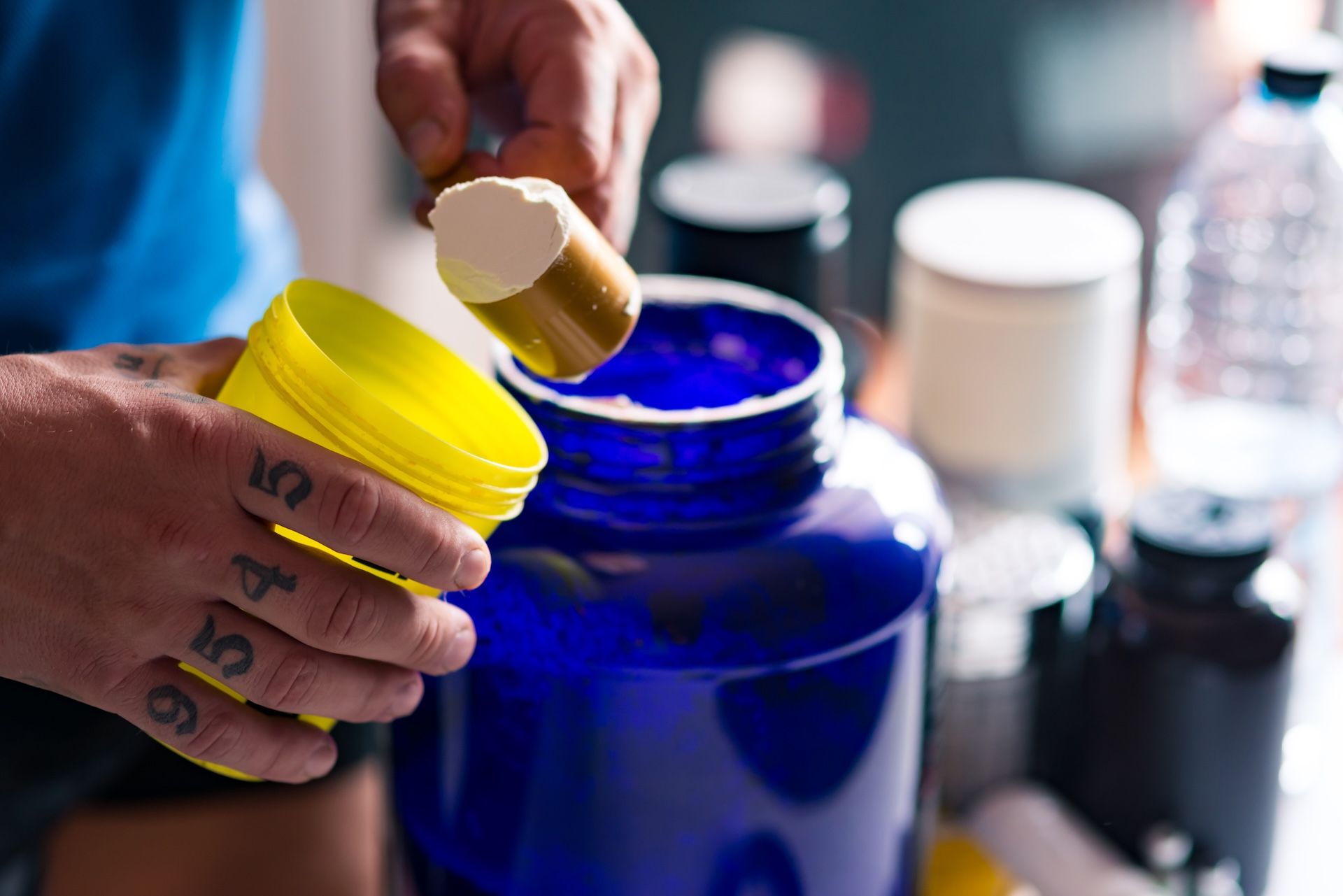
Nutrition plays a bigger role in hot-weather exercise than most people realize. What you eat before and after your workout affects your hydration status, energy levels, heat tolerance, and recovery.
Pre-Workout Nutrition (1 to 2 Hours Before)
Your pre-workout meal should be easy to digest, moderate in carbs, and include some protein. Heavy meals divert blood to your digestive system, which competes with your body's cooling mechanism.
Good options:
A banana with a tablespoon of peanut butter
Overnight oats with berries (prepare the night before for early morning workouts)
A light protein smoothie
Greek yogurt with a small amount of granola
A protein-rich breakfast wrap
Avoid: Heavy, greasy, or high-fiber meals that take long to digest. Spicy food right before exercise can also increase core temperature.
Post-Workout Nutrition (Within 30 to 60 Minutes After)
After exercising in the heat, your body needs three things: protein for muscle repair, carbohydrates to replenish glycogen, and fluids with electrolytes to rehydrate. This is not the time to skip eating because you're "not hungry." Heat suppresses appetite in many people, but your body still needs fuel.
Good options:
A balanced meal with 30 to 40 grams of protein, moderate carbs, and vegetables
A protein-packed bowl with brown rice or sweet potato
A recovery smoothie with protein powder, banana, and coconut water
Grilled chicken with vegetables and a moderate portion of carbs
Foods That Help Your Body Handle Heat
Certain foods naturally support your body's ability to manage heat:
Water-rich fruits: Watermelon, papaya, dragon fruit, cucumber. Thailand has all of these in abundance, fresh and cheap.
Potassium-rich foods: Bananas, coconut water, avocados. Potassium helps maintain fluid balance and prevent muscle cramps.
Nitrate-rich vegetables: Beetroot, spinach, arugula. Nitrates improve blood flow and can enhance exercise performance in the heat.
Anti-inflammatory foods: Turmeric (found in many Thai curries), ginger, berries. Exercise in the heat creates more oxidative stress, and these foods help your body manage it.
Heat-Related Warning Signs Every Bangkok Exerciser Should Know
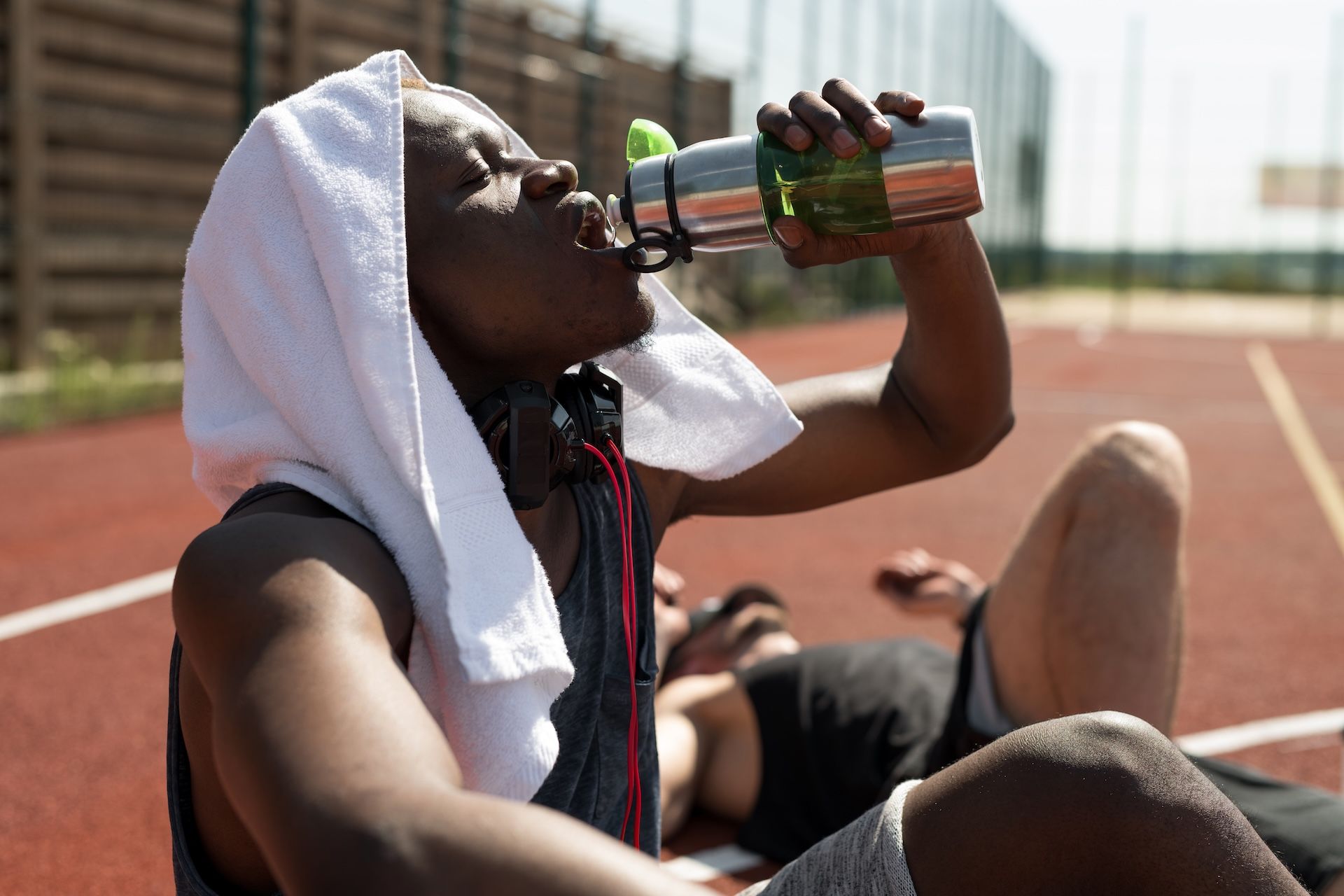
Knowing when to stop is just as important as knowing when to start. Heat-related illness progresses through stages, and recognizing the early signs can prevent a medical emergency.
Heat Cramps (Mild)
Muscle cramps or spasms, usually in the legs, arms, or abdomen
Caused by electrolyte imbalance from heavy sweating
What to do: Stop exercising, move to shade, drink water with electrolytes, gently stretch the affected muscles
Heat Exhaustion (Moderate, Requires Attention)
Heavy sweating with cold, clammy skin
Nausea, dizziness, or lightheadedness
Rapid, weak pulse
Headache and fatigue beyond normal exercise fatigue
What to do: Stop exercising immediately, move to a cool area, remove excess clothing, apply cool water to skin, drink small sips of electrolyte water. If symptoms don't improve within 15 to 20 minutes, seek medical attention.
Heat Stroke (Severe, Medical Emergency)
Core body temperature above 40 degrees Celsius
Hot, red, dry skin (sweating may have stopped)
Confusion, slurred speech, or loss of consciousness
Rapid, strong pulse
What to do: Call emergency services immediately (1669 in Thailand). Move the person to shade, cool them with any available method (cold water, ice, fan). This is life-threatening and requires immediate hospital treatment.
High-risk groups: People new to Bangkok's climate (expats and tourists in their first 2 to 4 weeks), anyone over 50, people taking certain medications (diuretics, beta-blockers, antihistamines), and anyone with cardiovascular conditions should be extra cautious.
How Easy Health Supports Your Active Lifestyle in Bangkok
Working out in Bangkok's heat demands more from your body, and that means your nutrition needs to step up too. When you're sweating out 1 to 2 liters per hour and your muscles are working harder than usual to compensate for the heat, what you eat before and after your workout genuinely matters.
This is where Easy Health fits in.
Every meal from Easy Health is prepared fresh daily with zero added sugar and no MSG. Every dish shows exact calories, protein, carbs, and fat. For people who exercise regularly in Bangkok, this level of transparency is essential because you need to know exactly what fuel you're putting into your body.
Here's how Easy Health works for different training schedules:
Early Morning Exercisers (5:30 to 7:00 AM)
Keep a light pre-workout meal simple: grab an Easy Health breakfast option when you get to the office after your workout
Peanut Butter Berry Jam Bowl · Protein-rich oats with fresh berries. 431 kcal, 21g protein. 175 THB. Perfect post-morning-workout recovery.
Hearty Breakfast Wrap · Scrambled eggs, fresh vegetables, savory sauce. 375 kcal, 27g protein. 179 THB.
Acai Berry Bowl · Creamy acai with granola and fresh fruits. 413 kcal, 16g protein. 275 THB. Great for replenishing glycogen after cardio.
Evening Exercisers (6:00 to 7:30 PM)
Order your post-workout dinner to arrive when you get home from the gym
Power Fit Combo · Soup + main dish + smoothie. 1,043 kcal, 83g protein. 319 THB. Covers your entire recovery meal in one order.
Ranchero Skillet · Protein-packed with bold flavors. 589 kcal, 56g protein. 289 THB. Ideal after a heavy strength session.
For Structured Training Programs
The Easy Health Meal Plans take the guesswork out of fueling your workouts across the whole week:
Active Plan (1,800 to 2,000 kcal/day) at 3,499 THB / 5 days. Designed for people who exercise 3 to 5 times per week. Enough calories to fuel training and recovery.
Athlete Plan (2,400 to 2,600 kcal/day) at 4,799 THB / 5 days. Built for intense daily training. High-energy, nutrient-dense meals.
Lean Plan (800 to 1,000 kcal/day) at 1,899 THB / 5 days. For those combining exercise with aggressive fat loss. Low calories but still macro-balanced.
The beauty is that you don't have to calculate your macros, worry about hidden sugars in your post-workout meal, or spend time cooking when you'd rather be recovering. It's all handled.
FAQ
What is the best time to exercise outdoors in Bangkok?
The best time is early morning between 5:30 and 7:00 AM, when temperatures are at their lowest (25 to 28 degrees) and UV radiation is minimal. The second-best window is evening between 6:00 and 7:30 PM, after the sun has dropped and temperatures begin to cool. Avoid outdoor exercise between 11:00 AM and 4:00 PM, when heat index can exceed 45 degrees.
How much water should I drink when exercising in Bangkok's heat?
Drink 400 to 600 ml in the 2 hours before exercise, 150 to 250 ml every 15 to 20 minutes during exercise, and 1.5 liters for every kilogram of body weight lost after exercise. For sessions longer than 60 minutes, add electrolytes (sodium is most critical). Don't rely on thirst alone because by the time you feel thirsty, you're already dehydrated.
Can I still build muscle if I exercise in hot weather?
Yes. Heat doesn't prevent muscle growth. However, your performance may decrease in extreme heat, which could reduce training volume. Compensate by training during cooler times of day, staying well hydrated, consuming adequate protein (1.6 to 2.2g per kg of body weight), and eating enough total calories. Many professional athletes train in tropical climates year-round and maintain excellent muscle mass.
How long does it take to acclimatize to exercising in Bangkok's heat?
Most research suggests it takes 10 to 14 days of regular heat exposure for your body to acclimatize. During this period, your sweat rate increases, your sweat becomes more dilute (losing fewer electrolytes), your heart rate stabilizes, and your core temperature stays lower during exercise. Expats and tourists newly arrived in Bangkok should reduce exercise intensity by 30 to 50% during their first two weeks and gradually build back up.
Is it safe to exercise during Bangkok's hot season (March to May)?
Yes, but with extra precautions. Stick to the early morning window (before 7:00 AM), increase your water and electrolyte intake by 30 to 50%, reduce exercise intensity by 10 to 20% compared to the cool season, and consider moving high-intensity workouts indoors to an air-conditioned gym. Monitor yourself for signs of heat exhaustion (dizziness, nausea, excessive fatigue) and stop immediately if they appear.
What should I eat after exercising in hot weather?
Prioritize three things: protein for muscle repair (30 to 40 grams), carbohydrates to replenish glycogen, and fluids with electrolytes to rehydrate. Eat within 30 to 60 minutes after your workout, even if you don't feel hungry (heat suppresses appetite). Good options include a balanced meal with lean protein and vegetables, a recovery smoothie, or a macro-counted meal from a service like Easy Health. Avoid heavy, greasy foods that are hard to digest.
Ready to Fuel Your Workouts the Right Way? Download the Easy Health App
You're already putting in the work. Now make sure your nutrition matches your effort. The Easy Health App gives you fresh, macro-counted meals with zero added sugar, so you can refuel after every workout without guessing or compromising.
Here's what you get:
Easy Ordering · Browse 160+ menu items, find the perfect post-workout meal, and order in seconds
Track Your Nutrition (Calories & Macros) · See exact calories, protein, carbs, and fat for every dish, so your nutrition supports your training
Personalized Meal Planning · Choose from 6 curated plans (Lean, Balance, Active, Athlete, Keto, Vegetarian) matched to your fitness goals
Exclusive Rewards · Earn points with every order and unlock special deals available only in the app
Download now and start eating smarter today:
Android: Download on Google Play
iOS: Download on the App Store
References & Links
References:
Périard, J.D., Racinais, S., & Sawka, M.N. (2015). "Adaptations and mechanisms of human heat acclimation: Applications for competitive athletes and sports." Scandinavian Journal of Medicine & Science in Sports, 25(S1), 20-38. · https://onlinelibrary.wiley.com/doi/10.1111/sms.12408
American College of Sports Medicine (2007). "Exercise and Fluid Replacement: Position Stand." Medicine & Science in Sports & Exercise, 39(2), 377-390. · https://journals.lww.com/acsm-msse/fulltext/2007/02000/exercise_and_fluid_replacement.22.aspx
Harvard Health Publishing, "Exercising in Hot Weather" · https://www.health.harvard.edu/staying-healthy/exercising-in-hot-weather