
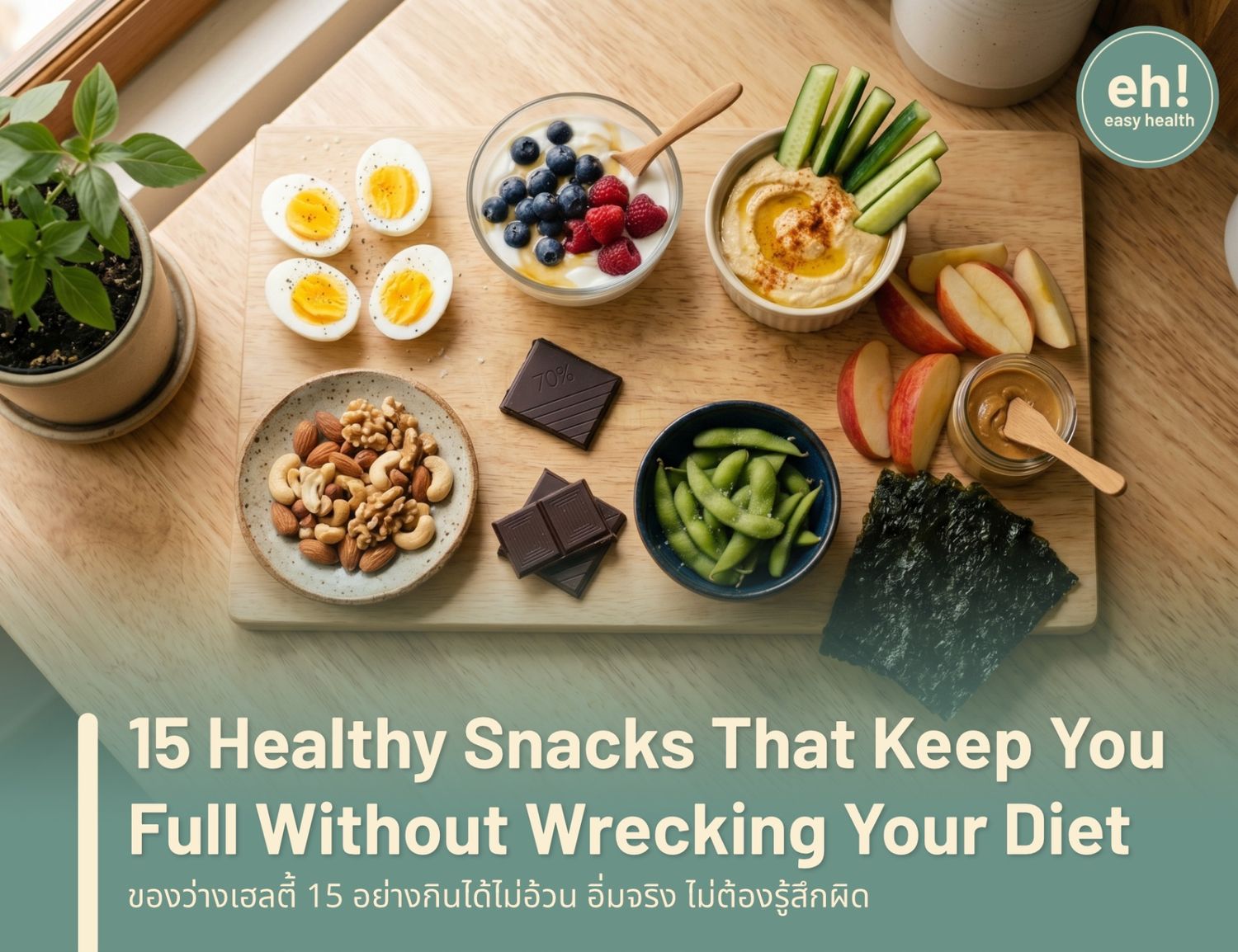
15 Healthy Snacks That Actually Keep You Full (Without Wrecking Your Diet)
You are doing everything right. Your breakfast is solid. Your lunch is balanced. And then 3 PM arrives. Your brain quietly but forcefully demands a snack. You do not want a carrot stick or a glass of water; you want something deeply satisfying.
This is the exact moment where most diets fail. We tend to be highly disciplined during main meals, but careless between them. A "small" bag of chips casually turns into 400 calories. A "healthy" granola bar secretly delivers 25g of sugar. A bubble tea adds 500 calories to your day without even registering in your mind as actual food.
The truth is, snacking itself is not the problem. Scientific reviews show that strategic snacking can actually improve your overall diet and prevent you from overeating at dinner. The real problem is what you choose to snack on. Most convenient snacks in Bangkok are engineered to taste incredible for 90 seconds, only to leave you with a blood sugar crash and intense cravings 30 minutes later.
This guide provides 15 snacks that actually work. Every item is backed by nutritional science, strictly controlled for calories (under 300 per serving), and easily accessible in Bangkok.
The Science of Satiety: Why Most Snacks Leave You Starving
Understanding why you feel hungry between meals is the first step to fixing the problem. Forget the complex medical jargon; here is how your body's hunger system actually works:
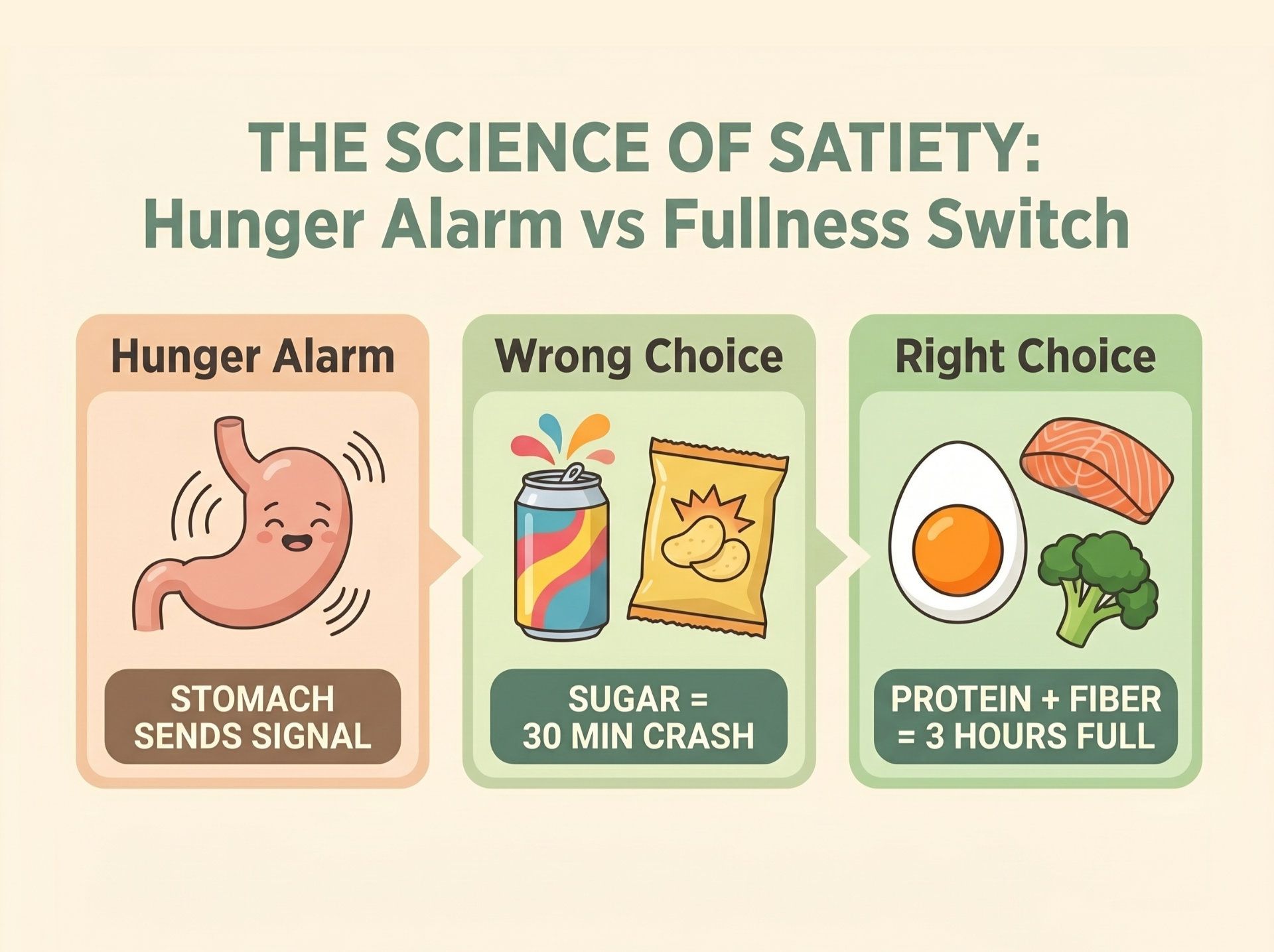
The Hunger Alarm vs. The Fullness Switch
The Hunger Alarm: Your stomach produces a specific hormone to signal your brain that it is time to eat. The absolute best way to quiet this alarm is by consuming protein and fiber, not sugar or refined carbohydrates.
The Slow-Release Switch: When you eat protein or healthy fats, your intestines signal your stomach to slow down digestion. This is why a small handful of almonds keeps you full for hours, while a bag of gummy candies leaves you hungry again in 20 minutes.
The Fullness Signal: Your fat cells tell your brain when you have consumed enough energy. However, eating highly processed, sugary foods continuously damages this sensor, meaning you can eat massive amounts of junk food without ever feeling truly full.
The Golden Rule: The most satiating snacks are high in protein, high in fiber, and minimally processed.
The 15 Healthy Snacks (Backed by Science)
We have divided the best snacks into three strategic categories so you can choose exactly what your body needs at any given moment:
Category 1: High-Protein Hunger Killers
Choose these when you are genuinely hungry and need a snack to hold you over for the next 2-3 hours.
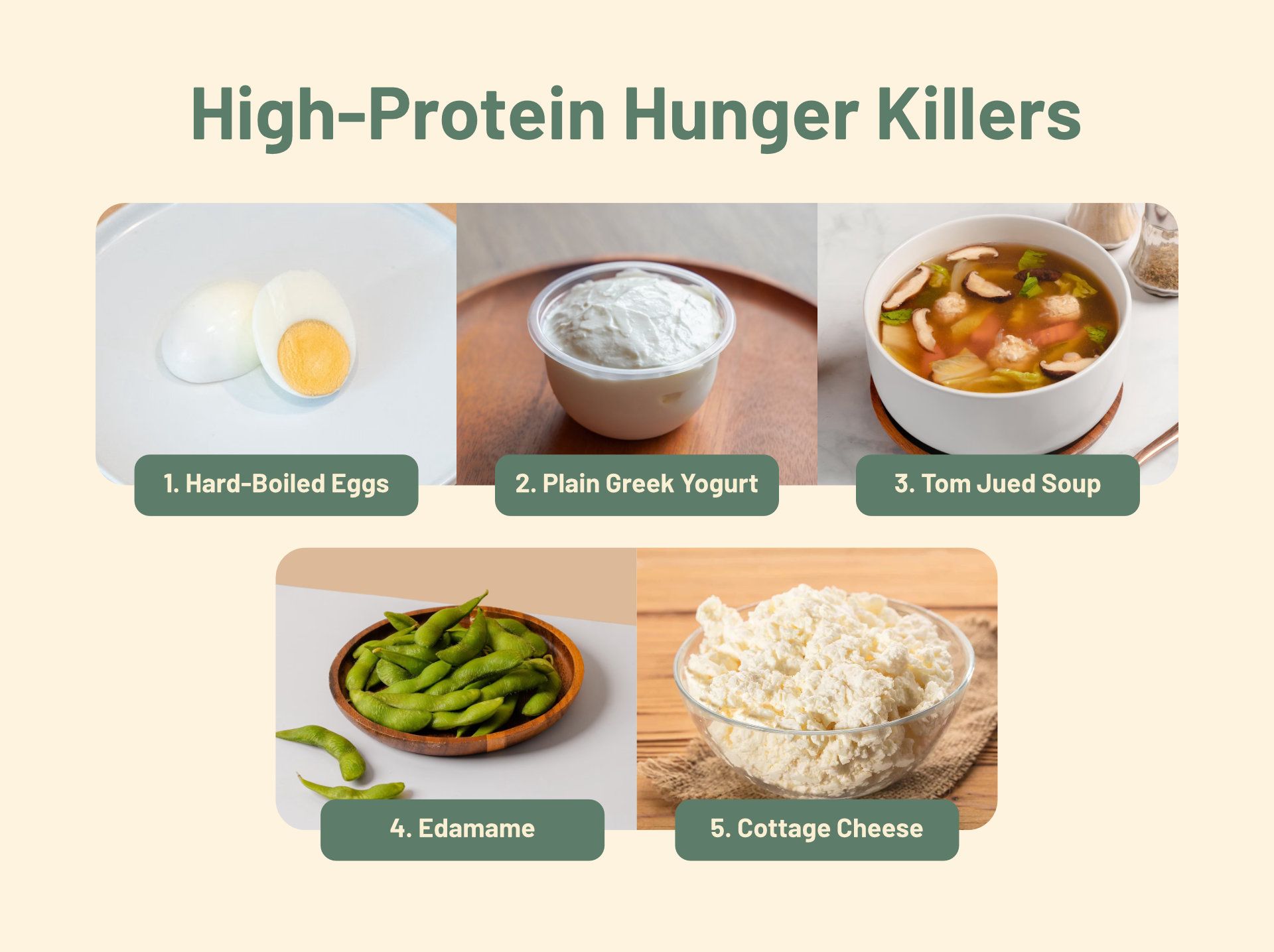
1. Hard-Boiled Eggs (2 eggs): Delivers 12g of protein for roughly 140 calories. Eggs are one of the most satiating foods on the planet. The high-quality protein and healthy fats shut down hunger hormones immediately.
2. Plain Greek Yogurt (150g): Delivers 15g of protein for just 100 calories. Greek yogurt is strained, giving it almost double the protein of regular yogurt. Avoid flavored versions, which are packed with hidden sugars.
3. Tom Jued Soup from Easy Health: Delivers 14g of protein for a remarkably low 93 calories. The warm broth adds volume in your stomach, and research shows that soup-based snacks significantly reduce how much you eat at your next meal.
4. Edamame, shelled (150g): Delivers 16g of plant-based protein for 180 calories. The combination of protein, fiber, and the physical act of shelling them forces you to eat slower, giving your brain time to register fullness.
5. Cottage Cheese (100g): Delivers 11-14g of protein for 100-170 calories. Rich in casein protein, which digests very slowly. This makes it the ultimate late-night snack for muscle recovery without fat storage.
Category 2: High-Volume, Fiber-Rich Snacks
Choose these when you want to eat a large volume of food without consuming excess calories.
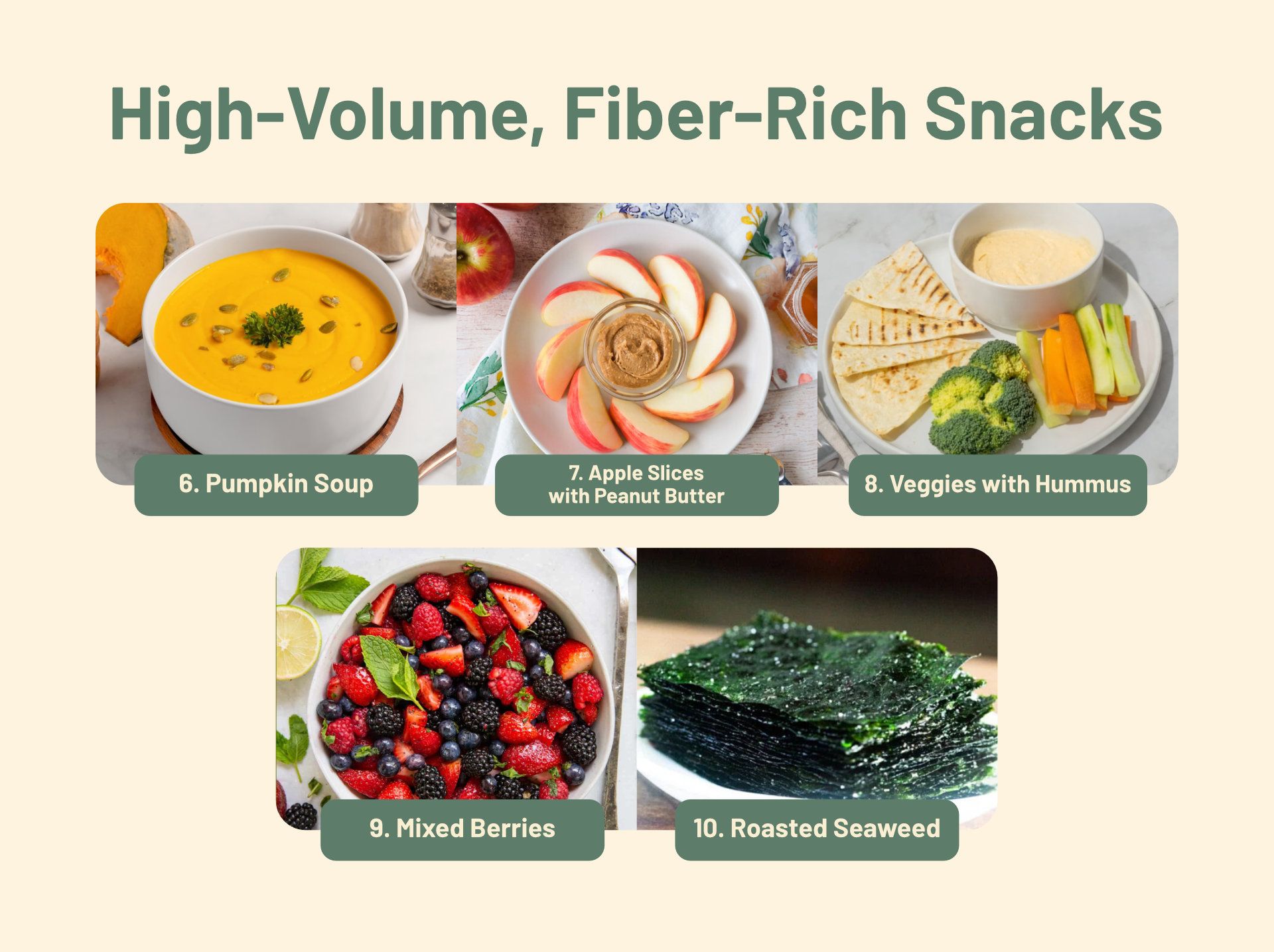
6. Pumpkin Soup from Easy Health: High in fiber and deeply satisfying (165 calories). The fiber slows down digestion, while the warm liquid acts as a perfect bridge between lunch and dinner.
7. Apple Slices with Peanut Butter (1 tablespoon): Apples provide volume and water, while the fat in peanut butter slows the digestion of the apple's natural sugars (around 200 calories).
8. Raw Veggies with Hummus: Carrots and cucumbers have the lowest calories of any food. Pair them with hummus for added chickpea protein and flavor, allowing you to eat a massive portion guilt-free (around 180 calories).
9. Mixed Berries (150g): The ultimate sweet treat. High in fiber and very low in sugar (only 70 calories). They satisfy cravings without spiking your blood sugar.
10. Roasted Seaweed (1 small pack): At just 25-30 calories, this is essentially a free snack. It satisfies the craving for something salty and crunchy without the massive calorie penalty of potato chips.
Category 3: Balanced Energy Combos
Choose these for mid-morning or mid-afternoon when you need a substantial energy boost or a mini-meal replacement.
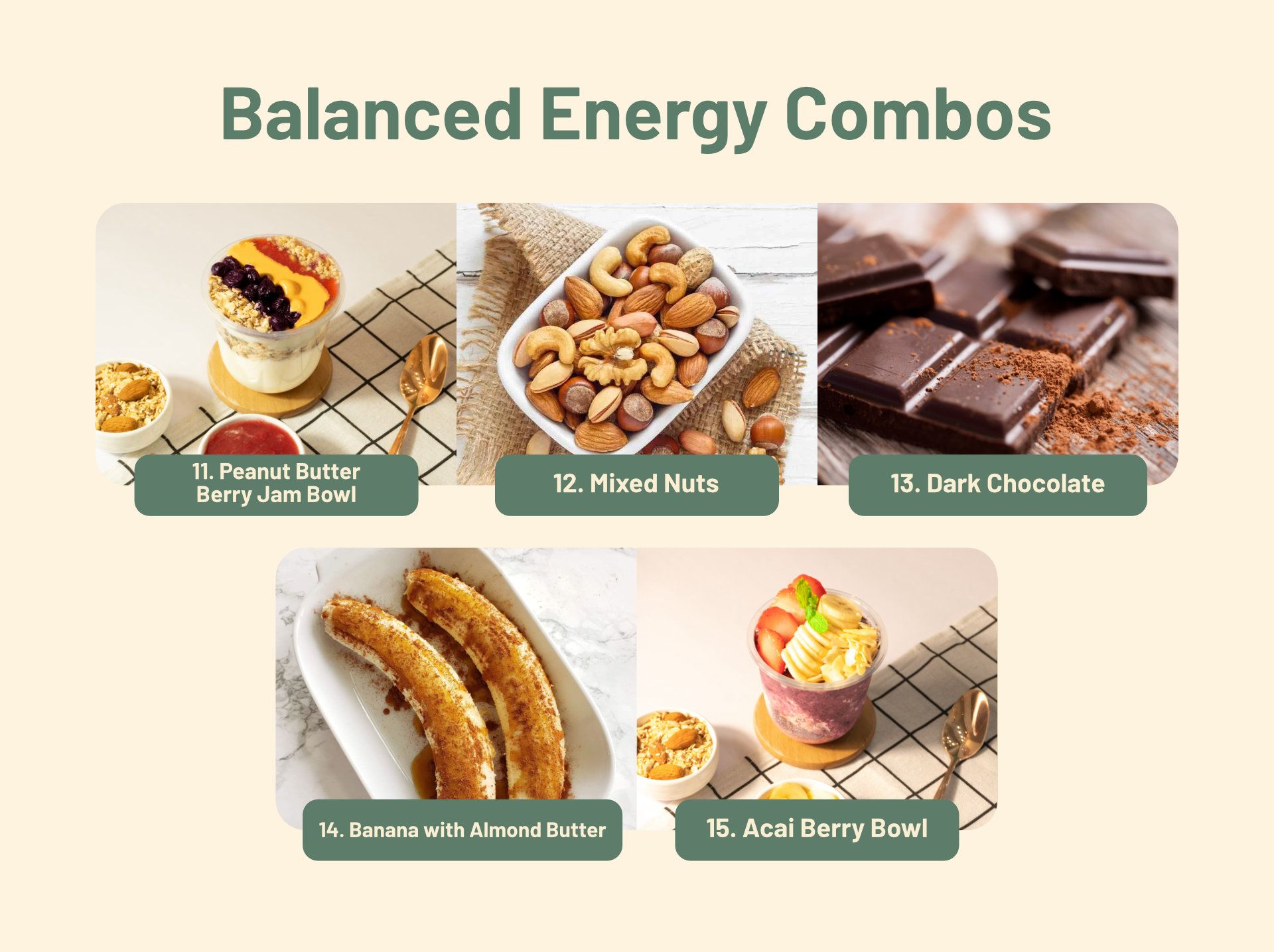
11. Peanut Butter Berry Jam Bowl from Easy Health: Packs a massive 21g of protein (431 calories). Ideal for highly active days or when lunch is significantly delayed.
12. Mixed Nuts (30g or one small handful): Rich in healthy fats and protein (around 180 calories). Crucial Warning: Nuts are calorie-dense. You must measure your portion and never eat directly from a large bag.
13. Dark Chocolate, 70%+ (2-3 small squares): Rich in antioxidants (around 110 calories). The bitter compounds and healthy fats in dark chocolate are surprisingly effective at killing cravings.
14. Banana with Almond Butter (1 tablespoon): The healthy fat from the almond butter converts the fast-burning sugars of the banana into slow, sustained energy (around 200 calories).
15. Acai Berry Bowl from Easy Health: Provides 16g of protein (413 calories). Unlike commercial cafes that load their bowls with sugar and honey syrups, this provides pure antioxidant power with zero added sugars.
The Bangkok Snack Traps to Avoid completely
Convenience is a double-edged sword. Avoid these everyday items that secretly destroy your calorie deficit:
Convenience Store Toasties & Sandwiches: 300-500 calories of refined white bread, processed meats, and heavy sauces with minimal protein.
Bubble Tea & Thai Iced Tea: 400-700 calories. A single medium bubble tea can contain more calories and sugar than a full meal.
Bakery Pastries: A single croissant or chocolate muffin typically ranges from 400-500 calories.
Dried Fruits: 100g of dried mango contains roughly 70g of sugar. Dehydration concentrates the sugar into a tiny volume. Always choose fresh fruit instead.
How to Build a Fail-Proof Snacking System
Do not rely on willpower; rely on preparation. When hunger strikes, you will eat whatever is easiest. Make healthy choices the easiest option:
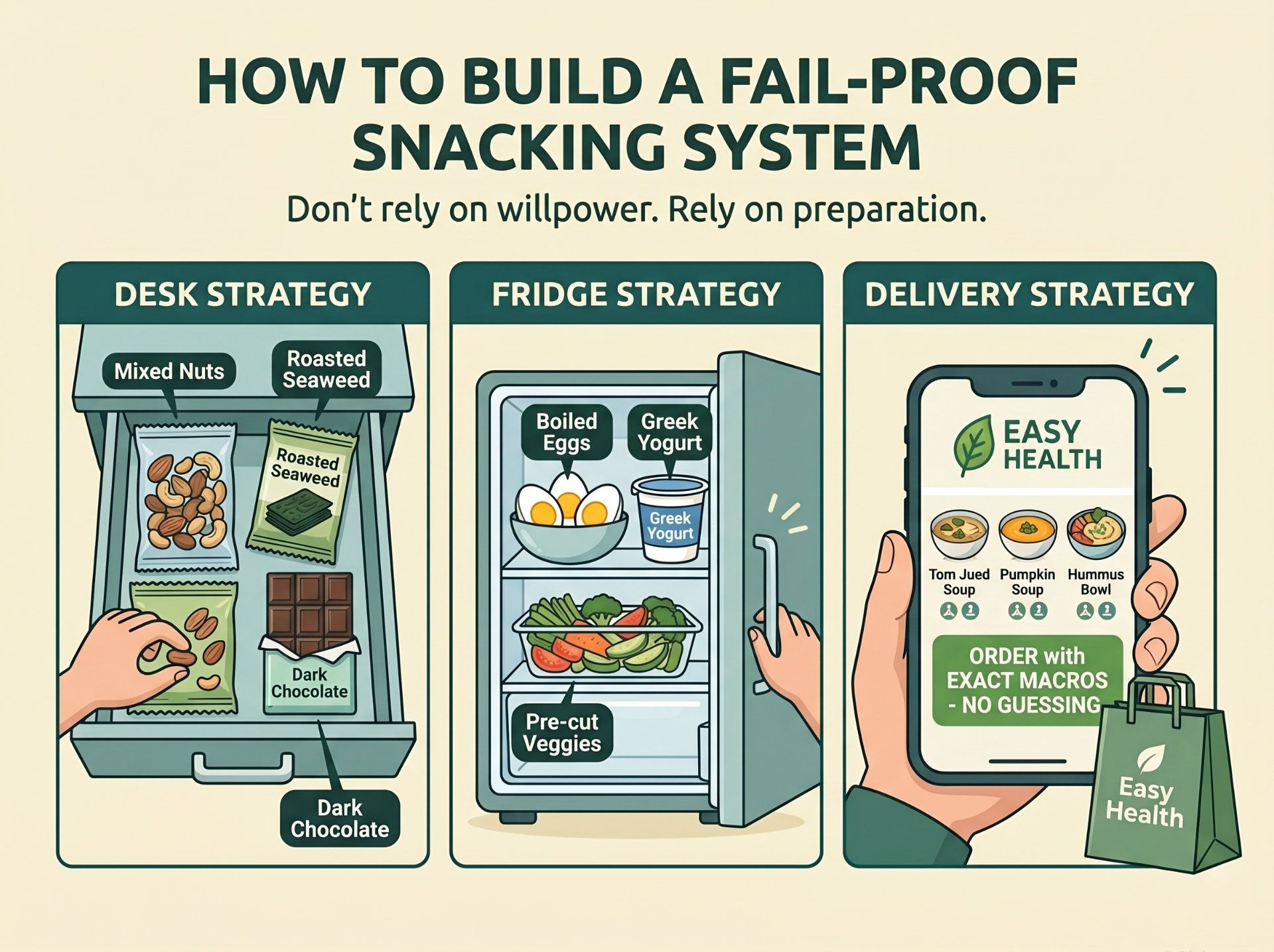
The Desk Strategy: Keep roasted seaweed, pre-portioned bags of mixed nuts (30g each), and dark chocolate permanently stashed in your office drawer.
The Fridge Strategy: Boil a batch of eggs on Sunday, stock up on Greek yogurt, and pre-cut your vegetables in advance.
The Delivery Strategy: For zero-effort days, order the Tom Jued Soup, Pumpkin Soup, or Hummus Bowl from Easy Health. Every item has exact macros listed, so you never have to guess.
Snacking For Your Goals
Weight management does not mean starving yourself; it means making intelligent choices. If you want maximum convenience without the anxiety of hidden calories or sugars, let the professionals handle it.
At Easy Health, every snack and meal on our menu comes with exact nutritional data. Calories, protein, carbohydrates, and fats are printed clearly on every package. We use absolutely zero MSG and zero added sugar.
You can order individual items or put your entire diet on autopilot with our 5-Day Meal Plans, delivered fresh to your office every single day.
FAQ
What are the healthiest snacks that actually keep you full?
The healthiest snacks for lasting fullness combine protein and fibre, which are the two macronutrients most effective at suppressing hunger hormones (ghrelin) and triggering satiety hormones (CCK and leptin). Top options include hard-boiled eggs (12g protein, 140 kcal), Greek yoghurt (15g protein, 100 kcal), edamame (16g protein, 180 kcal), and broth-based soups like Tom Jued (14g protein, 93 kcal). The key principle: choose snacks with at least 10g of protein or 5g of fibre per serving to maintain fullness for 2-3 hours.
How many calories should a healthy snack have?
For most adults managing their weight, a healthy snack should contain 100-250 calories. Snacks under 100 calories often fail to satisfy, leading to multiple snacking episodes that add up to more calories than a single satisfying snack. Snacks over 300 calories start to approach meal territory and can create a calorie surplus. The sweet spot is 150-200 calories with at least 10g of protein or 5g of fibre.
What snacks should I avoid for weight loss?
Avoid snacks that are high in sugar and refined carbohydrates with minimal protein or fibre. The biggest culprits in Bangkok are bubble tea (400-700 kcal), Thai iced tea (200-400 kcal), bakery items from coffee shops (300-500 kcal), commercial granola bars (200-350 kcal with 15-25g sugar), flavoured yoghurt with added sugar, dried fruit and trail mix (calorie-dense and sugar-concentrated), and convenience store toasties and sandwiches. These snacks cause rapid blood sugar spikes followed by crashes, which trigger more hunger and cravings within 30-60 minutes.
Is it better to snack or not snack between meals?
It depends on the individual. Research published in Advances in Nutrition (2016) found that planned, protein-rich snacking can improve diet quality and prevent overeating at meals. However, mindless or habitual snacking (eating because of boredom, stress, or habit rather than genuine hunger) consistently leads to calorie overconsumption. The guideline: snack when genuinely hungry between meals, choose protein-rich or fibre-rich options, and plan your snacks in advance rather than making decisions when hunger strikes.
Are nuts fattening even though they are considered healthy?
Despite being calorie-dense (approximately 180 kcal per 30g serving), research consistently shows that regular nut consumption does not lead to weight gain. A 2010 study in The Journal of Nutrition found that the combination of protein, fibre, and fat in nuts creates a high satiety effect, meaning people naturally compensate by eating less at subsequent meals. The critical caveat is portion control. Eating nuts directly from a large bag leads to unconscious overconsumption. Measure 30g portions (a small handful) in advance and treat each portion as one snack serving.
What is the best late-night snack that will not ruin my diet?
The best late-night snack is high in protein and low in carbohydrates. Casein protein (found in cottage cheese and Greek yoghurt) is ideal because it digests slowly, providing a sustained amino acid release overnight. A 2015 study in the British Journal of Nutrition found that a casein-rich snack before bed improved overnight muscle protein synthesis without increasing fat storage. Good options: 150g Greek yoghurt (100 kcal, 15g protein), 2 hard-boiled eggs (140 kcal, 12g protein), or a small portion of cottage cheese (100 kcal, 11g protein). Avoid sugary or carb-heavy snacks before bed, as they can disrupt sleep quality.
Ready to Snack Smarter?
Every snack on the Easy Health menu shows exact calories, protein, carbs, and fat. No guessing whether your "healthy" snack is secretly loaded with sugar. No estimating portion sizes. Just real food with real numbers.
Over 160 menu items with full macro transparency
Zero MSG, zero added sugar, zero preservatives
Cooked fresh daily and delivered across Bangkok
Perfect portions with nutritional info on every package
Download the Easy Health app:
References
Leidy, H. J., et al. (2015). The role of protein in weight loss and maintenance. The American Journal of Clinical Nutrition, 101(6), 1320S-1329S. https://doi.org/10.3945/ajcn.114.084038
Rolls, B. J., et al. (2005). Salad and satiety: Energy density and portion size of a first-course salad affect energy intake at lunch. Journal of the American Dietetic Association, 104(10), 1570-1576. https://doi.org/10.1016/j.appet.2005.06.002
Mattes, R. D., & Dreher, M. L. (2010). Nuts and healthy body weight maintenance mechanisms. Asia Pacific Journal of Clinical Nutrition, 19(1), 137-141. https://doi.org/10.3945/jn.109.114223
Holt, S. H., et al. (1995). A satiety index of common foods. European Journal of Clinical Nutrition, 49(9), 675-690.
Leidy, H. J., et al. (2016). The role of protein in appetite control and satiety. Advances in Nutrition, 7(3), 532S-540S. https://doi.org/10.3945/an.115.009571
Kinsey, A. W., & Ormsbee, M. J. (2015). The health impact of nighttime eating. Nutrients, 7(4), 2648-2662. https://doi.org/10.3390/nu7042648
Westerterp-Plantenga, M. S., et al. (2012). Dietary protein, its role in satiety, energetics, weight loss and health. British Journal of Nutrition, 108(S2), S52-S63. https://doi.org/10.1017/S0007114512002589
Harvard T.H. Chan School of Public Health. The Nutrition Source: Snacking. https://nutritionsource.hsph.harvard.edu/snacking/
World Health Organization. (2020). Healthy Diet. Fact Sheet. https://www.who.int/news-room/fact-sheets/detail/healthy-diet