
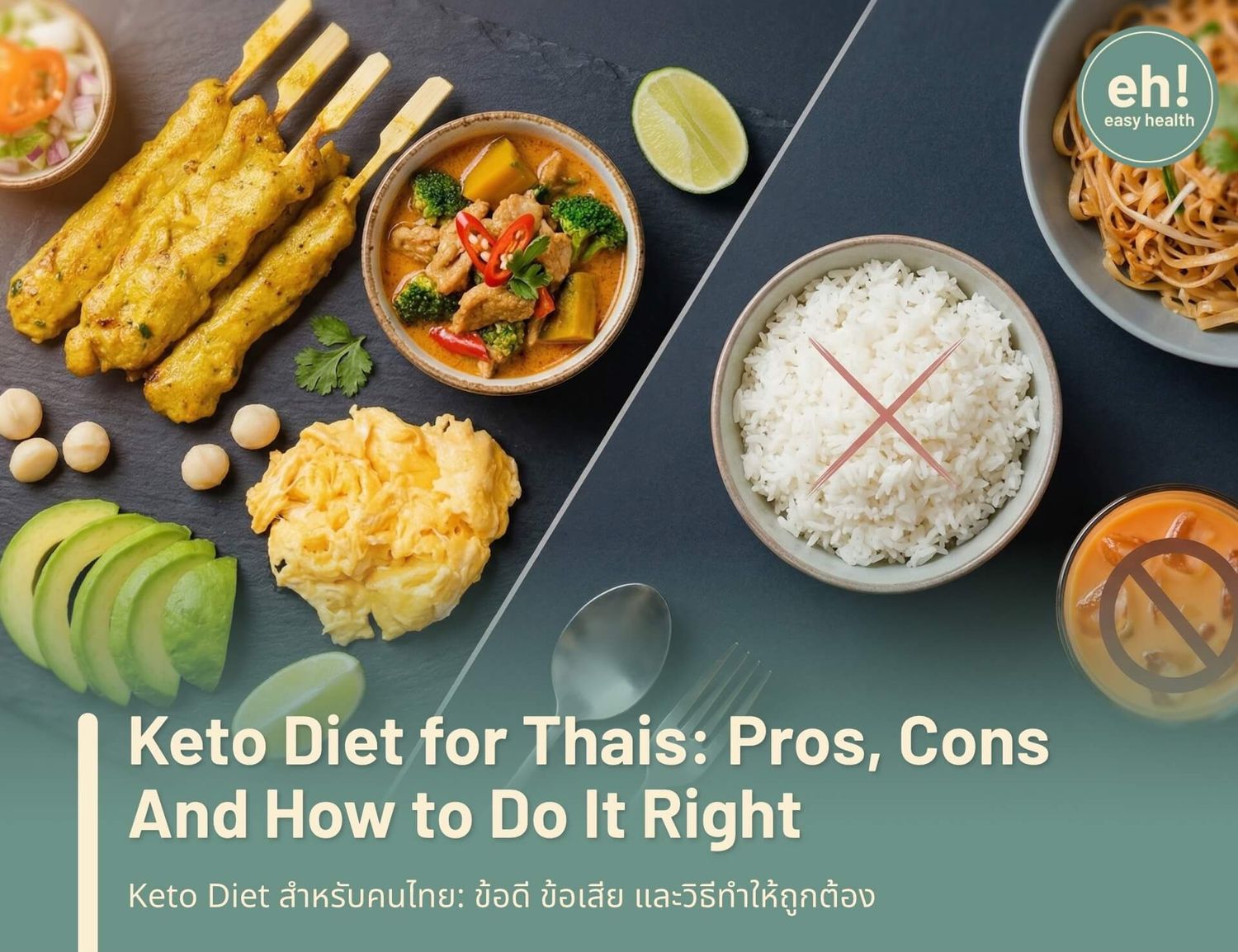
Keto Is Everywhere in Thailand Right Now. But Is It Actually Right for You?
Walk into any health-focused café in Thonglor or Ekkamai, and you'll see it on the menu: keto bowls, keto coffee, keto desserts. Open Instagram and half the Thai fitness influencers are posting about their keto journey. Your coworker just lost 8 kilos in a month and won't stop talking about how she quit rice.
The keto diet has exploded in Thailand over the past few years. And there's a good reason for that. For many people, it works. Fat melts off, energy stabilizes, cravings disappear. It sounds almost too good to be true.
But here's what most keto content doesn't tell you: the keto diet isn't for everyone, it's very easy to do wrong, and doing it in Thailand comes with unique challenges that a guide written for Americans or Europeans simply won't address.
This article is different. We'll cover what the keto diet actually is, the real science-backed pros and cons, how to do keto properly while living in Thailand, what Thai foods work (and which ones secretly kick you out of ketosis), and how to decide whether keto is the right approach for your body and goals.
No hype. No miracle claims. Just practical information you can actually use.
What Is the Keto Diet, Exactly?
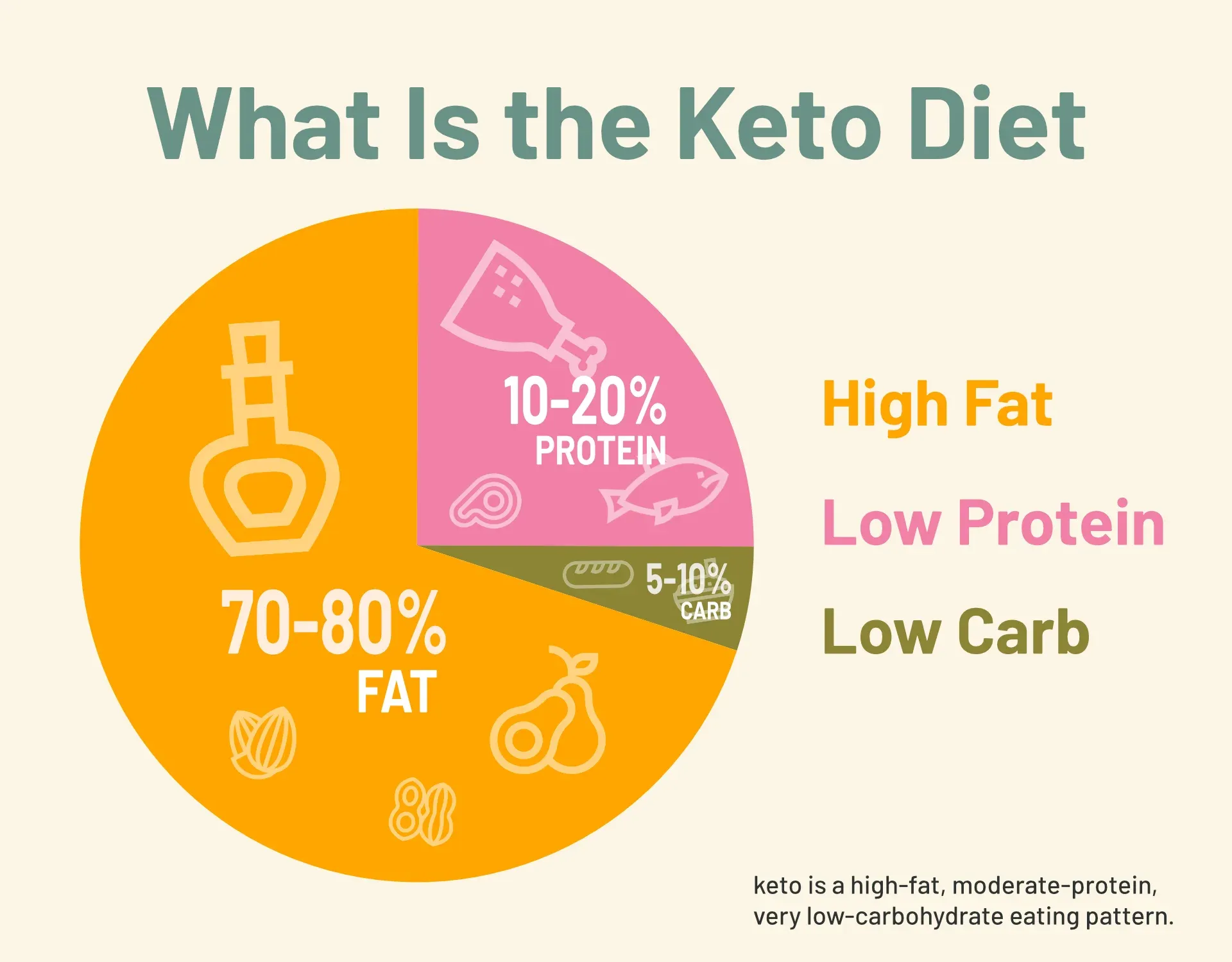
The ketogenic diet, or keto, is a high-fat, moderate-protein, very low-carbohydrate eating pattern. The standard breakdown looks roughly like this:
Fat: 70-75% of daily calories
Protein: 20-25% of daily calories
Carbohydrates: 5-10% of daily calories (typically 20-50 grams per day)
To put that in perspective, a single plate of Thai jasmine rice contains about 45 grams of carbs. That's an entire day's worth of carbs on keto, in one side dish.
The goal of keto is to push your body into a metabolic state called ketosis. Normally, your body runs on glucose (sugar) from carbohydrates as its primary fuel source. When you drastically reduce carbs, your body runs out of glucose and starts breaking down stored fat into molecules called ketones. These ketones become your body's alternative fuel source.
This metabolic switch is what makes keto different from simply "eating less carbs." Your body is literally changing the way it produces energy, shifting from a sugar-burning machine to a fat-burning machine.
Most people enter ketosis within 2 to 7 days of restricting carbs below 50 grams per day. However, it can take 2 to 4 weeks for your body to become fully "fat-adapted," meaning it efficiently uses fat and ketones as fuel without the side effects that come during the transition.
The Real Pros of the Keto Diet (What the Science Actually Says)
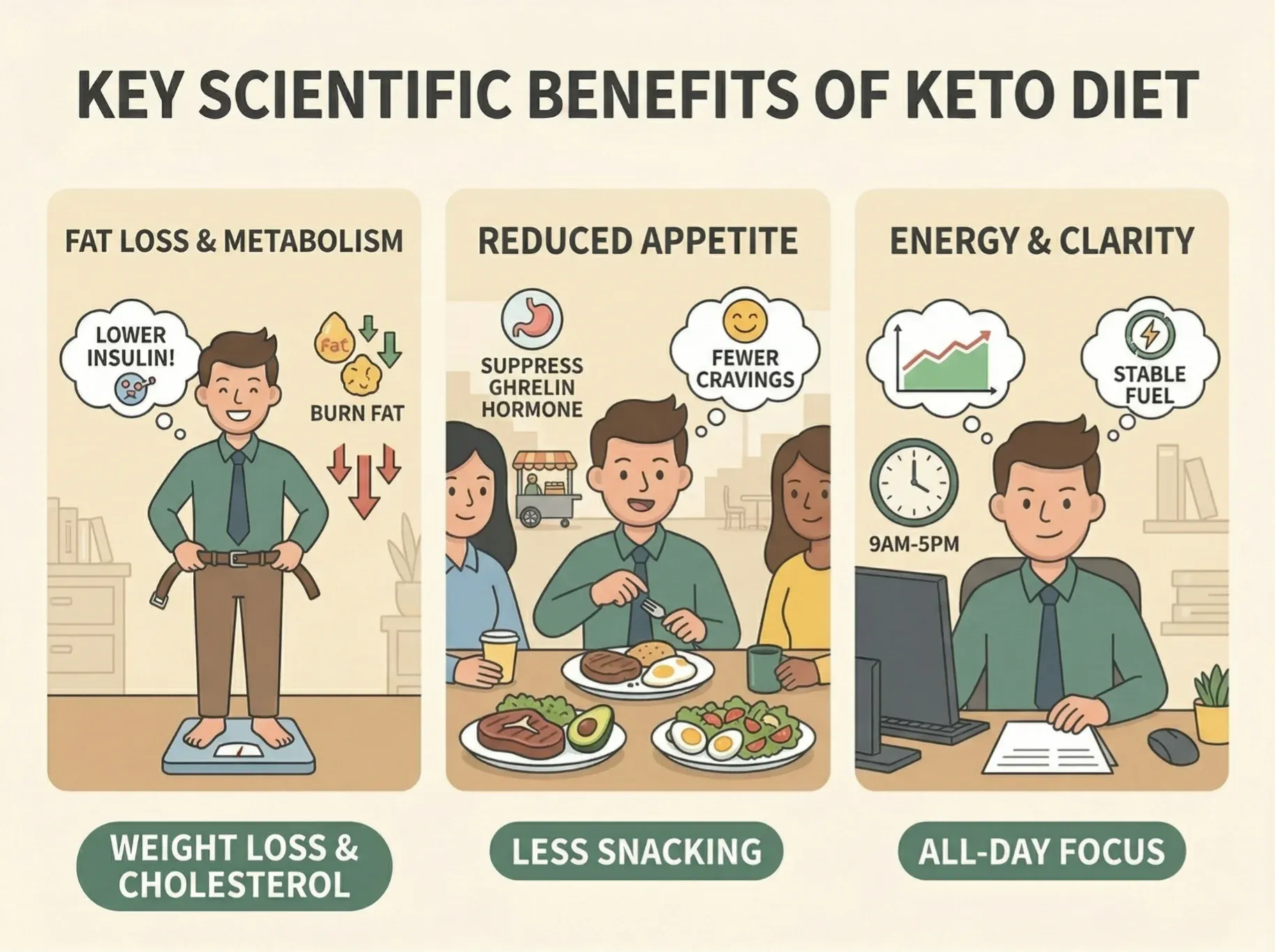
Let's start with what keto genuinely does well. These aren't Instagram claims. These are benefits supported by peer-reviewed research.
Pro 1: Effective Fat Loss, Especially in the First Few Months
Multiple studies, including a landmark review published in the British Journal of Nutrition, show that low-carbohydrate diets like keto produce greater weight loss than low-fat diets in the first 6 to 12 months. The mechanism is partly hormonal: lower carb intake leads to lower insulin levels, which allows your body to access and burn stored fat more easily.
Many people in Thailand find that keto helps them break through weight-loss plateaus that calorie counting alone couldn't fix. If you've been stuck at the same weight for months despite eating "clean," the metabolic shift from keto might be what your body needs.
Pro 2: Reduced Appetite and Fewer Cravings
One of the most commonly reported benefits of keto is that hunger genuinely decreases. This isn't willpower. There's a physiological reason: ketones suppress the hunger hormone ghrelin, and the high fat content of meals increases satiety. Many keto dieters find they naturally eat fewer calories without feeling deprived.
For people living in Thailand, where food temptation is literally on every corner, this appetite-suppressing effect can be a game-changer. When you're genuinely not hungry, walking past that som tam cart at 10 PM becomes much easier.
Pro 3: Stable Energy Throughout the Day
If you've ever experienced the dreaded post-lunch crash at the office, keto can help. When your body runs on ketones instead of glucose, you avoid the blood sugar spikes and crashes that come from carb-heavy meals. Many people on keto report consistent energy from morning to evening, without the need for afternoon coffee or sugar hits.
This is particularly relevant in Bangkok, where the standard Thai lunch (rice + stir-fry + sugary drink) can leave you practically comatose at your desk by 2 PM.
Pro 4: May Improve Certain Health Markers
Research published in the Annals of Internal Medicine shows that ketogenic diets can improve several metabolic markers, including lower triglycerides, higher HDL cholesterol ("good" cholesterol), reduced blood sugar levels, and lower blood pressure in some individuals. These improvements are particularly meaningful for people at risk of Type 2 diabetes or metabolic syndrome.
Pro 5: Mental Clarity
Many keto practitioners report improved focus and mental sharpness. While the scientific evidence on this is still emerging, the theory is that ketones provide a more stable fuel source for the brain compared to the fluctuating glucose levels from a high-carb diet. If your work requires sustained concentration, this is worth noting.
The Honest Cons of the Keto Diet (What Nobody Likes to Talk About)
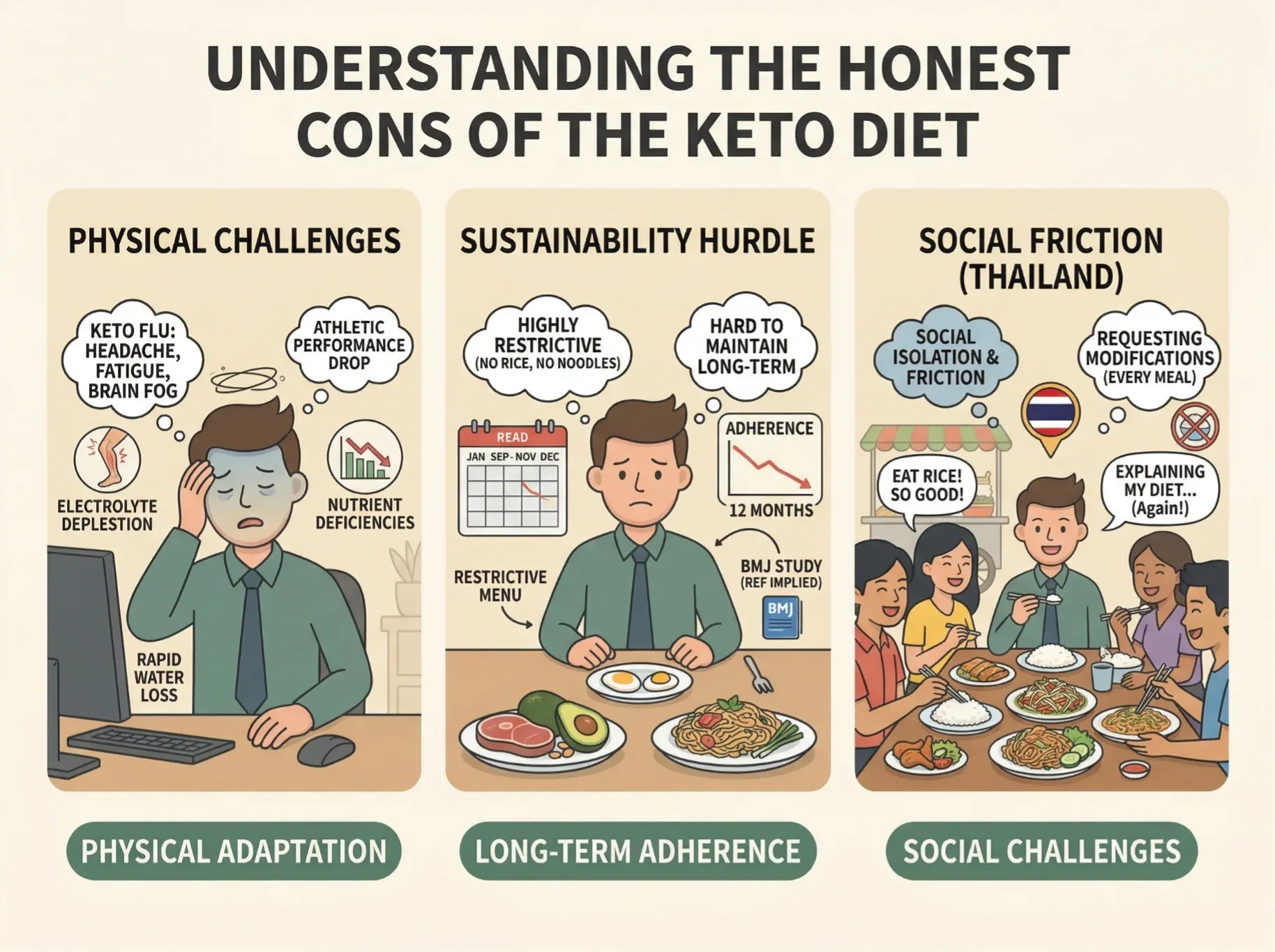
Now for the other side. Keto advocates tend to downplay these, but you deserve to know the full picture before committing.
Con 1: The "Keto Flu" Is Real and It's Rough
During the first 1 to 2 weeks of keto, many people experience what's commonly called the keto flu: headaches, fatigue, brain fog, irritability, nausea, and muscle cramps. This happens because your body is adapting to using fat for fuel instead of glucose, and you're also losing water and electrolytes rapidly.
In Bangkok's heat and humidity, the keto flu can hit harder. The combination of dehydration from the climate and electrolyte loss from the diet transition is a recipe for feeling absolutely terrible. The good news: it's temporary. The bad news: it can last 5 to 14 days, and some people quit before it passes.
How to minimize it: Increase your water intake to at least 3 liters per day. Supplement with sodium, potassium, and magnesium. Bone broth is excellent during this phase. Don't start keto during a busy work week; give yourself a weekend to adjust.
Con 2: It's Hard to Sustain Long-Term
Let's be honest. Keto is restrictive. No rice, no noodles, no bread, no most fruits, no beer, limited alcohol. In Thailand, where rice is the foundation of nearly every meal and social eating is a core part of the culture, maintaining strict keto for months or years is extremely difficult.
A meta-analysis in the BMJ found that while low-carb diets produce impressive short-term results, adherence drops significantly after 12 months. Most people eventually return to some form of carbohydrate consumption. This doesn't mean keto is bad. It means you should go in with realistic expectations about how long you'll actually maintain it.
Con 3: Nutrient Deficiencies Are Common
When you eliminate entire food groups (fruits, grains, legumes, many vegetables), you risk missing out on important micronutrients. Common deficiencies on keto include fiber (which can cause constipation), vitamin C, potassium, magnesium, and B vitamins.
This is why "dirty keto" (eating only bacon, cheese, and butter) is a terrible idea long-term. A well-formulated keto diet should include plenty of non-starchy vegetables, nuts, seeds, and varied protein sources.
Con 4: Potential Impact on Athletic Performance
If you do high-intensity exercise like HIIT, CrossFit, or heavy weightlifting, keto may initially reduce your performance. High-intensity activities rely heavily on glycogen (stored glucose), and keto depletes glycogen stores. While some athletes adapt over time, others find that their explosive power and anaerobic capacity never fully recover on strict keto.
If you're training hard at a Bangkok gym 4 to 5 times per week, consider whether your performance matters more than the specific fat-loss advantages of keto. A moderate low-carb approach (100-150g carbs) might serve you better than strict ketosis.
Con 5: Social Challenges in Thailand
This one is specific to the Thai context and it's significant. Thai social life revolves around food. Office lunches, family dinners, temple festivals, after-work street food runs. Almost all of these involve rice, noodles, or sweetened dishes.
Being on strict keto means you'll frequently have to explain your diet, request modifications, or simply watch others eat things you can't have. Over time, this social friction causes many people to abandon keto, not because it doesn't work, but because the lifestyle cost becomes too high.
How to Do Keto Right in Thailand: A Practical Guide
If you've read the pros and cons and decided keto is worth trying, here's how to do it properly in the Thai context.
Step 1: Understand Your Thai-Friendly Keto Foods
Many Thai ingredients are naturally keto-friendly. The trick is knowing which ones to lean on and which to avoid.
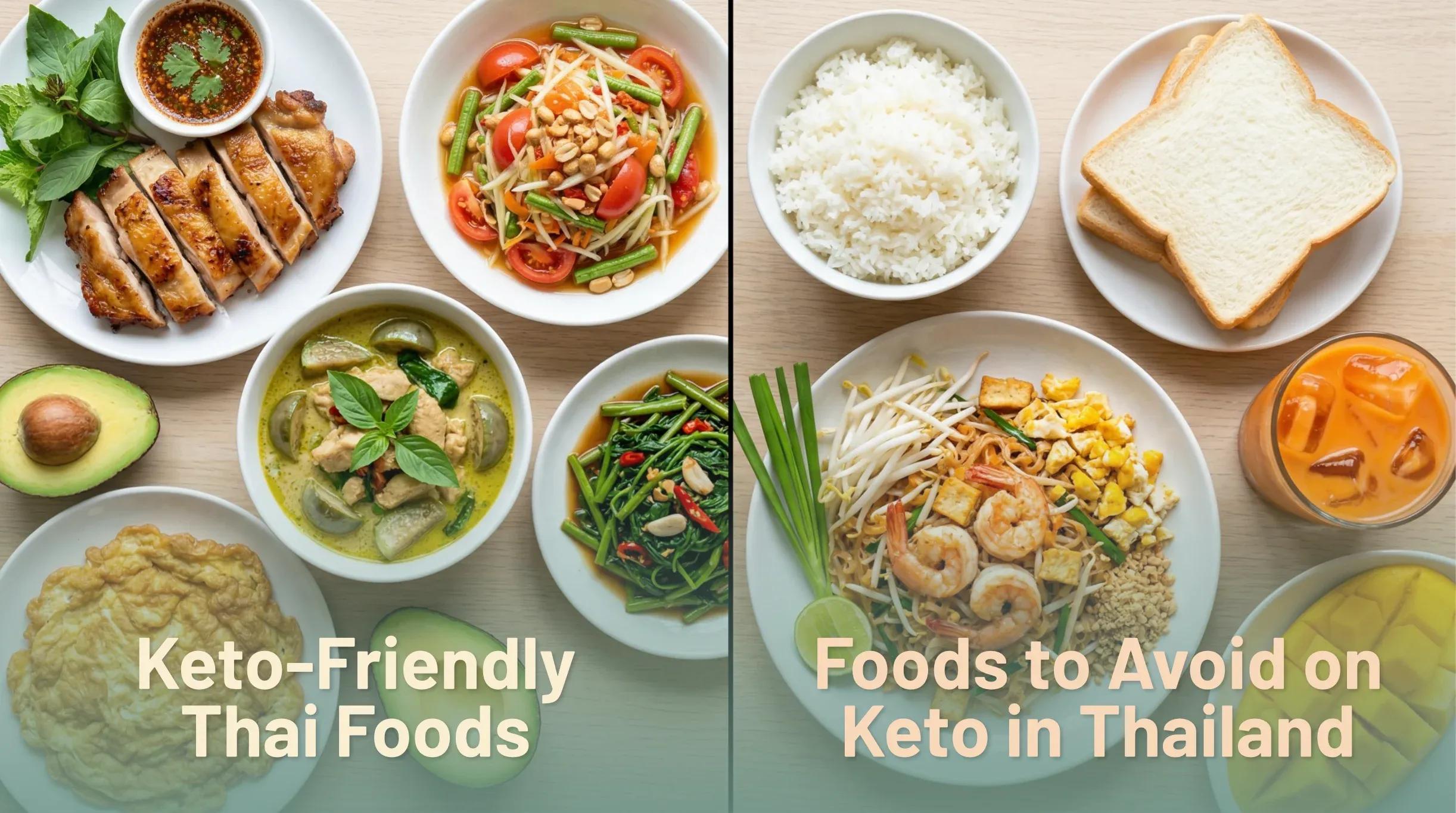
Keto-Friendly Thai Foods:
Grilled meats: gai yang (grilled chicken), moo yang (grilled pork), moo ping (grilled pork skewers, skip the sticky rice)
Seafood: pla pao (grilled fish), goong ob woonsen (if you skip the glass noodles), steamed fish with lime
Eggs: kai jeow (Thai omelette, cooked in minimal oil), boiled eggs from 7-Eleven
Coconut-based curries: green curry, red curry, panang curry (skip the rice, eat the curry with vegetables instead)
Stir-fries without sugar: pad pak (stir-fried vegetables), pad kra pao (holy basil stir-fry, request no sugar and no rice)
Soups: tom yum (without noodles or rice), tom kha gai (coconut chicken soup)
Vegetables: morning glory, Chinese broccoli, bok choy, cabbage, cucumber, Thai eggplant
Healthy fats: coconut cream, coconut oil, avocado, macadamia nuts, almonds
Foods to Avoid on Keto in Thailand:
Rice (all types: jasmine, sticky, brown. Yes, even brown rice is too high in carbs for keto)
All noodles (pad thai noodles, sen lek, sen yai, woon sen, mama instant noodles)
Bread and bakery items
Most fruits (mango, longan, lychee, durian, banana are all high in sugar)
Sweetened drinks (Thai iced tea, Thai iced coffee, nam manao with sugar, all bubble teas)
Sweet sauces (sweet chili sauce, oyster sauce, most dipping sauces)
Deep-fried battered items (the batter is typically flour-based)
Most Thai desserts (bua loy, khanom chan, mango sticky rice)
Step 2: Learn to Navigate Thai Restaurants on Keto
Eating out on keto in Thailand is doable, but it requires some adjustments.
What to say when ordering:
"Mai sai nam tan" (ไม่ใส่น้ำตาล) = No sugar. Use this for every stir-fry and curry.
"Mai ao khao" (ไม่เอาข้าว) = No rice.
"Perm pak" (เพิ่มผัก) = Extra vegetables.
"Perm neua sat" (เพิ่มเนื้อสัตว์) = Extra meat/protein.
Safe restaurant orders:
Gai yang + som tam Thai (request no sugar, no peanuts if strict)
Tom yum goong (clear broth version, no noodles)
Steak or grilled fish at a Western restaurant, substitute fries for salad
Shabu/hotpot with meat, seafood, and leafy vegetables (skip the noodles and dipping sauces with sugar)
Sashimi and seared fish at Japanese restaurants
Watch out for hidden carbs:
Many Thai sauces contain sugar as a base ingredient. Even "savory" dishes like pad kra pao often include a teaspoon or more of sugar.
Oyster sauce, which is used in countless stir-fries, contains significant sugar.
"Healthy" smoothie bowls at cafés often contain honey, banana, and granola, all of which are carb-heavy.
Salad dressings at most restaurants are sweetened.
Step 3: Stock Your Kitchen for Keto in Bangkok
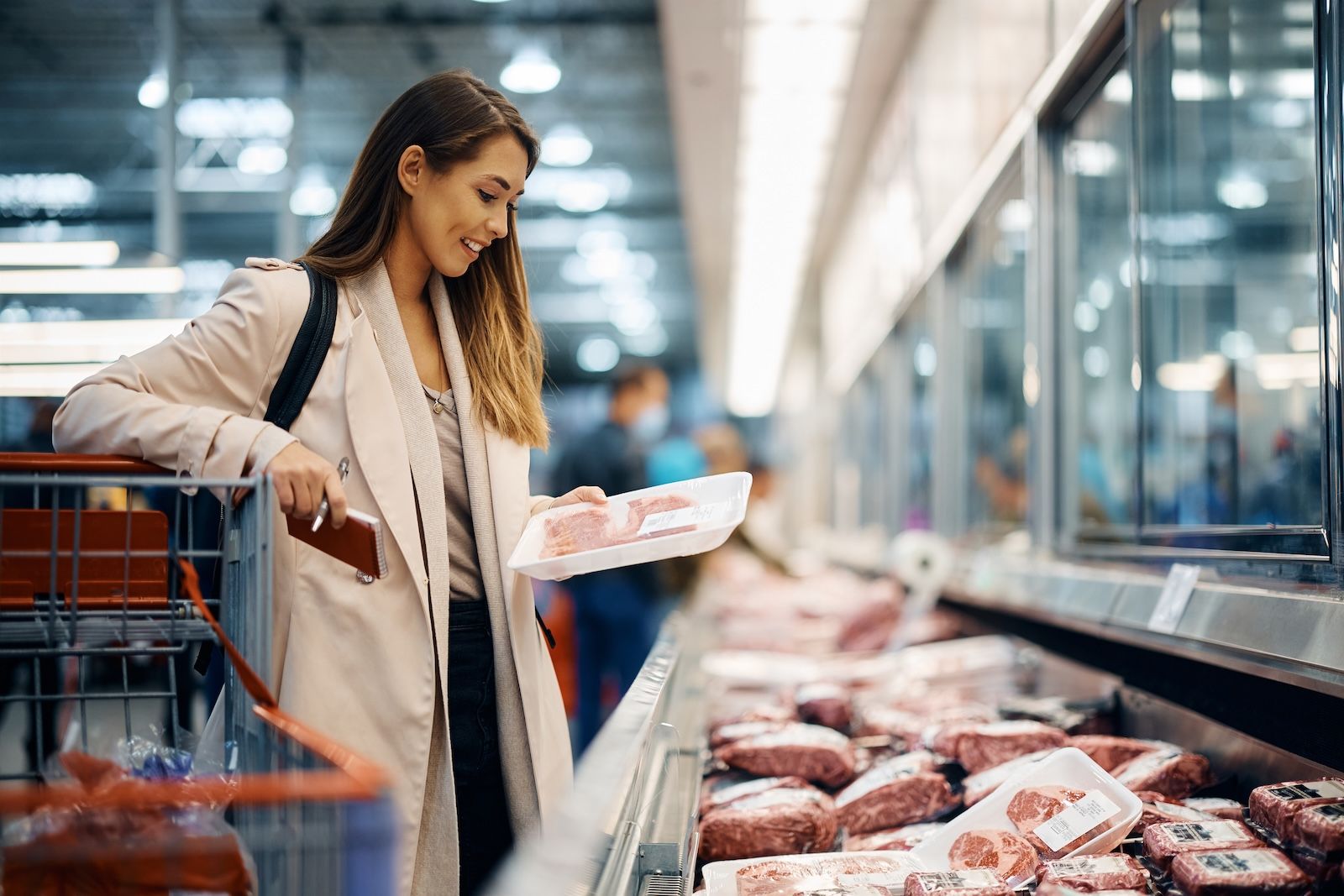
If you cook at home, here's your Bangkok keto shopping list.
Where to shop:
Tops, Villa Market, Gourmet Market for imported keto staples (almond flour, coconut flour, MCT oil, grass-fed butter, specialty cheeses)
Makro for bulk proteins (chicken breast, pork loin, eggs, frozen seafood) at wholesale prices
Local fresh markets for affordable vegetables, herbs, coconut cream, and fresh meats
Lazada/Shopee for keto-specific products like erythritol, monk fruit sweetener, keto snack bars, and almond butter
Keto pantry essentials:
Coconut oil and coconut cream
Eggs (your best friend on keto)
Butter or ghee
Avocados
Nuts: almonds, macadamias, walnuts
Full-fat Greek yogurt (unsweetened)
Dark chocolate 85%+ cacao
Fish sauce (naturally zero carb and full of umami)
Soy sauce or tamari
Fresh herbs: basil, cilantro, lemongrass, galangal, kaffir lime leaves
Step 4: Track Your Macros (At Least in the Beginning)
Keto only works if you're actually in ketosis. And you can only be sure you're in ketosis if you know how many carbs you're eating. During the first 4 to 6 weeks, track everything.
Common macro targets for keto beginners:
Carbs: Under 30g net carbs per day (total carbs minus fiber)
Protein: 1.6 to 2.0g per kilogram of body weight
Fat: Fill the rest of your calories with healthy fats
After a few weeks, you'll develop an intuitive sense of which foods and portions keep you in ketosis, and tracking becomes less necessary.
Step 5: Plan for the Social Situations
Before you start keto, think through your weekly social eating situations and have a strategy for each one.
Office lunch orders: Learn 2 to 3 keto-friendly dishes you can order from any Thai restaurant. Gai yang with vegetables, tom yum without rice, and stir-fries without sugar are safe defaults.
Family dinners: Eat the protein and vegetable dishes, skip the rice. Most Thai family-style meals include enough variety that you can stay keto without making a scene.
Drinking with friends: Spirits with soda water or lime are keto-friendly. Beer and cocktails are not. Wine in moderation (dry red or dry white) is acceptable for some keto practitioners.
Temple festivals and holidays: These are the hardest. Thai festival food is almost entirely carb and sugar-based. Consider allowing yourself a planned "off day" rather than stressing about perfection.
Keto Mistakes That Are Especially Common in Thailand
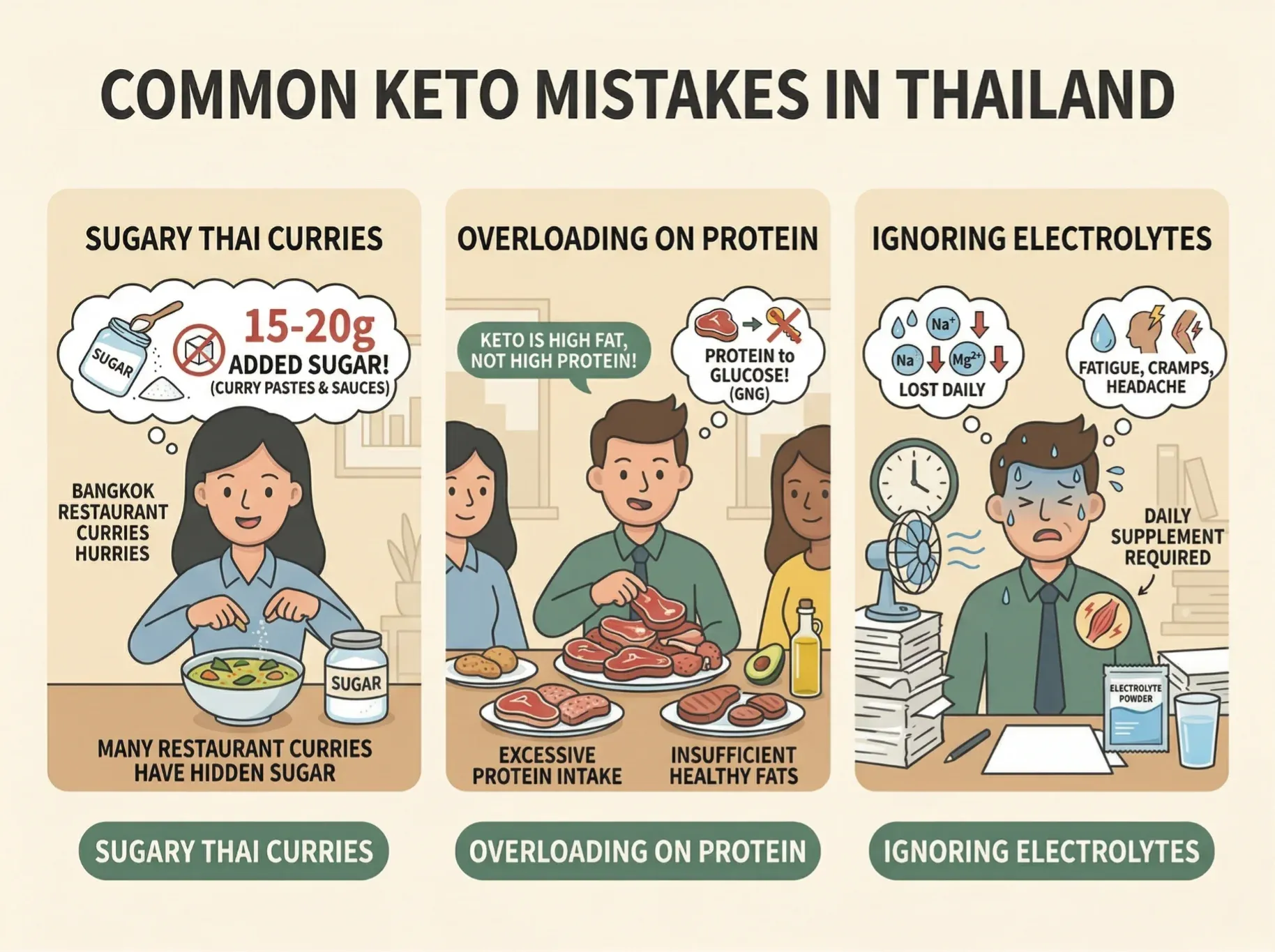
Mistake 1: Thinking All Thai Curries Are Keto
Thai curries use coconut cream (keto-friendly), but most restaurants add sugar to the curry paste and sauce. A bowl of green curry from a typical Thai restaurant might contain 15 to 20 grams of sugar. If you're eating curry, either make it at home without sugar or choose a restaurant that's transparent about ingredients.
Mistake 2: Overloading on Protein Instead of Fat
Many Thais who try keto accidentally eat too much protein and not enough fat. If protein intake is too high, your body converts excess protein into glucose through a process called gluconeogenesis. This can kick you out of ketosis. Remember: keto is a high-fat diet, not a high-protein diet.
Mistake 3: Ignoring Electrolytes in the Thai Heat
Bangkok's heat makes you sweat more, which means you lose more sodium, potassium, and magnesium. On keto, you already lose electrolytes faster due to reduced insulin levels (insulin tells your kidneys to retain sodium). The combination is a recipe for cramps, headaches, and fatigue. Supplement your electrolytes daily. This is not optional in Thailand.
Mistake 4: Drinking "Keto Coffee" Loaded with Calories
Bulletproof coffee (coffee blended with butter and MCT oil) has become popular in Bangkok's keto community. But a single serving can contain 300 to 500 calories. If you're drinking this on top of your regular meals, you might be in ketosis but still eating too many calories to lose fat. Keto doesn't override the laws of thermodynamics. Calories still matter.
Mistake 5: Quitting After the Keto Flu
The first 1 to 2 weeks are the hardest. If you quit during this period, you get all the downsides (feeling terrible) with none of the benefits (fat adaptation, stable energy, reduced appetite). Commit to at least 4 full weeks before deciding whether keto works for you.
Is Keto Right for You? A Decision Framework
Not everyone should do keto. Here's a simple framework to help you decide.
Keto might be a good fit if you:
Have 10+ kilograms of fat to lose and traditional calorie counting hasn't worked
Experience strong sugar cravings and energy crashes throughout the day
Have insulin resistance, prediabetes, or metabolic syndrome (consult your doctor first)
Prefer eating larger, satisfying meals less frequently rather than small meals all day
Are willing to commit to at least 4 to 8 weeks of strict carb restriction
Keto might NOT be the best choice if you:
Do high-intensity training 4+ times per week and need explosive performance
Have a history of eating disorders or a difficult relationship with food restriction
Find the social constraints too stressful for your lifestyle in Thailand
Are pregnant, breastfeeding, or have kidney disease
Simply love rice too much to give it up for extended periods (that's a valid reason)
The middle ground: If strict keto feels too extreme, consider a moderate low-carb approach (80 to 120 grams of carbs per day). You won't enter full ketosis, but you'll still get many of the benefits: reduced cravings, better blood sugar control, improved energy. And you can still eat a small portion of rice at lunch without wrecking your entire day.
How Easy Health Supports Your Keto Journey in Thailand
Whether you're going full keto or simply cutting carbs, the biggest challenge is finding meals that are actually low in carbs, free from hidden sugars, and show exactly what's in them.
That's where Easy Health comes in.
Easy Health prepares every meal fresh daily with zero added sugar and no MSG. Every single dish on the menu shows exact calories, protein, carbs, and fat. No guesswork, no hidden ingredients.
For people doing keto specifically, Easy Health offers a dedicated Keto Plan at 3,499 THB for 5 days. This plan provides balanced low-carb, high-fat meals designed to keep you in ketosis without sacrificing flavor or variety. Each day's meals are different, so you never get bored eating the same thing.
Beyond the Keto Plan, the Easy Health menu includes many individual items that work well for keto and low-carb eaters:
Morning Omelette · Fluffy, protein-packed, loaded with fresh vegetables and herbs. 366 kcal, 28g protein, only 3g carbs, 27g fat. 225 THB. Tagged: Keto, High Protein.
Pumpkin Soup · Warm and creamy, naturally low-carb. 165 kcal, 4g protein, 14g carbs, 10g fat. 75 THB. Tagged: Vegan.
Tom Jued Soup · Light Thai clear soup with tofu and fresh vegetables. 93 kcal, 14g protein, 6g carbs, 1g fat. 75 THB.
Farmer Omelette · Hearty omelette with mushrooms, peppers, and onions. 385 kcal, 33g protein, 13g carbs, 23g fat. 229 THB. Tagged: High Protein.
Ranchero Skillet · Bold, savory, and packed with protein. 589 kcal, 56g protein, 27g carbs, 29g fat. 289 THB. Tagged: High Protein.
The beauty of using Easy Health for keto is that you never have to wonder whether the restaurant added sugar to your sauce or snuck in a few tablespoons of oyster sauce. Everything is transparent, clean, and designed with nutrition-conscious people in mind.
You can order individual meals à la carte through the Easy Health App or commit to the full 5-day Keto Plan for a structured, hands-free approach. Either way, your macros are handled.
FAQ
How many carbs can I eat per day on the keto diet?
Most keto guidelines recommend staying under 20 to 50 grams of net carbs per day (total carbs minus fiber). For most people in Thailand, aiming for under 30 grams of net carbs is a good starting point. To put this in context, a single bowl of Thai jasmine rice contains roughly 45 grams of carbs, which already exceeds a strict keto limit.
How long does it take to get into ketosis?
Most people enter ketosis within 2 to 7 days of restricting carbs below 50 grams per day. However, it takes 2 to 4 weeks to become fully fat-adapted, which is when your body efficiently uses ketones for energy without the fatigue and brain fog of the transition period. Be patient with the process.
Can I eat Thai food on a keto diet?
Yes, but with careful selection. Grilled meats (gai yang, moo yang), seafood, eggs, coconut-based curries (without added sugar), stir-fries (request no sugar), clear soups, and non-starchy vegetables are all keto-friendly Thai foods. The main things to avoid are rice, noodles, sweetened sauces, and sugary drinks. Always ask for "mai sai nam tan" (no sugar) when ordering stir-fries and curries.
What is the keto flu and how do I deal with it?
The keto flu refers to a cluster of symptoms (headaches, fatigue, nausea, brain fog, irritability, muscle cramps) that many people experience during the first 1 to 2 weeks of starting keto. It's caused by your body adapting to burning fat instead of glucose, combined with water and electrolyte loss. To minimize symptoms, drink at least 3 liters of water daily, supplement with sodium, potassium, and magnesium, eat bone broth, and avoid starting keto during a stressful week.
Is the keto diet safe long-term?
Short-term keto (3 to 6 months) is generally considered safe for healthy adults and is supported by substantial research. Long-term keto (1+ years) has less research, and there are concerns about potential nutrient deficiencies, kidney strain in susceptible individuals, and the difficulty of maintaining such a restrictive diet. Many health professionals recommend cycling: doing strict keto for 3 to 6 months, then transitioning to a moderate low-carb approach for sustainability. Always consult a doctor if you have pre-existing health conditions.
Will I gain all the weight back if I stop keto?
Not necessarily, but it depends on what you do after keto. If you immediately return to eating large portions of rice, noodles, and sugary drinks, you'll likely regain weight. The smart approach is to gradually reintroduce carbohydrates (starting with 50g, then 80g, then 100g per day) while monitoring your weight. Many people find that a moderate low-carb diet (100 to 150g carbs per day) is the sweet spot for maintaining their results long-term.
Ready to Start Keto Without the Guesswork Download the Easy Health App
No more wondering whether the restaurant added sugar to your curry. No more guessing if your meal fits your macros. The Easy Health App gives you access to keto-friendly meals with full nutritional transparency, fresh daily, zero added sugar.
Here's what you get:
Easy Ordering · Browse 160+ menu items, filter for keto-friendly options, and order in seconds
Track Your Nutrition (Calories & Macros) · See exact calories, protein, carbs, and fat for every dish, so you always know you're staying in ketosis
Personalized Meal Planning · Choose the dedicated Keto Plan or build your own low-carb meal rotation from the à la carte menu
Exclusive Rewards · Earn points with every order and unlock special deals available only in the app
Download now and start eating smarter today:
📱 Android: Download on Google Play
🍏 iOS: Download on the App Store
References & Links
References:
Bueno, N.B. et al. (2013). "Very-low-carbohydrate ketogenic diet v. low-fat diet for long-term weight loss: a meta-analysis of randomised controlled trials." British Journal of Nutrition, 110(7), 1178-1187. · https://www.cambridge.org/core/journals/british-journal-of-nutrition/article/verylowcarbohydrate-ketogenic-diet-v-lowfat-diet-for-longterm-weight-loss-a-metaanalysis-of-randomised-controlled-trials/6FD9F975BAFF1D46F84C8BA9CE860783
Bazzano, L.A. et al. (2014). "Effects of Low-Carbohydrate and Low-Fat Diets." Annals of Internal Medicine, 161(5), 309-318. · https://www.acpjournals.org/doi/10.7326/M14-0180
Harvard T.H. Chan School of Public Health, "Diet Review: Ketogenic Diet for Weight Loss" · https://www.hsph.harvard.edu/nutritionsource/healthy-weight/diet-reviews/ketogenic-diet/
Internal Links:
External Links: