
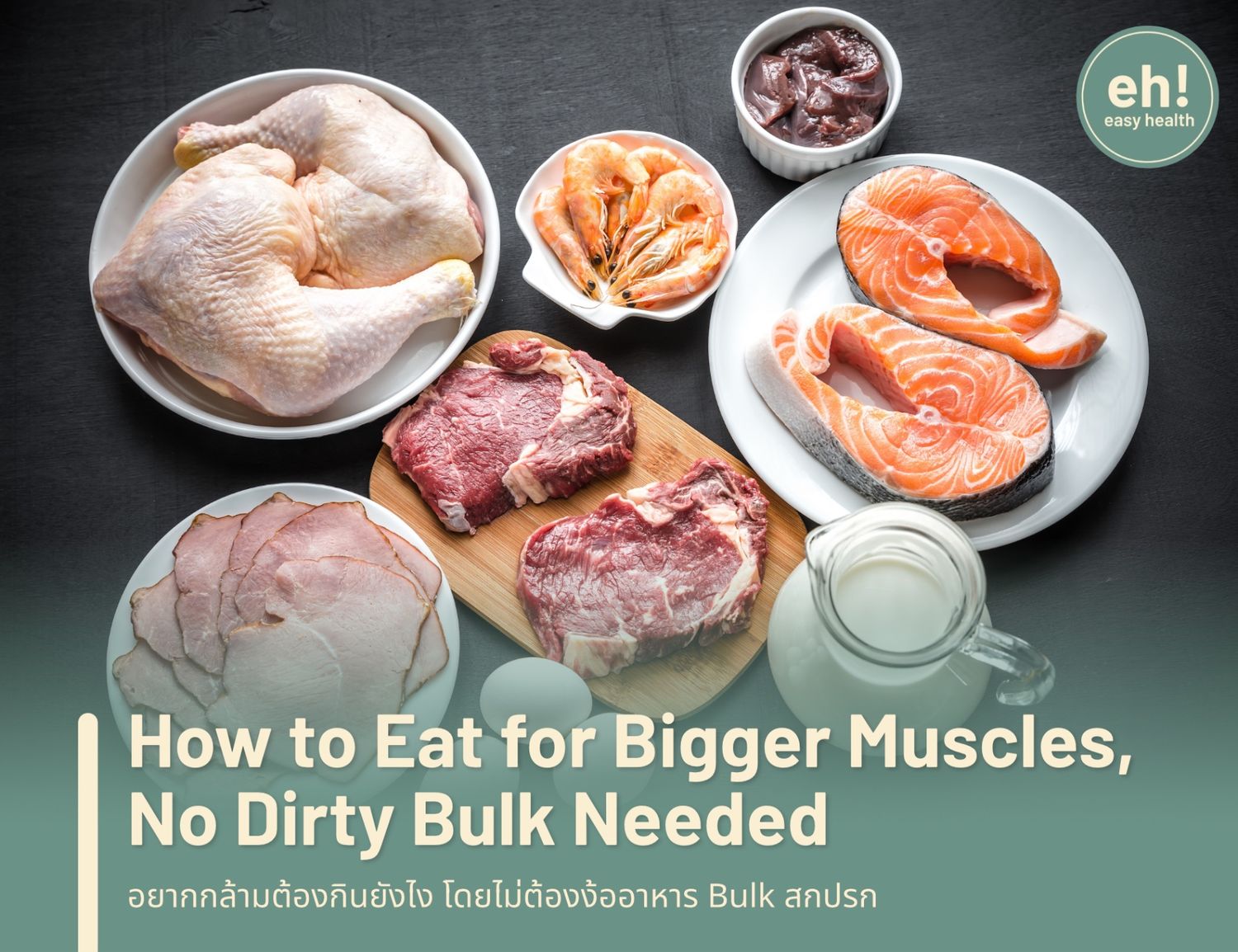
How to Eat for Bigger Muscles, No Dirty Bulk Needed
Dirty bulking, eating anything and everything to get enough calories for muscle growth, is still alive and well inBangkok’s fitness scene. The logic sounds simple: eat big, get big, cut later. The problem is that “later” usuallyturns into a cutting phase that is longer and harder than expected, and the end result is usually worse bodycomposition than a slow, clean bulk from day one.
Why You Need to Eat Above Maintenance, and by How Much?
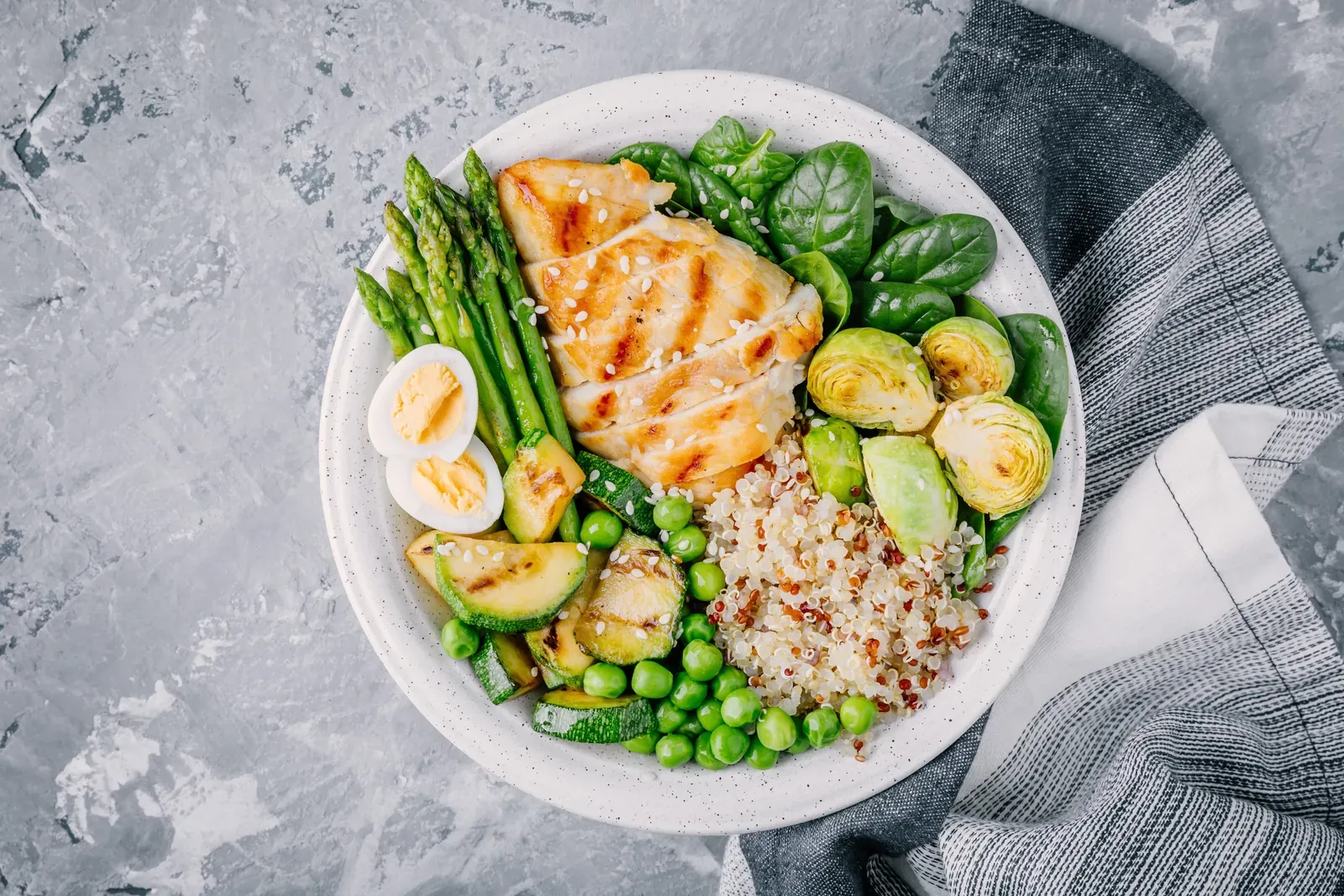
Building new muscle tissue takes more energy than your body uses just to get through the day. This is the partdirty bulking gets right. You cannot build meaningful muscle while constantly short on calories.
What everyone gets wrong is the size of the surplus. The research numbers are much smaller than mostpeople think:
Your body can build roughly 0.5 to 1 kilogram of new muscle per month if you train naturally withoutenhancement
A calorie surplus of 250 to 500 calories above maintenance is enough to fully support that rate
Anything beyond that does not speed up muscle growth. It gets stored as pure fat
This is where dirty bulking fails by its own logic. Eating 1,000 calories over maintenance does not build twicethe muscle of eating 500 over. You get the same muscle, just with a lot more fat along for the ride.
Protein Is the Real Limiting Factor in Muscle Growth

For people who train consistently, the thing holding back muscle growth is usually not total calories. It isprotein. Muscle is built from amino acids, and without enough protein, no calorie surplus of any size will helpyour muscles grow much.
The numbers you need to hit:
Target 1.6 to 2.2 grams per kilogram of body weight per day. For a 70kg person, that is 112 to 154grams daily
Spread it across 3 to 4 meals of 30 to 45 grams each. This triggers muscle protein synthesis better thanpacking all your protein into one sitting
A typical rice-and-topping lunch in Bangkok gives you only 25 to 35 grams of protein. Reaching 140grams a day takes deliberate choices at every meal, not hoping your khao man gai adds up on its own
Clean Foods with Enough Calories for a Real Bulk
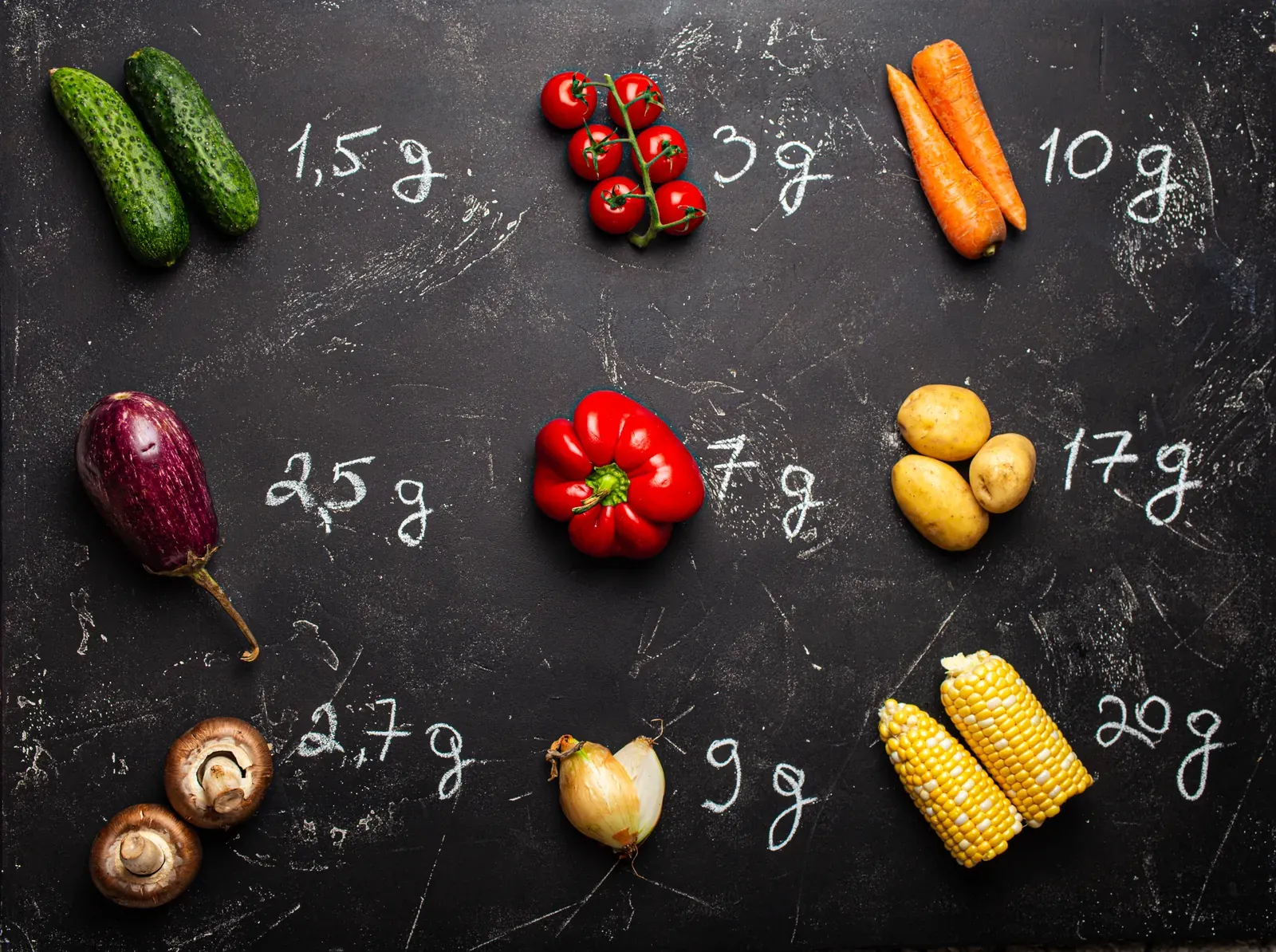
The real challenge of clean bulking is not finding good food. It is eating enough of it. Whole foods keep you fulllonger than processed foods, which is normally a good thing, but becomes a problem when you need to eatabove maintenance day after day.
Foods that are both clean and calorie-heavy enough for muscle building:
Whole eggs: 77 calories each, easy to add to any meal
Salmon and fatty fish: around 200 calories per 100g, with 20 grams of protein plus omega-3s
Grass-fed beef: around 250 calories per 100g, with 26 grams of protein
Avocado: 160 calories per half, high in healthy fats
Quinoa: 130 calories per 100g uncooked, with 7 grams of protein
Natural nut butter: around 90 to 100 calories per tablespoon, easy to add to smoothies or oats
On the Easy Health menu, the Fajita Bowl at 312 calories and 31 grams of protein, or the Grass-Fed MincedBeef Fitness Meal at 419 calories and 48 grams of protein, are examples of single meals that push both yourcalorie surplus and protein target at the same time, without any of the ingredients dirty bulking relies on.
Why Dirty Bulking Backfires in the Long Run

Beyond the extra fat, dirty bulking creates ongoing problems most people never think about before starting:
Insulin sensitivity drops as body fat goes up. Your body gets steadily worse at sending calories tomuscle instead of fat. The longer the dirty bulk, the less efficient your body becomes at turning food intomuscle. The “eat more, gain more” logic works directly against this mechanism
The cut after a dirty bulk is consistently longer and harder than expected. Losing the 6 to 8 kilogramsof fat gained during the bulk while trying to hold onto muscle requires a calorie deficit, which itself worksagainst muscle retention
Many people finish their cut with body composition similar to or worse than before the bulk started,after spending 6 months or more on both phases combined
A small clean surplus of 300 to 400 calories, done consistently, builds muscle at nearly the same rate butwith far less fat gain. The cut afterward is shorter and easier.
How to Make It Work in Bangkok Life

Step 1: Know your maintenance calories first
For moderately active people in Bangkok, this sits around 1,800 to 2,400 calories depending on body sizeand activity level. Add 300 to 400 calories on top as your target. This number is much smaller than dirty bulkculture claims, which makes it much easier to hit with real food.
Step 2: Build every meal around a protein anchor
When the protein is right, the calories tend to follow naturally. For people who train hard and want clearstructure, the Easy Health Athlete Plan at 2,400 to 2,600 calories per day is built specifically for muscle-building goals. The macros are designed to support performance without adding excess fat.
Step 3: Close the calorie gap with density, not volume
If you struggle to eat enough clean calories, adding calorie-dense foods like avocado, eggs, or nut butter tomeals you already eat is the easiest fix. The Power Fit Combo at 1,043 calories and 83 grams of protein in asingle meal shows what a clean, high-calorie meal looks like in practice.
Browse the full Easy Health menu to structure your week around meals with clear macro data.
Frequently Asked Questions
How long does a clean bulk take before I see results?
Expect 1 to 2 months before changes become noticeable to other people, and 3 to 6 months for a seriouschange in your physique. The natural muscle-building rate is around 0.5 to 1 kilogram per month under thebest conditions. A clean bulk is not slower than a dirty bulk in terms of muscle gained. It is only slower on thescale, because you are not adding fat at the same rate.
Can I build muscle without eating above maintenance?
People who are new to training, or coming back after a long break, can build muscle in a deficit or atmaintenance because their body is adapting to a new stimulus. For anyone who has trained consistently formore than 3 to 6 months, a steady calorie surplus is necessary for meaningful muscle growth. The surplusdoes not need to be big. 250 to 400 calories above maintenance is enough, but it needs to be consistentacross the week, not just on training days.
I am very skinny and cannot eat enough whole food. What should I do?
For ectomorphs and people with small appetites, the problem is usually appetite and food volume, not foodquality. The fix that actually works is raising calorie density without raising volume. Add avocado to meals,cook with olive oil, blend nut butter into smoothies, choose salmon and whole eggs over plain chicken breast,and drink part of your calories as a protein smoothie when solid food volume becomes the limit.
Can I build muscle and lose fat at the same time?
Yes, but only under certain conditions. Body recomposition works best for people who are new to training,carry a lot of extra fat, or are returning after a long break. In those cases, the body can pull from fat stores tosupport muscle building even without a calorie surplus. For anyone who has trained consistently for a year ormore at a healthy weight, doing both at once is very slow and demands very precise nutrition. Picking one goalat a time and switching between a modest surplus and a modest deficit works better in the long run.
How important is sleep compared to food for building muscle?
Equally important, and neither can replace the other. Sleep is when most muscle protein synthesis and growthhormone release happen. Consistently sleeping less than 7 hours per night lowers muscle protein synthesisand testosterone while raising cortisol, all of which directly block the muscle-building process. Researchsuggests poor sleep can cut your muscles’ response to training roughly in half. Eating perfectly but sleeping 5to 6 hours a night will underperform someone who eats imperfectly but sleeps a solid 8 hours.
What is the minimum training needed for the food to work?
Resistance training is the stimulus that makes nutrition useful for building muscle. Without progressiveoverload, extra protein and calories get stored as energy or fat, not muscle. Two to three focused, progressivestrength sessions per week are enough for steady muscle growth when combined with enough protein and asmall calorie surplus. Training more can speed things up, but the relationship is not linear, and recoverybetween sessions matters as much as the sessions themselves.
Build Muscle Clean with Easy Health
Getting your calories, protein, and food quality right every single day without relying on junk food is the realchallenge of clean bulking. Easy Health takes care of the food side for you.
160+ menu items with full macros on every dish, so you always know where your calories and proteincome from
Zero added sugar, zero MSG, zero artificial preservatives across all meals
The Athlete Plan at 2,400 to 2,600 calories per day, built specifically for muscle-building goals
Fresh daily preparation, never frozen, delivered across Bangkok with branches in Bangkok and Pattaya
Browse the full menu at easyhealth.asia/menu.
Download the Easy Health app:
Easy Health on Google Play (Android)
Easy Health on App Store (iOS)
References
Slater G, Phillips SM. (2011). Nutrition guidelines for strength sports: Sprinting, weightlifting, throwingevents, and bodybuilding. Journal of Sports Sciences, 29(S1), S67-S77.https://doi.org/10.1080/02640414.2011.574722
Morton RW, Murphy KT, McKellar SR, et al. (2018). A systematic review, meta-analysis and meta-regression of the effect of protein supplementation on resistance training-induced gains in muscle massand strength. British Journal of Sports Medicine, 52(6), 376-384. https://doi.org/10.1136/bjsports-2017-097608
Garthe I, Raastad T, Refsnes PE, Sundgot-Borgen J. (2013). Effect of nutritional intervention on bodycomposition and performance in elite athletes. European Journal of Sport Science, 13(3), 295-303.https://doi.org/10.1080/17461391.2011.643164
Areta JL, Burke LM, Ross ML, et al. (2013). Timing and distribution of protein ingestion during prolongedrecovery from resistance exercise alters myofibrillar protein synthesis. Journal of Physiology, 591(9),2319-2331. https://doi.org/10.1113/jphysiol.2012.244897
Stokes T, Hector AJ, Morton RW, et al. (2018). Recent Perspectives Regarding the Role of Dietary Proteinfor the Promotion of Muscle Hypertrophy with Resistance Exercise Training. Nutrients, 10(2), 180.https://doi.org/10.3390/nu10020180
Dattilo M, Antunes HK, Medeiros A, et al. (2011). Sleep and muscle recovery: endocrinological andmolecular basis for a new and promising hypothesis. Medical Hypotheses, 77(2), 220-222.https://doi.org/10.1016/j.mehy.2011.04.017