

Evening Workout Meal Plan: How to Fuel After Work Training
For many professionals in Bangkok, evening is the only realistic time to train. After a full day of meetings and commuting through Sathorn or Sukhumvit, workouts usually start around 6:00 or 7:00 PM, when both mental and physical energy are already depleted.
This is where nutrition often works against you. Skipping lunch due to meetings or choosing a heavy, oily meal earlier in the day leaves you drained by workout time. You either arrive at the gym with no energy left, or finish training late at night unsure what to eat without feeling uncomfortable or disrupting your sleep.
Training in the evening requires a different approach to fueling. You need steady energy to carry you through the workday, enough support to perform well during your workout, and the right nutrients afterward to recover without heaviness. This guide breaks down the ideal evening workout meal plan and explains how the Easy Health Active Plan at 1,800 to 2,000 kcal is designed to support training after work in Bangkok.
The 3 Pillars of Evening Performance
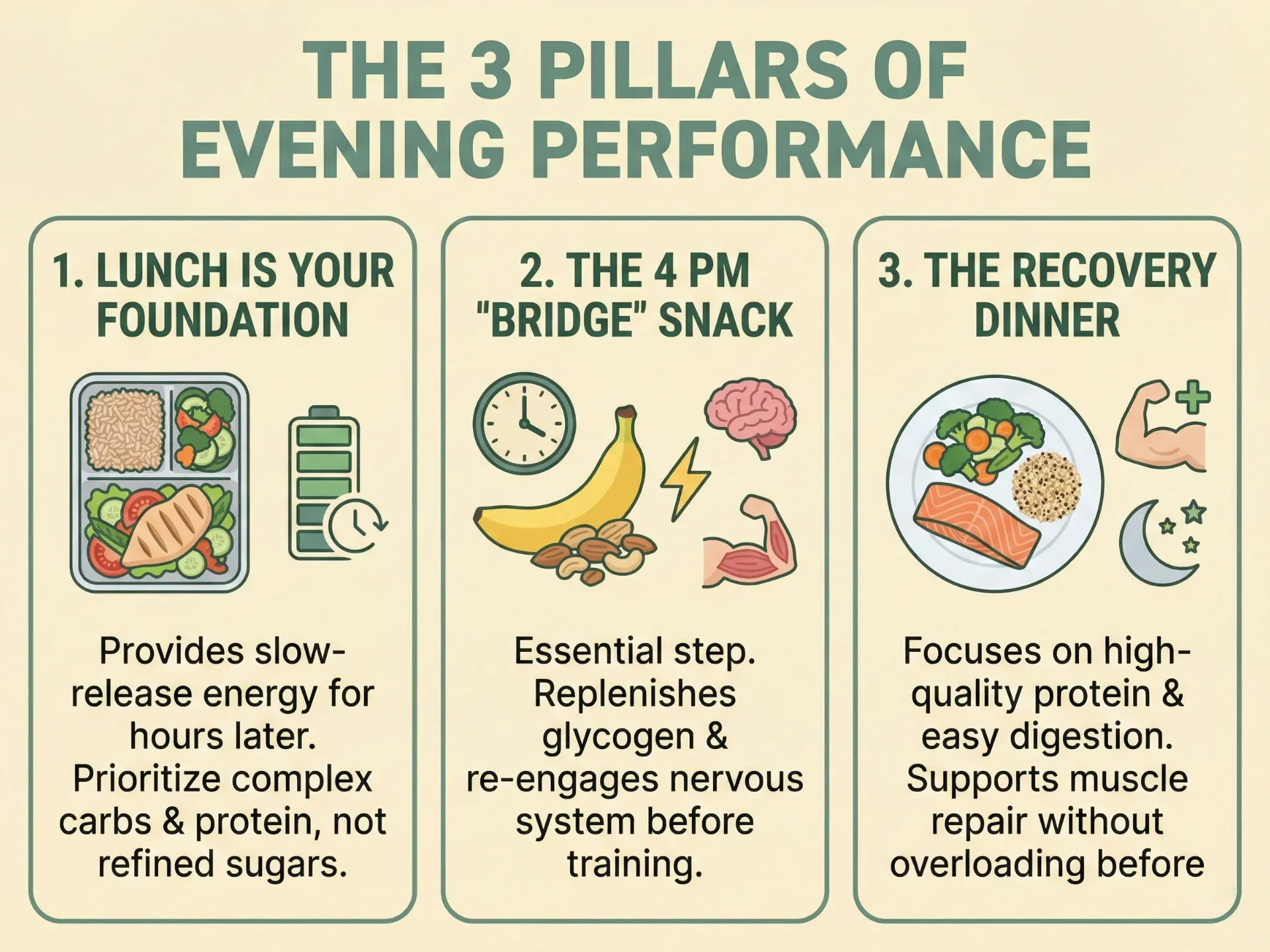
To perform at your best during an evening workout, your meal plan needs to get three things right:
Lunch Is Your Foundation: Lunch is not just a midday break. It provides slow-release energy that supports performance hours later, which means prioritising complex carbohydrates and protein over refined sugars.
The 4 PM “Bridge” Snack: This step is essential. A well-timed snack helps replenish glycogen and re-engage the nervous system before leaving the office for training.
The Recovery Dinner: Evening meals should focus on high-quality protein and easy digestion, supporting muscle repair without overloading your system before sleep.
How the Active Plan Supports Evening Training and Recovery
The Active Plan is built for professionals who train after work. It includes three main meals and one snack, set at 1,800 to 2,000 kcal with 160 g or more of protein. Here’s how to time each meal for better training performance and recovery:
1. Lunch: Building the Fuel Base (12:30 PM)
This meal should prioritise complex carbohydrates to provide steady, long-lasting energy.
Easy Health Menu: BBQ Wrap or Tijuana Bowl.
Why: Riceberry rice or quinoa supports a steady release of glucose, while fibre helps keep you satisfied and reduces the urge for afternoon snacking.
2. The Pre-Workout Snack: The Igniter (4:30 PM)
Avoid sugary energy drinks and choose real food to support steady energy before training.
Easy Health Menu: Banana Peanut Butter Pancake or Raw Energy Balls.
Why: These options provide fast-absorbing carbohydrates from bananas or dates for immediate fuel, paired with healthy fats from peanut butter or nuts to sustain energy. Eating this at your desk helps ensure you arrive at the gym prepared and focused.
3. The Workout Window (6:30 PM to 7:30 PM)
Train with purpose and intensity, knowing your nutrition is already working in your favour.
4. Post-Workout Dinner: The Repair (8:00 PM)
This meal should prioritise protein while staying light enough to support recovery without weighing you down before sleep.
Easy Health Menu: Sumo Bowl with salmon or tofu, or the free-range chicken fitness meal.
Why: Each option provides a high protein intake, often around 40 to 60 g per serving, to support muscle repair after training. Fat levels are kept moderate, and easily digestible vegetables such as broccoli and cauliflower are used to help recovery without causing discomfort before sleep.
Why “Winging It” Fails for Evening Training
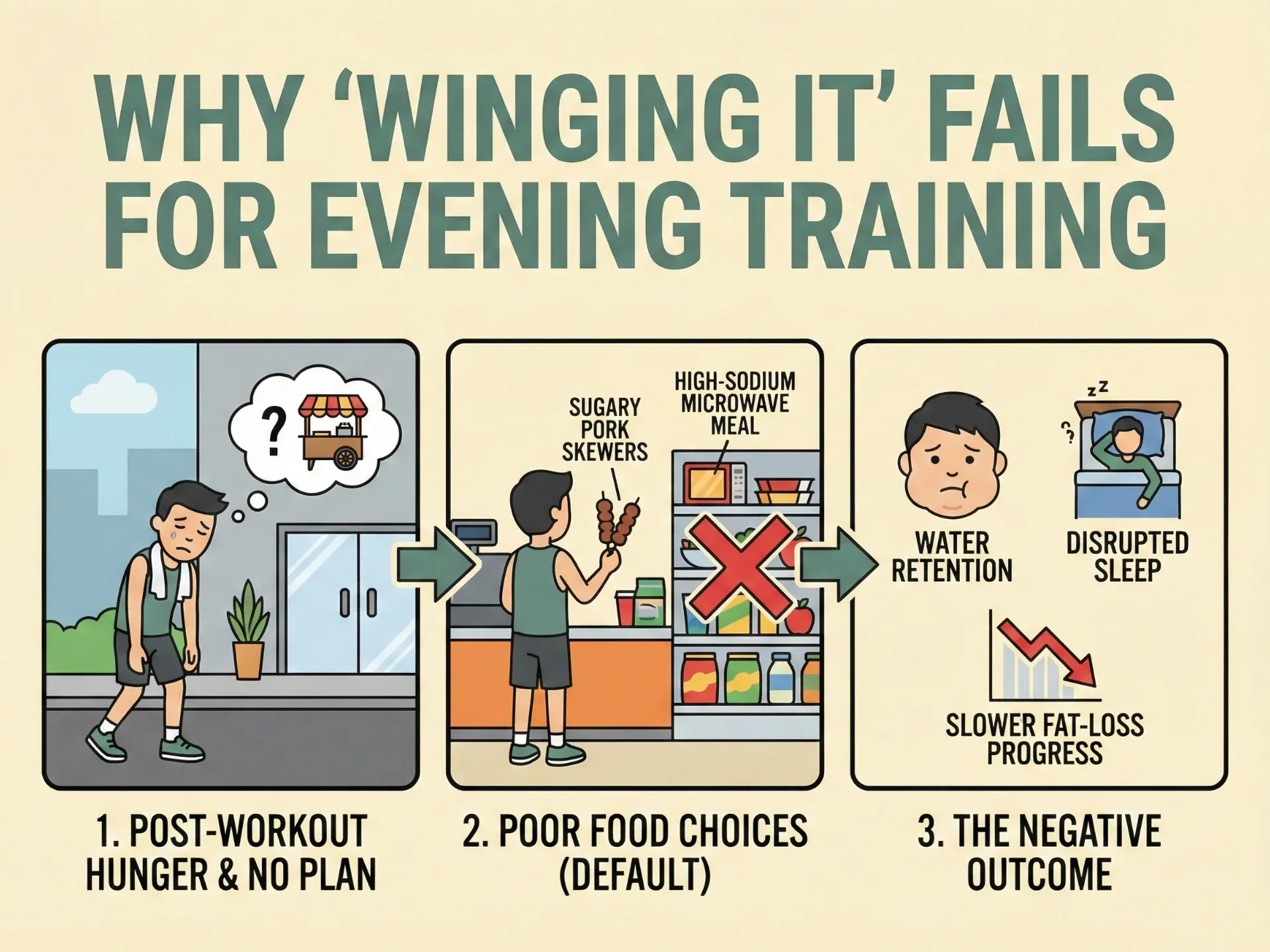
Without a structured plan, this is the common situation many people in Bangkok fall into:
Post-workout hunger: You end up stopping at a street stall or 7-Eleven on the way home.
Poor food choices: Processed pork skewers with sugary marinades or high-sodium microwave meals become the default.
The outcome: Water retention the next morning, disrupted sleep, and slower progress toward fat-loss goals.
With the Active Plan, your post-workout meal is already prepared and waiting at home or delivered to your gym. It’s balanced, portioned for recovery, and designed to support training results without guesswork.
FAQ: Evening Training Nutrition
Q1: Will eating carbs at 8 PM make me gain fat?
No. After an intense workout, carbohydrates are used to replenish muscle glycogen, not stored as fat. As long as total daily calories stay within range, which the Active Plan manages for you, evening carbs support recovery rather than fat gain.
Q2: I take pre-workout supplements. Do I still need the snack?
Yes. Pre-workout supplements provide stimulants such as caffeine, but they do not supply usable calories. Training after a long workday without food increases the risk of muscle breakdown. A real food snack provides the energy your body actually needs.
Q3: Can I customize the delivery time?
Yes. You can choose to have your full day’s meals delivered in the morning to your office, or arrange split delivery if you are located near one of our branches.
Dominate Your Evening Routine. Download Easy Health App.
Stop letting a busy workday interfere with your training progress. Let Easy Health manage your nutrition logistics so you can focus fully on your workouts.
Subscribe to the Active Plan today:
Android: Download via Google Play Store
References
National Strength and Conditioning Association (NSCA). (2024). Nutrient Timing for Resistance Exercise. Retrieved from https://www.nsca.com/
Healthline. (2024). Eating Before Bed: Good or Bad? Retrieved from https://www.healthline.com/nutrition/eating-before-bed
Journal of the International Society of Sports Nutrition. (2024). International society of sports nutrition position stand: nutrient timing. Retrieved from https://jissn.biomedcentral.com/articles/10.1186/s12970-017-0189-4